The Decanter interview: Château Palmer’s Thomas Duroux


Since his arrival at Château Palmer in 2004, this instinctive winemaker has converted the Margaux estate to biodynamics and refocused the second wine. He tells Jane Anson about his quest for quality...
Looking a little exhausted when we meet, Thomas Duroux is in the middle of the 2018 harvest – but I don’t think it’s the physical work that’s tiring him out. Rather it’s the psychological hit of suffering an extremely low yield when much of Bordeaux is celebrating its good fortune, and as a result being called on to justify his decision to take this most illustrious of Margaux wines into biodynamic farming.
Unquestionably, in my book at least, Palmer is making its greatest stretch of wines in living memory right now, easily going toe-to-toe with its neighbour Château Margaux. But avoiding spraying phytochemicals on the vines means there are no easy solutions to problems such as the mildew that struck in 2018, while yields are less than a third of a usual year, right down to 12hl/ha. It’s something that, as the estate’s CEO, he is no doubt having to explain to the board, which in Palmer’s case comprises several dozen members of the Sichel and Mähler-Besse families.
Scroll down to see Anson’s pick of Château Palmer wines
‘Even with the 2018 issues, I am still convinced that this way of farming is right for the wine,’ Duroux asserts. ‘The whole team has felt the change in Palmer, in the way that it seems to be getting closer to being a true expression of this particular place. Until I have the conviction that it doesn’t work, I will keep on trying.’ Then he pauses, with the first real smile of the afternoon. ‘And let’s not forget that 1961 had yields of only 12hl/ha here at Palmer. It was seen as a disaster at the time, but turned out to be a vintage that was of huge importance in the history of the estate.’
Thomas Duroux at a glance
Born 1970 in Bordeaux, to a French father and Italian mother
Education Degree in agricultural engineering from ENITA university; Oenology at Bordeaux Sciences Agro
Career Opus One (Napa); technical director at Ornellaia (Tuscany); moved to Palmer in 2004, aged 34
Family Wife Carlyn, children Gabrielle (2009 vintage) and Mia (2006)
Other interests Jazz
Italian influence
Duroux has long been one of the most articulate and passionate winemakers in Bordeaux. He’s someone that always gives a straight answer to a question in a region where obfuscation can be a smart career move, and is clearly not satisfied with simply following the status quo.
‘History is very important of course, especially here in Bordeaux, but it can be a hindrance as well. It can make you feel like there is no point in changing anything, because if things worked so well in the past, then what difference can you possibly make?’
This is an attitude that has served him well throughout his career, most crucially because it means he is open to the simple pleasure of curiosity. Long before it led him to try out biodynamics in the venerated fields of an 1855 third growth, it led him to one of the most important jobs of his career at Ornellaia.

That happened, in a roundabout fashion, because the father of his best friend at school was an ardent wine lover.
‘When we were teenagers, maybe 17, we broke into his wine cellar and opened several bottles over a number of weeks. At one point he realised what was going on and asked to see us but said, “The problem is not that you are drinking all of my wines, but that you have no idea what it is that you are opening.” One of the very first wines that he opened for us after that was a Château Palmer 1983.’
Duroux’s reaction to this wine clearly impressed, because a few years later, the same friend’s father invited him to an Italian wine dinner at Clarette restaurant in Bordeaux (no longer open). There, wine merchant Jeffrey Davies casually poured a wine that made the table fall silent.
‘It was Sassicaia 1985,’ says Duroux, ‘and it blew me away. My mother is Italian, and I grew up spending a lot of time there, and yet I had no idea that they could make wines like that. And it was Cabernet Sauvignon, a grape that we knew in Bordeaux, but transformed.’

Astute observer
Ten years later, after agronomy and oenology studies, followed by practical experience at Opus One among others, he was making wine in Tuscany himself, as technical director at Tenuta dell’Ornellaia. It’s hard not to see a direct line between one experience and the next.
‘It definitely awakened something in me,’ he agrees. ‘And my two years in Italy were incredible. I was then headhunted from Ornellaia to Château Palmer. When I arrived [in 2004], I assumed I knew plenty about Cabernet Sauvignon and Merlot. But I quickly understood that it was not the same game. At Ornellaia we were creating something new, and so had great freedom, whereas at Palmer I was arriving at an estate with hundreds of years of history – and I still had a lot to learn.’
This statement tells you all you need to know about Duroux. He is not afraid to admit when he’s wrong – a quality that’s usually a pretty good indication of integrity. ‘I remember that the 2004 vintage was a big crop, and I was watching as the cellar team filled two large vats with Merlot, and pumped it over twice a day, in the same way they always did,’ he recalls. ‘I suggested that they go further, push the extraction deeper, which was something that we were used to doing in Italy. But when I tasted the vats a few days later, I realised that I was wrong. In the end I simply observed for the rest of that vintage.’
It’s this instinctive understanding of what’s needed by a wine to reflect its own sense of place that makes Duroux such a brilliant winemaker – and such an ardent defender of biodynamics. For the wines recommended here, I simply asked him to pick four vintages that said something either about the development of Château Palmer, or his own relationship to it. Of all of them, it was maybe the 2010 that said the most about who he is as a winemaker.
‘This was the first time that I really sat in front of a glass of Palmer, since I had been involved in the winemaking, and said, “Wow, this is magical terroir”. It is just an enchanted place. There was exuberance and charm in 2009 and 2005 of course, but in 2010 I could really feel the identity and personality of Palmer, and it was a crucial step in my understanding of this place. It made me dedicated to the place itself, not just to what I as a winemaker could do with it.’

Simple truth
By the time the 2015 rolled around, all of the work that Duroux had previously put into place was starting to bear real dividends, and his detailed, meticulous approach, begun a decade earlier, was paying off.
‘There were certain lessons from Ornellaia that did apply,’ he says, ‘particularly tasting every vat of fermenting juice every day, often twice a day, and adjusting our winemaking according to what was needed.
‘This also meant that from 2006 we were starting to make Alter Ego, Palmer’s second wine, from a positive rather than a negative blend,’ he explains. ‘So we would look for parts of the vineyard that truly expressed the philosophy behind it, rather than just ensuring that all of the best parts went to Palmer, and the rest to Alter Ego.
‘From 2007, when we hired Sabrina Pernet as technical director, we moved that focus into the vineyard. She questioned why, if we were being so meticulous in the cellar, we weren’t also treating individual vineyard plots in different ways. We carried out a full study of everything from soil type to water retention to nitrogen levels, and began treating the vines accordingly. It was the start of our move towards biodynamics, and although at first it wasn’t clear exactly what was happening, it became obvious from 2010 that something special was going on with the wine.’
What had been merely interesting at first became a conviction that land such as this, classified and recognised as one of the greatest vineyard treasures in France, should be protected and allowed to speak in an unadulterated way. It’s why Duroux is hoping that the 2018 vintage, even if small in quantity, will still quicken the pulse of those lucky enough to drink it. And why, away from Château Palmer, he is capable of being equally thrilled with an inexpensive glass of any wine that is an authentic and true reflection of place. I asked him for a recommendation of something that he drinks on his rare nights off at home with his American wife. He chose the brilliant Domaine du Cros in Marcillac, southwest France, and its Lo Sang del Païs.
‘It’s a wine that I cherish because it’s simple but true, and it tells you something. There are times when all you want is bread, a bit of paté, maybe a few gherkins, a great bottle of something honest, and to live in peace.’
Anson’s pick: a taste of Château Palmer
Château Palmer, Margaux, 3ème Cru Classé, Bordeaux, France, 2015
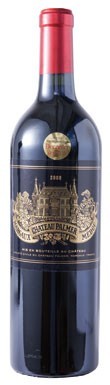

Six months from the last time I tasted this wine and it is a little more closed than it was, as the 2015s begin to retreat inwards for a few years. Still no mistaking the quality of this vintage, and it remains a brilliant Palmer, that is equal to the greatest years. Still extremely young, with rich, deep textured fruits, tons of blueberry and raspberry fruits, all expressed with clarity and purity. Grilled cedar, liquorice and crushed stone minerality. Harvest September 22 to October 7. At this point the estate was fully in conversion for certification, working 100% organically and biodynamically.
2015
Château PalmerMargaux

Château Palmer, Margaux, 3ème Cru Classé, Bordeaux, France, 2010
One of the great years of Bordeaux now at 10 years old and showing why this is such an unusual vintage in terms of the depth of structure and muscular concentration that was achieved (in fact I am upping the drinking window from the last time I tasted this, as there is such a pulse of life and grip that shows no signs of going anywhere). The initial layers are starting to be peeled back, but this retains primary black and blue fruits that are still full of flesh, baked earth, tons of liquorice and black chocolate with a grippy tannic structure, fresh acidities and a serious attitude. Brilliant stuff, that is clearly going to power on for decades. Harvest September 22 to October 20.
2010
Château PalmerMargaux
Château Palmer, Margaux, 3ème Cru Classé, Bordeaux, France, 2006
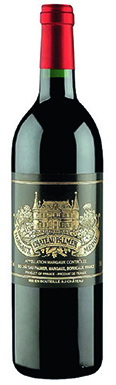
44% Cabernet Sauvignon, 56% Merlot. A clear step up from the 2004, even though the vintages were not dissimilar in style. A more delicate grain of tannins is on display, perhaps because 2006 was the first vintage where they took a more rigorous approach in the vineyard. Very dark fruits: cassis and bilberry. This is gentle in its spicing, finessed and expansive through the mid-palate, mouthwatering on the finish. Opens in waves as it sits in the glass.
2006
Château PalmerMargaux
Château Palmer, Margaux, 3ème Cru Classé, Bordeaux, France, 2004
I appreciated this supple, elegant wine with its approachable blackberry and blackcurrant fruit aromas touched with hints of fresh flowers, saddle leather, and spice. The texture seemed slightly restrained, with silky tannins and balanced acidity, but the finesse stood out. It was perhaps too understated to make a powerful impression on some of the tasters, but I felt it showed well and would continue to age with grace.
2004
Château PalmerMargaux
