
Dom Pérignon 1990-2009: ‘The mother of all DP tastings’


Simon Field MW attended one of the most comprehensive retrospectives of Dom Pérignon ever held, celebrating the 28-year tenure of outgoing chef de caves, Richard Geoffroy...
It served as the most fitting tribute possible to the gentleman who has done more than any other to build the reputation of this great wine during his long tenure.
Geoffroy has sculpted a peerless range, starting with the 1990 vintage, but now he hands over the reins to a worthy successor – 42-year-old Vincent Chaperon, who has been shadowing the master since 2005. Geoffroy, a polymath and a former chemist, is to go and make saké in Japan. What a fascinating prospect…
The tasting
This tasting took place at 67 Pall Mall on 21 November, co-hosted by Nick Baker, managing director of The Finest Bubble, who had organised the entire event, and Jancis Robinson.
It was a great privilege to taste this extraordinary range, featuring all 15 of his blancs and seven of his 11 rosés, several in large formats.
Baker got the tone right straight away, saying, ‘Richard Geoffroy is as famous as Dom Pérignon himself’, the ‘human face’ of such a large house and the ‘great communicator of Champagne’. Geoffroy’s first communication of the evening was somewhat pithy: ‘This is going to be the mother of all DP tastings’. And so it proved.
The aphorisms quickly acquired a more cerebral tone, as we learnt the thinking behind the highly successful Plénitude range, created specifically to illustrate Champagne’s somewhat misunderstood and certainly undervalued capacity to age beautifully.
The first plénitude is the ‘normal’ release, after eight years or so of ageing. The second plénitude is released after 15 years and replaces the old Oenotheque range, while the third, rarest plénitude will be released after 20-30 years of ageing.
Disgorgement and release dates are entirely pragmatic, selected only with legacy in mind. The dictates of commerce and the thirst of the market are entirely secondary to the quality of the liquid in the bottle. This is how it should be, and is Geoffroy’s most impressive bequest.
And with Chaperon, the legacy seems assured- he’s been well trained after all! Geoffroy, with characteristic wit, summed up the night by wishing his successor well: ‘You are very lucky, you have 2012 DP to come’, adding with a smile, ‘don’t mess it up!’.
I am certain that he will not, but good luck all the same, Vincent. The bar has been set unbelievably high.
Tasting Dom Pérignon 1990-2009:
The 1992 P2 was affected by cork taint and is therefore not reviewed below
You might also like:
Best Champagnes of 2018 tasted by our experts
What happens when a new chef de cave takes over?
Producer profile: Dom Pérignon
Dom Pérignon, Champagne, France, 2009
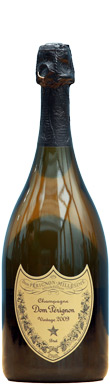

After the magnificent austerity of 2008, 2009 is riper and fuller, ‘solaire’ by temperament and generous of figure. Some '09s, according to Geoffroy, are ‘too...
2009
Dom Pérignon

Dom Pérignon, Legacy Edition, Champagne, France, 2008
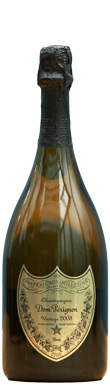
2008 is described as a ‘miracle’ year by Vincent Chaperon: everything looked set to go wrong and yet it all ended up flirting with perfection....
2008
Dom Pérignon
Dom Pérignon, Champagne, France, 2006
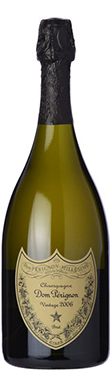
Stylish glittering pale gold with tiny flowing bubbles. Chardonnay scents lead into citrus fruits with floral lilac and snow drop aromas. The Pinot Noir is...
2006
Dom Pérignon
Dom Pérignon, Champagne, France, 2005
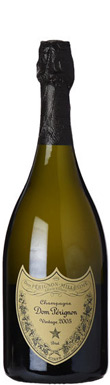
2005 was a tricky vintage, with rain and botrytis punctuating the sleep patterns of the vigneron. It was harvested at great speed, quite the opposite...
2005
Dom Pérignon
Dom Pérignon, Champagne, France, 2004
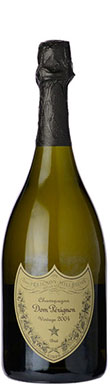
In 2004, quality and quantity were happy bedfellows, especially in the vineyards of the Côte des Blancs. Geoffroy said that by now he had the...
2004
Dom Pérignon
Dom Pérignon, Champagne, France, 2003
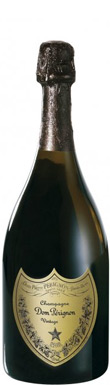
A famously hot year, with partial shutdown of the photosynthetic process resulted in low yields of 20 hl/ha - 2003 was far from typical and...
2003
Dom Pérignon
Dom Pérignon, Champagne, France, 2002
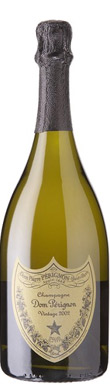
Wonderfully caressing and typical. The silkiness and balance impress most, along with a fluffy, creamy tone and stylish nuttiness. A great Dom Pérignon that charms...
2002
Dom Pérignon
Dom Pérignon, P2, Champagne, France, 2002
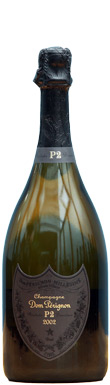
And so from P1 methuselah to P2, which for Geoffroy ‘goes beyond Champagne’. P2, he continues, must be ‘deeper, richer, longer…better than P1' - otherwise...
2002
Dom Pérignon
Dom Pérignon, P2, Champagne, France, 2000
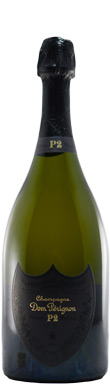
2000 is described as a year of transition in the DP story, a child of a slightly temperamental year, bolstered by its pivotal millennial identity....
2000
Dom Pérignon
Dom Pérignon, Champagne, France, 1999
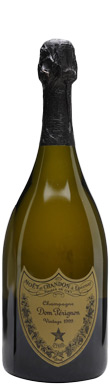
1999 was a warmer vintage in the mould of 2009, producing a large crop after a slightly rainy end of season. Picking time, as always,...
1999
Dom Pérignon
Dom Pérignon, P2, Champagne, France, 1998
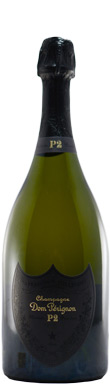
Geoffroy advises that in 1998 too many growers picked early after a very hot August, worried by the rain that had been forecast. The rain...
1998
Dom Pérignon
Dom Pérignon, P2, Champagne, France, 1996
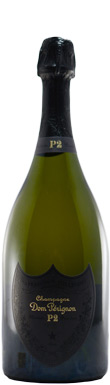
Geoffroy pulls no punches in his description of 1996 as ‘insolent’, its profile informed above all by the northeast wind which provoked dehydration in the...
1996
Dom Pérignon
Dom Pérignon, P2, Champagne, France, 1995
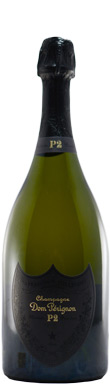
The most impressive of the evening's head-to-head pairings was that between the 1995 and 1996, the yin and yang of recent vintages. The former is...
1995
Dom Pérignon
Dom Pérignon, P2, Champagne, France, 1993
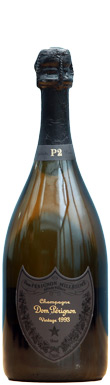
The years after 1990 proved somewhat challenging, more a function of the vintages in question - he didn't make a 1991 or 1994 - than...
1993
Dom Pérignon
Dom Pérignon, P3, Champagne, France, 1990
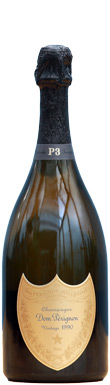
P3 is all about texture and complexity, and Geoffroy uses the French word épure to sum up what he hopes to achieve: all elements seamlessly...
1990
Dom Pérignon
Dom Pérignon, Rosé, Champagne, France, 2005
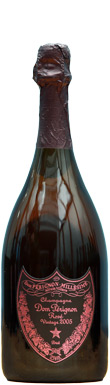
And so to the rosés. Red grapes are sourced from 10ha, all specific sites, located from Hautvillers down to Cumières and then in Ay and...
2005
Dom Pérignon
Dom Pérignon, Rosé, Champagne, France, 2004
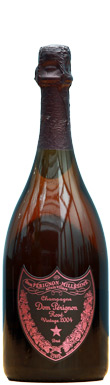
Next to the explosive 2006 and steely 2008, 2004 is a quieter vintage for Dom Pérignon rosé (despite the formidable 28% red wine addition), although...
2004
Dom Pérignon
Dom Pérignon, Rosé, Champagne, France, 2003
In a year as warm and punishing as 2003, it was vital to get the reds right. The vineyards in question are planted at high...
2003
Dom Pérignon
Dom Pérignon, Rosé, Champagne, France, 2002
Extraordinarily powerful yet astonishingly beautifully constructed, the 2002 rosé is subtly different to its siblings, yet still seamless of architecture and impressive of length. Beyond...
2002
Dom Pérignon
Dom Pérignon, P2 Rosé, Champagne, France, 1996
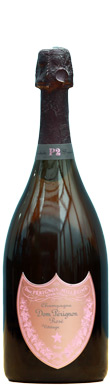
The 1996 rosé is a touch unresolved, its tension hitherto dominated by the acidity and its shape less at ease with itself than with the...
1996
Dom Pérignon
Dom Pérignon, P2 Rosé, Champagne, France, 1995
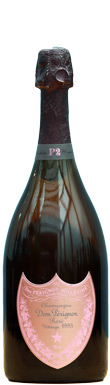
The familial trait handed down by 1995 finds its focus in generous and extrovert fruit. The wine is pleasingly different to the 1996, showing raspberry...
1995
Dom Pérignon
Dom Pérignon, P2 Rosé, Champagne, France, 1990
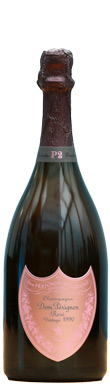
The rosés at Dom Perignon mature more slowly than the whites - elsewhere it is often the other way round. Therefore, the P3 Rosé is...
1990
Dom Pérignon
