
Domaine de la Romanée-Conti: Profile and wine ratings


Burgundy master Clive Coates MW tells you everything that you need to know about Domaine de la Romanée-Conti (DRC), along with historical tasting notes on wines from top vintages - as part of a series that looks back at domaine profiles from Clive's most recent books.
Vosne-Romanée is the first of the six great – in the sense that it possesses grand cru climats – communes of the Côte D’Or as one travels north out of Nuits-St-Georges.
Beyond this rectangle, at the north-west corner of the village, along a little road which abruptly stops at the entrance to the vineyard of Romanée-Saint-Vivant, the traveller will find, not without difficulty if this is his first visit, the red-painted metal gate which leads into the small courtyard of the Domaine de la Romanée-Conti.
See Decanter’s tasting notes and report from the 2015 preview in January 2018
Beneath the offices to the left lie part of the cellars; a couple of hundred metres away, under what looks like an anonymous garage, lie further cellars, where the wines are made and will spend their first year or so in cask. A short walk in the opposite direction will bring you to the old manoir of the abbey of Saint-Vivant, which the domaine took over a couple of dozen or so years ago for use as a second barrel cellar and is now their main offices.
Scroll down to see Clive’s tasting notes for his top Domaine de la Romanée-Conti wines
The contrast with the grand country estate atmosphere of the leading growths of the Médoc, or the tourist-attracting rather over-restored buildings of some of the négociants in Beaune is very apparent. There are no neon lights, no flamboyant panneaux. Visitors, though warmly received when they do arrive, come only by appointment. The casual tourist is discouraged.
Above and behind this small complex of houses, offices and chais lie the vineyards, literally the bed-rock on which the fortunes of the Domaine are based. Nearest is Romanée-St-Vivant, the largest vineyard. Further up the slope is the tiny, gently inclined La Romanée-Conti itself. As the hill curves round to the right to face more north-east than south-east lies the steeper Richbourg.
To the left, across the narrow files of vines which make up the climat of La Grande Rue, runs the slope of La Tâche, again steep at the top. On either side of this memorable roll-call of names are two of Vosne’s top Premiers Crus, Les Malconsorts, on the Nuits boundary, marching with Les Boudots, in my view Nuits’ best site, and to the north Les Suchots, across which are the various stony Echezeaux vineyards.
The Domaine de la Romanée-Conti owns the entirety of two climats, La Romanée-Conti and La Tâche. They possess approximately half of Richebourg, over a third of Grands Echezeaux and one-seventh of Echezeaux. It also use to ‘farm’, but since 1988 has owned, the portion – over half of the appellation – of the Domaine Marey-Monge’s Romanée-St-Vivant.
Total Vosne-Romanée grand cru holdings:
La Romanée-Conti 1.81ha
La Tâche 6.06ha
Richbourg 3.51ha
Grands-Echezeaux 3.53ha
Echezeaux 4.67ha
Romanée-St-Vivant 5.29ha
In addition, the domaine owns 0.68 hectares of Le Montrachet, 0.17 ha of Bâtard and 3.43 ha of premier cru and communal Vosne. The last two are not sold under the domaine label but in bulk to local merchants, as is the produce of vines on the more famous slopes which are less than ten years old.
In 2009 the domaine came to an agreement with the successors of the late Prince de Mérode of the Château de Serrigny. They took a lease on three important parcels of Corton: 57 ares of Clos du Roi, 1.19 ha of Bressandes and 51 a of Renardes. For the time being the fruit is vinified as one wine, and labelled simply Corton, but the domaine is not insisting that there will only be the one Corton in future vintages. It is more that they are used to decent-sized parcels of wine. It simplyfies life.
From time to time, starting with the 1999 vintages, the younger, but not totally infant, vines’ produce is blended together to produce a Vosne-Romanée-Conti Premier Cru Cuvée Duvault-Blochet, named after the proprietor in the 19th century.
The Abbe Courtepée in the late eighteenth century, echoed by Camille Rodier in the twentieth, said of Vosne-Romanée ‘Il n’y a pas de vin commun‘- there are no common wines in the village. The wines were famous then, and they are highly regarded now. The mixture of the right exposure, on a well drained slope facing east or south-east, soil which is essentially an oolitic, iron-rich limestone on a base of marl, rock and pebbles, and vines which lie approximately between 250 and 300 metres above sea level, sheltered from the west and north by the trees at the top of the slope, is as good as you can get. The grand cru climats, plumb in the middle of the slope, are the best of all, and the Domaine de la Romanée-Conti has the lion’s share of these.
The Domaine as it stands today was brought together by Jacques-Marie Duvault-Blochet about a century ago, but its individual constituents have of course an older history.
See all of Decanter’s Domaine de la Romanée-Conti tasting notes & scores
The history
The prime section, La Romanée-Conti itself, can count but nine owners in eight and a half centuries. In the 12th century it belonged to an influential local family called Vergy. In 1232 Alex de Vergy donated a piece of land known as Le Cloux de Vosne (Cloux is a common lieu-dit in Burgundy and denotes a particularly well-regarded piece of ground) to the nearby Abbey of Saint-Vivant, a subsidiary of the great endowment at Citeaux. Almost exactly four hundred years later, in 1631, the site was sold to a Monsieur de Croonembourg (to raise money for a crusade to Palestine, it is said; though it sounds a little late to me for Crusades).
It was the Croonembourg family who decided to change the name to Romanée. Was there some tangible evidence of Roman occupation at the time? Or was this just in memory of the people who had first introduced the science or art of vine cultivation to Burgundy?
The Croonembourgs also bought the neighbouring vineyard of La Tâche, and it was under their ownership that the wines first received renown.
An 1760, after the death of Philippe de Croonembourg, his son André decided to sell his domaine. There was great competition to become owner of La Romanée, then regarded as the best vineyard in Burgundy. After a while, only two contestants remained in the ring, the Marquise de Pompadour, the King’s mistress, and one of the King’s distant kinsmen, Louis-François de Bourbon, the Prince de Conti. Thanks to the efficacy of his agent, François Joly, it was the Prince who was the victor, much to the chagrin of La Pompadour – but no doubt the King himself was the final arbiter, and as has unkindly been pointed out, the Pompadour was then somewhat on the wrong side of 50, and perhaps had less influence on the King then she had previously enjoyed. The price, though, was astronomical, 8000 gold livres, particularly as taxes continued to be payable to the Abbot of Saint-Vivant.
The Prince added his name to La Romanée, and Romanée-Conti it has been ever since. The Pompadour forswore Burgundy and turned to the delights of Champagne.
Conti, however, reserved all the produce of his vineyard for his own pleasure. Not even his friends, who according to Beaumarchais, would go down on their knees in front of him and mockingly plead for an indulgence of one single bottle would move him from his avarice. La Tâche, now under a separate ownership, was able to take La Romanée-Conti’s place as the most sought-after Burgundy in France.
During the Revolution Conti emigrated, and the vineyard was sequestered by the State and sold as a Bien National in 1793. As John Arlott, and Christopher Fielden point out (Burgundy, Davis-Poynter, 1976), “Even the prosaic valuers….dug deeply into their resourses of evocative language when they described it on the Bill of Sale”.
A celebrated piece of vineyard, they said; the most advantageous position in Vosne; the fruit reaches the most perfect maturity; the site bears its breast to the first rays of the sun which stimulates it with the softest heat of the day; and so on. The document even goes on to claim that the Romanée-Conti vineyard “did not suffer from coulure or frost like many of the other climats”. This contrasts amusingly with the Document of Sale under similar circumstances and at the same time which is today preserved, framed at Lafite. Lafite’s bill of Sale says simply that it was “Le Premier Cru du Médoc et produisant le premier vin“; the property was in good order – and it also did not suffer from frost.
The purchaser was a Parisien, a Nicolas Defer de la Nouerre, about little seems to be known. Subsequently, in 1819, it changed hands again. The new owner was Julien Ouvrard, one time Napoleon’s banker, later to be imprisoned for fraud, and already proprietor of Clos Vougeot and also according to Fielden of properties in Bordeaux (though no famous ones as far as I am aware). The price was once more fabulous. At 78,000 Francs, it worked out at 45000 Francs per hectare, at a time when Chambertin, La Tâche and Richebourg could not attain more than a third of that amount.
Finally in 1869 Romanée-Conti changed hands for the last time. The new purchaser was the afore-mentioned M. Duvault-Blochet, probably the most important vineyard owner Burgundy has seen since the Revolution. He it was who constituted most of the present Domaine by acquiring the holdings in Richebourg and both of the Echezeaux climats, and his domaines extended throughout the Côte D’Or, including the Domaine de la Pousse D’Or in Volnay.
By the time of the Second World War the domaine was in the hands of two families, both successors to Duvault-Blochet, the De Villaines and the Chambons. In 1942 – one can hardly conceive today quite how unprofitable fine winemaking was until only just recently – the Chambons wanted to sell out.
Happliy a family friend and good customer was Henri Leroy, a local wine-merchant. Leroy was just as horrified by the possibility of the domaine being split up as was Herri de Villaine. He acquired half, and jointly ran it with Henri de Villaine until their children, Aubert and Lalou Bize-Lzroy were ready to take over. In 1999, following a boardroom argument, Mme Bize ceded responsibility in favour of her nephew Henri Roch.
According to my French dictionary, the name of La Tâche signifies “work which was remunerated” as well as merely a task. “A la tâche” was a form of payment by the job completed rather than by the hour or day, and here perhaps refers to the difficulties of working this particular vineyard in order that it would produce of its best; perhaps as the cliché puts it, “beyond the call of duty”.
In the 18th century, according to some records, it was also in the hands of the Croonembourg family. At some time before the Revolution it belonged to the Chapitre de Nuits, and while La Romanée-Conti was off the market sold for the high price of 1200 francs the queue – a burgundian measurement which like the Bordeaux tonneau has no cooperage actuality but which is the equivalent of two 228 litre pièces or burgundy barrels.
In 1791 it was bought by a M. Marey, whose family also owned part of Romanée-Saint-Vivant. It was acquired by the Domaine de la Romanée-Conti in1933.
Originally La Tâche only covered one and a half hectares. However, during the 1930s most of the climat of Les Gaudichots was absorbed, for the Domaine de la Romanée-Conti and its predecessors in a series of lawsuits was able to prove that a “local, loyal and constant” precedent of selling the wine from this additional section as La Tâche had been set, and this was confirmed by the A.C. regulations when they appeared in 1936. La Tâche now covers 6 hectares.
Romanée-Saint-Vivant takes its name from the Abbey of Saint-Vivant, owners also in the middle ages of what is now Romanée-Conti. The abbey acquired part by donation, part by purchase in the mid 13th century, and were large vineyard holders in the Côte de Nuits and in the Hautes Côtes, more extensively planted with vines in pre-phylloxera times than now.
The wine achieved wide recognition and royal approval when was used to cure Louis XIV of a fistula, a sort of pipe-like ulcer, though how much was due to the wine and how much to the expertise of the royal surgeon Guy-Crescent Fagon is a matter for conjecture.
At the time of the Revolution all ecclesiastical vineyard holdings were sold off, and part was bought by the Marey-Monge family of Nuits for FF 91,000. The Domaine de la Romanée-Conti took over management of this parcel in 1966, and have re-constituted about half of this holding since then. In September 1988 they bought it.
One of the present day co-administrators of the Domaine de la Romanée-Conti, representing the large number of members of his family, is Aubert de Villaine, a great, great, great grandson of Jacques-Marie Duvault-Blochet.
De Villaine, b.1939, who originally had ambitions to be a poet, is a quietly-purposeful, studious-looking, bespectacled man. His mother was Russian. He has an American wife, and art historian, and lives in an attractively converted manoir in the village of Bouzeron in the Côte Chalonnaise.
De Villaine started working at the domaine in 1978, working alongside his father Henri and Henri Leroy, who had bought half the Domaine from other descendents of Duvault-Blochet in July 1942. De Villaine had previously trained with Leroy S.A in Auxey-Duresses. He acquired his own property in Bouzeron – of which he is mayor – in 1973, and since then has been the driving force behind the creation of Bouzeron as a separate A.C for Bourgogne Aligoté.
His example is a classic, and his Bourgogne Rouge, from Pinot Noir, and Blanc, from Chardonnay, are equally delicious.
In 1995 he embarked on a new project in the Provence with Jacques Seysses of Domaine Dujac and another friend, not in the wine business. Together they acquired the Domaine de Triennes in the Var near Saint-Maximin-de-Saint-Baune. They transformed the 46 hectare vineyard to Syrah, Cabernet-Sauvignon, Chardonnay and Viognier. The results are very promising.
Following the departure of Lalou Bize-Leroy, it was decided to appoint Charles Roch, eldest son of Lalou’s sister Pauline, as co-gérant. Tragically Charles was killed in an automobile accident a month later. His brother Henri, b.1962, proprietor from a base in Nuits-Saint-Georges of his own small Vosne-Romanée estate, has taken his place.
Viticulture
It was said quite some time ago that the Domaine de la Romanée-Conti was run on biodynamic lines. This was not strictly true until relatively recently. The first trials began in the late 1990s but it was not until 2007 that it was decided to go fully biodynamic. Aubert de Villaine was determined not to rush things until he was fully convinced.
‘We want to get the maximum of character and individuality from the soil and from each vine’, I was told on a visit once. As evidence of this, in reaction to the widespread replanting in the early years of this century following the phylloxera epidemic, the owners refused, despite declining yields – in only one vintage during the 1920s did the harvest exceed more than 20 hectolitres per hectare, and again in 1933 only 6 he/ha – to plough up the vineyard and plant grafted vines in the Romanée-Conti climat. They only finally finished replanting in 1946, and it was not until 1952 that the next harvest appeared under Domaine de la Romanée-Conti label.
Propagation is done using shoots from their own vineyards. Behind the offices, what at first sight seems to be a potager turns out on closer inspection to be a field of newly-grafted young vine shoots. These are propagated from the domaine’s own vines in Romanée-Conti and Ta Tache.
The vineyards are rigorously pruned, and even then, if the harvest looks like being too abundant, some of the young bunches are piteously knocked off. Pruning has traditionally been done by women, wives of the cellar-workers; the wife of the late André Noblet, erstwhile cellar master, who died in 1986, reserving for herself the vineyard of Romanée-Conti itself. Today the top vineyards are ploughed by horses.
There are a total of 25 permanent employees: one per hectare. At the time of the vintage these are naturally supplemented so that there is a team of 60 pickers, enabling the Domaine de la Romanée-Conti to complete its harvest in 8 days.
The rendement is normally scant – in a region often notorious for over-production. In the twenty years to 1980 40 hectolitres per hectare was reached occasionally: in 1959, 1970, 1972 and 1973, but never surpassed, and the average yield was a mere 30.8 he/ha. Elsewhere almost half as much in a generous vintage such as 2009 would today be the norm. Even in 1989 and 1990, prolific vintages, the Domaine harvested no more than 32 he/ha. And of late the average harvest has been around 25 he/ha.
The Domaine used to pride itself on the late date of its picking. This was always at least a week after everyone else has commenced their harvest, often a fortnight. In 1978 the Domaine de la Romanée-Conti did not start until the 16th of October, after the rest of Burgundy had finished. Before the real harvest commences a passage de nettoyage is undertaken. Experienced staff work through the rows of vines cutting out anything substandard.
I was in Burgundy with a wine tour at the time of the 1987 harvest, and took them up to worship at Romanée-Conti. The earth was covered in rejected bunches or half-bunches of grapes not considered up to scratch. Today, as far as I can see, the Domaine is no longer a ‘late picker’. ‘We pick when the fruit is ready,’ I was told recently.
Viniculture
On arrival at the press house the bunches undergo a triage. They are poured onto a conveyor belt, and each is systematically and assiduously picked over to eliminate anything rotten or unripe. This technique – a first in Burgundy – was first introduced in 1977. “Only with the finest fruit can you produce the finest wines”.
Next the bunches, stems and all, are moved into the wooden vats, where the must undergoes a long cuvaison – often for as much as a month. The must is first cooled to 15° and there will then be a natural cold soaking for a few days. Fermentation used to take place at a temperature of between 30° and 32°. Nowadays it is allowed to rise to as much as 35°.
The juice from the first pressing is added, and the wine matured entirely in new oak from François Frères in Saint-Romain, increasingly today exclusively from the forests of the Troncais and the Bertranges, for sixteen to twenty months before bottling – it used to be longer. The 1990s were bottled in April 1992.
One advantage of such a painstaking triage is that the wine can be kept on its lees as long as possible. Often there is not a single racking, as in 1979, 1980 and 1981; otherwise one only.
If there is a fining, and this also does not always take place, it is done with white of egg; four whites per barrel. Up to 1985 – with the exception of the 1982 – the bottling was straight from the cask, and cask by cask without any prior égalisage or filtering, into a special heavy, old-fashioned bottle.
Today five or six casks at a time are assembled before bottling in order to eliminate any minute bottle variation which might occur.
Of the red wines, the two Echézeaux – particularly the Grands- Echézeaux, which is the more expensive of the two – are burly wines; this is not say they are not ripe and full of fruit, but they can lack breed. The Romanée-Saint-Vivant – a significant step up – is lighter, softer, much more elegant and more feminine – there is a higher proportion of marl and clay in the soil – while the Richebourg is big, but fat and ripe, and lasts a long time.
La Tâche is a classic, but a classic in a Mouton Rothschild sort of way, that is if Romanée-Conti can be said to be Lafite. The improvement over the Richebourg is immediately apparent. There is more concentration and depth (perhaps the vineyard is older – 45 years overall is claimed as the average) with more density of fruit.
Finally at the top of the tree by several leagues, and justifiably therefore at twice the price, is Romanée-Conti itself; a wine of great richness, harmony, concentration and finesse. Silk rather than velvet as in La Tâche. Throughout the whole range, but especially in these last two, the glorious, true, clean flavour of the Pinot Noir comes shining through. At their best – and there has been a lot of best in the last thirty years – these are yardstick examples of all that is glorious about Burgundy.
Clive’s top Domaine de la Romanée-Conti wines:
Where to buy Clive Coates MW’s ‘My Favorite Burgundies’ book:
My Favorite Burgundies, Clive Coates – Available at Amazon UK
My Favorite Burgundies, Clive Coates – Available at Amazon USA
Domaine de la Romanée-Conti, Romanée-Conti Grand Cru Monopole, Burgundy, France, 2009
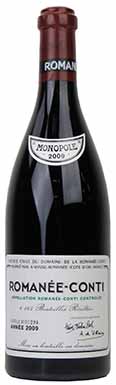

Just a little less colour than the Tache. Not a lot on the nose at present. You have to go searching for it. What there...
2009
Domaine de la Romanée-ContiRomanée-Conti Grand Cru Monopole

Domaine de la Romanée-Conti, Romanée-Conti Grand Cru Monopole, Burgundy, France, 2006
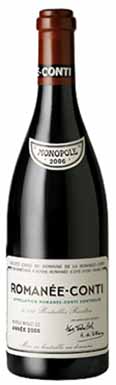
Medium-full weight. Very lovely, almost Musigny-like fruit here. Complex, concentrated and intense. Marvelous harmony. Very, very long and multi-dimensional. This is very special.
2006
Domaine de la Romanée-ContiRomanée-Conti Grand Cru Monopole
Domaine de la Romanée-Conti, Romanée-Conti Grand Cru Monopole, Burgundy, France, 2005
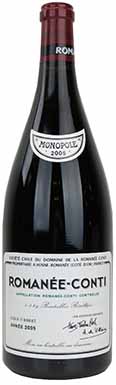
Medium-full colour. Ethereal nose. A lighter wine than many of these Vosne grands crus. Less new oaky also. This is highly individual and very, very...
2005
Domaine de la Romanée-ContiRomanée-Conti Grand Cru Monopole
Domaine de la Romanée-Conti, Romanée-Conti Grand Cru Monopole, Burgundy, France, 2008
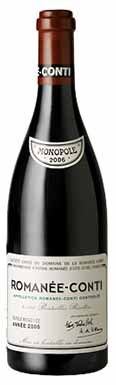
Good colour. Very fragrant, intense, delicate but classy nose. Creamy-rich. Very fine tannins. Lots of concentration here. Heaps of finesse. Brilliant.
2008
Domaine de la Romanée-ContiRomanée-Conti Grand Cru Monopole
Domaine de la Romanée-Conti, La Tâche Grand Cru Monopole, Burgundy, France, 1990
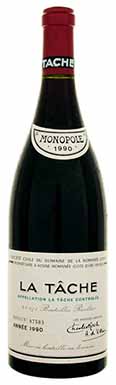
Splendid colour. A touch of reduction at first but this quickly blew away. Pure and definitive and very fine indeed on the nose. Marvelous fruit....
1990
Domaine de la Romanée-ContiLa Tâche Grand Cru Monopole
Domaine de la Romanée-Conti, La Tâche Grand Cru Monopole, Burgundy, France, 2009
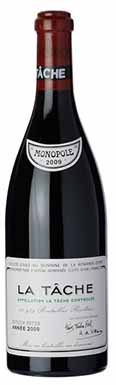
Fine colour. Really quite closed on the nose: even more so than the Richebourg. Lovely perfumed cassis nose. A big, backward, quite tannic wine with...
2009
Domaine de la Romanée-ContiLa Tâche Grand Cru Monopole
Domaine de la Romanée-Conti, La Tâche Grand Cru Monopole, Burgundy, France, 2008
Full colour. Splendidly opulent nose. Rich and succulent. Very good tannins. Rather more integrated and sophisticated than the Richebourg. Very lovely fruit, and very finely...
2008
Domaine de la Romanée-ContiLa Tâche Grand Cru Monopole
Domaine de la Romanée-Conti, La Tâche Grand Cru Monopole, Burgundy, France, 2000
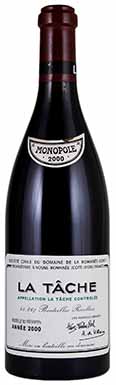
Full, very fresh colour. Marvelous depth and concentration on the nose. Rich, vigorous, crammed with fruit. Impressive grip. Really profound for a 2000.
2000
Domaine de la Romanée-ContiLa Tâche Grand Cru Monopole
Domaine de la Romanée-Conti, Richebourg Grand Cru, Burgundy, France, 2009
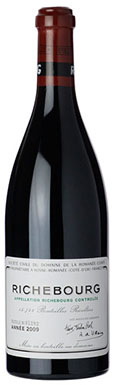
Fine colour. Rich, closed, powerful and concentrated on the nose. Lots of wine here. Full bodied. Very good tannins. Profound and multi-dimensional. Excellent fruit. Splendid...
2009
Domaine de la Romanée-ContiRichebourg Grand Cru
Domaine de la Romanée-Conti, La Tâche Grand Cru Monopole, Burgundy, France, 2006
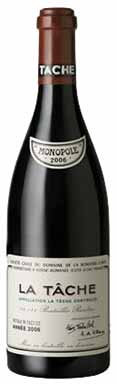
Good colour. The nose is a bit hidden. But it is evident that this is a big step up on the Richebourg. More concentration. More...
2006
Domaine de la Romanée-ContiLa Tâche Grand Cru Monopole
Domaine de la Romanée-Conti, Romanée-St-Vivant Grand Cru, Burgundy, France, 1999
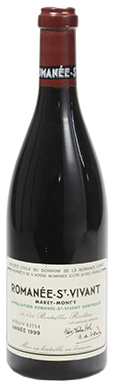
Good colour. Very lovely nose. Now just about ready. Splendid fruit here. Medium-full body. Marvelously intense, harmonious and classy. Very long. Very complex. Very fine...
1999
Domaine de la Romanée-ContiRomanée-St-Vivant Grand Cru
Domaine de la Romanée-Conti, Grands-Echézeaux Grand Cru, Burgundy, France, 1999
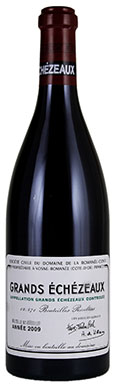
Medium-full colour. Now just about mature. Fullish, slightly four square nose. This softened up quickly. Fragrant, relaxed, poised and elegant. On the palate fullish body....
1999
Domaine de la Romanée-ContiGrands-Echézeaux Grand Cru
Domaine de la Romanée-Conti, Montrachet Grand Cru, Burgundy, France, 2006
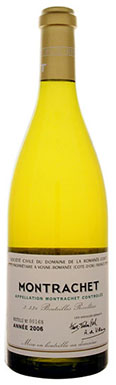
Rich, fat, oaky and quite exotic. Sumptuous and vanillary, yet very good grip. Underneath very minerally. Full bodied. Very ripe fruit. Honeyed and opulent and...
2006
Domaine de la Romanée-ContiMontrachet Grand Cru
Domaine de la Romanée-Conti, La Tâche Grand Cru Monopole, Burgundy, France, 2007
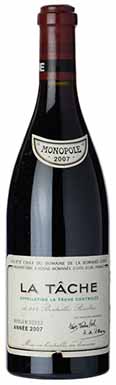
2007 La Tâche was restrained and elegant, with an alluring bouquet of bright red fruit such as pomegranate and cranberry, plus a bit of the...
2007
Domaine de la Romanée-ContiLa Tâche Grand Cru Monopole
