
Domaine de l’Hortus: Introducing the Naked Venus


Andrew Jefford tastes ‘the enduring classics of a recovered tradition’...
There’s no reason why a beautifully sited vineyard should produce outstanding wine. Vines are eyeless, as well as aesthetically illiterate; what matters to their stomata is the play of light, wind and warmth on their leaves, and the comfort and sustenance they can draw from their anchored roots.
A dull, stony rise in the Médoc may be vastly superior, in terms of vine performance and fruit balance and complexity, to an entrancing slope in Provence or the Cape.
It’s gratifying for us primates, though, when the two do go together. No one who has ever visited the Pic St-Loup vineyards of Domaine de l’Hortus will forget them; I don’t know any vineyard in Southern France more beautiful than this on a sunny morning in spring, a languid summer dusk, or a bright, crisp winter day.The vines are banked on two opposing slopes: one underneath the brilliant, south-facing white Cretaceous limestone cliffs of Hortus; the other in shadier conditions beneath the long north-facing drop of Pic St-Loup itself and its Jurassic limestones. The inherent drama of the scene testifies to the force of the collision, around 40 million years ago, of the Eurasian plate and the Iberian plate, centred on the Pyrenees but whose effects were seen way over here in eastern Languedoc.
Pines, holm oaks and the delicate tangle of garrigue-scrub plants like mastic, buckthorn, smilax and mock privet filter the falling light, and two ruined castles, the châteaux of Viviourès and of Montferrand, survey the scene from each ridgeline, lending it a little perspective.
Back in the 1970s, an agricultural student called Jean Orliac used to climb Hortus – and looked down, when belayed at the cliff’s midpoint, at the landscape below. “Some was planted but most was abandoned,” he remembers, “and the old vineyards were full of little pines. It had been destroyed by the frosts of 1956 and by low prices.”
The varieties were wrong, too: Aramon couldn’t make good wine; Carignan refused to ripen successfully here. He knew from his university studies, though, that the botany department used to visit this place with groups of students, since conditions were so different beneath the two slopes that you could find two entirely different sets of plants in close proximity. That, he reasoned, would surely be propitious for winemaking. The perfect conditions for both whites and reds, for example, or for both Syrah and Mourvèdre: the new ‘improving’ varieties now being suggested for red wines.
In any case, this was cheap land which no one wanted, whereas he had been unable to get a tenancy on more successful (and productive) vineyards elsewhere.His hunch came good. The south-facing land underneath the cliff of Hortus was not only warm in itself, but the cliff reflects further heat. “In spring, it can be 5˚C warmer up there than outside the front door,” says Jean – and Mourvèdre ripens impressively on the limestone rubble. Underneath the north-facing Pic, by contrast, where white oaks and pubescent oaks take over the relay from the holm oaks of the southern side, Syrah is happy and freshly scented as it rarely is elsewhere in Languedoc. The cooler land on the valley floor, with its alluvial white soils, suits white varieties.
Orliac also realized that the process of crafting serious fine wine in a region where these traditions had been destroyed as comprehensively as they had in the Languedoc would take time. He began, in the 1980s, by taking his fruit to the local co-operative, where its quality was systematically obliterated in Aramon-led cuvées. “I was fine with that since I knew that the young vines wouldn’t have produced anything outstanding anyway.” He only began producing his own wine in 1990. The family are still at it, though now there are 80 ha in several sites, including 20 ha at some distance from the winery near the Lac de Cécélés.
“A great wine needs two if not three generations. The important thing is not to lose perspective, and to learn from your mistakes.” Three sons (viticulturalist François, marketer Yves and winemaker Martin) now work with him, as does his law-trained daughter Marie, on the legal and accounting side of the business. There have been changes: higher planting densities, for example, to avoid the need for green harvests; lots of compost to raise soil quality; varietal tweaks for the white (the family are easing back on Viognier while the Roussanne has gone from the Grande Cuvée altogether; step forward instead Sauvignon Gris and Petit Manseng). The latest addition is a new wine: Le Dit de l’Hortus.
This is a single-parcel, single-variety wine released whenever the quality justifies it. “We thought about it for a long time,” said Martin, “and finally we did it, in 2016. We’re trying to say that it’s not just in the north of France that you can have great single vineyard wines, but it’s possible in the south, too.” “And no wood,” adds Jean, with a smile. “It’s the naked Venus.”
I had a chance to taste the selection below in early January. Any wine drinker who loves the allusive grandeur and sense of place of Languedoc wines but who dislikes their occasional tendency to excess should seek out the range of Domaines de l’Hortus (and the second and third wines, Bergerie de l’Hortus and Le Loup Dans La Bergerie). They are elegant, fresh and fine-grained: the enduring classics of a recovered tradition.
Andrew Jefford’s top wines from Domaine de l’Hortus:
Domaine de l'Hortus, Grande Cuvée Blanc, Val de Montferrand, Languedoc-Roussillon, France, 2017
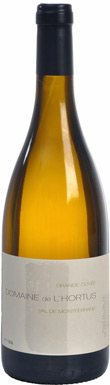

The Pic St-Loup AOP is, for the time being, only available for red wines – though the whites in this comparatively cool, moist zone of...
2017
Domaine de l'HortusVal de Montferrand

Domaine de l'Hortus, Grande Cuvée Blanc, Val de Montferrand, Languedoc-Roussillon, France, 2016
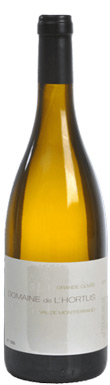
The 2016 blend sees 50% Chardonnay with 20% each of Sauvignon Gris and Viognier, plus 10% Petit Manseng. The wine is a fuller gold in...
2016
Domaine de l'HortusVal de Montferrand
Domaine de l'Hortus, Grande Cuvée Blanc, Val de Montferrand, Languedoc-Roussillon, France, 2014
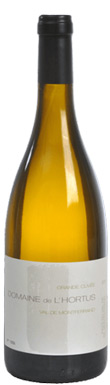
The percentage of Chardonnay in the 2014 vintage is higher still than for its younger peers, at 60%, with 20% Viognier, 15% Sauvignon Gris and...
2014
Domaine de l'HortusVal de Montferrand
Domaine de l'Hortus, Grande Cuvée Rouge, Pic St-Loup, Languedoc-Roussillon, France, 2016
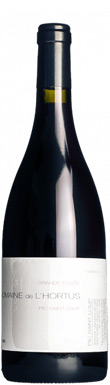
In contrast to the white wine, the blend of the Grande Cuvée red has been settled for a long time. It is 60% Syrah (never...
2016
Domaine de l'HortusPic St-Loup
Domaine de l'Hortus, Grande Cuvée Rouge, Pic St-Loup, Languedoc-Roussillon, France, 2013
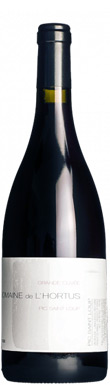
The 2013 season was a long and relatively cool one for the Languedoc, with the latest harvest ever recorded at the domain. This dark wine...
2013
Domaine de l'HortusPic St-Loup
Domaine de l'Hortus, Grande Cuvée Rouge, Pic St-Loup, Languedoc-Roussillon, France, 2011
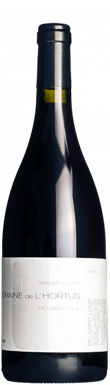
Another dark wine which has retained its colour well and shows no visual sign of ageing. After the Burgundian 2016 and the Italianate 2013, the...
2011
Domaine de l'HortusPic St-Loup
Domaine de l'Hortus, Grande Cuvée Rouge, Pic St-Loup, Languedoc-Roussillon, France, 2009
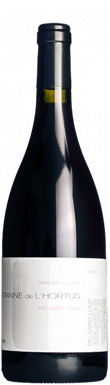
This vintage was as warm and generous in Languedoc as it was everywhere else, producing a small harvest of rich wines. Of the vintages I...
2009
Domaine de l'HortusPic St-Loup
Domaine de l'Hortus, Grande Cuvée Rouge, Pic St-Loup, Languedoc-Roussillon, France, 2005
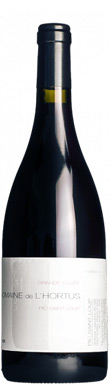
This wine is still dark, with a russet-garnet hue. Truffle, mushroom and crushed acorn scents make this the only wine of the series to have...
2005
Domaine de l'HortusPic St-Loup
Domaine de l'Hortus, Le Dit de l'Hortus L'Ombrée, Pic St-Loup, Languedoc-Roussillon, France, 2017
In the 2017 vintage, the Dit is a Syrah parcel from a mid-slope site underneath Pic St-Loup itself. It's north-facing, hence ‘L’Ombrée’, meaning ‘the shadowed...
2017
Domaine de l'HortusPic St-Loup
Domaine de l'Hortus, Le Dit de l'Hortus La Soulane, Pic St-Loup, Languedoc-Roussillon, France, 2016
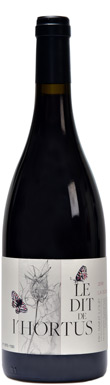
Jean Orliac was originally from the Pyrenees, and ‘Soulane’ is a southwestern dialect word for a sunny field. The Dit 2017 is a pure Mourvèdre...
2016
Domaine de l'HortusPic St-Loup
