
Emma Rice: The Winemaker’s Reserve – a Decanter review
English winemaker Emma Rice, former head winemaker at Hattingley Valley, has launched her first limited-edition sparkling wines under her own name – a topsy-turvy duo some aged on lees upside down and some on their sides for 13 years.


Renowned for her work as head winemaker at Hattingley Valley and as a consultant to multiple English winemaking projects, Emma Rice needs little introduction to those following the English wine scene.
Now embarking on a new journey as an independent consultant, the award-winning winemaker has recently released her first limited-edition sparkling wines under her own name.
And they are rather special: created during her early years making wine in the UK, the batch of her 2009 vintage sparkling wine from the South Downs was, by happy coincidence, left on lees – half upside down and half on their sides – for 13 years.
Released in pairs, the En Point (a play on en pointe in French) and Sur Lattes duo showcase a fascinating diversity of texture and flavour.
Dive into the story behind them in Decanter’s exclusive report.
Scroll down to notes and scores of the Emma Rice Winemaker’s Reserve
The first steps into the wine world
A bottle of Krug 1979 inspired Emma Rice’s journey into wine when she was 19 years old. After graduating from Plumpton as one of ‘the first cohort of six to graduate in the UK’ from its newly created BSc in Viticulture & Oenology, Rice soon ventured abroad to make vintages in Napa and Tasmania.
The experience working in Tasmania – especially the ‘lack of organisation’ in the winery she worked in – hadn’t been the most positive, and she returned home in 2008, originally intending to head back to Australia again.
‘Immediately upon returning and catching up with friends I’d studied with at Plumpton College, it became very clear that the industry was expanding and there was a lack of qualified people around to help it grow, so I decided to stay and see how it might all transpire,’ said Rice.

Winemaking in England: ‘spreading your bets’
After setting up her own wine laboratory and consultancy in Sussex – where she was born and raised – Rice received an invitation from lawyer Simon Robinson to work on his new project, which later became known as Hattingley Valley Wines.
Challenges were expected – especially the unpredictable weather in England. ‘Sharp focus’ and ‘infinite patience’ are essential when making wine in such a climate, while battling ‘mildews, rots, or insects that are trying to take over’.
As is usually the case for a wine estate, money is locked in for a long period before any returns are seen.
Drawing on insight from Champagne houses sourcing grapes across regions, Rice soon realised the importance of a diverse supply: ‘restricting oneself to one vineyard site or one region in our marginal climate will severely limit the volume, if not the quality, of wine you can produce.’
‘It is not a popular opinion within the wine world,’ she admitted, ‘but sometimes, it isn’t about the vineyard – it’s about how the winemaker can make the best of adverse conditions,’ and flexibility and adaptability are key.
Such was the strategy she took on at the initial stage of the Hattingley project: ‘I started to take on contract winemaking clients and encouraged Simon to grow the winery to accommodate far more than he would produce,’ she recalled.
And her foresight was rewarded. ‘This decision allowed the winery to grow faster than ever anticipated.’

The ‘Emma Rice’ identity
During her time at Hattingley, Rice crafted numerous wines in addition to the estate’s own brands, both in Hampshire and further afield. These projects included Raimes, The Grange, and Roebuck.
Rice considers the use of oak and ‘a generally oxidative approach to primary processing’ to be the defining features of her winemaking style.
‘I really feel that wine should be immediately enjoyable for the final consumer and that they (should) enjoy it instinctively, rather than having to have it explained to them or think about it too much.’
That said, there are also occasions when she decides to follow her instincts and make alternative decisions – such as in the case of her new release.
Striking out alone
In 2014 and 2016, Rice became the first female winemaker to be awarded the UKVA Winemaker of the Year award twice (the UKVA later merged into WineGB).
‘Being a successful winemaker requires a certain level of ego; otherwise, you’d never take the risks required to make good wine, but it can come back to bite you if you start to believe your own hype,’ Rice told Decanter.
In 2022, Emma Rice made the surprising decision to leave Hattingley Valley and become an independent winemaking consultant.
Recalling the decision, she said on her website: ‘Although the wines and the winery felt like mine, they weren’t. I decided that if I was to continue to work so hard, it needed to be for myself.’
The first wines released under her own name last October are the ‘Winemaker’s Reserve’ – a pair of sparkling wines from the 2009 vintage.
More precisely, they are two variations of the same wine, sourced from the chalky soils of the South Downs.

‘En Point’ and ‘Sur Lattes’
‘2009 was a successful year for English wines, thanks to warm days and cool nights during the ripening season,’ said Rice. Sugars and acids remained high, and due to the limited equipment at the winery where the wine was made, there was no malolactic fermentation.
There was no oak influence either, making the 2009 ‘unique’ among the wines Rice has made for numerous clients and brands so far.
‘I always knew the wine would need age and time on lees to soften and develop, although I will admit I didn’t originally plan on it taking 14 years!’ she said.
The base wine is a blend of 70% Chardonnay for ‘backbone and structure’ and 30% Pinot Meunier for the ‘flesh’ of the blend – contributing softness and approachability.
Those were her early years working with English wines, and she had the idea to experiment with the impact of bottle position on ageing. With the 2009 wine she had made, she riddled half the bottles in 2012, leaving the other half lying down in a stillage.
At the time, she was under contract with Hattingley Valley and couldn’t release these bottles under her own name. As a result, they remained half upside-down and half on their side for 13 years – until she left the company in 2022 and resumed working on them.
The names and even the labels nod to which wines are which. Those aged lying down (sur lattes) have their label the ‘right’ way round, while those kept up-ended (en pointe) have their label upside down.
In August 2023, these bottles were finally disgorged with a dosage of 8g/L and acidity of 10.3g/L, followed by a year of ageing under cork.
Our verdict: The Winemaker’s Reserve

I found that the En Point (aged upside-down) edition of the 2009 vintage is noticeably more autolytic than the ‘Sur Lattes (aged on their sides)’ edition, with buttery, creamy characters in addition to dried yellow fruits and baked pastry notes.
The palate is well-developed, showcasing marmite, sweet spices and ginger, refreshed by zingy citrus acidity. Earthy and nutty characters linger on the finish.
The Sur Lattes edition, likely due to the larger surface area of lees contact, was significantly fresher and more vibrant than its sibling.
Toasty on the nose, with citrus peel, confected peach, and marzipan in addition to autolytic creaminess.
The citrus zing provides drive and tension on a complex palate of brioche, lemon and sourdough, with an umami tang, leading to a profound, nutty and saline finish.
What’s on the horizon
Leaving behind a life of running a large winery, Rice is ‘enjoying’ her consultancy work with clients from smaller-scale, family-run vineyards – ‘both newcomers and those who have been operating for decades, through to some of the largest producers in the country.’
A lot of the pleasure without the pain, as she put it.
‘I confess I sometimes miss the camaraderie of harvest and the joy that comes from following a wine from grapes in the vineyard through to pouring it in front of the sommeliers of London, Melbourne, or New York on sales trips. Hence the decision to buy back this wine to start my own small operation.’
‘My ultimate dream is a garage winery where I live in Brighton & Hove, making small batches of really fine wine sourced from the best vineyards across the country. I’m happy to leave the growing to others, but making the wine I like is something I want to have full control over. I’m in the process of looking for financing and potential partners.’
At the moment, Rice is working on a co-labelling project with 67 Pall Mall.
‘Early stages, but we are doing a dosage project with a wine I made in 2020. Can’t say much more yet, or when it might hit the shelves, but it’s been great fun working with them so far.’
The pair of Winemaker’s Reserve bottles is available directly from her website at £250 per set.
Also from Four Walls Wine Company and Brunswick Fine Wines.
Emma Rice’s Winemaker’s Reserve: our review
Related articles
Emma Rice, Winemaker’s Reserve Sur Lattes, England, United Kingdom, 2009
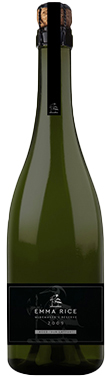

Fresher in character than its sibling – the same wine stored ‘en point’ (upside down) – the ‘sur lattes’ (stored on its side) edition displays...
2009
Emma Rice

Emma Rice, Winemaker’s Reserve En Point, England, United Kingdom, 2009
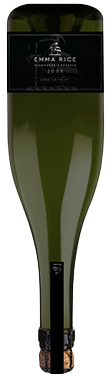
Stored upside down during 13 years of cellaring, the 'en point' edition of the 2009 vintage is noticeably more autolytic than the 'sur lattes’ (stored...
2009
Emma Rice
