
First taste: Gaja Barbaresco 2015 wines rated


John Stimpfig gives his views on Gaja's Barbaresco 2015 wines, including the single vineyard bottlings, and interviews Gaia Gaja herself at an event hosted by Armit Wines in London...
Gaia Gaja was recently in London to present the famous Piedmontese winery’s three single vineyard Barbaresco 2015 wines, which are all now back in the DOP after her father Angelo dramatically took them out more than two decades ago.
Scroll down to see the tasting notes & scores
Gaia Gaja has inherited the family’s trait for ploughing its own furrow. Consequently, she is not remotely frightened of challenging accepted wisdom and changing course.
Certainly, there have been subtle and significant changes aplenty in the last few years. Most notably in the vineyards. ‘Historically, we looked for concentration, structure and body in Piedmont,’ said Gaia Gaja, who gave a similar view to Decanter’s Andrew Jefford in 2017.
‘But for the last 10 or 15 years, we have been looking less and less for ripeness and more and more for elegance, finesse and delicacy.’
And there have been changes in the winery as well. ‘We’re using less new oak, playing more with the lees and don’t do any racking unless it is a particularly tannic vintage,’ she said.
The effect has been to give recast recent vintages a vibrancy and tension that wasn’t there in the 1990s, where power and heft were more the order of the day. ‘To me Nebbiolo is a discreet variety that doesn’t come with a loudspeaker to announce its arrival. I like to describe it as being kissed by a beautiful ballerina,’ says Gaja.
Perhaps for that reason we should reappraise when we should broach these rare wines. Gaja certainly believes that that is the case. ‘I think too many people underestimate the beauty of young Barbaresco wines. You can certainly drink these wines when they are youthful. In fact, if you don’t you are missing out.’
She said that they are particularly attractive for the first five years, after which they shut down for a similar amount of time. ‘The 2010s are in a sleeping phase right now. But I would drink the 15s for another year or so.’
Read Stephen Brook’s full report on Barbaresco 2015 and 2013 Riserva wines here
About the Barbaresco 2015 vintage
Barbaresco was generally considered to have prospered in the 2015 vintage, which was marked by a prolonged heatwave in July and well-timed rain just before harvest.
Some have drawn comparisons with the excellent 2010 vintage.
The Nebbiolo grapes achieved full ripeness in many cases and most producers had harvested by the time rains returned at the end of September, said Brook following his recent tasting of Barbaresco 2015 and 2013 Riserva wines for Decanter premium subscribers.
Gaja Barbaresco is drawn from 22 hectares of vines spread across 14 vineyards. Vines are 40 years old on average and all planted between 250 metres and 300m above sea level.
In 2016, Gaja announced that it would be taking three single vineyard wines, Costa Russi, Sorì Tildin and Sorì San Lorenzo back into the Barbaresco appellation, after having previously declassified them.
Gaja Barbaresco 2015 wines: Tasted
Editing by Chris Mercer and Laura Seal.
You might also like:
Piedmont new releases – Full report
More Barbaresco 2015 wines reviewed here
Decanter wine legend: Gaja Barbaresco 2001
Gaja, Sorì San Lorenzo, Barbaresco, Piedmont, Italy, 2015
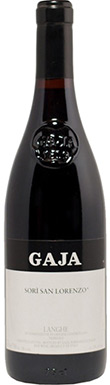

The Sorí San Lorenzo vineyard is situated close to the Tanaro River, which undoubtedly helps moderate the temperature and initiates an earlier flowering period. Its...
2015
GajaBarbaresco

Gaja, Costa Russi, Barbaresco, Piedmont, Italy, 2015
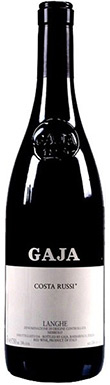
From a cooler, hillside site to the southeast of the appellation with heavier clay and limestone soils. This expresses a cooler style of Nebbiolo, leaning...
2015
GajaBarbaresco
Gaja, Sorì Tildin, Barbaresco, Piedmont, Italy, 2015
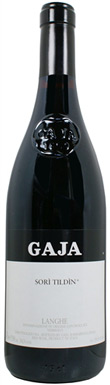
High density vines planted in a south-facing amphitheatre made for perfect ripening in 2015. This is substantial and fleshy with a deeper colour. Beautiful scents...
2015
GajaBarbaresco
Gaja, Barbaresco, Piedmont, Italy, 2015
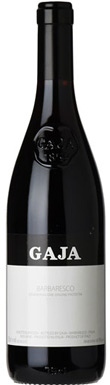
Classic Nebbiolo perfume of violet and raspberry, followed by red cranberry and cherry fruit. Sweet, slightly creamy oak; this is approachable and – although it...
2015
GajaBarbaresco
