Henschke single-vineyard wines: A Decanter Fine Wine Encounter Masterclass
Johann Henschke, sixth-generation winemaker of his family estate in South Australia’s Eden Valley, took guests at the recent Decanter Fine Encounter in Singapore through mini verticals of Hill of Grace and Mount Edelstone as well as two other single-vineyard wines.


It was a full house for the much-anticipated final masterclass of the day at the Decanter Fine Wine Encounter Singapore, showcasing iconic single-vineyard wines from Henschke, one of Australia’s oldest and most revered wineries.
And to make the experience even more special, masterclass guests were guided through the tasting of eight wines, including mini-verticals of Hill of Grace and Mount Edelstone, by the family’s sixth-generation winemaker, Johann Henschke.
Scroll down to see tasting notes and scores for all eight wines from the Henschke masterclass
Established in 1868, Henschke is one of Australia’s oldest wineries, founded by Johann Christian Henschke who fled German-speaking Silesia with his family in 1841 due to persecution against their Old Lutheran religion by the Prussian state.
By the time he docked in Adelaide, after the four-month journey by cargo ship, he had lost his wife and two of their four children.
Johann Christian eventually moved to the Barossa, where many German-speaking immigrants had settled, and in 1860 set up his home in the town of Keyneton where six subsequent generations of his Henschke descendants have called home.
The current custodians are fifth-generation Stephen and Prue Henschke, winemaker and viticulturalist respectively.
Since the 1980s, this trailblazing husband-and-wife team have built on the visionary work of Stephen’s father, Cyril Henschke, the fourth-generation winemaker, who pioneered single-vineyard wines.

Location, location, location
The Barossa wine region comprises the Barossa Valley in the west – the fertile bank of an old river, with elevations of about 300m – and the Eden Valley to the east.
Despite its name, the Eden Valley is actually a series of valleys formed within an ancient mountain range that climbs past 600m and has a far more extreme continental climate than the Barossa Valley, with limited areas suitable to plant vines.
But recognising the importance of site isn’t the only legacy the Henschke ancestors have passed down.
South Australia is blessed with ancient, own-rooted vineyards free from phylloxera, with the world’s largest surface area of old-vine plantings found in the Barossa.
Henschke owns several of these, which contribute to their wines’ extraordinary complexity.
This includes a parcel of the 16ha Mount Edelstone vineyard, planted in 1912, and a few rows of vines in the 4ha Hill of Grace vineyard, planted in 1860.
These ancient soils and their vines are nourished and tended by Prue Henschke, who farms organically and biodynamically, and is internationally recognised for her innovations in sustainable grape growing and vineyard management.
While both Hill of Grace and Mount Edelstone sit at 380m to 400m above sea level, the former lies about 4km further north and has a mainly northerly aspect, while the latter faces east.
Both the neighbouring Cyril Henschke (planted 1988) and Wheelwright (1968) vineyards are about 10km further south, but in a cooler, rainier site between 445m and 470m.
All have free-draining sandy loam soils over various types of clay, but with different bedrocks: blue slate (Hill of Grace), micaceous schist (Mount Edelstone) and weathering gneiss/micaceous schist.

Single-site immersion
A unique aspect of this Henschke masterclass was the fact it was both a horizontal tasting (tasting different wines across the same vintage) and a vertical tasting (the same wine across different vintages).
Keen golfer Johann likened it to standing on a putting green, with the tasters having the opportunity to look at the wines from several angles – both single vineyards and vintages – and observing the various terrains and altitudes.
The big drawcard was undoubtedly the mini vertical tastings (the new-release 2021s as well as the 2015 and 2005 vintages) of Henschke’s two most famous single-vineyard Shirazes.
Mount Edelstone is arguably Australia’s longest consecutively produced single-vineyard wine, first released in 1952 by Cyril Henschke with the vineyard name proudly on the label.
Cyril made the first single-vineyard Hill of Grace Shiraz in 1958, when the original vines were already almost 100 years old, planted by a Henschke ancestor in 1860.

Tasting terroir
When asked what the biggest difference between the two iconic wines was, Johann’s reply was simple.
‘It’s just the location of the vineyard. That’s what it boils down to,’ he said.
‘Hill of Grace is at the same altitude as Mount Edelstone, but we’re in a warmer place, with a different aspect, and slightly different soils.
‘So there’s a different shape and feel to Hill of Grace. It almost feels like it is not part of the Eden Valley.
‘And if you’ve tasted Shiraz widely across the Barossa Valley you might find some of those characters, but I can guarantee you there are no Barossa Valley grapes in there!’
The Wheelwright Shiraz, launched in 2015, has a different shape and feel again – much more Pinotesque – coming from a vineyard planted at a higher altitude and in contours by Cyril, 100 years after the winery’s founding.
A single-site Cabernet Sauvignon has been made from what is now known as the Cyril Henschke vineyard since 1978.
When a virus struck, Prue and Stephen replanted it in 1988, adding some Cabernet Franc (0.4ha) and Merlot (0.7ha) to join the 2.1ha of Cabernet Sauvignon.
‘My grandfather Cyril never left the Barossa,’ Johann told the audience.
‘He’d never tasted great Burgundies or knew what terroir was, but it’s clear he understood that there was a uniqueness and a distinct character that came from these individual vineyards.’
‘When you’re on your putting green and you’re looking at the wines in different ways, hopefully you can identify that unique vineyard character clearly too.’
Watch the video highlights from the Decanter Fine Wine Encounter Singapore featuring Johann Henschke
Henschke masterclass: tasting the single-vineyard wines
(Wines are listed in the order they were tasted)
Related content
Four decades of Château Margaux: A Decanter Fine Wine Encounter Masterclass
Barossa Shiraz 2023: Vintage report and 40 top-scoring wines
A vintage to remember: Henschke 2021 single-vineyard releases
Henschke, Cyril Henschke Vineyard, Eden Valley, South Australia, Australia, 2021
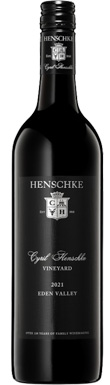

From a cool, north-facing vineyard at 470m first planted in 1969 by Johann Henschke's grandfather Cyril then replanted in 1998 by his parents. The vineyard makeup, which includes Cabernet Franc and some Merlot, means there's the potential to make a classic Left Bank Bordeaux, but exceptional quality of Cabernet Sauvignon in 2021 – fully ripe and beautifully expressive – warranted its 99% inclusion. The 1% Merlot, Johann explains, adds a plushness that you'd notice if it wasn't there. Vibrant, inky blackcurrant, black cherry and sloes, with a lifted menthol note of dried sage and mint. Complex and elegant but so approachable thanks to that pleasurable softness, yet still with the structure from fine tannins and bright acidity to see it continue to hold shape and balance for decades yet.
2021
HenschkeEden Valley

Henschke, The Wheelwright Vineyard, Eden Valley, South Australia, Australia, 2021
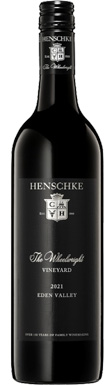
Planted in 1968, a century after Johann Christian Henschke released his first wines, this was fourth-generation Cyril Henschke's foray further down into the Eden Valley. Johann explained the high-altitude, north-facing contoured vineyard frustrated his grandfather, who tried until the early 2000s to make a wine from that it he was happy to release. But since the vines turned 50 years old in 2018, they have really started to express themselves, through consistent fruit quality and super-fine tannins. A more delicate, Pinot-esque side of Shiraz, that showcases both the Eden Valley character as well as the vineyard: blueberries, raspberries, blood plums and violets with bth a graceful stoney mineral quality and a mellow chocolate-orange note.
2021
HenschkeEden Valley
Henschke, Mount Edelstone Vineyard, Eden Valley, South Australia, Australia, 2021
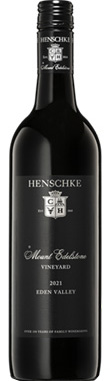
Impressive, expressive and intense, this is a brilliant vintage of what is Australia's longest consecutively produced single-site wine (since 1952), from a vineyard planted in 1912. The heady aroma leaps from the glass: captivating lifted brambles, dark plums, sagebrush, bay leaf and earthy spices, which continue on the opulent palate, showing the the depth and character of those old-vines. Supporting the impressive fruit richness are dense, mocha-like velvety tannins, musky oak notes, and a cool, slatey acidity that gives freshness alongside a tingling, lingering pepperiness. It's already disturbingly delicious, but needs two decades at least to show what it's truly capable of.
2021
HenschkeEden Valley
Henschke, Mount Edelstone Vineyard, Eden Valley, South Australia, Australia, 2015
Named for the yellow opals once found in the red clay loam soils of this area, Mount Edelstone is always rich and complex – more earthy and musky in spice compared to the sweeter baking spice notes of Hill of Grace. At 10 years old, this vintage is entering an interesting phase, the hallmark aromas and flavours of plum, blackberry, pepper, bay and sage evolving and taking on more savoury secondary and tertiary notes, like black olive tapenade and dark fruitcake. The vines were 103 years old in 2015 and that complexity and intensity of character is asserting itself, and the velvety tannins becoming more silky, melting into the opulent fruit.
2015
HenschkeEden Valley
Henschke, Mount Edelstone Vineyard, Eden Valley, South Australia, Australia, 2005
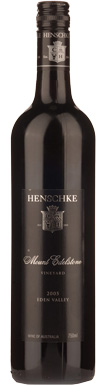
At 20 years from vintage – when the dry-grown Shiraz vines in the Mount Edelstone vineyard were 'just' 94 years old – this 2005 is blooming, says Johann Henschke, the sixth-generation winemaker of his family's estate. It still showcases the trademark herbal character of this single site, alongside the concentrated fruit core, but is now slipping into a silkier, more savoury phase as the wine matures. Notes of smoked meat, sweet leather, mocha and those earthy, peppery spices join rich damsons and mulberries on the supple palate, with a balsamic cherry and menthol lift adding great freshness alongside the silky tannins.
2005
HenschkeEden Valley
Henschke, Hill of Grace Vineyard, Eden Valley, South Australia, Australia, 2021
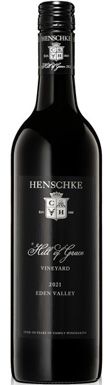
I was lucky enough to taste the Henschke single-vineyard releases from the heralded 2018 vintage, which Johann's father Stephen Henschke called 'the standout vintage of the decade'. Is the 2021 already the standout of this decade? Time will tell, but it's another latent rippling, muscular beauty, already teasing us with the further complexity and elegance still to come. Opulent, heady perfume of blue forest fruits, blood plums and raspberries – amazing fruit purity and vibrancy – joined by lifted florals, black pepper, incense and sweet baking spices. The tannins are firm but superfine, the oak present but not obtrusive, and the finish almost endless, with lingering pepper zip and wet stone freshness. Unlike the 2021 Mount Edelstone, this isn't anywhere near ready to broach, but give it a few years (better yet a few decades) to see it fulfil that potential.
2021
HenschkeEden Valley
Henschke, Hill of Grace Vineyard, Eden Valley, South Australia, Australia, 2015
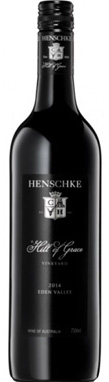
With 10 years of bottle age, this 2015 is just starting on its journey from a primary fruit spectrum into more secondary characters, perhaps a little less seductively expressive than the 2021 in the glass but no less complex. It is perhaps at this stage of maturity when the vineyard character – particularly the spice – between Mount Edelstone and Hill of Grace is the most evident: the former more warm, earthy and musky; the latter with sweeter baking spice and incense notes. Here, gorgeous suede-like tannins support rich forest fruits and dark plums, smoked meat, dried garrigue herbs, exotic black tea leaves, liquorice and cigar box. Incredibly layered and promising so much more. The vineyard (and wine) takes it name from the Gnadenberg Lutheran church which stands opposite, itself named for the region in Silesia from which Johann Christian Henschke emigrated in 1841.
2015
HenschkeEden Valley
Henschke, Hill of Grace Vineyard, Eden Valley, South Australia, Australia, 2005
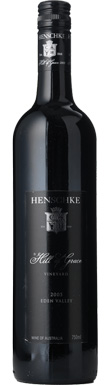
It's a real treat to be able to taste Australia's most famous single-vineyard wine, whose oldest contributing patch, the 0.56ha Grandfathers block, was planted more than 160 years ago. And even more of a treat to taste it when it is just entering it's first phase of tertiary maturity. At 20 years since vintage, the impact of the old vines on both flavour and texture is really becoming evident. Earthy, stony freshness and beautifully expressive – intense but elegant – where sleek satiny tannins glide across a seemingly endless array of flavours: mulled wine spices, undergrowth, plums, blood orange, wild raspberries, exotic incense, smoked meat, burnished leather and pot pourri. Has many years left, though at a lovely drinking point now.
2005
HenschkeEden Valley
