An interview and tasting with Jean-Louis Chave


Family-owned Domaine Jean-Louis Chave is one of the finest and oldest estates in the northern Rhône. John Livingstone-Learmonth catches up with the man himself...
Jean-Louis Chave is vexed. ‘Why would anyone want to drink what is a grand vin, and find it is skinny, not rich?’, he asks.
He is referring to the current trend to make white Rhônes in a pared-back manner, as if they can be successful as aperitif wines, for immediate drinking.
‘Whites have drastically changed,’ Chave continues. ‘How people talk about them, using Burgundian vocabulary; words like “taut” and “tense”, words that used to be “honey-like”, “soft” and “rich”.’ He says white Hermitage is a wine based on glycerol, suited to drinking with a meal: ‘You can’t disconnect it from the food’.
These insights into white Hermitage are almost more revealing than when discussing the red. The blending process, to which the Chave family has been wedded for ever, with no trendy, plot-specific micro-cuvées, is very delicate when applied to the white. Achieving balance in a wine that is rich, but also low in acidity, is a stimulating challenge for him, as it was for his father Gérard.
Focussed vision
Since returning to the Rhône in 1992 after a few years on walkabout, Chave has striven to refine the domaine’s top-flight status, but also to amplify its outlook. There has been a concerted drive to produce high quality St-Joseph from the rugged granite escarpments of its native Ardèche, on the right bank of the Rhône. ‘My challenge is to make good wines from this side of the valley,’ he affirms.
In 2009, the high-on-potential but then tired Clos de l’Arbalestrier was bought, just down the road from the Chave cellars in the quiet village of Mauves. The Arbalestrier setup was favourable but complicated. In his usual meticulous way, Chave has researched the story of this estate, which dates back to 1528. Bought in 1956 by the Florentins, a family of doctors, the magic amphitheatre of 2.7 hectares had been farmed organically, but lacked investment.
The perimeter of the clos’ southern side is lined with Mediterranean plants, trees and bushes, while the northern side is planted with trees and bushes more commonly found in Britain. Amid this detailed, well-researched horticulture, Chave can be found high up on the hills excavating granite escarpments to shape them into dry-stone walled terraces for his St-Joseph Syrah. One of his most symbolic plots is at Lemps, the little village of origin of the Chave family.
Detail again features in this extremely long-term picture. The dry-stone walls take an age to build, and include small holes to allow nests for birds that eat the worms that can attack the bunches. ‘The moment you plant a vine on a hillside, you must be able to work it rather than disinfect it,’ he says. ‘You can’t talk about terroir if the soil isn’t worked.’

The Jean-Louis Chave style
There has been much investment in recent years: a new vat and vinification cellar built in 2014, and extensions made to the maturation cellars. The new vats allow for softer cap punching, which ties in with the style of his red Hermitage. This is the jewel of the estate, thanks to the 15 hectares (half the domaine area) that club together to provide one of the world’s most notable wines.
‘Because we have plots in several different places, each with a defined character, we like to blend to create a more complete wine. That goes across all our wines. What I do treat differently is the stems – the Hermitage is fully destemmed, and the St-Joseph retains half the stems because its granite-based vines contribute to the freshness of the wine.’
Stylistically, the Chave Hermitage reds these days are more generous than those of the 1970s and 1980s, which reflects the progress of our times in vineyard care and investment. However, a vertical tasting shows consistency through the decades, with a more liberated purity in the wines than the denser and overtly concentrated Hermitages of Paul Jaboulet Aîné’s La Chapelle, its closest comparison until the mid-1990s.
In an age where social media and being ‘out there’ is deemed so important by our society, it is entirely refreshing to spend time with Chave. The intricacy of the human condition and its relationship with our planet are themes that ripple through one’s contact with him, a king in his countryside.
Domaine Jean-Louis Chave wines reviewed:
Abridged version of an article in the June 2017 issue of Decanter
Edited by James Button
Domaine JL Chave, Ermitage Cuvée Cathelin, Hermitage, Rhône, France, 2009
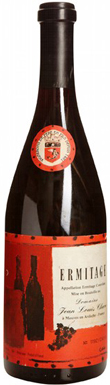

Wonderful wine: combines richness and decisive cut. A heroic, true Hermitage based on Bessards' smoky, close-knit intensity.
2009
Domaine JL ChaveHermitage

Domaine JL Chave, Hermitage, Rhône, France, 2001
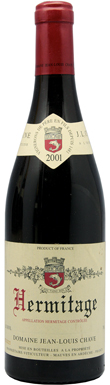
Still surprisingly dark in the glass, with an enticing, gamey, liquorice, animal nose. More gaminess on the bright-acid palate, with herbal nuances and just-ripe blackberry fruit. Very open and juicy, with enjoyably strict tannins and a fresh, long, ferrous, bloody finish. A vintage that has always had acidity and freshness, according to Jean-Louis Chave.
2001
Domaine JL ChaveHermitage
Domaine JL Chave, Blanc, Hermitage, Rhône, France, 2013
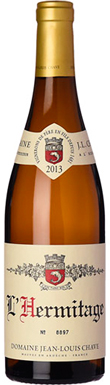
Blossom, aniseed and toast on a closed nose. A wine of delicacy, bears supple weight, a fresh line, with meatiness from a tiny crop to sustain it.
2013
Domaine JL ChaveHermitage
Domaine JL Chave, Hermitage, Rhône, France, 2012
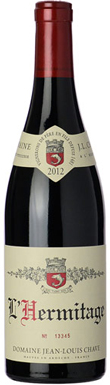
This is still quite closed on the nose, I would certainly hold this until at least 2025 before trying again. There's a new-leather note to the blackberry fruit. It's full-bodied, exceptionally smooth on your tongue. Great concentration but also great freshness. Acidity is perfectly balanced, this is a Hermitage of great liveliness, pep and freshness. Very long finish. The alcohol isn't low, but it's balanced. Long finish. An exceptional wine in the making.
2012
Domaine JL ChaveHermitage
Domaine JL Chave, St-Joseph, Les Serines, Rhône, France, 2014
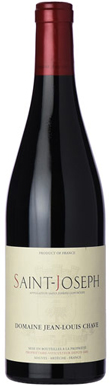
Floral, curvy red fruit nose. Real purity and harmony: aromatic and fine with a spur of freshness.
2014
Domaine JL ChaveSt-Joseph
