
Nebbiolo Prima 2019 and 2020: Producer focus
Stephen Brook profiles three producers and picks his top wines from the 2019 and 2020 Nebbiolo Prima tastings and parties...


Nebbiolo Prima is an arduous but rewarding tasting event for wine professionals, allowing them to taste blind hundreds of wines over five days. In the evenings we can let our hair down. Most years, four wineries host a dual-purpose event: a poured tasting of their wines for journalists, and alongside it, a party for family, friends, and neighbours.
When the journalists emerge from the tasting room, the dinner is in full swing: antipasti, two pastas, meat and more. Platters are brought from the kitchen and guests just help themselves, while sturdy cooks circulate with vats of pasta. At the same time a sideboard is crammed with dozens of bottles, mostly Barolo, some left over from the tasting, others from different vintages.
It’s a party, so I only scribble notes when a particular wine grabs my attention. The attraction is being able to sip and compare different vintages with food, a great contrast with the monastic severity of the tasting room.
The host winery for the event was Giovanni Abrigo in Diano d’Alba, but although it made a fine Barolo Ravera in 2016, its speciality is Dolcetto d’Alba Garabei, from 50-year-old vines, and with a surprising ageing potential. Below are some of the other top wines noted in 2019 and 2020 from the following producers.
M&V Adriano
Marco and Vittorio Adriano are brothers with a winery near Alba in the village of San Rocco Seno d’Elvio. They first began producing and bottling their own wines in 1994. It’s very much a family operation, and since 2014 Vittorio’s daughter Michela has joined the team. A part of the village’s vineyards lie within the Barbaresco DOCG, and the brothers produce two wines with this appellation. The first is a blend of two sites (Bricco and Frati) in San Rocco called ‘Sanadaive’, which is the dialect name of the village; and the other is a single-vineyard wine from the south-facing Basarin in Neive, with its mostly marl soils.
Fermentation takes place in stainless steel, with a moderate maceration period, especially for Sanadaive. Both Barolos are aged traditionally in large casks. Basarin’s richer soils and longer maceration do show in the wine, which is more structured than Sanadaive, the latter being intended for earlier drinking although the average age of the vines is older here than in Basarin.
Giacomo Fenocchio
The sympathetic Claudio Fenocchio took over after his father’s death in 1989, and has maintained the family’s resolutely traditional approach. The property dates back to 1864. He farms 14 hectares, and although the viticulture is essentially organic, with no herbicides or chemical fertilisers, Fenocchio is not certified. Bussia is the estate’s great prize, with 5 hectares of mostly southwest-facing vines on clay, limestone and iron. There are smaller plots, between 0.5 and 1 hectare, in other prestigious sites such as Cannubi, Villero, and Castellero. Villero has the oldest vines, with an average age of 65 years.
Claudio ferments the wines with indigenous yeasts and a maceration of 40 days is not unusual here. The Riserva is ’90 Di’, referring to the fact that the wine spends up to 90 days under a submerged cap in wooden vats, thus delivering an extremely long maceration period. The result is controversial, as not everyone agrees that the wine benefits from such prolonged vinification and ageing. (The 2013, tasted in 2019, packed a punch but was dominated by tannins.)
Monchiero
Based in Castiglione Falletto, Monchiero also own vineyards in Roddi and Verduno, but their Barolo comes from Castiglione. Since 2017 Vittorio Monchiero has been aided by his sons Luca and Stefano. The winemaking is traditional, with submerged-cap fermentation and long ageing in large casks. Bottling began in the 1970s and in the 1990s the family replanted its vineyards. Rocche di Castiglione is the most important site for Barolo: it’s steep, at up to 400 metres, faces southeast, and Vittorio ascribes the wine’s elegance to the sand in the soil.
In contrast to Rocche, there is a less well-known site called Montanello, which faces southwest and has a good deal of clay in the soil. This gives wines of considerable tannic density and structure, which is why it is often made as a Riserva. The generic Barolo is also sourced from their vineyards in Castiglione Falletto.
Stephen Brook’s top Nebbiolo Prima picks from 2019 and 2020
Marco & Vittorio Adriano, Basarin, Barbaresco, Piedmont, Italy, 2016
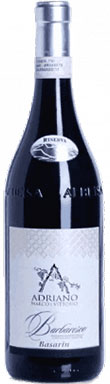

Basarin is a large site in Neive with some exceptionally steep sectors. At its best, as in this vintage, the Adrianos coax impressive balance from...
2016
Marco & Vittorio AdrianoBarbaresco

Marco & Vittorio Adriano, Sanadaive, Barbaresco, Piedmont, Italy, 2017
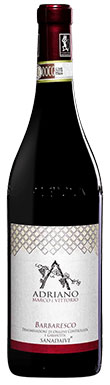
This fine vintage yielded a Sanadaive blend of exceptional quality. There are lifted strawberry aromas on the nose, which is pretty and floral. Quite concentrated,...
2017
Marco & Vittorio AdrianoBarbaresco
Marco & Vittorio Adriano, Sanadaive, Barbaresco, Piedmont, Italy, 2007
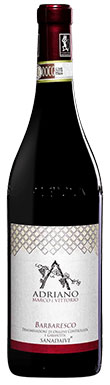
Although the Sanadaive blend of Barbaresco is not intended for lengthy cellaring, this vintage has held up surprisingly well. There is a slightly evolved colour,...
2007
Marco & Vittorio AdrianoBarbaresco
Marco & Vittorio Adriano, Basarin, Barbaresco, Piedmont, Italy, 2013
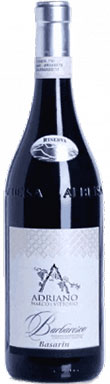
I am not convinced that the additional density of a Riserva style is particularly well suited to the Adriano vineyards. Certainly this is quite evolved,...
2013
Marco & Vittorio AdrianoBarbaresco
Giacomo Fenocchio, Bussia, Barolo, Piedmont, Italy, 2010
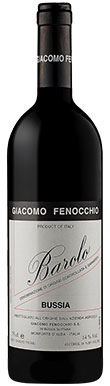
Curiously, this wine did not show well when tasted twice shortly after release, as it lacked depth and persistence, However, it is now in its...
2010
Giacomo FenocchioBarolo
Giacomo Fenocchio, Villero, Barolo, Piedmont, Italy, 2016
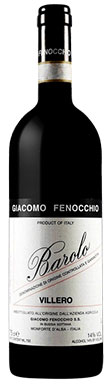
Fenocchio owns a hectare of this cru in Castiglione Falletto, and his parcel is planted with vines that are 65-years-old. This is unsurprisingly very youthful,...
2016
Giacomo FenocchioBarolo
Giacomo Fenocchio, Cannubi, Barolo, Piedmont, Italy, 2009
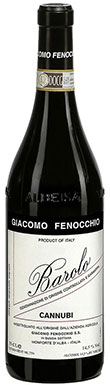
The summer was exceptionally hot in this vintage, delivering ripe and opulent wines that often had a distinct tannic charge too. The nose is generous,...
2009
Giacomo FenocchioBarolo
Giacomo Fenocchio, Villero, Barolo, Piedmont, Italy, 2009
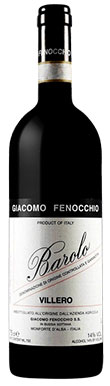
From the same producer in the same vintage, this Villero offers an interesting contrast to the more complex and sturdy Cannubi. The nose is...
2009
Giacomo FenocchioBarolo
Giacomo Fenocchio, Castellero, Barolo, Piedmont, Italy, 2015
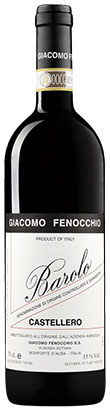
Castellero, from an 0.5-hectare parcel in Barolo, is a fairly new addition to the Fenocchio range, the first vintage being 2011. There's a good deal...
2015
Giacomo FenocchioBarolo
Monchiero, Rocche di Castiglione, Barolo, Piedmont, Italy, 2009
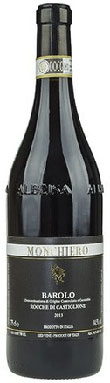
This is a classic if old-fashioned Riserva style, with more density than the regular Barolo from this site. Cherries and damsons dominate the nose, with...
2009
MonchieroBarolo
Monchiero, Montanello, Barolo, Piedmont, Italy, 2011
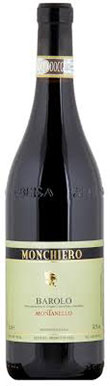
The 2011 vintage in Barolo has always been overshadowed by the superb 2010s, and it's certainly the case that 2010 is the better year. But...
2011
MonchieroBarolo
Monchiero, Montanello, Barolo, Piedmont, Italy, 2013
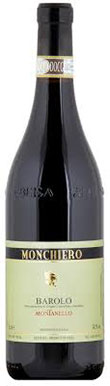
Both lush and formidable when tasted in Alba, this showed even better two months later in London. The nose is rich and ripe, displaying cherry...
2013
MonchieroBarolo
Monchiero, Rocche di Castiglione, Barolo, Piedmont, Italy, 2015
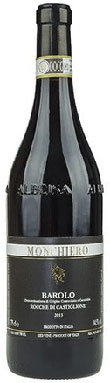
Three previous tastings revealed a wine that was fluid and bright if not very complex. Now with more bottle age it's showing more impressively, with...
2015
MonchieroBarolo
Monchiero, Rocche di Castiglione, Barolo, Piedmont, Italy, 2014
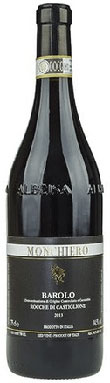
This was a seriously difficult vintage across Italy, thanks to copious summer rains. Barolo was affected too, although growers able to hold their nerve and...
2014
MonchieroBarolo
Monchiero, Castiglione Falletto, Barolo, Piedmont, Italy, 2016
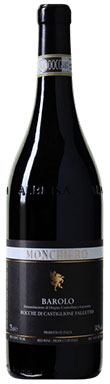
This is Monchiero's generic Barolo from its Castiglione Falletto vineyards, but from a great vintage even this is a very good wine. The nose is...
2016
MonchieroBarolo
