
Vying for Verdejo


Rueda’s signature white wine grape is already proving itself in terms of both quality and versatility, but there are stylistic questions to be resolved. Tina Gellie charts the way forward for the region and recommends ten of its best wines…
Less than a 100km drive from Madrid, the region of Castilla y León is not the tourist hotspot you might expect, given that it is home to half of all Spain’s historic and cultural artefacts. And what tourists there are – those unswayed by the buzz of Barcelona or the sun and sand of the costas – tend not to be wine lovers, who would more likely fly into Bilbão to visit Rioja or down to Jerez to enjoy the Sherry.
Scroll down for Tina Gellie’s top 10 Verdejo wines
This is one problem facing Rueda, Castilla y León’s only white wine denomination. The high, flat plains here are not particularly breathtaking – it’s no Priorat or Ribeira Sacra – and producers in this young DO (Castilla y León’s first, in 1980) are still catching up in terms of wine tourism, unlike the more monied nearby regions of Ribera del Duero or Rioja. On the other hand, it needn’t necessarily be seen as a problem at all – because Rueda is an undeniable success.
From humble beginnings of simple reds and fortifieds mainly drunk by locals, the Rueda DO is now Spain’s biggest quality white wine region, accounting for 41% of domestic sales. Not only that, Rueda as a ‘brand’ is behind only Rioja in terms of regional recognition among Spanish wine lovers. With such achievements, why would you need to worry about attracting visitors?
But Rueda’s success is currently all on the national level. With fewer than 15 million bottles exported (just one million to the UK in 2017) Rueda’s whites are a drop in the international ocean. So to compete on a global scale against the might of, say, New Zealand Sauvignon Blanc – or even Albariño from Rías Baixas, which exports twice as much as Rueda – there needs to be a real point of difference.
Rueda: the facts
DO created 1980
Vineyard area 16,165ha, all within Castilla y León
Key provinces Valladolid, Segovia, Avila
Geography Plateau at 700m-800m altitude, giving a continental climate with big diurnal temperature differences
Producers 70 wineries; 1,525 growers; 3 co-ops
Harvest 130,000 tonnes in 2018 – a record for the DO
Varieties 99% of the DO is planted to white grapes, with Verdejo comprising 85% of that, followed by Sauvignon Blanc, Viura and Palomino
Exports 15 million bottles or 15% of total production
Verdejo: behind the label
A wine labelled ‘Rueda Verdejo’ (new labels, right, introduced this year) is at least 85% Verdejo (most are 100%) and dry, with a maximum of 4g/l residual sugar and a minimum of 11.5% alcohol.
A wine labelled ‘Rueda’ is made with at least 50% Verdejo, blended with (usually) Viura at minimum 11% alcohol. There is no limit on the residual sugar, though most are 8g/l-10g/l.
Thankfully that is something Rueda has in its native Verdejo grape, which represents an incredible 85% of production. Rarely planted outside the DO, Verdejo is well suited to Rueda’s extreme continental climates, with many ancient bush vines still on their own rootstocks, having escaped phylloxera thanks to the region’s sandy, pebbly soil. Verdejo’s ability to produce expressive, structured whites with fresh acidity and complex flavours of fennel, herbs, meadow flowers, citrus and a characteristic pithy bitterness is what first attracted Rioja giant Marqués de Riscal in the 1970s, looking for an alternative to that region’s comparatively bland or overly oaked Viura whites.
Fresh start
That was the injection Rueda needed to kick-start the creation of the DO for whites (which was extended in 2008 in order to include the trickle of reds and rosés that were being made), and soon more big names marched into the region. The likes of Torres, Ramón Bilbao, Freixenet and Marqués de Cáceres were among the well-known producers looking for a fresh, fruity white to add to their mainly red-wine portfolios.
Alongside investment, the past decade in particular has given producers of all sizes the time to better their understanding of the Verdejo grape. More than just a simple unoaked white, its versatility now shines through in everything from vintage-dated, traditional-method sparklings to ambitious wines fermented and aged in barrel, experimental cuvées made in concrete eggs or amphorae, as well as sweet wines and the Sherry-like Dorado fortifieds.
Sadly, to a large extent Rueda has become a victim of its own success, and this enviable versatility has been ignored in favour of identikit mass-market wines – fruity, anodyne whites that might sit well on a supermarket shelf, but don’t sell the real potential of Verdejo.
‘Of course we want to show that Rueda is more than fresh, crisp wines, but these wines still have to be a major focus,’ says Santiago Mora Poveda, director general of the Rueda DO. With so many Spanish teenagers’ first drinking experience being frizzante (a frothy, semi-sweet, 5% alcohol Verdejo), such simple whites are their first step into quality wine.
This entry-level focus is compounded by the fact that many producers persist with Sauvignon Blanc, which represents just 5% of plantings. When you have such a unique and characterful native grape as Verdejo, which represents 85% of the DO, why try to compete with an international grape that has already flooded markets with its all-too-familiar gooseberry and passion fruit flavours?
Indeed, Sara Bañuelos, the dynamic young winemaker at Ramón Bilbao, says Rueda is a ‘difficult place’ for Sauvignon Blanc. ‘I’d prefer Viognier,’ she admits. ‘Sauvignon is hard in the vineyard and it’s hard in the winery – we have to find a profile that’s different to New Zealand or France.’ Her 2017 Sauvignon Blanc, however, fermented in a mix of concrete eggs, foudres and stainless steel, is one of the few wines which achieves that, though it is still no match for her range of Verdejos.
Bañuelos, who moved from Ramón Bilbao in Rioja to the new high-tech Rueda winery in 2015, is excited by the opportunity to educate wine lovers about the complexities of Rueda’s signature grape. ‘Spain is a red wine country, so when you finally convince someone to buy a Verdejo for €3, how do you convince them that it will be better at €16? That’s our challenge, so we have to think outside the box.’
Visitors to the winery (conveniently on the main highway to Madrid) are taken into the vineyards to see the grapes and touch the soil; they are shown what lees stirring means and given a taste of Verdejos influenced by French, American and Hungarian oak as well as concrete eggs; and then they enjoy the wines over a roast lamb lunch. Similarly ambitious tourism projects (still a drawcard mainly for Spaniards and usually backed by outside investment) include Grupo Yllera’s kilometre-long labyrinthine web of underground wine cellars, El Hilo de Ariadna.
Vine heritage
One winery that doesn’t receive visitors is the brazenly flashy Belondrade. ‘It’s better to focus on what we know, which is wine,’ says Jean Belondrade Lurton. It’s not just the name that has a Bordeaux-esqe sheen. Here, no expense is spared in the organic cultivation of 21 estate-owned micro-plots of Verdejo that encircle the winery, totalling 36ha. Each plot is tended and harvested according to soil, orientation, age and clone, and from each plot two different styles of must are made: those forward in acidity and freshness are vinified in stainless steel; those plots showing more structure are fermented in barrel.
As with Bordeaux, there is a grand vin, which is a blend of only those plots fermented and aged on lees in barrel, and a second wine, which is the deselected barrels blended with 60% of wine vinified in tank.
Elsewhere, even though it is still early days for highlighting Rueda sub-regions and single vineyards on labels, there have been great strides among producers in championing old vines and identifying new clones. At Bodega Herrero in Segovia, Javier Herrero, along with brothers Pepe and Juan, cultivate 6ha of their own vines – some of which were planted in 1899. These low-yielding, dry-farmed bush vines – at the highest point of the Rueda plateau at 900m – are still on their own rootstocks yet can’t even boast being the oldest in the DO, which were planted more than two centuries ago.
Javier Sanz has the region’s oldest family owned vineyard, dating from 1863, that still produces wine today – albeit yielding just 1,500kg/ha (compared with Verdejo’s permitted maximum of 10,000kg/ha) and producing just 2,987 bottles in 2017. But it’s the bodega’s work with clones that is particularly exciting.
In addition to discovering two previously unknown red vines in the middle of its 1863 Verdejo vineyard (now registered as Colorado), a clone of Verdejo from the same vineyard, under threat of extinction, has been isolated and propagated. Called Malcorta, meaning ‘hard to cut’, it was identified as producing better-quality grapes despite its challenges in the vineyard. This ageworthy wine has sold out every year since its inaugural 2012 release, producing 12,000 bottles in the latest 2017 vintage, most of the allocation going to 180 Michelin-starred restaurants.
Rueda nailed its colours to the mast with Verdejo more than 38 years ago, and it’s clear that foresight has paid off. There is arguably enough Sauvignon Blanc in the world, and while Albariño might be Spain’s star white internationally, it can’t compete with the versatility of Verdejo – oaked and unoaked, from sparkling through to fortified. Pushing that message effectively is the next step on an exciting road ahead.
Tina Gellie is associate editor of Decanter
See Tina Gellie’s top 10 Verdejo wines
You may also like
Are these Spanish whites in your cellar?Rioja renegades: 10 producers writing their own rulesTop 10 winery hotels in SpainWhere to go in Ponta Delgada: A wine lover’s guideGrape variety guide to Castilla y Léon
Grupo Yllera, Cantosán Reserva Brut Nature, Rueda, Castilla y Léon, Spain
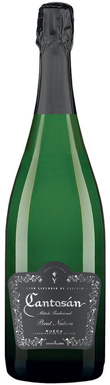

Sparkling Verdejo represents just a fraction of Rueda’s output, but with many Spaniards boycotting Cava during the Catalan crisis the wines are more in demand....
Grupo YlleraRueda

Belondrade y Lurton, Verdejo, Rueda, Castilla y Léon, Spain, 2016
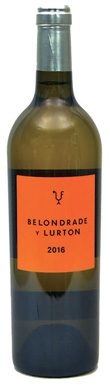
Hand-harvested selection of grapes from 22 organic estate plots, wild-yeast fermented and left on its lees for 10 months in 300-litre French oak barrels. Complex,...
2016
Belondrade y LurtonRueda
Javier Sanz, V Malcorta Verdejo, Rueda, Castilla y Léon, Spain, 2016
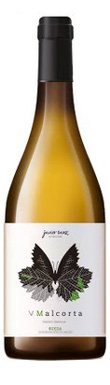
Malcorta is a fickle but high-quality clone of Verdejo saved from extinction by Javier Sanz. Unoaked, it shows terrific intensity, complexity and weight on the...
2016
Javier SanzRueda
Bodegas Ramón Bilbao, Edición Limitada Lías Verdejo, Rueda, Castilla y Léon, Spain, 2016
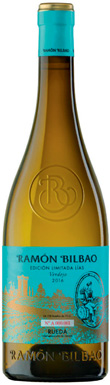
The first vintage of this lovely Verdejo by winemaker Sara Bañuelos. Hand-harvested grapes from 5ha of old vines see some skin contact before fermentation in...
2016
Bodegas Ramón BilbaoRueda
Herrero Bodega, Robert Vedel Verdejo, Rueda, Castilla y Léon, Spain, 2016
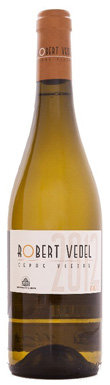
An unoaked old-vine cuvée named for the former president of the Rueda DO and founder of this small family winery, now run by his three...
2016
Herrero BodegaRueda
Bodegas Teodoro Recio, Seleccion Especial Acariciado Verdejo, Rueda, Castilla y Léon, Spain, 2016
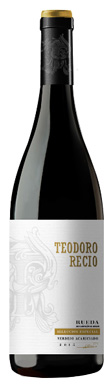
The grandchildren of Teodoro Recio now run this La Seca-based estate, founded in 1948, with the youngest vines planted more than 30 years ago. This...
2016
Bodegas Teodoro RecioRueda
Bodegas Protos, Verdejo, Rueda, Castilla y Léon, Spain, 2017
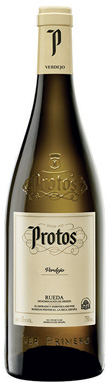
Like most Rueda Verdejos, grapes for this unoaked wine are harvested at night to retain acidity and fruit. Palate weight and creaminess come from three...
2017
Bodegas ProtosRueda
Diez Siglos, Verdejo, Rueda, Castilla y Léon, Spain, 2017
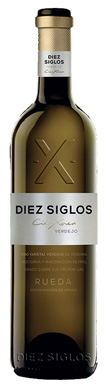
A private co-op of 65 growers who farm 380ha, with wines made by Sandra Chivite. The old-vine Momento is well worth seeking out, but this...
2017
Diez SiglosRueda
Bodega Gótica, Trascampanas Verdejo, Rueda, Castilla y Léon, Spain, 2017
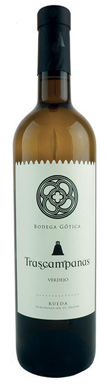
This ambitious, Gothic-inspired winery was started 15 years ago by Maria-Jesús de la Hoz. Badajo is the solid entry-level Verdejo but the Trascampanas label is...
2017
Bodega GóticaRueda
Palacio de Bornos, Verdejo, Rueda, Castilla y Léon, Spain, 2017
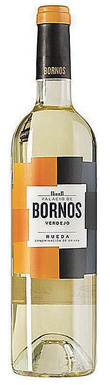
Sadly none of this bodega’s mineral La Caprichosa, made from 35-year-old bush vines, has made it to the UK yet. So in the meantime enjoy...
2017
Palacio de BornosRueda
