
Planting trees in vineyards: Cheval Blanc and Cheval des Andes
An ambitious agroecology manifesto is making a significant environmental impact in Bordeaux and Argentina. Amanda Barnes reports.


One vine of Château Cheval Blanc’s vineyard carries just five or six clusters of grapes. That barely makes one bottle of wine, and – in the case of this esteemed Right Bank estate – about £500 worth of wine, depending on the vintage.
You could say these vines are almost worth their weight in gold… So why then has Cheval Blanc uprooted over 3,000 vines in order to plant humble fruit trees in the vineyard instead?
Scroll down to see tasting notes and scores for a selection of Château Cheval Blanc and Cheval des Andes wines
This tree planting is part of Cheval Blanc’s rather radical agroecology plan, which has been evolving since 2009 in a bid to mitigate the impact of climate change on the estate’s wines.
‘If we don’t change the way we manage the vineyard today, it will be too late and our wine will change forever,’ explains technical director Pierre-Olivier Clouet. ‘Climate change will bring higher alcohol, drier tannins, riper fruit… So we had to make a significant change to the whole estate – not just by experimenting with one or two rows.’
The team has planted 80 trees per hectare of vines; not only surrounding the vines with hedgerows, woodlands and wildlife corridors but actually planting tree saplings within the vine rows, replacing some vines.

‘We have to adapt to global warming, but we also believe that the biggest impact on the environment in the last century has been [the change to] monoculture,’ explains Clouet. ‘Soil fertility decreased, biodiversity decreased and disease pressure increased. We thought we were doing the right thing back then, but now we realise it was a mistake.’
Polyculture philosophy
Cheval Blanc’s agroecology manifesto is all about returning to how things were before: polyculture vineyards.
As well as planting forest and fruit trees, since 2019 Cheval Blanc has enacted a zero till policy and planted an abundance of cover crop, created habitats for birds, insects, bats and animals. The vineyard produces its own fruit, vegetables and meat, with the ambition to become self-sufficient.
To date, Cheval Blanc has 150 chickens, 45 sheep, 20 beehives, a number of Basque pigs and several thousand forest and fruit trees on the estate.
‘We looked into organic, but it wasn’t enough,’ explains director Pierre Lurton. ‘I studied biodynamics too and I think it is important, but I still wasn’t satisfied. I believe agroecology is the best way — we need to respect the soil and its microbiology again, we can’t keep using copper. If you respect nature and make more diversity in the vineyard, the vine roots have better disease resistance and we don’t need to do so much spraying.’

Lurton has been able to significantly reduce the application of copper to the vineyards in recent years thanks to the new agroecology approach. Cheval Blanc will in fact tolerate a small amount of mildew in favour of less spraying.
Lurton and Clouet both believe that the change to polyculture has built up the natural resistance of the vines to disease. It also gives them more tools to face the impact of climate change, while lowering their carbon footprint.
‘On one practical level,’ adds Clouet, ‘the trees also provide more shade in the vineyards and a cooler microclimate — which is increasingly important in Bordeaux!’
Going underground
Adapting to climate change is part of the reason Cheval Blanc started to apply its now tried-and-tested agroecology manifesto to its estate in Argentina.
‘We take the same approach, but obviously with some differences as the climate is totally different,’ explains Lurton, who founded Cheval des Andes in Mendoza in 1999. With the desert climate of Mendoza, increasing water retention in the soils has been one of the main goals.
The team believes no tilling, planting of cover crops and the addition of trees will help to achieve this.

‘We think 80% of the benefit is what is going on underground – in the living soil,’ explains Clouet. ‘We know there is a link between all of the roots in the soil, and a tree is the biggest trap for mycelium [a network of underground fungi], as are cover crops and vines. These mycelium exchange water and nutrients, so it’s a natural way to keep nutrition and water in the ground.’
Pressing down the cover crops periodically helps to gradually break down returning nutrients to the soil, while the roaming vineyard animals provide fertiliser.
‘The more cover crop and more trees you have, the greater the mycelium link is between them, which will naturally give the vines more resistance and more homogeneity in the plot. The soil really is the intestine of the plant, and so we are focusing on its gut health,’ adds Clouet.
As with different human guts, the approach differs depending on the vineyard. ‘We have the benefit of using Cheval Blanc’s experience, but we are adapting our choices to our climate and soils,’ explains Gérald Gabillet, technical director of Cheval des Andes.
He manages two vineyards: one in the Uco Valley and the other in Luján de Cuyo. ‘We are planting local species [of tree] that are more drought-resistant, like algarrobo and chañar for example.’

In Cheval des Andes, the vineyard is already producing honey, olive oil and cherries for the local workers and their families, but Gabillet’s goal is to have a bigger community impact. ‘Some of the older vineyards in Mendoza are still polyculture and we want to educate the local community so that we don’t lose these mixed plantings,’ he says. ‘We are training our vineyard workers but also want to work with the local schools to engage future generations.’
Cheval des Andes is just at the start of its agroecology venture, taking its first steps in 2018 by planting 180 trees.
By the end of 2022, Cheval des Andes plans to have over 650 trees planted between the estates and will also be certified organic. The teams at both wineries are in constant communication about how to develop the next steps in Argentina, and last year Cheval Blanc decided to publish its 45-page manifesto so that other wineries could reinstate agroecology in their vineyards.

‘If we want to change what happens in the world we have to be coherent and consistent,’ explains Clouet. ‘We don’t want to publicise this to look good, we just want to convince people it is possible to farm in a different way — and one that costs relatively little. Agroecology is a living tool box. It’s scientific, it’s an expertise, but it is something that is alive.’
Château Cheval Blanc and Cheval des Andes wines reviewed and rated
Related content
Red Graves 2016: panel tasting results
St-Emilion 2012 Classification upheld in court
Left and right bank Bordeaux explained
Château Cheval Blanc, St-Émilion, 1er Grand Cru Classé A, Bordeaux, France, 2019
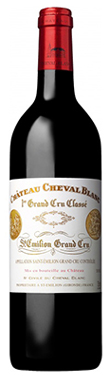

Released at a 32% discount to 2018, despite volumes being 30% down, this represented a 'bargain' for lovers of Cheval Blanc. Produced from 41 of...
2019
Château Cheval BlancSt-Émilion

Château Cheval Blanc, St-Émilion, 1er Grand Cru Classé A, Bordeaux, France, 2018
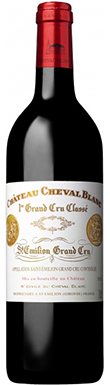
Lovely ripeness on the nose, full of dense Morello cherries and milk chocolate notes, this feels round and just very complete. It has a density...
2018
Château Cheval BlancSt-Émilion
Château Cheval Blanc, St-Émilion, 1er Grand Cru Classé A, Bordeaux, France, 2017
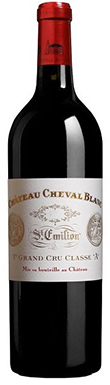
Fresh herbs on the nose, still with the trademark perfumed black fruits but more at the background. More gravel fruit in the blend this year...
2017
Château Cheval BlancSt-Émilion
Château Cheval Blanc, St-Émilion, 1er Grand Cru Classé A, Bordeaux, France, 2016
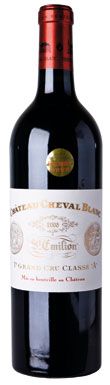
A bold nose, structured and dense. The palate is so delicious, just so filling but not heavy. It has the crushed stone, chalk texture that...
2016
Château Cheval BlancSt-Émilion
Château Cheval Blanc, St-Émilion, 1er Grand Cru Classé A, Bordeaux, France, 2015
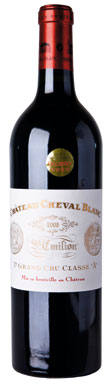
Wonderfully fresh on the nose, the Cabernet Franc perfume starting to shine through, loaded with violets and soft herbs. So floral and lifted. The palate...
2015
Château Cheval BlancSt-Émilion
Château Cheval Blanc, St-Émilion, 1er Grand Cru Classé A, Bordeaux, France, 2011
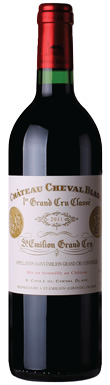
Still very youthful a decade on, with fresh notes of raspberry rising above the black fruit core. Nuances of cedar and a touch of violet...
2011
Château Cheval BlancSt-Émilion
Château Cheval Blanc, Le Petit Cheval blanc, Bordeaux Blanc, Bordeaux, France, 2019
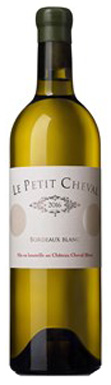
Precision and breadth come together in this mouthwatering Sauvignon Blanc with 20% Semillon. The wine opens with notes of warm citrus, bergamot and fresh white...
2019
Château Cheval BlancBordeaux Blanc
Cheval des Andes, Mendoza, Argentina, 2018
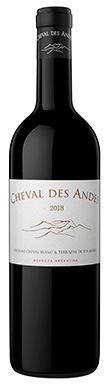
Partnering 70% Malbec and 30% Cabernet Sauvignon from Las Compuertas and Paraje Altamira, this has less tannin, density and acidity than the 2017 release, but...
2018
Cheval des Andes
Cheval des Andes, Mendoza, Argentina, 2017
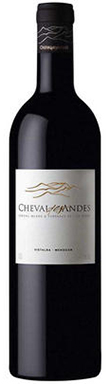
A warmer vintage in Mendoza, but one where Cheval des Andes clearly marks its new style with less oak influence and seeking a more austere...
2017
Cheval des Andes
Cheval des Andes, Mendoza, Argentina, 2016
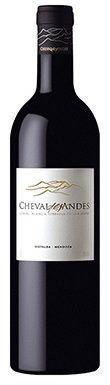
A cooler vintage which shows delicious freshness in the wine with tension on the palate and crunchy red and black berry fruit profile. Showing very...
2016
Cheval des Andes
Cheval des Andes, Mendoza, Argentina, 2015
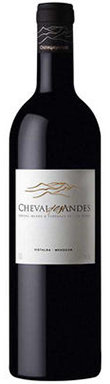
An expressive nose with fragrant red fruit notes and hints of bay leaf and cloves; a harmonious balance of the plushness of Malbec (69%) and...
2015
Cheval des Andes
Cheval des Andes, Mendoza, Argentina, 2012
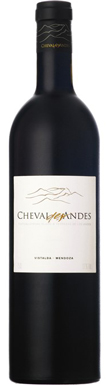
Supple in its age with tertiary notes of leather and tobacco coming to the fore, and undertones of black olive and fig. This vintage has...
2012
Cheval des Andes
Cheval des Andes, Mendoza, Argentina, 1999
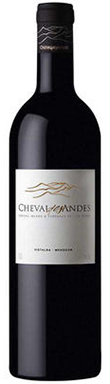
The first vintage of Cheval des Andes, under the hand of winemaker Roberto de la Mota, shows evolution with notes of tar and leather but...
1999
Cheval des Andes
