
Priorat reds: Panel tasting results
Plenty of high scores and a general consensus among our judges show that Priorat’s wine styles are evolving fast towards greater finesse and diversity, reports Pedro Ballesteros Torres MW.

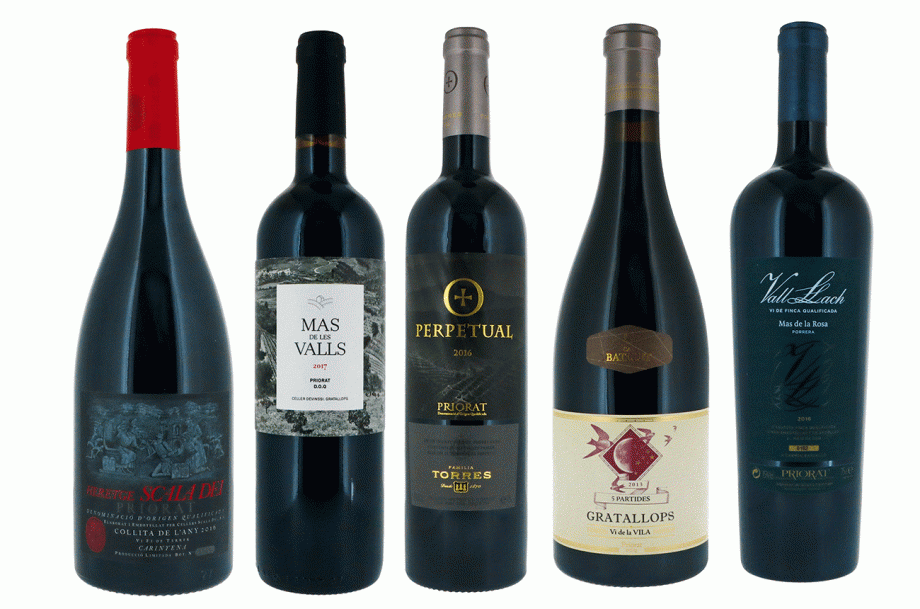
Pedro Ballesteros Torres MW, Sarah Jane Evans MW and Simon Field MW tasted 87 wines with three Outstanding and 44 highly Recommended…
Entry criteria: Producers and UK agents were invited to submit their latest-release reds from Priorat, with availability in UK or US markets
The verdict
Priorat is entering into a new phase of its modern history. The region is very prestigious, which has been vital in enhancing its self-confidence and its scope to be able to experiment and develop greater diversity within a well-defined overall identity. The permitted international grape varieties, so important in the early success of Priorat wines, now play second fiddle to Garnacha and Cariñena.
Key to quality in the region are viticulture and winemaker personality. Climate change is a factor – the last few years have seen a succession of extreme drought seasons, with record high temperatures interspersed with heavy rains, often coming at a bad moment. Vine-growers have been able to maintain very good quality despite these difficulties. One consequence of such developments is the rise of Cariñena – sturdy, reliable and great when yields are moderate – to star status alongside Garnacha. Very interestingly, the three top wines in this tasting are Cariñena-based.
Scroll down to see the tasting notes & scores
The tasting was presented village by village. Unsurprisingly, Escaladei, Porrera and Gratallops earned most of the high accolades, while Vilella Alta, El Molar and Morera de Montsant were below (a very good) average. Clay soils in Escaladei give wines a different character, particularly in the Cariñena – a lovely contribution to diversity.
There were few surprises in terms of the producer names at the top, and very few wines showed the volatile acidity, oxidation or excessive alcohol problems that were more usual in the past. Clearly, though, some producers are still experimenting, with uneven results. There were some wines showing early oxidation, even a slight mustiness, which may result from winemaking practices.
‘Key to quality in Priorat are viticulture and winemaker personality’
While it was too soon to evaluate any differences between the new Priorat wine categories, we could certainly appreciate an extra element of finesse in some of the wines claiming a selected vineyard origin.
The ageing potential of Priorat wines is particularly tricky to evaluate. Past experiences have been mixed. Some wines, even among the great ones, go downhill relatively quickly, while others develop amazing refinement and complexity with time – but there is no clear way to assess this when the wines are young, and beyond about seven to 10 years the need for further ageing is a matter of opinion. Maybe the best option is to have several bottles in your cellar and to make up your own mind by trying the wines over a number of years.
In terms of vintages, the three top-scorers here were from 2016 – clearly superior to 2014 and 2015. There were too few wines from the iconic 2013 vintage to form any conclusion. Most of the best 2017s are not yet in the market, so judgements cannot yet be made.
The three judges were broadly in agreement, each of us tending to mark down wines with excessive oak, lack of balance or jammy fruit, and to reward restrained elegance and complexity. Although Priorat wines usually have at least 14% alcohol – and often in excess of 15.5% – they were quite smooth to taste; we did not feel particularly tired after the tasting. This would have been impossible 20 years ago. Well done to the producers!
Overall, the tasting was very good: more than half the wines were Highly Recommended and above; there were 27 wines with 88-89pts, and many of those would be likely to gain higher marks in a less competitive tasting. Considering that some of the region’s most iconic wines did not participate, there is a sound rationale to state that Priorat is clearly a classic fine wine region with a justified prestige.
The scores
87 wines tasted
Exceptional 0
Outstanding 3
Highly Recommended 44
Recommended 34
Commended 3
Fair 1
Poor 0
Faulty 2
See all wines from this panel tasting
About Priorat
Now a byword for top quality with its full-bodied reds, this precipitous Catalan region has attracted some of Spain’s finest producers since its potential was revealed. Pedro Ballesteros Torres MW investigates…
It’s one of those miracle regions that any investor dreams of finding. Despite 900 years of written fine wine history, after the Spanish civil war (1939) the area was in the doldrums, with only two active wineries, specialised in rancio wines. In the early 1970s, a report on development prospects in the region, published by the UN’s Food and Agriculture Organization, concluded that Priorat had all the attributes of a top quality wine region. Fifteen years more passed by until a group of five friends, led by René Barbier, bought some land and grapes and started producing, in a co-op winery, modern-style wines. The success was almost immediate.
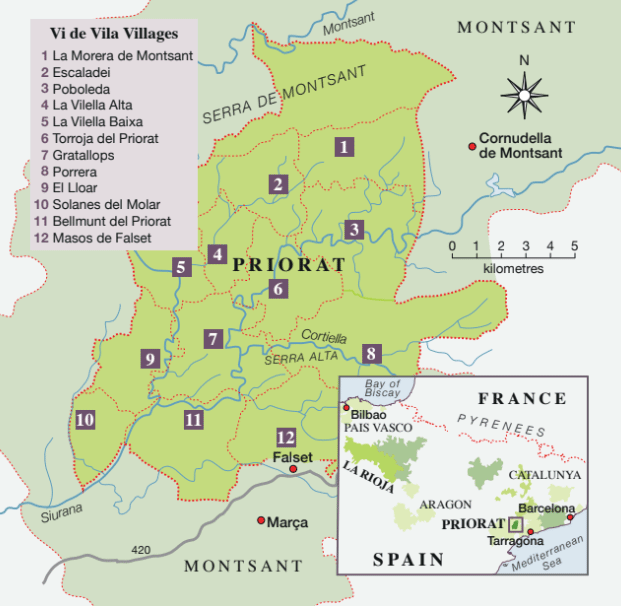
Nowadays, more than 500 vine growers and 109 wineries populate Priorat. This is one of the rare appellations with a clear image of quality and identity. Some of Priorat’s wines are among the most sought after in the world.
Together with Rioja (DOCa) Priorat is the only qualified designation of origin (expressed as DOQ in Catalan) in Spain – a regulation requiring stricter quality conditions. However, under Alvaro Palacios’ enthusiastic leadership, Priorat is now moving even further ahead.
Recently, the region became Spain’s first appellation to adopt a comprehensive zonification approach, to a degree inspired by Burgundy. There are five different wine categories, in a pyramid structure, starting from a base of generic wines, then ‘vi de vila’ (village wines), ‘vi de paratge’ (like a cru), ‘vinya classificada’ (premier cru) and ‘gran vinya classificada’ (grand cru). In this panel tasting, where wines were flighted by village, tasters had an opportunity to assess the rationale behind such classification.
Star quality
Priorat producers extol the exceptional character of their famed llicorella slate soil. But there are other soil types: I would recommend trying wines from clay soils, which give a very different expression. Vineyards are planted at between 300m-600m altitude, mostly on steep slopes and terraces. The climate is distinctly Mediterranean, with scorching dry summers and relatively cold winters because of the altitude.
Garnacha and Cariñena (or Samsó) are the genetic material behind the magic of Priorat, while other grape varieties are also authorised: Cabernet Sauvignon, Merlot and Syrah are indeed quite common in the blends.
Priorat: The facts
Plantings (2018): 2,010ha, (1,872ha red grapes, 138ha white grapes)
Production (2018): 6.5m Kg (6m Kg red varieties, the rest white; 2.7m Kg Garnacha, 1.6m Kg Cariñena), equivalent to about 4.5m bottles
Average yield: 3,200Kg/Ha (comparing to 5,281Kg/Ha* overall for Rioja reds in 2017)
Number of vine growers: 535
Number of wineries: 109
*Source: Consejo Regulador DOCa Rioja
Priorat: Know your vintages
2017 One of the most difficult vintages – extremely dry and hot. Only old-vine Garnacha and Cariñena yielded quality. Give the best eight years to unfurl.
2016 Drought marked the vintage, provoking hydric stress. Old vines showed their advantage. Many impressive wines – at least 10 years ahead.
2015 Warm and abundant, with good quality overall. Concentrated wines, the best should develop well over 10 years.
2014 A difficult year, with rain episodes during harvest, but excellent conditions for late-ripening varieties. Uneven quality.
2013 A very cold winter gave way to a rainy spring and then a dry summer and autumn. Great quality, long ageing potential, probably more than 15 years.
2012 Very dry growing season, but good healthy grapes. Nice ageing potential, until 2024.
Priorat wine styles have changed a lot over the last 30 years. Initially, the wines tended to be powerful, with lots of tannins, alcohol and oak. Then, producers started placing more emphasis on finesse. Now, Priorat offers an amazing diversity of styles. This is not only due to the region’s diversity of soils and microclimates, but also to the high number of characterful winemakers attracted by Priorat. If there is one cluster of wine creativity in Spain, it is to be found here.
Let’s not forget, too, that Priorat can also yield excellent white and rancio wines.
Top 32 Priorat wines from the panel tasting:
The following wines scored 91 points and above
See all the wines tasted here
The judges
Pedro Ballesteros Torres MW
A DWWA joint Regional Chair for Spain, Ballesteros Torres is a widely published wine journalist, educator and judge. He is a member of the Gran Orden de Caballeros del Vino and on the governing board of the Spanish Tasters’ Union.
Sarah Jane Evans MW
One of our three DWWA Co-Chairs, Evans is an awarded journalist and author specialising in Spanish wines, food and culture. A member of the Gran Orden de Caballeros del Vino, her most recent book is The Wines of Northern Spain (Infinite Ideas 2018).
Simon Field MW
Field was a buyer for Berry Bros & Rudd for more than two decades and now works as a consultant on areas which particularly interested him at that time, including Spain and the fortified category. He was admitted into the Gran Orden de Caballeros del Vino in 2015.
Scala Dei, Heretge, Priorat, Catalonia, Spain, 2016

The oldest winery in Priorat, Cellers de Scala Dei are known for bottling the first Priorat wine in 1878, and their remarkable cellars date back...
2016
Scala DeiPriorat

Vall Llach, Mas de la Rosa, Priorat, Catalonia, Spain, 2016
Founded in the early 1990s by Enric Costa and Lluís Llac, Celler Vall Lach is located on century-old estate vineyards, with 60 to 90 year...
2016
Vall LlachPriorat
Torres, Perpetual, Priorat, Catalonia, Spain, 2016
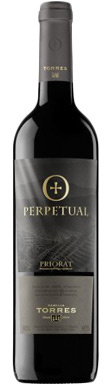
Familia Torres' winemaking origins can be traced back to 1870 in Penedès, and today they make wine across many of Spain's most iconic regions, as...
2016
TorresPriorat
Celler Devinssi, Mas de les Valls, Priorat, Catalonia, Spain, 2017
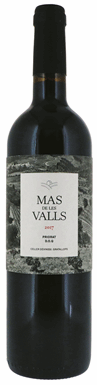
<p>Superbly floral, with roses, violets and blue fruits. The palate is rich, ripe and spicy. Nice fruit definition on the finish.</p>
2017
Celler DevinssiPriorat
Cal Batllet, 5 Partides, Priorat, Catalonia, Spain, 2013
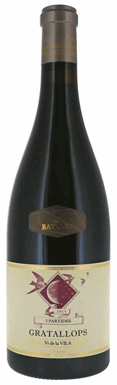
A delicious expression of Cariñena, with power, rusticity and complexity. Fine smoky oak aromas continue through on the palate.
2013
Cal BatlletPriorat
Marco Abella, Roca Roja, Priorat, Catalonia, Spain, 2016
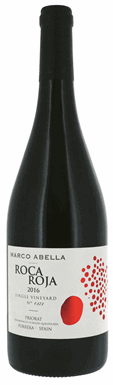
Intriguing aromatics of white pepper and aniseed; succulent berries in the mouth with lively lift of freshness. Complex.
2016
Marco AbellaPriorat
Vall Llach, Vi de Vila, Priorat, Catalonia, Spain, 2016
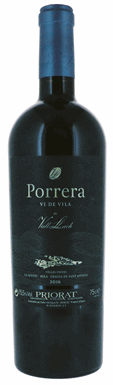
Intense and powerful; concentrated and long. Has a savoury, salty back note overlaid by black fruits. Excellent.
2016
Vall LlachPriorat
Scala Dei, Cartoixa, Priorat, Catalonia, Spain, 2016
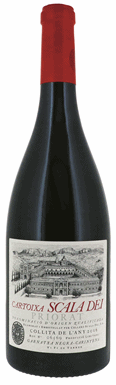
Elegant with discreet intensity, full of punchy, energetic savoury notes with fennel and red fruits. Long, harmonious finish.
2016
Scala DeiPriorat
Sangenís i Vaqué, Clos Monlleó, Priorat, Catalonia, Spain, 2011
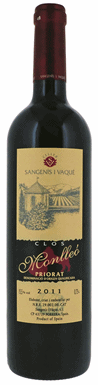
The wine smells of refinement and high investment. Top French oak, perfectly matured grapes, strict selection, and a long finish.
2011
Sangenís i VaquéPriorat
Clos Figueras, Font de la Figuera, Priorat, Catalonia, Spain, 2017
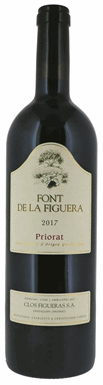
Richly drawn infusion of dark fruit, with a herbal backdrop. Distinctly ripe and full-bodied, with a remarkable potential for ageing.
2017
Clos FiguerasPriorat
Costers del Priorat, Pissarres, Priorat, Catalonia, Spain, 2016
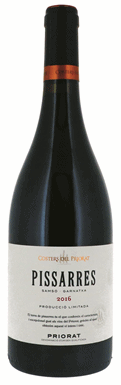
Concentrated red fruit palate with lovely rose and violet aromatics, seasoned by peppery spice and a hint of aniseed.
2016
Costers del PrioratPriorat
Viticultors del Priorat, Costers del Prior, Priorat, Catalonia, Spain, 2017
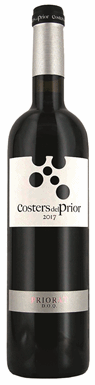
Well defined, showing a characteristic gum note and ripe red fruit. Powerful mid-palate with herbs and tapenade. Textbook Priorat.
2017
Viticultors del PrioratPriorat
Álvaro Palacios, Les Terrasses, Priorat, Catalonia, Spain, 2017
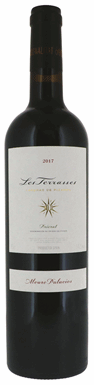
Luxurious aromas of plums, violets and cedar with delicious red fruit quality. Palate is fresh, with nice concentration and soft tannins.
2017
Álvaro PalaciosPriorat
Buil & Giné, Giné & Giné, Priorat, Catalonia, Spain, 2016
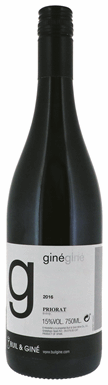
Vivid, generous, dense Priorat, plump with ripe fruit and a savoury nose of raspberry, myrtyl and raisins. Complex and long.
2016
Buil & GinéPriorat
Clos Mogador, Priorat, Catalonia, Spain, 2016
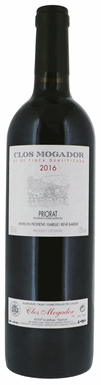
Full of rich fruit with a balancing layer of savoury oak. Chalky and rigorous tannins, yet taut and imposing in its peroration.
2016
Clos MogadorPriorat
Ritme Celler, Etern, Priorat, Catalonia, Spain, 2015
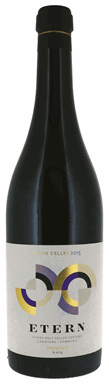
<p>Interesting nose of herbs and balsam, with hints of tobacco. Richly textured with a fine-grained tannin and bright freshness.</p>
2015
Ritme CellerPriorat
Mas d'en Gil, Coma Vella, Priorat, Catalonia, Spain, 2014
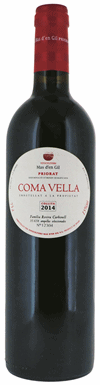
Classic Priorat characters with a rush of red fruits, a punch of acidity, a warm lick of alcohol and a long concentrated finish.
2014
Mas d'en GilPriorat
Marco Abella, Clos Abella, Priorat, Catalonia, Spain, 2014
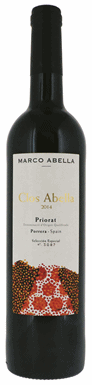
Bold and brooding, with a spicy black fruit profile supported by prominent oak character. Balanced acidity and impressive length.
2014
Marco AbellaPriorat
Blai Ferré Just, Desnivell, Priorat, Catalonia, Spain, 2012
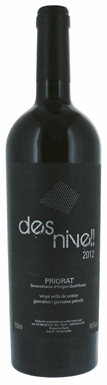
Aromas of mature oak and fruit; palate shows similar development. Beguiling spicy character, refined and intriguing.
2012
Blai Ferré JustPriorat
Celler de l'Encastell, MARGE, Priorat, Catalonia, Spain, 2016
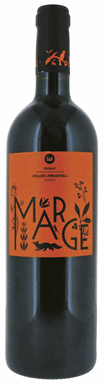
Poised and precocious, a lovely combination of oak and ripe fruit. Firm and finely grained tannins, lots of power. Everything well integrated.
2016
Celler de l'EncastellPriorat
Clos Mogador, Manyetes, Priorat, Catalonia, Spain, 2016
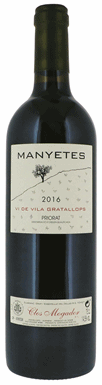
Deep of colour, with a nose of plums and hints of a distant bonfire. Shows a lean purity that continues in the mouth.
2016
Clos MogadorPriorat
Perinet, 1194, Priorat, Catalonia, Spain, 2016
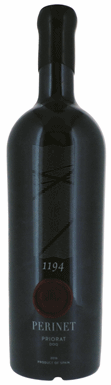
A journey into dark plum fruits, wrapped in layers of vanilla and cinnamon spice. Vivid, and a fine line of acid freshness.
2016
PerinetPriorat
Perinet, Mas Vell, Priorat, Catalonia, Spain, 2016
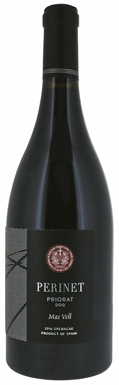
Dark fruit, figs and balsam, bonfires and a teasing freshness on the finish. A lively, complex palate full of energy. Delicious.
2016
PerinetPriorat
Terroir al Límit, Les Tosses, Priorat, Catalonia, Spain, 2016
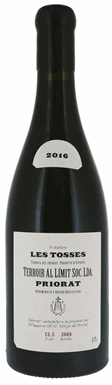
Juicy and full of vivacity, with bright rustic tannin. Intense aromatics of raspberry and leather, quite austere but of great quality.
2016
Terroir al LímitPriorat
Gratavinum, Silvestris, Priorat, Catalonia, Spain, 2017
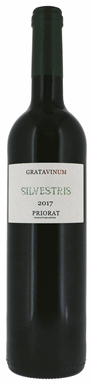
A powder keg of ripe fruit and soft spice, firm balancing acidity and excellent length. Cabernet Sauvignon defines fruit and structure.
2017
GratavinumPriorat
Mas Alta, Cirerets, Priorat, Catalonia, Spain, 2016
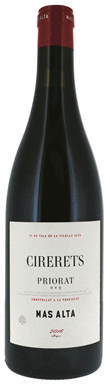
Aromas of blackberry and vanilla. Magnificent tannic structure, firm acidity and a block of dark dark fruit at its core. Appealing.
2016
Mas AltaPriorat
Ritme Celler, Plaer, Priorat, Catalonia, Spain, 2016
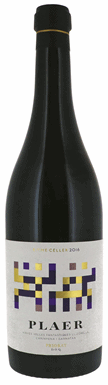
Finely grained, dense, with well-knitted tannins and lovely fruit, nice identity. Succulent black fruits, with notes of fresh herbs.
2016
Ritme CellerPriorat
Vins Singulars, RAR, Priorat, Catalonia, Spain, 2017
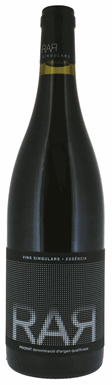
Attractive sweet berried fruit, summer pudding and soft spice; balanced acidity and a lifted exuberance which is attractive.
2017
Vins SingularsPriorat
Torres, Salmos, Priorat, Catalonia, Spain, 2016
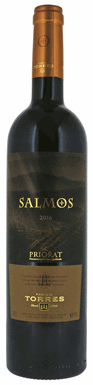
Decadent interplay of sumptuous warm fruits, cedar and vanilla. Oaky and ripe. Very well defined, not aiming for complexity.
2016
TorresPriorat
Mas La Mola, Vi d'Altura, Priorat, Catalonia, Spain, 2016
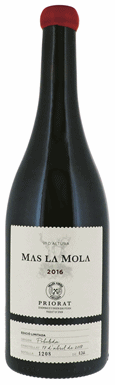
Luscious, polished, appealing, the Garnacha gives a burnished charm to the wine. Baskets of flowers and red berries with a long, vivid finish.
2016
Mas La MolaPriorat
Clos Berenguer, Clos de Tafall, Priorat, Catalonia, Spain, 2017
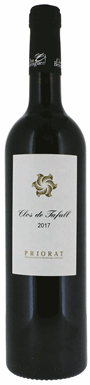
Savoury and serious, lots of black fruit with notes of liquorice, tapenade and fennel. Quite rustic, with a long well balanced finish.
2017
Clos BerenguerPriorat
Celler Joan Simó, Les Sentius, Priorat, Catalonia, Spain, 2016
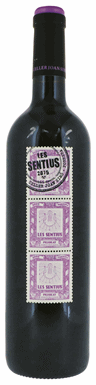
Classic Priorat style with ripe and overripe fruit, evidence of oak, soft but very abundant tannins, juiciness and a long finish.
2016
Celler Joan SimóPriorat
