
Producer profile: Familia Torres
Founded in 1870, today Familia Torres is Spanish wine royalty with a global reach that includes wineries in Chile and the US. Sarah Jane Evans MW looks at what the company has achieved, including its current projects to restore ancient grape varieties and combat climate change.


In May this year the wine world was expecting to break the industrious silence of Pacs del Penedès with a noisy party, celebrating 150 years since the founding of Familia Torres. Yet when I think of Torres, the idea of noise is unusual. I’ve been driven by Miguel Torres Maczasseck (46) in an eerily silent electric car. I’ve encountered Miguel A Torres (79), on a practically noiseless push-bike. (This was at a conference in Italy; while I was still on my first cup of breakfast coffee, with typical energy he’d been taking a cycling tour of the city.) Stand in a vineyard in Penedès and you may be able to hear the grass grow, now that the Family is trialling electric tractors.
It’s not just their commitment to environmentally friendly machinery that makes Familia Torres seem quiet. The very distinctive thing about this business, which in many ways is Spanish wine, is that it has risen to the top and stayed there, without shouting. There are measured press releases and interviews. Since lockdown, there have been webinars and Miguel Jr has joined Instagram, revealing just a little of his personal life. The wines win all the right awards and trophies, but they lay off the trumpets.
At this point I should explain how I’ll distinguish between the two Miguels. It’s customary for English speakers at least to refer to Miguel Sr, the company’s president, respectfully as Mr Torres. For his son, Miguel Jr, the current CEO, I’ll use the Catalan version, Miquel, the name he answers to on Instagram.
Through generations
The family can trace references to itself as a wine-grower in the 16th century. The modern story is well told, a history of survival and growth through national and global crises: the first generation founded Bodegas Torres in Penedès in 1870 and established an export business to Cuba. That explains the Torres coats of arms. The three towers don’t just represent Torres (‘towers’ in Spanish), they are also the coat of arms of Havana.
Spain subsequently lost its empire (including Cuba), so the second generation established a solid foundation for the future by launching brandy in 1928, which is still widely known and particularly significant in Mexico and Russia today.
The third generation, Miguel Torres Carbó, ‘is the key to understanding our history’, according to Miquel. Torres Carbó’s own ‘crisis’ was the Spanish Civil War (1936-1939), when the winery was destroyed by bombing and the ensuing years of World War II. Nevertheless, he was able to rebuild the business and laid the foundation for much of what we know today.
His son, Mr Torres, studied in France and chose a different approach from his father. Single-vineyard wines came into being. He experimented; resulting in such memorable wines as Mas La Plana Cabernet. He has seen to it that the world knows the name of Torres. If you are in the US of course, then you will know Marimar Torres, sister of Mr Torres, and her daughter Cristina Torres, who are Pinot and Chardonnay producers at Marimar Estate in Sonoma’s Russian River Valley.
Winds of change
What then is left for Miquel and his sister Mireia Torres Maczasseck (51)? The business is established. Is it just a matter of riding the latest storm? No, not entirely. ‘Every generation sees a change, and with it, there’s a little fight.’ The change of direction between Torres Carbó and his son was a historic difference of opinion. Mr Torres inherited in 1991. The transfer to the fifth generation, which was formally made in 2012, is a more subtle and less public process.
For example, there’s the quiet disappearance of the Torres brand from the famous names of Viña Sol and Sangre de Toro and its companions. The Family sees them as established brands which stand in their own right. In addition, those labels are made from purchased grapes and therefore have nothing in common with the range of single-vineyard Familia Torres wines.
Miquel explains: ‘A consumer in the UK knows Viña Sol, not Torres.’ I am not sure he is right, because the remarkable thing about those wines is the Torres brand reassurance of consistency and consistent improvement in quality and style.
What is certain is that there is a clearly defined range of Catalan wines, along with wines from Rioja, Ribera del Duero, Rías Baixas and Rueda – Spain’s premium Rs. Plus Miguel Torres Chile, and the Russian River. Are they going to invest further? Apparently not. ‘I travel to Chile three times a year as it is,’ says Miquel. Furthermore, he stresses: ‘The worst thing for a family is to lose touch. We make a point of tasting together.’ Perhaps not always with 100% agreement. ‘My father likes more structured wines. Mireia and I prefer more finesse, more liquid wines.’
The purchase of Mas de la Rosa in Priorat was a sign of the shift between generations. It’s a wonderful 1.9ha far from roads and powerlines. Too often, wine businesses step out of their usual environment and make do with lesser properties. This is a tribute to careful work, learning the vineyards, courting the owners, expressing your Catalan identity. Purchasing the vineyard was a step change: ‘My father wasn’t keen,’ says Miquel. ‘In the end, we learned, my sister and I, that as the next generation you have to form your own perspective. There’s a Spain that’s “known”. My generation now needs to find its own roots. There are going to be new wine regions in Spain which are going to blow your mind.’
Torres at a glance
Founded: 1870
Turnover (2019): €257m
Total vineyards: 2,432ha; Spain 2,000ha, nine wineries; Chile 400ha, one winery (Miguel Torres Chile in Curicó)
US 32ha, one winery (Marimar Estate in Sonoma)
Torres in Spain
In Catalonia
Total: 1,800ha (850ha certified organic)
Penedès: 590ha (68ha in the organic estates of Mas La Plana, Les Arnes, Mas Borràs, Fransola)
Priorat: 73ha organic vineyards, acquired 1996
Costers del Segre: 200ha organic vineyards, Celler Purgatori, acquired 1999
Vardon Kennett: Penedès estate owned by the Family since 1980s. Cuvée Esplendor 2013 traditional method sparkling wine launched 2016
Jean Leon: Penedès winery established by Jean Leon in 1963; taken on by Torres in 1994 and managed by Mireia Torres; wines certified organic
DO Penedès: Gran Viña Sol, Gran Coronas
DO Catalunya: Viña Esmeralda, Sangre de Toro, Coronas, Viña Sol
Outside Catalonia
Ribera del Duero: 30ha, owned since 2004
Rueda : 20ha, Bodega Magarín owned since 2014
Rioja Alavesa: Producing the Altos Ibéricos range since 2006; launched La Carbonera project based around Labastida in 2015; the 10ha vineyard qualifies as a Viñedo Singular; Las Pisadas wines
Rías Baixas: Acquired Pazo Torre Penelas in 2017, with 6ha vineyard
Current projects
Speaking of the coming years for the wine industry, Miquel states: ‘A lot of things are going to change, and we want to be part of that change.’ At present, it looks like the Family is ahead of the game. In one area, it’s thanks to the foresight of Mr Torres launching research into ancestral varieties. The work has been going on long enough that Torres can now release finished wines, most recently Forcada (white); with Moneu appearing at the end of the year in a red blend, and Pirene, a high-altitude red coming soon. ‘My idea is to have some ancestral varieties at more affordable prices in restaurants,’ notes Miquel.
This remains a major investment in fieldwork, lab tests, DNA tests, and bureaucracy. However it was agreed that this heritage would be shared – ‘it’s a philanthropic project’, says Miquel – and that Torres would advise other growers, so there was no delay in producing results. This isn’t their only philanthropy. The Foundation, established by Mr Torres’ mother and chaired by Mireia, supports projects with women and children. Another one of the silent activities of the Family.
In many ways, this member of Spanish wine royalty sounds much more like the new generation of viñateros returning to the old ways, than a CEO running a global business; though Miquel acknowledges he’s that too – and with the financial resources the small viñatero lacks. He talks with excitement of the granite eggs used for a soon-to-be-released Albariño, noting a distinct saline effect from the material. In Rioja, Torres is using lagares, the traditional container for treading grapes. At Purgatori, the cement vats are made with local clay. Throughout there’s a search for altitude. In Priorat the latest project is a vineyard at the margins of what may be possible for ripening. In Penedès Torres is restoring abandoned tiered vineyards.
This search for altitude is predicated on climate change, a concern that Mr Torres was very early to recognise. ‘We think that climate change is the next phylloxera,’ explains Miquel. Torres is a co-founder of International Wineries for Climate Action (iwcawine.org), with Jackson Family Wines. Working on a number of fronts, Torres has already cut carbon emissions per bottle since 2008 by 30% and is aiming for 55% by 2030, hence the silence of their machines. Surely this is an excessive amount of investment with no immediate profit? ‘Family businesses can afford the long view.’
Miquel is coming up to his first decade in charge. What about the sixth generation? ‘I have three children – but they are eight, 10, and 12. Mireia has two, who are older.’ Whoever in that generation takes on the family business will find much to occupy them. The wines sit in a carefully segmented pyramid of quality. The top wines are well-positioned now to be sold on the Place de Bordeaux given their international standing. In Catalunya the sheep are returning to the vineyard, and horses to the plough. Beneficial insects and wildlife are being welcomed back in. Familia Torres owns more forest than vineyard. Congratulations on the first 150 years. Which way next for 2170?
A taste of Torres: Evans’ pick of six
Miguel Torres Chile, Estelado Sparkling Rosé Brut NV, Maule Valley, Chile
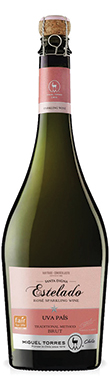

If you are looking for a fairly traded sparkling wine in the world, there aren't very many. Estelado is a rarity that ticks all the...
Miguel Torres Chile

Torres, Mas de la Rosa Vinyes Velles, Priorat, Catalonia, Spain, 2016
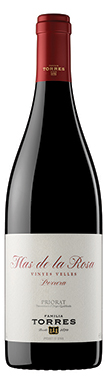
When a famous global brand enters the isolated enclave of Priorat, does it have the sensitivity to make a fine wine? Mas de la Rosa...
2016
TorresPriorat
Torres, Grans Muralles, Conca de Barberà, Catalonia, Spain, 2016
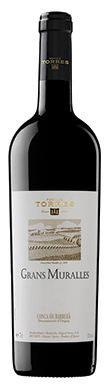
Taking its names from the walls surrounding Poblet Monastery in Conca de Barberà, this wine demonstrates the work done by Torres to resurrect native Spanish...
2016
TorresConca de Barberà
Torres, Reserva Real, Penedès, Spain, 2015
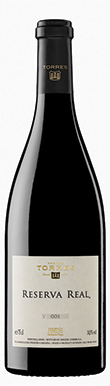
Refined red and black fruit on the nose, enhanced by notes of cedar and vanilla oak. Silky textured on the palate, showing real elegance.
2015
Torres
Miguel Torres Chile, La Causa Red Blend, Itata Valley, Chile, 2018
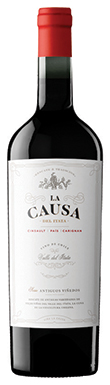
Miguel A Torres started out in Chile at the end of the 1970s. The business has seen great progress in recent years, rescuing old dry-farmed...
2018
Miguel Torres Chile
Torres, Sangre de Toro, Catalonia, Spain, 2018
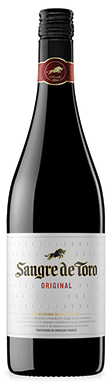
Launched back in 1954 by Miguel Torres Carbó, in very different times. It’s made mainly from Garnacha and Cariñena, varieties that went firmly out of...
2018
Torres
