
Producer profile: The Standish Wine Co
Born with Barossa in his blood, the studious work of this publicity-shy winemaker has propelled his wines quietly to the top of the Australian ranks, with his powerful yet detailed Shiraz styles winning fans among wine lovers and collectors alike. Sarah Ahmed reports
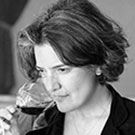

Pruning is Dan Standish’s favourite part of the winemaking cycle. Rigorous control of bud numbers and yields sets the tone for this Barossa Shiraz specialist, whose ‘off-cuts’ produce Fortnum & Mason’s Barossa Valley Shiraz (£15.50).
With exacting standards for his The Standish Wine Co label, he never uses more than 30% of the barrels, ‘guaranteeing that only the best of the best fruit ends up in the bottle’. So he must have been particularly frustrated that his average yields were down by 55% in 2019 and 70% in 2020. With minuscule allocations in the pipeline, it’s a good time to take a look at Standish’s 2017 and 2018 releases.
Preferring to court growers, not the press (whom Standish has ‘pretty much spent the last 20 years avoiding’), information about The Standish Wine Co is thin on the ground for a producer of his ilk. We met in 2004 at Barossa winery Torbreck, where Standish worked at the time but, until now, we had never discussed his own project.
Standish established his eponymous company in 1999, the same year he joined Torbreck, and just two years after graduating in chemical engineering. Standish is a sixth- generation Barossan and, at age six, learned to prune vines at his grandfather’s knee. He has taught himself winemaking ‘hands-on’ too – as well as wine appreciation (though he credits his wife Nicole, Australia’s Sommelier of the Year 2001, with having the better palate).
The Standish Wine Co: the facts
Owners Dan & Nicole Standish
Founded 1999
Winery location Light Pass, Barossa Valley
Annual production 12,000-28,000 bottles
Vineyard sources 12 Barossa vineyards totalling 42ha, of which 2ha (in Light Pass) is estate-owned
Vine age Planted between 1858 and 2002
Wines The Standish (introduced 1999), The Relic (2001), Borne Bollène (2007), Andelmonde (2007), The Schubert Theorem (2009), Lamella (2015)
Inspired by the greats
Following Dave Powell’s advice (his then boss at Torbreck) ‘to drink the world’s best wines, otherwise how do you know what great wine is’, for five years in a row, starting in 2000, he made a pilgrimage to the Rhône valley in France. He visited the luminaries who ‘really stood out, as their wines show power and grace’, including Clape (‘three visits, tasting with three generations of the family – pretty cool!’), Thierry Allemand, Noël Verset, Gonon, Jamet, Jasmin and Rostaing.
Vividly recalling the impact of tasting Domaine Rostaing’s Côte Blonde, Côte-Rôtie 1998, he enthuses: ‘It blew me away that a single wine could show such power and richness at the same time as intricate purity and elegance.’ Qualities which today define The Standish Wine Co’s Shirazes, especially the 2018s, which have exceptional fruit power, balance and detail, whether from old or relatively young vines.

Rigour in the vineyard
For Standish, ‘soil, site, clone, aspect and, most importantly, yield are equally as important, if not more so, than vine age’. With young vines he aims for yields of 10hl/ha-20hl/ha, and since acquiring the Light Pass vineyard eight years ago yields have plummeted from 55hl/ha to just 12hl/ha. Prune well, he says, and ‘half the winemaking is already done in the vineyard’.
Observing that his vineyards are often the last to be pruned, he explains: ‘I wait until the end of winter to assess how much seasonal rain we receive, then prune accordingly. If we have a dry winter or (god forbid, like last year) two very dry winters in a row, the vine [only] requires a fraction of the buds to push out its fruit bearing arms.’
Limiting bud numbers, he adds, also ensures berries are small yet regular in size, helping attain ‘perfect tannin ripeness’ from a balance of ripe seeds, lignified stalks and mature skin phenolics. Given leaves are solar panels, with a higher leaf-to-berry ratio, lower yields also advance phenolic ripeness, helping grapes retain higher and more balanced natural acidity.
His pursuit of perfection does not come at the cost of character since, says Standish, his goal was always to shine the light on different terroirs. While he was devastated when his parents sold the family vineyard Vine Vale in 2005 (it produced The Standish from 1999 to 2009), he admits ‘it was a blessing in disguise not to have all your eggs in the one basket’.
Prompted to seek out fresh vineyard sources, Standish now works with 12 ungrafted, organically cultivated vineyards (one certified biodynamic), selected for their exceptional potential, but also because each was ‘profound and distinct enough from my other parcels’. But that does not mean they necessarily make the cut for The Standish Wine Co label. Standish made only four single-site Shirazes in 2017 and five in 2018.
Providing an insight into his ultra-selective approach, he tells me it took him from 2001 (when he first started working with the vineyard) until 2009 to produce The Schubert Theorem, because ‘it took me this long to learn the intricacies and attributes of each microsection of the vineyard and how they supported each other’.
For The Relic, from Krondorf, where Shiraz ‘tends to be very aggressively tannic’, he asked the Hongell family to plant a single row of Viognier alongside the Shiraz. Handpicked together and co-fermented, he says ‘it not only adds heady aromatics to the mix, but also softens the otherwise firm tannins’.
As hands-on as he is in the vineyard, Standish is hands-off in the winery. All the wines are foot-trodden, basket-pressed, naturally fermented and bottled unfiltered and unfined. His ruthless declassification of barrels is an important element of his winemaking: ‘It took me many years to work out that the best wine is not necessarily the best six barrels, but maybe the best four plus the sixth and eighth best, as these latter components add complexity and bring out ethereal characters from the other barrels.’
Dissatisfied with fruit quality in 2000 and 2011, he released no wines whatsoever. But when the quality is there, he lets it shine. With their charismatic expression of fruit, there can be little doubt about his wines’ Barossa provenance. They are Shiraz, not Syrah, but with the power and grace that drew him to the northern Rhône.
The Standish Wine Co: a timeline
1994-1997 Dan Standish studies chemical engineering at University of Adelaide
1998 Does his first harvest at Wakefield Wines, Clare Valley
1999 Founds The Standish Wine Co, producing The Standish Shiraz from his parents’ 1912-planted Vine Vale vineyard. Completes his first of seven vintages at Torbreck Wines and also works a vintage at Paradise Ridge in Sonoma, California
2000 Makes his first trip to the Rhône Valley
2001 Works a vintage at Bodegas Muga in Rioja, Spain
2005 Works his last vintage at Torbreck and, following parents’ vineyard sale, starts looking for other vineyard sources
2005-2006 Works on Ernie Singer’s Koshu Project in Yamanashi, Japan
2008 Makes El Standito Proyecto garage wine, in Yecla, southeast Spain
2012 Acquires winery and vineyard in Light Pass, Barossa Valley, South Australia
2018 The Standish Shiraz enters Langton’s Classification of Australian Wine VII (‘Excellent’ category)
Fine adjustments
Attuned to vineyard and vintage, in the winery Standish uses a range of fermenters and barrel formats. The open fermenters can be sealed for pre-fermentation cold soaks, carbonic maceration and post-ferment maceration. He has also used Nomblot concrete eggs since 2009, ‘because the wine is continuously being turned over the lees, keeping it fresh and vibrant’.
With sympathetic élevage – a process he explored at Bodegas Muga in Rioja, working ‘intimately’ with the reservas – wines typically spend 18-24 months in barrel on lees, with 20%-25% new French oak for pressings components. Standish feels this better integrates oak and fruit tannins (he ferments with varying degrees of whole clusters).
In 2017 and 2018, subtle tweaks in the winemaking reflect two excellent, but contrasting vintages. In 2017, the grapes ripened more slowly due to high levels of soil moisture and cooler nights from late March, so Standish used fewer whole clusters, because there were more green, non-lignified stalks at harvest. The Lamella cuvée is made using high-elevation Eden Valley fruit, so always has the highest proportion of whole-bunch components, but in 2017 only 80% was included compared with 100% in 2018.
Overall, the 2017 Standish Shirazes seem firmer, the freshness and tannins a touch more pronounced, the fruit intense but tightly wound and, correspondingly, the spice and dried herbs dialled up a notch. In 2018, more concentrated, exuberant, typically darker fruit reflects a classically warm, dry year. Especially in the Barossa Valley, which experienced significantly less rainfall and warmer than average overnight temperatures in February.
But the 2018s are beautifully balanced too, with a ripe but powerful tannin structure, terrific buoyancy to the fruit and a tell-tale vineyard thumbprint that distinguishes the range. As Standish points out: ‘It’s relatively simple in the Barossa to make big, powerful Shiraz – but to bring out elegance, suppleness and delicacy is much more finicky.’
Standish’s ruthless focus on perfection has seen his Shiraz wines join the cream of Australia’s crop. The wines come at a price, but they compare favourably with the country’s other leading names and, compellingly, take you on a unique journey across the Barossa. Teasing out the finicky points of difference is a major draw.
The Standish experience: Ahmed’s pick
The Standish Wine Co, Lamella, Eden Valley, South Australia, Australia, 2018
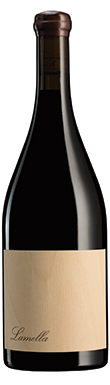

Classic Eden Valley fragrance: freshness, sinew and spice, wed to 2018’s compelling intensity and saturation of blackberry, strawberry and bramble fruit. Ethereal and lingering from...
2018
The Standish Wine CoEden Valley

The Standish Wine Co, Lamella, Eden Valley, South Australia, Australia, 2017
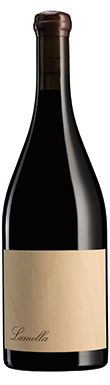
Anise, red liquorice, black cardamom and pepper, dried herb, truffle and mineral undertones – decant this in order to best appreciate these dramatic, dynamic aromas....
2017
The Standish Wine CoEden Valley
The Standish Wine Co, The Schubert Theorem, Barossa Valley, South Australia, Australia, 2018
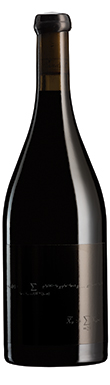
A masterful blend of six east-facing sections of the Schubert vineyard in Marananga, planted between 1994 and 1999. Intensely brooding black and blue berry fruit...
2018
The Standish Wine CoBarossa Valley
The Standish Wine Co, The Schubert Theorem, Barossa Valley, South Australia, Australia, 2017
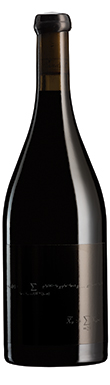
Shares the dark-fruited profile, savoury depth and tapering mineral tannins of the 2018, with lifted pink peppercorn, smoked meat, cocoa, cardamom and kelp nuances. The...
2017
The Standish Wine CoBarossa Valley
The Standish Wine Co, The Standish, Barossa Valley, South Australia, Australia, 2018
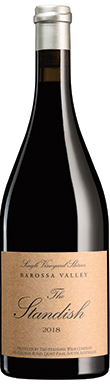
The acid and tannin structure is assertive at first but knits together given time and air. Intense, sinewy and creamy raspberry, damson and blackberry fruit...
2018
The Standish Wine CoBarossa Valley
The Standish Wine Co, The Standish, Barossa Valley, South Australia, Australia, 2017
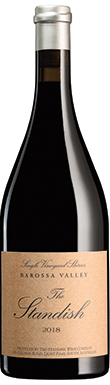
Restrained on the nose with imposing backbone to the raspberry-dominated palate. Bitter chocolate and espresso oak tones and earthy, herbal whole-bunch accents give resonance to...
2017
The Standish Wine CoBarossa Valley
The Standish Wine Co, The Relic, Barossa Valley, South Australia, Australia, 2018
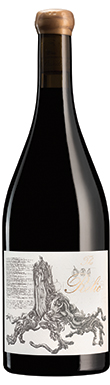
Shiraz co-fermented with 2% Viognier, from the Hongell Vineyard in Krondorf, planted 1991. A cascade of aromas: cassis, blackberry, bilberry, creamy Black Forest gateau, black...
2018
The Standish Wine CoBarossa Valley
The Standish Wine Co, The Relic, Barossa Valley, South Australia, Australia, 2017
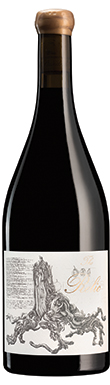
On the nose, sweet, silky red berry fruit, fresh redcurrant and fleshier blackberry and plum, laced with savoury fennel seed, dried mint, curry leaf, charcuterie...
2017
The Standish Wine CoBarossa Valley
The Standish Wine Co, Andelmonde, Barossa Valley, South Australia, Australia, 2018
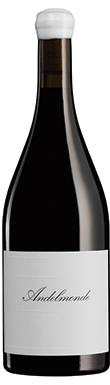
From John’s Vineyard in Light Pass, planted in 1964. Initially brooding, with meaty, tobacco undertones and hints of engine oil and dried black olive. Lavender...
2018
The Standish Wine CoBarossa Valley
