Rediscovering the value of Bordeaux’s second grapes
While Cabernet Sauvignon, Cabernet Franc and Merlot will rule Bordeaux for the foreseeable, producers are rediscovering the value of the traditional secondary varieties, used as seasoning to add complexity and to adapt in an age of global warming. James Lawther MW reports.


Bordeaux may be a Merlot-Cabernet-centric region, but a smattering of other red varieties subsist alongside. Look at the figures: Merlot accounts for 66% of the region’s red plantings, Cabernet Sauvignon 22% and Cabernet Franc 9%, leaving a meagre 3% of ‘other red varieties’. For these read: Carmenère, Malbec and Petit Verdot. While not exactly household names – though still officially authorised and very much part of the region’s DNA – these three secondary varieties are belatedly stirring interest as growers rediscover their potential as a single variety or as a component in a blend.
All three varieties were very much in evidence in 18th- and 19th-century Bordeaux. Carmenère, a natural cross between Cabernet Franc and Gros Cabernet, originated in the Gironde and was widely planted in the Médoc. Malbec (or Côt), originally from Cahors, was planted in Bordeaux from the mid-18th century on. History relates it was cultivated at Château de Pressac in St-Emilion around 1747, hence the local name for Malbec, Pressac or Noir de Pressac, which still holds today.
‘Petit Verdot is a complementary grape variety that can reduce elegance if not handled carefully’ – Philippe Bascaules, Château Margaux
Petit Verdot was initially thought to have come from the Gironde, but ampelographic (the field of botany concerned with the identification and classification of vines) and genetic research suggests provenance in the Pyrénées-Atlantiques. How it settled in the Gironde is less clear, but its 19th-century reputation was definitively tied to Bordeaux and in particular the Médoc, which today still maintains over half the region’s plantings.
The total extent of the surface area for all three by the mid-19th century is unrecorded, but it was clearly significant: Carmenère and Petit Verdot used in Médoc blends, and Malbec gradually dominating on the Right Bank. Until the advent of phylloxera (in the late 1860s and the 1870s), for instance, Malbec represented 80% of plantings in the Côtes de Bourg.
Renewed interest
It was phylloxera that reduced the presence of all three of these secondary varieties in Bordeaux, and the 1956 frost further decimated Malbec. Vines were destroyed and growers were averse to replanting them due to the difficulties they pose in cultivation. Carmenère is low-fruiting and susceptible to coulure (poor fruit set) so has irregular yields. Petit Verdot is naturally productive and has shoots and stems that break easily, so it needs plenty of work and attention in the vineyard; like Carmenère, it is also late-ripening. Malbec initially proved difficult when grafted on to American rootstock, is over-productive and sensitive to coulure.
The nadir of this was seen in the CIVB (Conseil Interprofessionnel du Vin de Bordeaux) figures for 2000, which show total plantings in the region of just 4ha Carmenère, 375ha Petit Verdot and 966ha Malbec. These have since increased respectively to 56ha, 1,093ha and 1,791ha in 2018, so clearly growers have found motivation to plant again. Global warming has helped considerably in their newfound popularity, as have improved viticultural techniques and new clones and rootstocks.
Carmenère is still the most marginal of the three. Its low yields and difficulty in ripening fully make it the least attractive. ‘It has the same growing cycle as Cabernet Sauvignon up to véraison (the period when berries begin to ripen), but from then on the maturity is protracted so it stays vegetal much longer,’ explains Christophe Capdeville, general manager of Margaux second growth Château Brane-Cantenac. The estate replanted the variety in 2007 but it has only been used in the grand vin in 2011, 2015 and 2016, and then up to a maximum of 1% of the blend.
‘Carmenère’s silky tannins add something to the texture of the palate’ – Christophe Capdeville
As a single variety it lacks distinction, but growers who cultivate Carmenère agree that if fully ripe it can add a little pep to a blend. ‘It offers an exotic, spicy note,’ says Jean-Emmanuel Danjoy, manager of Pauillac fifth growth Château Clerc Milon. The estate has an old parcel that was planted in 1947. Back at Château Brane-Cantenac, Capdeville appreciates ‘the silky tannins, which add something to the texture of the palate’. Plantings of Carmenère remain discreet and mainly Left Bank-oriented but there are exceptions. Châteaux de Fonbel and de Pressac in St-Emilion cultivate a little, as does Château de Bouillerot in the Entre-Deux-Mers.
Positive influences
The other Médoc-leaning variety is Petit Verdot. Its attributes include colour, acidity, sugar potential and tannin. It is also resistant to downy mildew, a positive factor in 2018. On the negative side, it is naturally high-yielding, awkward to cultivate, late-ripening and sensitive to powdery mildew and rot. In the past this would have been a turn-off for growers, but improved viticultural practices and global warming now make the difficulties surmountable.
Low yields are compulsory, with producers today aware that 40hl/ha is the ceiling. ‘The key to quality is the yield,’ says Sabrina Pernet, technical director at Margaux third growth Château Palmer. Each year the Petit Verdot is reduced down to 25-35hl/ha via an extensive green harvest, a procedure introduced in the early part of the new millennium.
Other factors that have assisted with quality are the use of less vigorous rootstocks, planting on earlier-ripening sites with sufficient moisture to avoid stress, the use of better vine material and, of course, climate. The new millennium has generally seen warm to hot summers and clement weather during the harvesting period. ‘The vegetal element in Petit Verdot is no longer a problem,’ says Thierry Bos of Château de Bouillerot.
For most producers Petit Verdot is again seen as a blending component. It can enhance colour, power, density of structure and freshness, but is considered a little too rustic to use in large doses. ‘It’s a complementary grape variety that can reduce elegance if not handled carefully,’ confirms Philippe Bascaules, managing director of Château Margaux.
Contradicting this rule, Patrice de Bortoli of Château Moutte Blanc in Macau, Médoc, has been making the 100% Petit Verdot Moisin since 1994. It is indeed muscular but ages well. He has been joined by the Dubourdieu family of Château Reynon in Cadillac Côtes de Bordeaux. This year they released a single-variety wine, Hommage à Denis Dubourdieu 2018, in memory of the late oenologist-winemaker and his appreciation of the variety.
Wines for today Malbec used to be planted throughout Bordeaux but eventually found its home on the Right Bank and in the Entre-Deux-Mers, where it can still be found today. With its large berries and bunches, it too can be high-yielding, so volume needs to be carefully managed. At the same time, it is also susceptible to coulure and rot. But as Bos points out: ‘It adapts well to clay-limestone soils and can deliver the sort of fresh, fruit-driven wines demanded by today’s market.’
At a glance:Carmenère, Malbec & Petit Verdot
Carmenère
Total plantings: 56ha
Flavour profile: Green bean if underripe; spice, exotic notes
Characteristics: Late-ripening, irregular production, low acidity, light but fine tannins
Application: Blends
Malbec
Total plantings: 1,791ha
Flavour profile: Fruity (dark fruit), floral
Characteristics: Productive, good colour and acidity, zesty fruit, structured
Application: Single variety, blends
Petit Verdot
Total plantings: 1,093ha
Flavour profile: Dark fruit, floral (violet), spice, pepper
Characteristics: Late-ripening, productive, deep colour, tannic power/structure, good acidity
Application: Blends, single variety
The Côtes de Bourg is once again at the forefront of promoting the variety. At the beginning of the new millennium just 5% of the appellation was planted to Malbec, but a number of internal initiatives have helped the figure rise to 10% or about 400ha. The grape variety can be found in blends or labelled as a single variety; the Côtes de Bourg a rare sub-regional or communal appellation where this is permitted. A regional joint venture with a vine nursery will also see two new qualitative clones available from 2021.
Plantings of Malbec in Bordeaux are a mix of old vine material, massal selection (propagating cuttings from existing vines, with the aim of preserving clonal diversity and quality) from the old vines and two or three commercial clones. Questioning the qualitative nature of the latter, David Barrault of Château Tire Pé in the Entre-Deux-Mers sourced his massal selection Malbec from old vines in Cahors when he planted the variety in 2002. The clay-limestone soils, planting density of 5,000 vines per hectare and yields of 40-50hl/ha have produced a benchmark fresh, floral style.
With the INAO (Institut National de l’Origine et de la Qualité) deliberating on the use of seven other grape varieties in Bordeaux (some distinctly non-Bordeaux), Barrault has already jumped the gun by planting two old and forgotten Bordeaux varieties, Castets and Mancin. Peppery and fresh with relatively low alcohol, they too could offer another perspective for the region.
The Merlot-Cabernet hegemony will take some shifting, but for savvy Bordeaux producers looking for an alternative expression, delving into the old grape varieties of the past could be the way to go.
Lawther’s pick: Bordeaux with a different accent
See also: What does Petit Verdot add to a wine? Ask Decanter
Château Tire Pé, Les Malbecs, Bordeaux, France, 2016
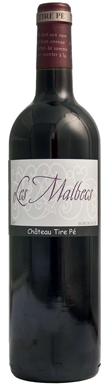

There’s a lovely floral freshness and verticality about this wine. It has a deep colour and aromatic spectrum that includes chalky, menthol, liquorice and floral notes. There’s a touch of violet on the palate, which is long, linear and fresh thanks to the vibrant acidity. The tannins are firm but fine and it gains in volume with aeration, finishing again on a chalky note. Aged in 600-litre demi-muids and amphorae.
2016
Château Tire Pé

Château de Pressac, St-Émilion, Grand Cru Classé, Bordeaux, France, 2016
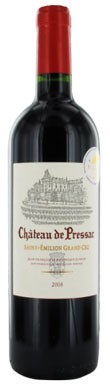
This château was the site of the English surrender in 1453 at the end of the Hundred Years War. Owned since 1997 by JeanFrançois and Dominique Quenin, it is the only St-Emilion grand cru classé to grow all six permitted red Bordeaux grapes on its 42ha, including Malbec, whose historic name is Pressac. In 2016, the blend was 72% Merlot, 11% Cabernet Franc, 10% Cabernet Sauvignon, 5% Malbec and 2% Carmenère, aged in 65% new oak. Georgie Hindle: Gorgeous red berry fruit with a bite, and slight strictness to the tannins. Not yet ready to drink, but sleek and stylish. Concentrated and muscular, excellent pure acidity, and salty minerality, too. Vincenzo Arnese: Good structure, vibrant with good intensity and ripeness. Tannins are integrated and oak is well blended. Good finish. Arthur Coggill: Spicy, aromatic, inviting nose, touches of clove and wild bilberry. Juicy, succulent, full-on redcurrant and damson. Grippy but delicate tannins dominate for now, so leave a few years.
2016
Château de PressacSt-Émilion
Château Moutte Blanc, Moisin, Bordeaux Supérieur, Bordeaux, France, 2014
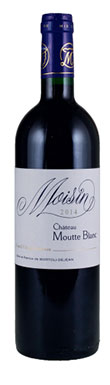
From vines with an average age of 100 years, this has the signature of Petit Verdot. The colour is an opaque purple-black, while the nose is lifted and fresh with discreet, dark fruit notes and a hint of oak (ageing in 70% new oak barrels). The palate is suave but firm, the acidity marked and tannins present, but well honed. Certainly needs food to match.
2014
Château Moutte BlancBordeaux Supérieur
Château Reynon, Hommage à Denis Dubourdieu, Bordeaux, France, 2018
This is the initial vintage of this 100% Petit Verdot produced from massal selection vines from La Lagune (at Ludon-Médoc) and Moutte Blanc (Macau), as well as clone 1058. There’s a little more finesse to this cuvée, but it still has the grape variety’s traits of deep colour, freshness and structure. The fruit has a lovely purity and the tannins are honed to a velvety texture.
2018
Château Reynon
Château Angludet, Margaux, Bordeaux, France, 2016
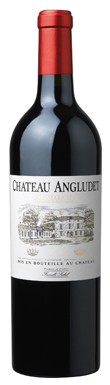
Petit Verdot is significant at 12% of the blend. Aromatics are lifted and fruit-driven with a hint of spice and vanilla. The palate has an innate sweetness and is supple and round but backed by a tangy freshness – possibly from the Petit Verdot. Tannins are fine, the finish slightly chalky. It’s a balanced wine that offers modest charm. Aged for 12 months in Bordeaux barriques.
2016
Château AngludetMargaux
Château de Bouillerot, Cep d’Antan, Bordeaux, France, 2017
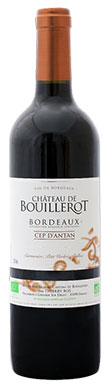
A rarity in that it’s produced from old vines of all three grape varieties. A fresh, fruity nose with just a twist of pepper. The palate is juicy but linear and firm, the acidity giving a refreshing note, the finish dry and sandy. An honest and enjoyable wine.
2017
Château de Bouillerot
Château Tour des Graves, Idylle, Côtes de Bourg, Bordeaux, France, 2016
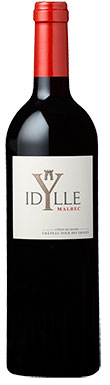
What the Côtes de Bourg can aspire to with gravel soils and yields at 35hl/ha. A blend of 85% Malbec with 15% Cabernet Sauvignon, zesty and fresh on nose and palate with dark fruit, toast and spicy notes. Long and linear, but with fruit and a chalky terroir note. Aged 16 months in barrel.
2016
Château Tour des GravesCôtes de Bourg
Les Vignerons de Tutiac, Origines Ter Pointe, Côtes de Bourg, Bordeaux, France, 2016
Made by the dynamic Tutiac co-op at Marcillac, from a parcel of Malbec grown on gravel soils in the lieu-dit La Pointe. A gourmand wine, with dark, creamy fruit, supple texture, fine tannins and freshness on the finish. The oak is apparent but integrated.
2016
Les Vignerons de TutiacCôtes de Bourg
