
Regional profile: Cairanne
Promoted to full appellation status in 2016, this southern Rhône region makes an array of quality wines, with dynamic producers showing just what the area is capable of, reports John Livingstone-Learmonth...


‘It’s been a relentless struggle, but I am very happy now.’ These were the words of Denis Alary, president of the Syndicat de Vignerons de Cairanne, speaking in February 2016. He was referring to what can only be called the long saga of raising Cairanne from a Villages wine to cru – full appellation status – which started in July 2008. Endless disputes ensued, centred on which vineyards would not qualify for the new, tighter rules, and other new demands such as compulsory hand-harvesting.
Hand harvesting will protect old vines trained in the standalone gobelet fashion, and will set up correct crop discarding in tricky years, as was required in 2014. There is also the protection of wooded zones neighbouring the vineyards. In the cellar, a maximum use of sulphur on red wines is 100mg/l, below the Europe-wide level of 150mg/l, and closer to what organic certificates demand.The AC Cairanne promises a wide array of quality wines, both red and white. There are dozens of good domaines here, more than in any other local appellation apart from Châteauneuf-du-Pape and Gigondas. The ruling allowed growers to produce the splendid vintage of 2015 in either AC Cairanne or AC Côtes du Rhône-Villages Cairanne. Those who wished to sell their wines from spring – perhaps 65% of the estates – could have opted for Villages; while one-third delayed the issue of their wines until summer, when they are now titled full cru on the label.
The Cairanne vineyard has reduced from 1,350 hectares to 1,088ha. Of this, 300ha represents the prime, pre-World War II vineyards. The discarded zones are mainly in the southern part of the appellation, and their wine henceforth will either be Côtes du Rhône or Côtes du Rhône-Villages.
Cairanne’s heartbeat comes from two long-established families, whom I have known since I first visited their estates in 1973 – the Alarys and Brussets. The Alarys were large-scale silk-worm breeders in the late 19th century, supplying the village’s factory between 1860 and 1890, while they also grew madder, the name of the plant providing the dye for the French army’s red trousers. The advent of nylon and abandonment of red trousers paved the way for vineyard planting a century ago.
Cairanne at a glance
Area under vine 1,088ha
Annual production 27,333hl (2013)
Soils Clay with limestone, also garrigue and sandy areas
Main red grapes Grenache (min 50%), Syrah, Mourvèdre, Carignan, Counoise, Cinsault
Main white grapes (Just 5% of the area under vine) Grenache, Clairette, Bourboulenc, Marsanne, Roussanne, Viognier
Yield 38hl/ha red, 40hl/ha white
Exported 37%
Wineries 44
Co-operatives 6
Top recent vintages 2012, 2010
Good recent vintages 2014, 2013, 2011
Best vineyards
Their top sites lie to the east of the village, with a bountiful, south-facing yellow and blue clay-based slope centred on St-Martin, where up to 40% limestone brings tension to the wine, and an east-northerly exposure is especially rated, along with a little elevation towards 250m. Ebrescade, Haut Coustias, Estévenas and La Ridel are other ‘grand cru’ sites in this area, giving finer wines than the low-lying, garrigue zone near the Plan de Dieu and the sandy sites that can be found west of the village. Domaines Boisson, Clos Romane, Richaud and Rabasse Charavin all feature in this prized sector.
Another good spot lies north of the village, at height, on the Col du Débat, where cold clay soils provide freshness in the wines; Boutinot and Hautes Cances have vineyards there. By and large, the garrigue area gives robust, punchy wines, while the sand zones lend finesse to the Grenache, albeit in wines that can flirt with high degrees of alcohol.
Cairanne reds are usually laced with influences of garrigue or herbs, and give a direct flow of bright, lightly spiced fruit. They are a little less overtly robust than their neighbour Rasteau, where the clay content in the soil is generally higher. As Frédéric Alary of Domaine de l’Oratoire St-Martin says: ‘We really want the wine to raise its game, and allow us to show that Cairanne is more elegant and fine than our neighbours.’
The 2012 vintage was fabulous here, a bearer of both bounty and flair – and an accurate depiction of the terroir in the glass. The 2013s were more crunchy, low on Grenache, while the 2014s deliver fruit with some flair: many are extremely appealing.
Youth and recent start-ups are also making their mark; Patrice Jubain, a former audio- visual producer whose father and grandfather were members of a wine co-op, makes a small amount of Vieilles Vignes in bottle, led by a lovely, genuine 2012. Loïc Massart, an industrial engineer until 2011, has issued promising red and white in 2014 under his domaine name of Les Chemins de Sève. Domaine Clos Romane was set up in 2011 when Stéphane Charançon left the local cooperative; his vineyards are both in the east and the west, and he works with low sulphur, seeking to make wines marked by freshness.
Amid all this expectation lies one shadow, however. The Cave de Cairanne, Camille Cayran, emerged from two years in receivership in February, its finances so perilous that an outside appointee had been controlling all of its spending. Many co-op members have left, and production is down to a very small 14,000hl, under one-third of its usual level. It has an arrangement with the merchant Les Grandes Serres, which rents space and runs the bottling line; it is expected to continue, costs pared right down, with an emphasis on good quality wine sold in bulk, and a restricted amount sold in bottle.
Six Cairanne producers to watch
Domaine de l’Oratoire St-Martin
It has been fascinating to observe the steady progress towards ever more refined wines at this 28ha top estate; the Alarys are local royalty, with the family contributing much to the standing of the village for several decades. Frédéric Alary reflects on their modus operandi in the following way: ‘I find I am coming back to what my grandfather did – I have suppressed the 228-litre and 600-litre oak casks in favour of large barrel or concrete vat for maturing the reds. The casks broadened the wines, whereas I want to lengthen them.’
Domaine des Amadieu
Yves Jean Houser was an agricultural engineer and director of Carrefour before coming to Cairanne in 2007. He works 7ha, and I rate the biodynamic virtues of his wines. They are fresh, the fruit is bright as a button, they bear local depth, and they go long, presenting saline moments on the finish. Both his Vieilles Vignes and Cuvée des Garrigues are testament to a fast learner, and a committed, thoughtful worker.
Domaine Alary
Denis Alary is visibly buoyed by the growing interest of his son Jean-Etienne and daughter Bénédicte at this classy domaine. He terms his L’Estévenas a more northern Rhône-style wine, and the Cuvée Jean de Verde more southern, a bearer of refined strength. His achievement of smooth tannins in 2013, when many wines were edgy and dusty, and the enjoyable plumpness of the Grenache in 2014, when the crop quality was uneven, both point to the attention to detail here.
Domaine Clos Romane
Stéphane Charançon is ex-vice president of the Cave de Cairanne. His 30ha are well spread across heights and plain lands, and by working with natural yeasts and low sulphur, he is determined to present full but also fresh wines. The 2014 is smooth and wholesome, with Grenache at only about 50% of the wine, while the 2012 is a Nordic-styled, slow gainer of a wine. His oaked 2011 Pinarius is weighty but lucid – a good effort on a one-off wine.
Domaine Richaud
The most ‘fun’ wines at Cairanne undoubtedly come from the talented Marcel Richaud. He is not one to suggest venerable laying down of his bottles, which ties in with his innate sense of conviviality and friendship. Some semi-carbonic maceration is used, which promotes the brightness of the fruit. The enlargement of the cellar now means his flagship wine, Cuvée L’Ebrescade, made only in small quantities – and notably pure in the tricky 2013 vintage – has been matured for two years.
Domaine Les Grands Bois
Mireille and Marc Besnardeau work nearly 10ha in Cairanne organically, along with Côtes du Rhône Villages at Ste-Cécile-les-Vignes and some Rasteau. Quality is extremely consistent; the Cuvée Marc red was a star in 2012, full of flavour and local integrity, with both the 2013 and 2014 just a bit behind that in quality. The Cuvée Maximilien is a bustling, juicy wine, and there is also a recent, bonny Cairanne white called Malorie: half Viognier, half Roussanne.
Eleven top choices from Cairanne
See more Cairanne tasting notes from Decanter experts here
See also: Ten of the most exciting southern Rhône estates
Domaine Oratoire St Martin, Haut-Coustias, Côtes du Rhône Villages, Cairanne, Rhône, France, 2013
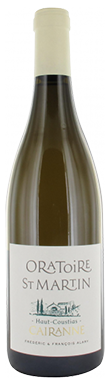

Shy nose with a hint of pear but has potential and real elegance. The palate has inner strength; a welling-up of tangy flavour and...
2013
Domaine Oratoire St MartinCôtes du Rhône Villages

Domaine Les Hautes Cances, Cuvée Tradition, Côtes du Rhône Villages, Cairanne, Rhône, France, 2010
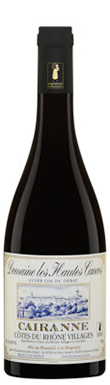
Brewed, dark aroma; full bodied, good life force and fresh – even in amid its plentiful fruit weight. Long. Mourvèdre and Counoise complete the blend
2010
Domaine Les Hautes CancesCôtes du Rhône Villages
Domaine Alary, Cuvée Jean de Verde, Côtes du Rhône Villages, Cairanne, Rhône, France, 2012
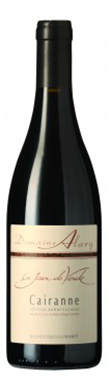
Full, floral nose. Broad, meaty, deep, red-berried palate showing power from within. Serious wine; deserves time and good food.
2012
Domaine AlaryCôtes du Rhône Villages
Domaine Brusset, Les Chabriles, Côtes du Rhône Villages, Cairanne, Rhône, France, 2010
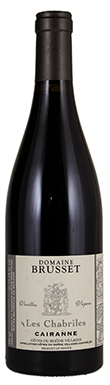
Garrigue and intense savoury aromas. Deep, fluid, tasty and local. Lots to enjoy.
2010
Domaine BrussetCôtes du Rhône Villages
Domaine Oratoire St Martin, Cuvée Prestige, Côtes du Rhône Villages, Cairanne, Rhône, France, 2010
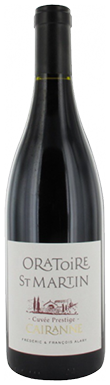
Rich nose of abundant raspberry fruit and fine depth on the profound, wide palate. Good final flourish.
2010
Domaine Oratoire St MartinCôtes du Rhône Villages
Domaine des Amadieu, Cuvée des Garrigues, Côtes du Rhône Villages, Cairanne, Rhône, France, 2013
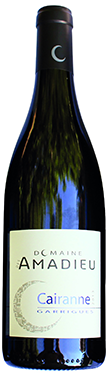
Big, brewed, ripely fruited nose;the strength in its veins is never overdone. Lovely, long and full – genuine; typical.
2013
Domaine des AmadieuCôtes du Rhône Villages
Domaine Jubain, Vieilles Vignes, Côtes du Rhône Villages, Cairanne, Rhône, France, 2012
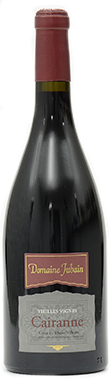
Expressive, nuanced bouquet of spice and dark fruits. Suave, serene drinking – broadly flavoured, true and terroir specific.
2012
Domaine JubainCôtes du Rhône Villages
Domaine Boisson, Côtes du Rhône Villages, Cairanne, Rhône, France, 2012
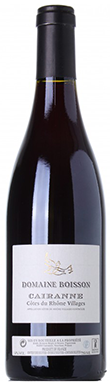
Deep and fat bouquet of cooked fruits and herbs. Tasty attack – the southern depth of fruit sustains it. Understated wine but it holds good...
2012
Domaine BoissonCôtes du Rhône Villages
Domaine Richaud, Côtes du Rhône Villages, Cairanne, Rhône, France, 2014
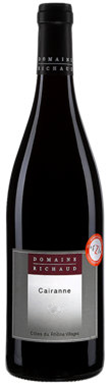
Lucid and attractive black fruit aromas, the palate is stylish and free-running and the finish is neat. Syrah completes the blend.
2014
Domaine RichaudCôtes du Rhône Villages
Famille Perrin, Peyre Blanche, Côtes du Rhône Villages, Cairanne, Rhône, France, 2011
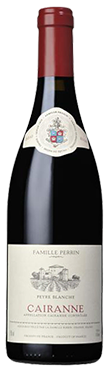
Sweet herbs and plum fruit in a lifted bouquet. Shapely, well woven palate with good tannic support. Authentic ripeness here.
2011
Famille PerrinCôtes du Rhône Villages
L'Ameillaud, Côtes du Rhône Villages, Cairanne, Rhône, France, 2012
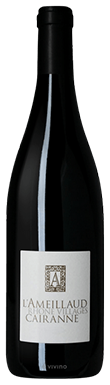
Southern depth and oiliness on the bouquet with notes of raspberry liqueur. Deep fruit, shapely tannins, and a little mystery on the palate. Heat and...
2012
L'AmeillaudCôtes du Rhône Villages
