
Italy: We need to talk about Calabria
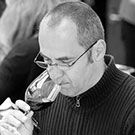

Little known by tourists and wine lovers alike, Calabria is emerging as a source of distinctive wines made from unique local grapes. Walter Speller shines a light on the area’s pioneering producers.
Calabria, the mountainous, rugged toe of the boot of Italy, is still so off the radar that not even Federdoc, the Italian institute for quality wines, knows how many hectares of vines are planted there.
Stefano Coppola, winemaker at Ferrocinto situated high up in the Pollino Mountains north of Cosenza, estimates it is only 12,000ha.‘I have only deduced that from the number of hectares the EU law allows us to plant each year,’ he says. In 2017 that was 120ha, or 1% of its total surface.
While its isolation has kept large parts of vineyard land unspoiled, years of neglect eroded Calabria’s wine production, making it unknown to most wine lovers.
But with some 350 local varieties, Calabria is well positioned to cater for the growing international thirst for anything indigenous, while its beautiful, rugged landscape remains one of Europe’s least explored.
Ferrocinto is one of a growing number of estates to push Calabria back into the spotlight. Founded in 1849 by the Salturi barons, the actual turnaround came in 2000 when vineyards were replanted with local varieties, especially the potentially great red Magliocco Dolce.
In 2017 Coppola’s strong belief in local vines led to the planting of an experimental vineyard with 110 cuttings from unknown varieties.
The lack of a viticultural and oenological research institute or government investment are the main reasons why Calabria still lags behind the rest of Italy, so private initiatives like Ferrocinto’s are crucial in moving the region forward.
In the vineyard two distinct Maglioccos were identified: rustic Magliocco Canino and the tannic yet elegant Magliocco Dolce. What Nebbiolo is to Piedmont, Magliocco Dolce is to Cosenza.
Magliocco Dolce gives this part of Calabria a strong and much needed identity and signals a shift away from French varieties.Between 2011 and 2017 Calabria’s vineyard area increased by 2,000ha, stemming a decline that began at the end of the 19th century, when poverty triggered a wave of immigration, and phylloxera destroyed swathes of vineyards.

Vineyard decline
Through abolition of the mezzadria, or sharecropping system, in the 1960s large landholdings were confiscated, cut up and sold to those who had previously only worked the land. Calabria’s post-war agriculture was characterised by swapping one crop for a more profitable one, from grapes to mandarins, peaches to kiwis. EU subsidies to encourage growers to pull out vines, in an effort to drain the European wine lake, were the final blow.
Viticulture withdrew itself to hillsides, which proved a blessing in disguise, because here vineyards benefit from cooler night-time temperatures in summer, as well as granite soils high in mineral content. But in the process intimate knowledge about viticulture was almost annihilated. Historically the Calabrians were famous for their sophisticated viticulture, going back to the Bronze Age when the Enotri, the original inhabitants of Calabria, controlled the area. When the Greeks arrived in what would become Magna Graecia they found a highly advanced viticulture.
In the Pollino Mountains you can still find traces of this ancient viticulture. The youthful Giuseppe Calabrese, a true garagiste who vinifies part of his crop in his garage due to lack of a cellar, keeps tradition and historic varieties alive. Calabrese dropped out of agricultural school, preferring to work in his grandmother’s vineyards instead.
‘I planted my first vines when I was 10,’ he says, explaining the irresistible call of the vines. Parts of his vineyards are still trained using the ancient alberello system: bush vines with branches tied to stakes. The local white Guarnaccia grape as well as Magliocco Dolce are Calabrese’s protagonists. Since the time his grandmother owned them, vineyards have been tended organically and his white and red are vibrant expressions of the rugged area. Because of Calabrese’s unconscious decision to work in traditional ways, the wines are spot-on for wine lovers in search of authenticity.

Growth and investment
At 650m in a beautiful windy spot in the hills of La Sila, a nature reserve in the centre of Calabria, Demetrio Stancati of Serracavallo has just planted 6ha of Magliocco Dolce. A newcomer to wine, he decided to plant French varieties as well as Riesling in his family’s vineyards after a trip to France in 1995. Recognising the huge potential of this area, Stancati’s first efforts immediately drew the attention of the Italian press in 1997.
Being one of only two producers in the area, he soon realised that strength lies in numbers. To access EU funding he mobilised 15 people, who didn’t have a lot of wine knowledge but had plenty of business know-how, and founded a consortium. In 2005 some €20 million was amassed, half from an EU loan, triggering vineyard plantings and cellar constructions.
Now, in 2017 there are more than 40 estates here, selling bottled rather than bulk wine. ‘In the past the region’s restaurants refused to list Calabrian wines,’ Stancati tells me. Nowadays it is considered a sign of ignorance if a restaurant doesn’t offer any.

The region of Cirò is on the eastern side of Calabria, on the coast of the Ionian Sea, where vineyards are planted on gentle slopes near the town of the same name. It produces a totally different style of red wine based on Gaglioppo. The pale, tannic Cirò red is regularly misunderstood, not least by local producers, who recently decided to blend in French varieties in the erroneous belief that it would increase the grape’s appeal. The first winery to produce an award-winning Gaglioppo-Cabernet blend years ago was Librandi (though it must be noted that this staunch Gaglioppo defender never gave up the production of a pure Cirò).
This dilution of the Cirò style triggered a new wave of young producers completely focusing on 100% Gaglioppo wines. Dubbed the ‘Cirò Revolution’ because of their unwillingness to compromise, they tend vineyards organically while experimenting with long maceration times, resulting in more complex reds. They also put enormous effort into Gaglioppo rosato, which is quickly advancing as one of Italy’s best rosés.
These few examples highlight Calabria’s huge potential for fine wine based on local varieties, enthusiastically embraced by a new generation, which is aware of their quality and their commercial value – something that has long been overlooked or underestimated. Taking this southern region’s history, local varieties and many complex terroirs as their inspiration, it is these producers who are putting Calabria back on the map.
Calabria: six names to watch
’A Vita
Francesco de Franco is one of a handful of young Cirò producers who strictly adheres to organic protocols. Due to their highly original expressions of the red Gaglioppo grape, these producers have been dubbed ‘Cirò Revolution’. De Franco makes complex, long-lived wines that defy the region’s undeserved label of rustic and tannic – a reputation that led to a controversial change of rules to allow the blending of international varieties. His complex Riserva, which stays on the skins for 40 days, clearly shows the fallacy of that change of rule.
Ferrocinto
No newcomer, Ferrocinto was founded in 1658, but the estate’s potential has only been revealed since 2000 with the replanting of its vineyards, located in the Pollino Mountains at 600m above sea level, with a strong focus on indigenous varieties – notably Magliocco Dolce. Research in its experimental vineyard has unearthed a further 20 local varieties that are completely unknown and potentially interesting. Winemaker Stefano Coppola makes blends of Magliocco Dolce and the more rustic Magliocco Canino, while cask samples of pure Magliocco Dolce show huge class.
Giuseppe Calabrese
Agricultural college drop-out Giuseppe Calabrese planted his first vines at the age of 10. He took over old vineyards from his grandmother in 2007 and only started to bottle under his own name in 2013. The tiny plots, scattered around the Pollino Mountains – several of which still have alberello-trained vines – have been tended organically, and the approach in the cellar is completely hands-off. Calabrese’s pure Magliocco Dolce is energetic and a little wild, while his finely chiselled tannins call to mind Nebbiolo.
Librandi
No one has done more for Cirò than the historic estate of Librandi. The release in 1988 of Gravello, an award-winning Gaglioppo-Cabernet Sauvignon blend, paved the way for wider international recognition of the winery’s Duca Sanfelice Riserva Cirò, which helped shine a spotlight on the denomination. Librandi was also trailblazing in its research into local grape varieties, planted in its experimental vineyard, and was one of the first producers to realise the potential of Magliocco Dolce, evidenced by the release of Magno Megonio back in 1998.
Serracavallo
A newcomer to wine, Demetrio Stancati planted French grape varieties on his family’s estate in 1995, because, as he admits, this attracted the attention of journalists at a time when very few people had heard about this wild corner of Calabria. The vineyards of his Serracavallo estate are situated in the windy hills of La Sila, a rugged nature reserve, where large diurnal temperature differences render wonderfully supple wines. Several Serracavallo wines are blends of Magliocco Dolce and Cabernet Sauvignon, but the most original rendition is pure Magliocco Dolce.
Terre del Gufo
Eugenio Muzzillo is fast advancing as a Magliocco Dolce specialist. All 5ha of vineyards on his Terre di Gufo estate, which sit at 500m altitude, have been planted with this variety. As one of the very few winemakers located here, the production of Muzzillo’s Magliocco keeps the tiny, historic Donnici denomination alive. So far, he has been unable to label his Magliocco Dolce as such because – due to a bizarre quirk of fate – only the rustic Magliocco Canino has been officially registered in Italy’s national register of grape varieties. Apparently, official correction is underway – not least because of Muzzillo’s work.
Speller’s top picks from Calabria:
Giuseppe Calabrese, Daipastini Bianco, Pollino, Calabria, Italy, 2016
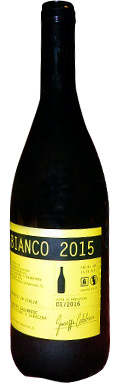

A blend of Guarnaccia and Malvasia. Honeyed and perfumed aromatics are almost a little heady. Loads of minerals on the palate are tied in by...
2016
Giuseppe CalabresePollino

Serracavallo, Besidiae, Valle de Crati, Calabria, Italy, 2016
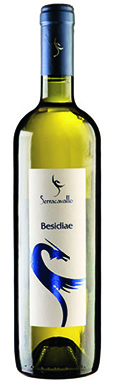
89
A blend of 40% Pecorello, 30% Chardonnay and 30% Riesling. Pale straw colour, with soft pear and apple aromas on the nose, plus a distinct note of lime. The palate shows citric nerve; finely textured and very fresh.
2016
SerracavalloValle de Crati
’A Vita, Rosato, Calabria, Italy, 2016
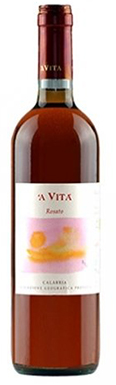
A pale orange-pink rosé. Notes of cool citrus peel, orange and mandarin on the nose. The finely textured and tannic palate displays intense acidic nerve...
2016
’A Vita
Serracavallo, Don Fili’, Terre di Cosenza, Calabria, Italy, 2016
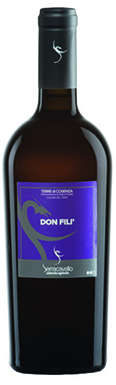
Salmon pink colour. Crushed, red berry fruit aromas with a hint of oak. The fresh red fruit palate is a little racy. Long and finely...
2016
SerracavalloTerre di Cosenza
Librandi, Gravello, Val di Neto, Calabria, Italy, 2010
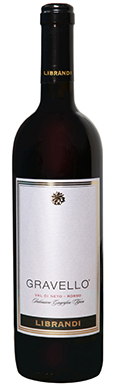
Deep, complex and earthy dark fruit nose with cigar box and liquorice hints. Black cherry and damson fruit, with serious but polished tannins. A claret...
2010
LibrandiVal di Neto
Librandi, Magno Megonio, Val di Neto, Calabria, Italy, 1999
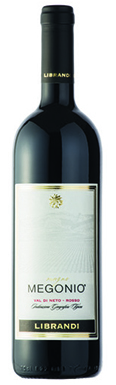
100% Magliocco Dolce. Evolved but very impressive nose: cherry, smoke, iron and mulch. Amazing concentration and still taut. Vibrant fruit and velvety bittersweet tannins on...
1999
LibrandiVal di Neto
’A Vita, Cirò Riserva, Cirò, Calabria, Italy, 2013
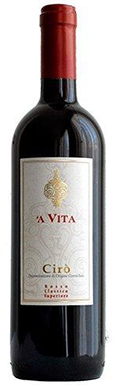
Deep, intense and aromatic nose with notes of cherry and rosehip preserve. Liquorice, tobacco and cherry fruit are evident on the palate. Lots of coating,...
2013
’A VitaCirò
Calabretta, Cirò Classico Superiore, Cirò, Calabria, Italy, 2013
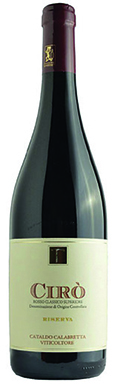
Savoury red fruit with huge depth and fine herbal liqueur notes. The palate is reminiscent of Nebbiolo, but this is more savoury. Very long finish;...
2013
CalabrettaCirò
Giuseppe Calabrese, Pollino, Terre di Cosenza, Calabria, Italy, 2013
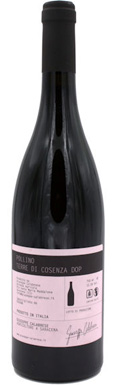
Deep, full and spicy on the nose. Bright, concentrated fruit on the palate, matched with gorgeous, rustic, lively tannins. Long and a little wild in...
2013
Giuseppe CalabreseTerre di Cosenza
Sergio Arcuri, Più Vite, Cirò, Calabria, Italy, 2011
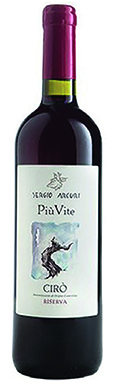
The colour of a deep rosé. Gorgeous raspberry and rosehip nose with minerally, liquorice notes behind. Stunning spicy fruit with layers and layers of tannins....
2011
Sergio ArcuriCirò
Ferrocinto, Magliocco, Calabria, Italy, 2015
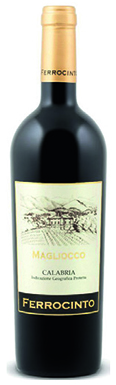
Savoury cherry nose with a hint of liquorice. More savoury cherry along with wild strawberry on the palate, plus a firm backbone of tannins....
2015
Ferrocinto
Terre del Gufo, Portapiana, Terre di Consenza Donnici, Calabria, Italy, 2015
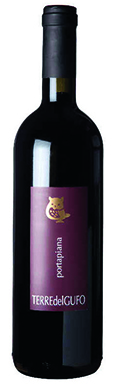
A blend of Magliocco Dolce, Mantonico and Greco Nero. Intense red fruit with a layer of oak. Refreshing acidity on the palate, with fine, chewy...
2015
Terre del GufoTerre di Consenza Donnici
