
Regional profile: Michigan
The Great Lakes State may not be as famous for wine as others in the US, but aromatic whites thrive in its cold, northern climate...

Long overlooked by wine lovers outside the region, Michigan is the sixth-largest wine-producing state in the US.
The name ‘Michigan’ comes from the Native American word for ‘big water’, and the state is bordered by freshwater lakes on every side save its southern border. It’s these lakes that make the state hospitable to vineyards, since the climate here is harsh. Temperatures can fall below freezing from December through February, sometimes into March.
The presence of the lakes, however, moderates the severe climate and makes growing wine grapes possible. Nearly all vineyards must be planted within 40km of a body of water to receive the lake’s insulating benefit. As one might expect in such a cold climate, some of the most successful wines are aromatic whites. Riesling has long been a staple, but it’s far from the only game in town.
‘That stunning delicacy and purity you can get from Pinot Blanc in Michigan is really attractive’
As Master of Wine and Master Sommelier Doug Frost points out: ‘Riesling is what most people talk about here, but I’m also a fan of Pinot Blanc and Pinot Gris. It’s that sense of purity. You can get riper versions from Alsace that have more mineral character, but that stunning delicacy and purity you can get from Pinot Blanc in Michigan is really attractive.’
Madeline Triffon MS concurs. With a 43-year wine career based in Michigan’s largest city of Detroit, including becoming the second woman (in 1987) to pass the Master Sommelier exams, Triffon has been called ‘Detroit’s First Lady of Wine’. ‘There is some shockingly good Pinot Blanc out there,’ she said. ‘If I were to short-list the varieties with real potential, it would be Pinot Blanc, Auxerrois, Pinot Noir, Blaufränkisch and Riesling.’
Restaurateur Amanda Danielson of Trattoria Stella in Traverse City notes that winemaking is evolving quickly. ‘In the past 10 to 15 years you’ve had winemakers making the wines that should be made in Michigan. They’re not trying to be Napa or Russian River. They’re having fun and not afraid to push the envelope on some lesser-known varieties.’
The lie of the land
Wine production in Michigan originated with French settlers in 1679, who made wine from local Vitis riparia grapes. Due to the harsh climate, viticulture struggled to take root in the state. There were several commercial wineries in the 19th century, but none survived Prohibition. Post-Prohibition winemaking was also somewhat checkered, since the most famous Michigan wine of the era was the sweet, sparkling red known as Cold Duck. Then production through the 1960s was dominated by hybrid varieties and by fortified wines.
The first winery to plant traditional European grape varieties (Vitis vinifera) in Michigan, in the mid-1970s, was Chateau Grand Traverse. The amount of vinifera planted has grown steadily since. Hybrid varieties such as Vidal Blanc and Vignoles are losing ground, but they are still important to the local industry, according to Dr Paolo Sabbatini of Michigan State University. They are most frequently found in the American Viticultural Area (AVA) called Tip of the Mitt, where it is just too cold to ripen vinifera adequately.

There are five main grape-growing areas in Michigan, whose soils throughout are sandy, well-drained glacial moraine, mixed at times with clay. Lake Michigan Shore AVA is in the southwest corner of the state. This is where Michigan’s first grapes were planted and it is still the region with the largest production. The smaller Fennville AVA is wholly contained within the Lake Michigan Shore.
Perhaps the most promising areas are located in northwestern Michigan on two peninsulas that jut into the lake. Leelanau Peninsula AVA is the larger of the two and separates Lake Michigan from Grand Traverse Bay. This peninsula is the home of the two largest wineries, Leelanau Wine Cellars and Chateau Grand Traverse, each producing more than 100,000 cases each year. Most of the other Michigan wineries are much smaller, producing 3,000 to 10,000 cases annually and selling most of it from the cellar door.
Producers to watch
Among the best of the smaller producers is Bryan Ulbrich at Left Foot Charley, who bottles about 5,000 cases annually under that label and does contract work for other growers who ship another 3,000 cases. The winery is a co-operative owned by 18 farmers who each tend vineyards ranging in size from 0.5ha-2ha. Ulbrich vinifies the grapes in his urban winery located in a refurbished mental hospital in Traverse City.
‘For the Riesling, it’s important to get into a Saar-like mentality,’ Ulbrich says of the Germanic balance he is trying to achieve. ‘I don’t like to deacidify, so I leave a bit of the natural residual sugar in most years and make truly dry Riesling only in the warm years.’
Another top-quality Northern Michigan producer is Sean O’Keefe at Mari Vineyards, located in the heart of Old Mission Peninsula AVA. This peninsula also projects into the Grand Traverse Bay, but it is much narrower than the Leelanau Peninsula.
O’Keefe is a second-generation winemaker: his father Edward founded Chateau Grand Traverse and planted the state’s first Riesling. In 2015, O’Keefe signed on with Mari Vineyards, where they farm an incredible 30 different varieties, including Teroldego, Refosco, Malvasia Bianca and Schioppettino along with the more common Riesling, Pinot Blanc and Cabernet Franc. All varieties are grown in Mari’s estate vineyards.
The Pinot Grigio is made in a ramato style, using some skin contact before pressing to harness colour and phenolic compounds. O’Keefe goes even further with the Friulano, which makes up 5% of his Pinot Bianco blend: he ferments the grapes for 48 days on the skins before pressing. Mari’s overall production has grown to 8,000-9,000 cases annually, split evenly between red and white wine.
‘It isn’t like you have to work hard anymore to find good Michigan wine – there is just so much out there’
The spirit of experimentation in Michigan, and the desperation provoked by the extreme climate mean an ample range of wines are produced. Many are available only locally, although most wineries ship. As Madeline Triffon notes, ‘It isn’t like you have to work hard anymore to find good Michigan wine – there is just so much out there.’
Charles Curtis MW’s top Michigan wines
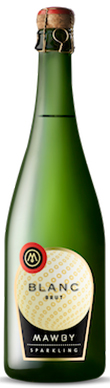
Mawby, Blanc Brut, Leelanau Peninsula, Michigan, USA
90
This traditional-method sparkler with a twist is a blend of 80% Chardonnay and 20% Riesling. After 16 months on the lees, it is disgorged and dosed at 8g/l. The finished wine has little overt Riesling character, but there is a slight green tint to the hue. There is surprising finesse here, with aromas of white flowers and ripe pear. The mousse is fine and lively, and refreshingly crisp acidity leads to a juicy finish.
MawbyLeelanau Peninsula
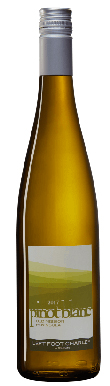
Left Foot Charley, Island View Vineyard Pinot Blanc, Old Mission Peninsula, Michigan, USA, 2017
92
Intensely aromatic, with notes of greengage plums, lime peel and a stony mineral underpinning. On the palate, there is just a hint of CO2, very crisp acidity and light body, but there is still an impressive persistence to the finish. This is a Pinot Blanc to make you sit up and take notice!
2017
Left Foot CharleyOld Mission Peninsula
Mari Vineyards, Dry Riesling, Old Mission Peninsula, Michigan, USA, 2016
92
Geisenheim-trained winemaker Sean O’Keefe believes too much sweetness in Riesling is as unnecessary as 'ketchup on steak'. This bone-dry beauty is produced exclusively from the Jamieson Vineyard at the tip of the Old Mission Peninsula. The 2016 vintage shows some developed petrol aromas and hints of lime peel and earth. Lively, crisp acidity carries this complexity on the palate to an exciting conclusion.
2016
Mari VineyardsOld Mission Peninsula
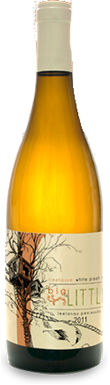
bigLITTLE, Treehouse White Pinot Noir, Leelanau Peninsula, Michigan, USA, 2018
91
Produced by innovative young winemaker Michael Laing, this Pinot Noir is whole-cluster-pressed and then fermented off the skins in new and used casks to create a lovely Blanc de Noirs with notes of ripe apricot, marzipan and white flowers. On the palate, the texture is pleasantly dense yet shows a deft balance between fresh acidity and rich extract. Marvellous!
2018
bigLITTLELeelanau Peninsula
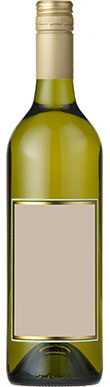
Mari Vineyards, Pinot Bianco, Old Mission Peninsula, Michigan, USA, 2017
91
A blend of 80% Pinot Bianco, 15% Pinot Grigio and 5% Friulano. The first two grapes were whole-cluster pressed and fermented in stainless steel; the Friulano was fermented on the skins for 48 days. The final result is superb, with aromas of fresh peach and mango, herbs and beeswax. On the palate, there is a pleasantly dense texture carried to impressive length by a mouthwatering freshness.
2017
Mari VineyardsOld Mission Peninsula
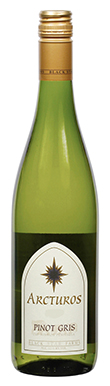
Black Star Farms, Arcturos Pinot Gris, Michigan, USA, 2018
90
Alsatian in style, this delicious white is fermented in stainless steel, delivering ripe melon fruit aromas of impressive purity with a hint of spice and a note of honey. On the palate, the wine is rich (4g/l residual sugar), but the acidity is crisp, and the final impression is one of exquisite balance and weight.
2018
Black Star Farms
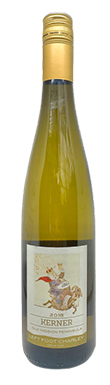
Left Foot Charley, Kerner, Old Mission Peninsula, Michigan, USA, 2018
89
Traditional to Austria and Northern Italy, the Kerner grape yields seductive results here. Fermented and aged in large, used casks, there is an apricot fruit character plus hints of fresh flowers and cream. The palate is clean and fresh – the oak character is more texture than taste, lingering subtly on the finish. Impressively elegant and sophisticated.
2018
Left Foot CharleyOld Mission Peninsula
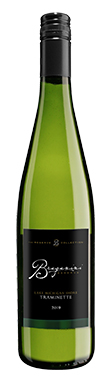
Braganini, Traminette Reserve, Lake Michigan Shore, Michigan, USA, 2019
88
Traminette is a hybrid of Gewürztraminer and table grapes and this wine is an excellent example of its type. Surprisingly elegant, it shares some of the spicy rose-petal aromatics of its Alsatian parent but none of the heaviness. The 11g/l residual sugar is balanced by 7g/l acidity, resulting in a slightly off-dry but refreshing medium-bodied wine with a clean, lingering finish.
2019
BraganiniLake Michigan Shore
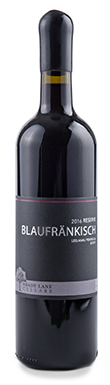
Shady Lane Cellars, Blaufränkisch Reserve, Leelanau Peninsula, Michigan, USA, 2016
91
The product of a hot dry summer, this wine represents a barrel selection of the best estate Blaufränkisch. The fruit is punched down during fermentation in open-top fermenters and aged for 22 months in a combination of new and used casks. The wine has a deep purple-blue colour and a pronounced mulberry aroma, with bramble and spice flavours. The texture is firmly tannic but supple, and the finish lingers delightfully.
2016
Shady Lane CellarsLeelanau Peninsula
Mari Vineyards, Praefectus, Old Mission Peninsula, Michigan, USA, 2018
90
This sturdy red is a blend of 60% Cabernet Franc, 30% Cabernet Sauvignon and 10% Merlot. These last two varieties are grown under temporary greenhouses called 'hoop-houses', ripening to perfection. There are pleasant aromas of cherry, blackcurrant and plum, with a suggestion of mint tea. On the medium-bodied palate, well-managed tannins combine well with acidity that is fresh but not tart for a gracious finish.
2018
Mari VineyardsOld Mission Peninsula