
Regional profile: Montagny
It’s one of those no-fuss regions, positioned between the Côte de Beaune and Mâconnais, and content to busy itself specialising in Chardonnays of a reliably decent standard, and in some cases better. As price rises elsewhere across Burgundy show little sign of slowing, the whites of Montagny are offering increasingly good-value interest, says Andy Howard MW


The southernmost appellation of Burgundy’s Côte Chalonnaise, Montagny remains an enigma. With prices of the best white Burgundy rocketing over the past few years, there is now increasing interest in wines from the Côte Chalonnaise, with many representing a great balance between quality and price. Vintages 2017 and 2018 have both been fine in the Chalonnaise, making it a serious alternative for consumers seeking out high-quality Bourgogne wines at affordable prices.
Berry Bros & Rudd buyer Adam Bruntlett says: ‘Montagny pricing is competitive – premiers crus are about half the price of village Puligny or Meursault.’
Andrew Hawes, from specialist importer Thorman Hunt, agrees: ‘Montagny offers good value white wines in the Burgundy context.’ Despite this, Montagny retains a low profile, even in comparison with the wines of its Chalonnaise neighbours Mercurey and Rully. So, how best to navigate the appellation? Who are the producers to seek out, and what should consumers expect in terms of style?
Montagny at a glance
Established One of the first French ACs, established in 1936
Area under vine (2018) Montagny 141ha (40%), Montagny 1er Cru 211ha (60%)
Production (2018) Montagny 8,650hl, Montagny 1er Cru 12,258hl
Elevation 250m-400m above sea level
Soils Bajocian limestone with marls and marl-limestone from the Lias (Jurassic) and Triassic period
Premier crus 49 in all: Montagny-lès-Buxy 32, Buxy 13, Jully-lès-Buxy 2, St-Vallerin 2
Producers (>5,000 bottles per year) 18 wine-growers (including the cave co-op); also 44 négociants of varying size buying grapes
Grapes 100% Chardonnay
Source: BIVB
Long tradition
Montagny can only be produced in the four communes of (north to south) Buxy, Montagny-lès-Buxy, Jully-lès-Buxy and St-Vallerin, with the appellation reserved exclusively for white wine made from the Chardonnay grape. The terroir here is well matched to this noble variety, with complex geological structures showing some significant differences to the Côte d’Or, Maconnais and the rest of the Côte Chalonnaise.
The clay soils differ to those of Mercurey and Rully, with marls and marl-limestone on strata from the Lias (Jurassic) and Triassic period. In some vineyards Kimmeridgian soil is found, perhaps explaining why Montagny and Chablis often share a certain flintiness.
Established in September 1936, Montagny was one of France’s first appellations. The area under vine covers about 350ha, with production in 2018 totalling just under 21,000hl. Vineyards are planted with south and easterly exposition at 250m-400m. Many of the top climats are found at the higher elevations, adding raciness and a salty edge to the appellation’s fleshy, ripe style. Montagny is generally more floral and expressive than Mercurey or Rully, with fresh acidity and mineral notes combining with green apple and stone fruit flavours. In the main, these are wines to be enjoyed in their youth.

Too many crus?
A unique feature of the appellation is the predominance of premiers crus. Montagny has 49 climats designated premier cru, more than any other appellation with the exception of Chablis. In the Côte d’Or a distinct quality pyramid exists, with generic wines at the base, supporting village-level wines and decreasing numbers of premier and grand cru wines at the top. Montagny turns this on its head, with 60% of the appellation at the higher level – the rest simply labelled Montagny. This approach dates back to the occupation of France during World War II, when all vineyards were promoted to premier cru. It was only in 1989 that producers agreed to downgrade certain premier cru to ‘village’ wines – a rare process within France, and subject to continued debate.
With an abundance of wines labelled as premier cru, it is debatable whether this premium designation has always been matched by the quality of wine in the bottle. Alternatively, it explains why premier cru Montagny can be purchased at relatively low prices. Jason Haynes, director of specialist Burgundy importer Flint Wines, notes: ‘The idea of premier cru as an enhanced level seems to have got a bit lost.’
As in the rest of Burgundy, different sites have individual characteristics, but in Montagny the small size of many vineyards makes bespoke bottlings difficult. The result is many wines labelled ‘premier cru’ that are made from a blend across climats. Haynes believes ‘Montagny premier cru is almost too generic – with so many premiers crus being blended together, the appellation suffers from a lack of vineyard recognition’.
On the up
The range of producers adds to the complexity of Montagny. The appellation is dominated by the Buxy cooperative, which accounts for about two-thirds of bottles produced. Established in 1931, the Cave has more than 120 producers and is highly regarded in terms of quality and investment in both vineyard practices and production. The Buxy co-op is the source for many of the good-value, good-quality Montagny premier cru wines found on the shelves of UK supermarkets, mirroring La Chablisienne in Chablis.
At the same time, smaller domaines are gaining in importance, with a focus on individual terroir and specific climats. Key names are Berthenet, Château de Chamilly, Feuillat-Juillot and the highly regarded Stéphane Aladame. One of the biggest drawbacks with these producers is availability, as volumes are often low.
It is also worth seeking out the Montagny bottlings from respected Côte de Beaune names such as Jean-Marc Boillot, Philippe Colin and Jean-Marc Pillot. These classy examples elevate the profile of the appellation, emphasising the quality that can be achieved with the adoption of classic Côte de Beaune methods. The picture is completed by a number of négociants, including well-known names such as Faiveley, Louis Latour, Maison Joseph Drouhin and Olivier Leflaive.
Top spots
Of the notable climats worth seeking out. Stéphane Aladame’s favourite is Les Vignes Derrière, which he sees as ‘the terroir most representative of the appellation’, while Arnaud Desfontaine from Château de Chamilly expresses a preference for Les Burnins – ‘rich and full-bodied, yet retaining freshness’. Françoise Feuillat of Feuillat-Juillot describes Les Coères (at 34ha the largest premier cru) as ‘balanced and elegant, with long ageing potential’. Other leading premiers crus are the Chablis-like Sous Les Feilles, and the unctuous Les Gouresses from deep clay soils.
Franck Grux, winemaker at Olivier Leflaive, adopts a different approach, using a blend of different premiers crus to achieve the desired balance. With a base of about 80% from the steep clay slopes of Bonneveaux, Grux blends in Les Coères, Les Burnins and Perrières to enhance freshness, spice and mineral notes.
It would seem that a greater focus on named premiers crus is a sensible way to take the appellation forward, along with raising the profile of individual domaines. Jason Haynes agrees: ‘There is clearly scope for Montagny to evolve in a very quality-driven direction.’ However, others advise caution about over-complicating matters, Bruntlett concluding: ‘Montagny has a simple message – it’s all white and comes with a very good quality-to-price ratio.’
In conclusion, although Montagny is often overlooked compared to the more renowned appellations of the Côte de Beaune, it appears that with a greater emphasis on specific premier cru sites and the region’s key producers, Montagny can widen its appeal as a source of terroir-driven, individualistic wines at highly attractive prices.
Montagny: 10 names to know

Domaine Feuillat-Juillot
A small producer achieving consistently high quality. Françoise Feuillat-Juillot started working in Montagny-lès-Buxy in 1989 in a joint venture with another producer. In 2004 she bought the estate, which today produces about 80,000 bottles. Feuillat-Juillot produces six premier cru wines, in addition to several other Montagny bottlings.
Château de Chamilly
Situated in the north of the Côte Chalonnaise, Château de Chamilly produces both Mercurey and Montagny. The estate has been owned by the Desfontaine family for more than 150 years, with current proprietor Véronique Desfontaine assisted by her sons Xavier and Arnaud. Château de Chamilly focuses on principles of lutte raisonnée, organic preparations and a philosophy of minimal intervention.
Domaine Berthenet
Established in 1974, it was in 2001 that Jean-Pierre Berthenet and his son François separated from the Buxy cooperative. With their 15ha in Montagny producing seven premier cru wines, Berthenet is another producer who believes a focus on individual climats is the best way to raise the profile of Montagny. Vinification is mostly in stainless steel to promote freshness.
Domaine Jean-Marc Pillot
A highly respected vigneron in Chassagne-Montrachet, Jean-Marc Pillot has elevated the domaine into one of Chassagne’s top addresses. Pillot focuses on hand-harvesting, long, slow fermentation and extended ageing on lees. The domaine buys in grapes for Montagny from Stéphane Aladame, from a small plot of 100-year-old vines planted on limestone bedrock.
Domaine Philippe Colin
Following the division of Domaine Colin-Deléger, Philippe (brother of Bruno) set up his modern winery on the outskirts of Chassagne-Montrachet in 2004. With a strong focus on lutte raisonnée, Philippe’s style aims for elegance and subtlety rather than weight and power. Only big barrels (450L-500L) are used for the ageing of white wines. Colin buys grapes for his Montagny from his great-uncle.
Domaine Stéphane Aladame
In 1992, at the age of 18, Stéphane Aladame created this highly regarded domaine from scratch. Situated in the commune of Montagny-lès-Buxy, it now totals 7.5ha. Aladame runs the domaine with his wife Julie, focusing on individual bottlings of premier cru such as Découverte, Les Burnins, Les Coères and Les Vignes Derrière. Aladame is considered one of the best producers of Montagny.
Joseph Drouhin
Drouhin owns 80ha of vineyards across Bourgogne with its négociant arm, Maison Joseph Drouhin, one of the most important in the region. Founded in Beaune in 1880, Drouhin manages more than 90 APs, with Véronique Drouhin as the head winemaker. Two Montagny are produced, one a premier cru.
Louis Latour
Beginning as vine-growers in Aloxe-Corton in 1768, Maison Louis Latour was established in 1797 and is now a 50ha domaine and large négociant business with global reach. Louis Latour bottles two Montagnys, which are fermented in steel, undergo malolactic fermentation, and are aged for 8-10 months in steel tanks. La Grande Roche is from vines located on higher, steep slopes and is hand-picked.
Olivier Leflaive
This well-known négociant has produced a Montagny premier cru since the company was created in 1984. Franck Grux is the highly respected winemaker here. For the generic bottling, Grux adopts a different approach to premier cru by blending from different climats, with Bonneveaux usually dominating.
Vignerons de Buxy
Established in 1931, the cooperative at Buxy is the largest producer in the Côte Chalonnaise, with more than 120 members, and the biggest in Montagny. Despite its size, the Cave de Buxy is quality-oriented, investing heavily in improving vineyard practices and winemaking facilities. An important producer for many of the supermarket bottlings of Montagny seen in the UK.
Howard’s dozen Montagny wines to try
Domaine Feuillat-Juillot, Montagny, 1er Cru Les Coères, Burgundy, France, 2018


Les Coères is Montagny’s largest premier cru and Feuillat-Juillot owns 4ha of 60-year-old vines lying at 300m. Rich and concentrated, the wine retains a lovely...
2018
Domaine Feuillat-JuillotMontagny

Domaine Jean-Marc Boillot, Montagny, 1er Cru, Burgundy, France, 2018
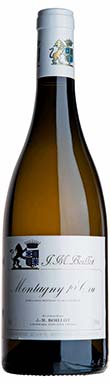
A very glossy Montagny premier cru, almost Côte de Beaune in style: rich, unctuous and spicy, with enough acidity to keep the palate fresh and...
2018
Domaine Jean-Marc BoillotMontagny
Domaine Stéphane Aladame, Les Maroques, Montagny, 1er Cru, Burgundy, France, 2018
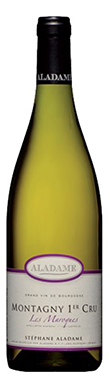
A 3.5ha vineyard on east-facing slopes above 300m. From older vines, this is a fine example of the quality being achieved by Aladame. Vinified with...
2018
Domaine Stéphane AladameMontagny
Château de Chamilly, Les Reculerons, Montagny, Burgundy, France, 2018
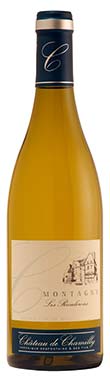
Les Reculerons is a 0.5ha lieu-dit with grey marl soils interspersed with silex. Ageing in concrete has added to the subtle smoky notes, with green...
2018
Château de ChamillyMontagny
Domaine Feuillat-Juillot, Cuvée Les Grappes d’Or, Montagny, 1er Cru, Burgundy, France, 2018
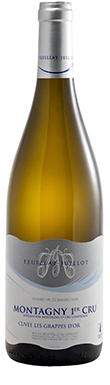
A fine premier cru sourced from 30- to 40-year-old vines grown on a 6ha site. A proportion of barrel fermentation has added spice and dried-fruit...
2018
Domaine Feuillat-JuillotMontagny
Domaine Jean-Marc Pillot, Les Gouresses, Montagny, 1er Cru, Burgundy, France, 2017
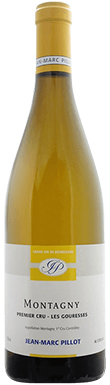
From a small plot of 100-year-old vines, Pillot produces a very smart Montagny premier cru. Rich, full-bodied and creamy, this is balanced by a focused,...
2017
Domaine Jean-Marc PillotMontagny
Domaine Philippe Colin, Sous les Feilles, Montagny, 1er Cru, Burgundy, France, 2017
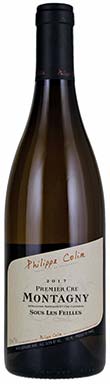
Colin adopts a similar stylistic approach to this Montagny as with all his wines: the emphasis is on raciness and elegance with subtle wood character....
2017
Domaine Philippe ColinMontagny
Berthenet, Tête de Cuvée, Montagny, Burgundy, France, 2018
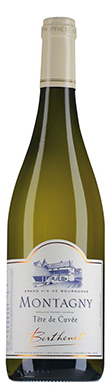
Berthenet’s Tête de Cuvée is a blend from all but one of the domaine’s vineyards. Succulent, ripe and honeyed, the calcareous slopes have added freshness,...
2018
BerthenetMontagny
Louis Latour, La Grande Roche, Montagny, 1er Cru, Burgundy, France, 2018
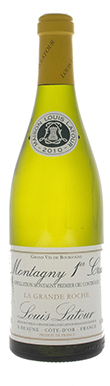
Crisp, bright, unoaked premier cru Montagny with more than a little similarity to a warmer-vintage Chablis. Peach and ripe melon fruit flavours, combined with a...
2018
Louis LatourMontagny
Olivier Leflaive, Montagny, 1er Cru, Burgundy, France, 2018
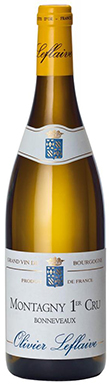
80% of the blend is from the south-facing Bonneveaux, with the rest from Les Coères and limestone-driven Perrières. Franck Grux vinifies all the elements separately,...
2018
Olivier LeflaiveMontagny
Domaine Joseph Drouhin, Montagny, Burgundy, France, 2017
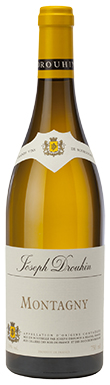
A blend of green apple and yellow stone fruit flavours, with characteristic acidity from the 2017 vintage balancing the ripe, warm palate. Aged in barrel...
2017
Domaine Joseph DrouhinMontagny
Vignerons de Buxy, Montagny, Burgundy, France, 2016
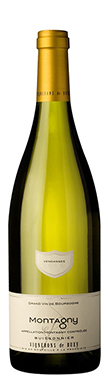
A vintage that’s at its best now, this is a typical example of the high quality produced at the Buxy cooperative (see p46). There are...
2016
Vignerons de BuxyMontagny
