
Regional profile: Nova Scotia
Michaela Morris visits this small Atlantic province in Canada that, despite its extreme climate, is fast making a name for itself - particularly when it comes to traditional-method sparkling wines...

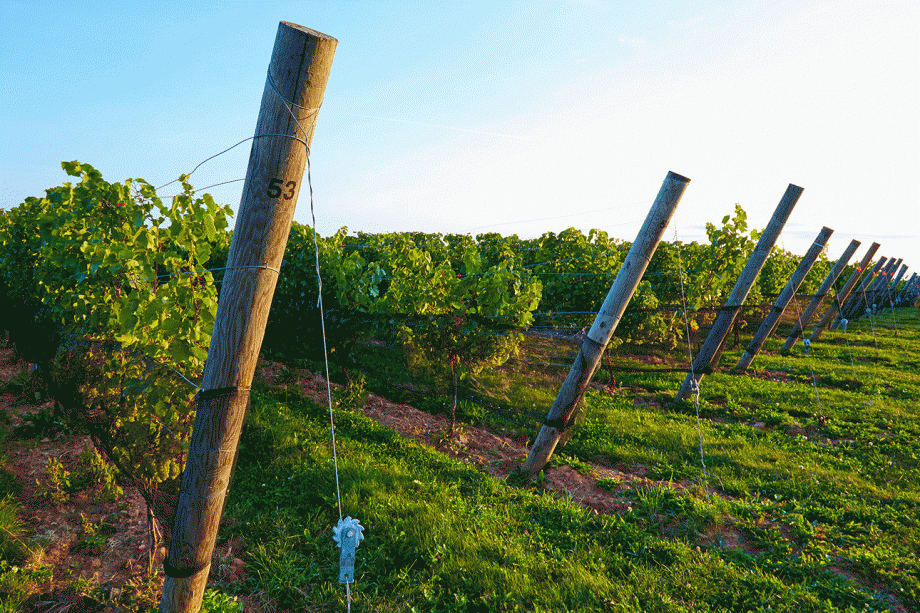
Located in the far east of Canada, Nova Scotia is readily associated with succulent cold-water lobster. But wine? Astonishingly, grapevines were first planted here in 1633.
Alas, inhospitable weather, a preference for beer and spirits as well as the strong temperance movement thwarted any preliminary hopes of developing a wine industry.
Nevertheless, the search for suitable wine grapes began in the early 20th century. Eventually, in 1962, local researchers found a new hybrid called V-53261 which showed potential for cool-climate viticulture.A few years later, Roger Dial moved from California to Nova Scotia to teach political science. His winegrowing hobby turned into a full-blown obsession when he purchased 120ha with the vision to turn the Annapolis Valley into the Napa of Nova Scotia. In 1979, he established Grand Pré (now Domaine de Grand Pré), Nova Scotia’s first commercial winery. The vineyards were planted to a number of hybrids including V-53261, which Dial renamed L’Acadie Blanc after the Acadians – early settlers in Canada’s Maritime and Québec provinces. L’Acadie Blanc has since become Nova Scotia’s flagship grape.
While Grand Pré was soon followed by Jost Vineyards (Nova Scotia’s largest winery), the crucial turning point for the province wasn’t until the mid-2000s. There was a significant increase in small-farm wineries and the Winery Association of Nova Scotia was formed. Today Nova Scotia has 19 wineries.
Challenges
Despite continued growth, the cool and wet marginal climate remains a challenge. Surrounded by large bodies of water, Nova Scotia is maritime in its geography. Yet strong westerly winds make it decidedly continental, with wide diurnal and seasonal temperature differences. Winter starts in January and can last until May. Late spring frost is a serious threat and, in 2018, decimated 40% of production. ‘Growing grapes on the Atlantic Ocean has its challenges, to say the least,’ says Simon Rafuse, winemaker at Blomidon Estate Winery. ‘We had a hurricane hit us a couple of weeks ago.’ That was mid-September.
Most Nova Scotia vineyards are located in the province’s southwest – in the Annapolis Valley and its sub-valley of Gaspereau. Sandwiched between the North and South Mountains, the area is protected from cool offshore winds and moderated by the Bay of Fundy, home to the world’s largest tides. The moderating influence extends the ripening season into late October and even early November.
The extreme climate limits which grape varieties are successful. French-North American hybrids were initially selected for their winter hardiness, and reds in particular were chosen to meet perceived market demand. Maréchal Foch is still Nova Scotia’s fourth most planted grape. In the last decade, producers have turned their attention to white varieties and L’Acadie Blanc dominates, accounting for 30% of Nova Scotia’s production. Floral scented with apple and citrus flavours, this convoluted hybrid is made up of eight different Vitis species and includes Pedro Ximénez and Muscat in its parentage.
Vinifera plantings are more recent as its varieties tend to be more susceptible to disease, less winter hardy and take longer to ripen. Chardonnay is the most planted of these and third overall, after hybrid New York Muscat. Other varieties include Pinot Noir, Riesling and Sauvignon Blanc as well as Cabernet Franc, which is making some smart rosés. In all, Nova Scotia boasts more than 50 different grape varieties, most grown in minuscule amounts.
Calling cards
Above all, it is style that defines Nova Scotian wines and two distinct types have emerged. Most notable on an international scale are traditional-method sparkling wines. The long, cool autumn encourages phenolic ripeness with low sugar accumulation and bracing acidity – a lot like Champagne. Indeed, the classic trio of Chardonnay, Pinot Noir and Pinot Meunier feature in Nova Scotia bubbles but L’Acadie Blanc is also a key player. Regardless of grape, the signature is light, racy and linear with an ‘energising saline minerality’, according to Jocelyn Lightfoot, co-founder of Lightfoot & Wolfville Vineyards.
The newly established appellation of Tidal Bay best captures Nova Scotia’s other calling card: crisp, subtly aromatic, still whites. The blend must be led by hybrids L’Acadie Blanc, Seyval Blanc, Vidal Blanc and the unromantically named Geisenheim 318, while overtly pungent grapes like Gewürztraminer and New York Muscat are limited to no more than 15%.
The wines are modest in alcohol (9% to 11%), fruity rather than oak-driven and typically off-dry (a maximum of 20g/l residual sugar is permitted). Launched in 2012 with the 2011 vintage, the Tidal Bay appellation seeks to create a loosely cohesive style under one blanket name. ‘L’Acadie Blanc is a difficult story to tell, while an appellation encompassing Nova Scotia’s many grapes is easier,’ says Mark DeWolf an educator for the Canadian Association of Professional Sommeliers and one of the instigators for the appellation.
Nova Scotia has a long way to go to reach Napa Valley’s magnitude or status as Roger Dial once dreamed. More importantly it is forging a clear identity, with well-defined wine styles that match brilliantly with the province’s legendary lobster.
Michaela Morris is a wine writer, educator, judge and speaker based in Vancouver, who contributes to Decanter on Canada and Italy
Nova Scotia at a glance
Number of wineries: 19
Area under vine: 400ha
Production: 1.9 million litres (2017)
First vineyard established: 1633
First commercial winery: Grand Pré in 1979
Tidal Bay appellation established: 2011
Most planted grape varieties: L’Acadie Blanc, New York Muscat and Chardonnay
Nova Scotia wines to try:
You may also like:
British Columbia wines: Can they compete?
Exciting Canadian wines to try
Lightfoot & Wolfville Vineyards, Blanc de Blancs, Nova Scotia, Canada, 2014

From a single-estate vineyard, this elegant and restrained traditional-method sparkler has a pronounced saline, mineral edge. Ageing is for four years on its lees in...
2014
Lightfoot & Wolfville Vineyards

Benjamin Bridge, Brut Reserve, Nova Scotia, Canada, 2012
<p>A refined nose of delicate red berries and grapefruit, with nuances of freshly baked scones, while the palate is dry, saline and chalky. The cool,...
2012
Benjamin Bridge
Blomidon Estate Winery, Brut Réserve, Nova Scotia, Canada, 2011
Crafted exclusively from Chardonnay with 60 months on its lees and a modest dosage of 7g/l of sugar, acacia and baked almond aromas lead the...
2011
Blomidon Estate Winery
L'Acadie Vineyards, Vintage Cuvée, Nova Scotia, Canada, 2016
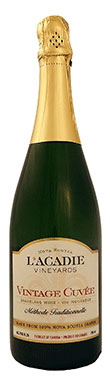
<p>This is all peaches and cream in both aroma and flavour, with freshly picked apples and a yeasty toastiness underneath. Lively bubbles persist in this...
2016
L'Acadie Vineyards
Blomidon Estate Winery, Crémant, Nova Scotia, Canada, 2017
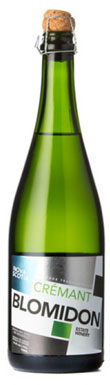
A brut-style traditional-method sparkling made with slightly lower CO2 and 12 months on its lees. Soft, gentle bubbles carry pretty peach and musky melon flavours....
2017
Blomidon Estate Winery
Benjamin Bridge, Pet-Nat, Nova Scotia, Canada, 2018
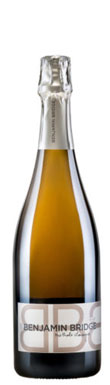
A proprietary blend of aromatic grapes, this is vegan-friendly with no added sulphites. It's appropriately hazy, playfully frothy, bone-dry and yeasty. Expect a mouthful of...
2018
Benjamin Bridge
Domaine de Grand Pré, Riesling, Nova Scotia, Canada, 2017
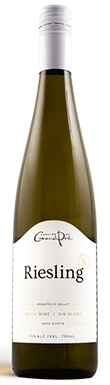
From estate vineyards planted in 2010, this has a straightforward green apple sorbet character with lip-smacking lime notes that dominate this vertical white. Spine-tingling acidity...
2017
Domaine de Grand Pré
Domaine de Grand Pré, Classic Collection L'Acadie, Nova Scotia, Canada, 2018
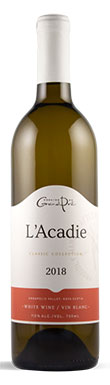
<p>The Stutz family has been producing this wine since the relaunch of the winery in 1999. A blend of estate and purchased fruit from vines...
2018
Domaine de Grand Pré
Gaspereau Vineyards, Tidal Bay, Nova Scotia, Canada, 2018
<p>A blend of Vidal Blanc, Seyval Blanc, New York Muscat, Chardonnay and Riesling, this is aromatic with a rather exotic nose of rose and orange...
2018
Gaspereau VineyardsTidal Bay
Benjamin Bridge, Cabernet Franc Rosé, Nova Scotia, Canada, 2017
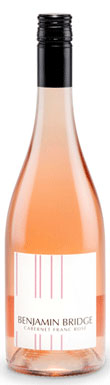
Hailing from a parcel of Cabernet Franc planted 20 years ago - the oldest vitis vinifera vines in Nova Scotia - this wine has subtle...
2017
Benjamin Bridge
Lightfoot & Wolfville Vineyards, Ancienne Pinot Noir, Nova Scotia, Canada, 2016
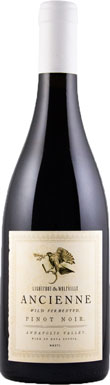
<p>From Lightfoot & Wolfville's Demeter-certified Oak Island vineyard, this wine is wild-yeast fermented and aged in neutral barrels. It offers crunchy red fruit atop an...
2016
Lightfoot & Wolfville Vineyards
