
Regional profile: St-Julien
The Médoc commune of St-Julien may not boast any first growth châteaux, but it is known and loved for the quality and consistency of its wines. Stephen Brook explores the region to discover how proprietors are investing in their estates and working hard to maintain - and improve - standards in their vineyards


St-Julien probably has the strongest identity of any of the major Médoc communes as it’s the most compact, and the smallest. It has much in common with part of Pauillac, just to the north, but its wines tend to be more virile than most from Margaux to the south. Moreover, it is separated from Margaux by a broad strip of Haut-Médoc vineyards. The St-Julien appellation is restricted to red wines only, but two estates – Talbot and Lagrange – have long had a good reputation for their white wine as well.
It’s hard to beat St-Julien for sheer consistency. Even in Pauillac there have always been estates where quality has trailed behind that of some of their neighbours. That’s hardly surprising, since Pauillac is home to three first growths that set the highest imaginable standards. St-Julien has 11 classed growths but no first growths, which means there is no single domaine that dominates. Since 95% of the vineyards here are classified, there is a strong incentive for their proprietors to maintain standards. And the few surviving non-classified growths, such as Château du Glana and Château Gloria, are hardly slouches.
St-Julien at a glance
AP created 1936
Planted area 910ha
Dimensions 5.5km north-south, 3.5km east-west
Grape varieties Cabernet Sauvignon, Merlot, Cabernet Franc, Petit Verdot, Malbec, Sauvignon Blanc, Semillon
Bottles produced About 5.5m per year
Classed growths Five seconds, two thirds, four fourths
Location matters
As in other communes, many of the finest wines come from estates in close proximity to the estuary: these include Beychevelle, Ducru-Beaucaillou and the three Léoville properties.
As well as that closeness to temperature-moderating, flowing water, and thus a diminished risk of frost, they are planted on deep plateaux of Günzian gravel rich in quartz, clay and flint. Both the soils themselves and the presence of small streams (jalles) around these plateaux provide excellent drainage. In addition, the gravel can store heat which is then reflected on to the vines after sunset, a process that encourages speedier maturation.
In contrast, other estates lie further west of the estuary, including Gruaud-Larose, Lagrange and Talbot. If slightly less blessed by nature than the riverside properties, they nonetheless produce rich and long-lived wines. Philippe Dhalluin, now the director of the Mouton Rothschild group, used to run Château Branaire-Ducru, where the vineyards are dispersed, and he believes the key to the quality of St-Julien wines is the precocity of the growing season, observing that just to the south in Cussac (Haut-Médoc), the harvest is generally a week later.
Vintage characters don’t differ significantly from the rest of the southern Médoc. 2010, 2015 and 2016 are all great years, and the same is likely to be true of the 2018s and 2019s. Both 2012 and 2017 will be relatively forward, although St-Julien escaped the worst of the frost in 2017 that reduced yields severely elsewhere. 2014 wasn’t an easy vintage either, but there are many excellent wines. In contrast, 2013 should in most cases be avoided: rain and rot impacted on both yields and quality. When young, the 2011s were rather severe, but some are now opening up, although it remains a rather charmless year.
Although there is admirable consistency to the wines, they are far from uniform in their typicity. They are less filigree and poised than the best Margaux, yet less weighty and muscular than the most celebrated Pauillacs. But such generalisations can be misleading. Stylistically, even first growths in Pauillac can differ greatly, as a comparison between Latour and its neighbour Lafite demonstrates. A well-known Bordeaux broker concluded in 1815 that St-Julien wines were ‘more smooth and mellow’ than those from other communes.

Human touch
The most famous view in St-Julien is the great gateway into the Las Cases historic vineyards as you drive north towards Pauillac. If you stop your car (or bike), you’ll soon see that the gravelly sweep of the Las Cases vineyard hardly differs from that of Latour just to the north. Indeed, I doubt that in a blind tasting even experienced wine lovers would necessarily place Las Cases in St-Julien rather than Pauillac; votes would be cast for either option.
It’s not just the terroir, of course. It never is. The human hand plays its part too. The three Léoville estates – once a single property, long since divided up – are an excellent case in point. The Delon family of Léoville Las Cases has always favoured a rich, even extracted style: powerful and structured, slow to mature and very long-lived. The fruit’s weight and intensity allow the wine to survive that extraction and the high proportion of new oak.
The Cuvelier family, owners of Léoville Poyferré for a century, has worked with Michel Rolland as its consultant since 1994. As is well known, Rolland favours late harvesting and a good dose of new oak. The aim is an overtly opulent and fleshy style that is immensely satisfying, although some will prefer the more restrained and classic cedary style exhibited by Léoville Barton (and indeed by Langoa Barton too) – no late harvesting here, just a long fermentation at moderate temperatures and about 50% new oak for the ageing; there’s more austerity than in the other Léovilles, but often more perfume and finesse.
Elsewhere in Bordeaux, higher ripeness levels are beginning to blur terroir and stylistic distinctions. Super-ripe Merlots, the signature of St-Emilion, can taste alike, which is not to deny the quality of these wines, but to signal a growing lack of nuance. Somehow St-Julien, aided by the high proportion of Cabernet Sauvignon in the vineyards, has managed to retain a good deal of the typicity of each growth.
Yet no one is resting on their laurels. Proprietors are investing significantly. Beychevelle, under the ownership of two large drinks groups, has lagged slightly behind the other top properties, but a new vat room and cellar was built in 2015; and in 2010 a new vat room was completed at Léoville Poyferré. At Talbot, modern cellars were completed in 2013, and the Barton family will soon begin major cellar work at its two estates.
Fair pricing
Despite the prestige of the region, some estates continue to make reasonably priced wines within the context of top Bordeaux. Châteaux Léoville and Langoa Barton used to be released at bargain prices, but Anthony Barton realised that prices would often double on the secondary market, enriching middlemen but not those who actually made the wine. So prices rose, quite understandably. Branaire-Ducru, while more expensive than it used to be, is now a wine of exceptional quality at a fair price. Lagrange too, under Japanese ownership, and Talbot have never been greedily priced.
As has already been mentioned, hardly any non-classed growths remain. The Meffre family produces a reliable wine at Château Glana; it’s a bit four-square, but well balanced and suited to medium-term ageing. Château Gloria is a strange wine, blended from small parcels throughout the commune. Henri Martin created the property from scratch from the 1940s by buying plots mostly from classed growths. It’s the wine equivalent of a patchwork quilt, and recent vintages have been very attractive.
Château Lalande-Borie is an off-cut too, having been part of Lagrange until 1970, when it was sold to the Bories of Ducru-Beaucaillou. Charming and relatively light, it’s a less complex shadow of Ducru itself. I have a soft spot for Château Moulin de la Rose, a 5ha property that belongs to Jean-François Delon. Rather grippy in the past, it is now more accessible.
Henri Martin also worked his magic as a collector of vineyards with Château Saint-Pierre. By 1981 the château and what was left of its vineyard were acquired by Martin, who exchanged parcels with neighbours and reconstituted the domaine. His son-in-law Jean-Louis Triaud runs both Saint-Pierre and Gloria, and their production is united in a flash modern winery that was designed by Triaud’s architect brother, Alain. Saint-Pierre can be excellent, if less consistent than the very best properties.
It’s hard to imagine that any claret lover would be disappointed by a bottle of château-bottled St-Julien. This commune really is a sweet spot for classic Left Bank Bordeaux, delivering wines that invariably succeed in combining fruit, structure and finesse. There are none of the significant variations in style and quality that can affect Margaux or St-Estèphe, for example.
Best of all, no estate is standing still, as the new investments confirm. Most properties make superlative wines, but aspire to do even better. What more could one ask?
St-Julien: the classed growths
Second growths
Ducru-Beaucaillou Owned since 1941 by the Borie family, who are Bordeaux merchants, Ducru has been making delectable wines for many years, blending opulence and vibrancy.
Gruaud-Larose Most of the 82ha vineyard surrounds the château on a well-drained gravel plateau. Some clay in the soil probably explains the wine’s richness and generosity.
Léoville Barton Still inhabited by the Barton family, who bought it in 1826. A benchmark for classic St-Julien, with no excesses but impeccable balance, as well as weight.
Léoville Las Cases The Delons have long believed this wine is of first-growth quality, and in some vintages it’s hard to disagree. Weighty, voluptuous and very long-lived.
Léoville Poyferré Late harvesting and ample new oak result in a sumptuous and seductive style. Moulin Riche comes from a separate vineyard further west and, with more Merlot, offers more immediate fruit and lushness.
Third growths
Lagrange With 125ha under vine, the largest estate in St-Julien, owned since 1983 by Suntory of Japan. A very reliable wine, and its second label, Les Fiefs de Lagrange, is fruity and charming.
Langoa Barton Overshadowed by its neighbour Léoville Barton, this is a fine wine in its own right that should not be underestimated. It has a high proportion of Cabernet Sauvignon to give structure and ageability.
Fourth growths
Beychevelle An 18th-century palace near the estuary with 90ha of vines. Long under corporate ownership, quality could be humdrum, but since 2005 this classically styled claret has improved.
Branaire-Ducru Long ago the vineyards were part of the Beychevelle estate. In 1988, it was bought by its present owners, the Maroteaux family, who have raised its profile. Lovely wines with polish and finesse. Saint-Pierre An ancient property, but in its modern form just 40 years old. However, the vines are old and quality is often very high, though with less consistency than at some other estates.
Talbot Like Gruaud-Larose, this very large estate was acquired by Bordeaux merchant Désiré Cordier in 1917, but unlike Gruaud it remains in the family. With more sand in the soil, the wines can have less depth and longevity but are good value and well balanced.
Stephen Brook’s dozen: St-Julien at its best
Château Ducru-Beaucaillou, St-Julien, 2ème Cru Classé, Bordeaux, France, 2016
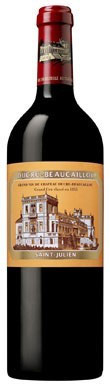

The youngest of a very strong trio (alongside 2010 and 2005) the 2016 is a wonderful example of 'new-wave' Bordeaux with all the intensity, purity...
2016
Château Ducru-BeaucaillouSt-Julien

Château Léoville Las Cases, St-Julien, 2ème Cru Classé, Bordeaux, France, 2015
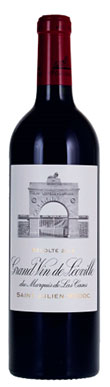
Las Cases at its imperious best, a Cabernet-based wine vinified in old oak vats then aged in mostly new barrels. The nose is magnificent, sumptuous...
2015
Château Léoville Las CasesSt-Julien
Château Léoville Barton, St-Julien, 2ème Cru Classé, Bordeaux, France, 2016
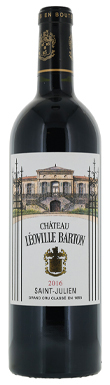
The nose offers sun-kissed raisin and plum, while the palate is juicy and energetic with fleshy bramble fruit, exotic spices and a hint of blue...
2016
Château Léoville BartonSt-Julien
Château Léoville Poyferré, St-Julien, 2ème Cru Classé, Bordeaux, France, 2016
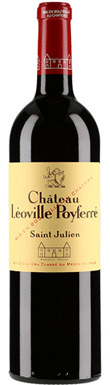
What a wine - such class from the excellent 2016 vintage. A touch of meatiness to the nose with bacon, green peppers and black pepper....
2016
Château Léoville PoyferréSt-Julien
Château Branaire-Ducru, St-Julien, 4ème Cru Classé, Bordeaux, France, 2016
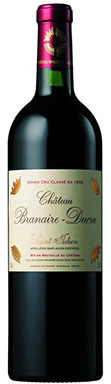
Florality and black fruits on the nose, really very aromatic and expressive. Generous and giving, this is definitely more plush and supple than the 2015,...
2016
Château Branaire-DucruSt-Julien
Château Langoa Barton, St-Julien, 3ème Cru Classé, Bordeaux, France, 2016
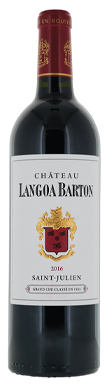
Owned by the Barton family since 1821, Langoa Barton is a third growth St-Julien estate known for its traditional approach and consistent quality. The 20ha...
2016
Château Langoa BartonSt-Julien
Château Talbot, St-Julien, 4ème Cru Classé, Bordeaux, France, 2016
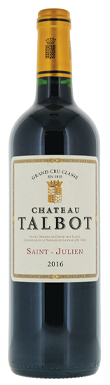
Good intensity and richness with earthy, leafy notes and integrated structure. Cumin, dark chocolate, toasted spice and black fruit provide balance, supported by soft tannins.
2016
Château TalbotSt-Julien
Château Saint-Pierre, St-Julien, 4ème Cru Classé, Bordeaux, France, 2015
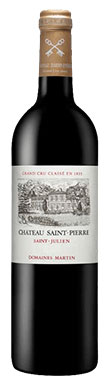
Saint-Pierre is the smallest of the classed growths in St-Julien, with just 1 ha under vine, and parcels near Ducru-Beaucaillou and Beychevelle. Jean-Louis Triaud directs...
2015
Château Saint-PierreSt-Julien
Château Gruaud-Larose, St-Julien, 2ème Cru Classé, Bordeaux, France, 2017
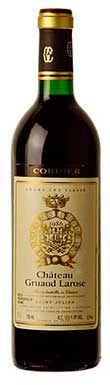
This estate is owned by the négociant group Taillan, and farming has moved towards organics and biodynamics. Gruaud made a very successful wine in a...
2017
Château Gruaud-LaroseSt-Julien
Château Lagrange, St-Julien, 3ème Cru Classé, Bordeaux, France, 2015
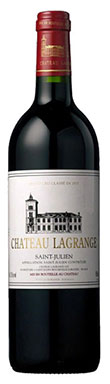
Suntory bought Lagrange in 1983 and planted 60ha, so now more than 100ha are under vine. Lagrange is known for its freshness and accessibility. The...
2015
Château LagrangeSt-Julien
Château Beychevelle, St-Julien, 4ème Cru Classé, Bordeaux, France, 2016
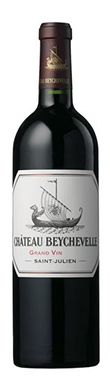
By this vintage, the gravity-operated vat room and cellar were in operation, with smaller steel vats allowing for greater parcel selection. Still closed on the...
2016
Château BeychevelleSt-Julien
Clos du Marquis, St-Julien, Bordeaux, France, 2015
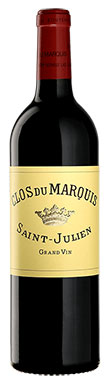
First made in 1902, this is a blend of various parcels, some close to Léoville Las Cases, others near Talbot. In this vintage a second...
2015
Clos du MarquisSt-Julien
