
Why Ribera del Duero can be hard to love


The quality of its top wines is not in question, but this highly rated Spanish region has struggled to win the affections of some wine lovers, including Sarah Jane Evans MW. Here, she explains why, and meets producers determined to change her mind.
Let’s start with this fact: Spain’s most historic and internationally famous winery is in Ribera del Duero. It’s so famous that I don’t need to name it, but for the sake of clarity I will: Vega Sicilia.
The second fact is that in 1982 a wine from Alejandro Fernández, the simply named Tinto Pesquera, was spotted by US critic Robert Parker. In the same year the Ribera del Duero DO (Denominación de Origen) was created, and the Alvarez family purchased Vega Sicilia. Ribera was on the map.
The third fact is that in less than 40 years since then Ribera has undergone huge growth, and is today home to almost 300 wineries.
Now let’s move on to the awkward part, my opinion.
Generalising wildly, I find it hard to fall passionately in love with wines from this exceptionally highly rated region. For a long time I thought I was alone, like the person who says a rude word during a sudden silence at a dinner party. However, having researched this more closely I realise I am one among many.
A Spanish wine enthusiast, a buyer for a top-end independent business in the UK, says despairingly: ‘I just can’t sell Ribera del Duero; my customers won’t buy them, they just don’t like them.’
He stocks wines from Vega Sicilia and a couple of other brands, but cannot delve deeper. Another common complaint is price: Ribera isn’t cheap. Says one buyer: ‘I can’t find a wine I like that my customers can afford.’
The price of Ribera del Duero is certainly an issue, but the key factor is the style.John Hoskins MW of Huntingdon’s Old Bridge hotel notes: ‘If someone asks for Rioja we can sell them anything Spanish, if it’s in a round, “smooth” [the favoured word] style. And of course Ribera rarely does that, normally trying too hard.’ He goes on: ‘We do have consumers who like big wines, but they tend to want big and soft. So big Garnacha works well. But big Tempranillos rarely work.’To get a Spanish perspective I spoke to Amaya Cervera, the perceptive commentator of the award-winning wine website www.spanishwinelover.com. I asked if it was a national or cultural issue in Spain.
‘You’re right; the English critics have never been very keen on Ribera del Duero’s wines. The region that produces naturally powerful wines with a very fruity, oaky profile is still the most popular in the Spanish market – above all in the mass-market roble category which, with rare exceptions, is very marked by oak.’

Learning curve
Riojano Ricardo Arambarri, whose company Vintae makes wine in Ribera del Duero and elsewhere, explains how this has come about.
‘It’s not necessarily due to the vineyards and the grapes, but the style in which it is made. Ribera del Duero is a very young appellation and has a short history of fine winemaking. Apart from Vega Sicilia, the first successes came at the end of the 1980s through to the early 2000s,’ he says.
‘Those successes came from a very over- extracted, oaky style that stood apart from the classic Rioja style. During that time, the market, influenced by Robert Parker’s preferences, welcomed that style and the appellation enjoyed huge success.’
Ribera del Duero delivers structure, power, intensity. Plus also freshness, dark fruit and tannins. The clue is in that stylistic preference for tannin and the oak ageing.
As a producer says, off the record: ‘I often hear winemakers saying, “If it doesn’t taste tannic, it’s wrong”. Unfortunately there’s a trend here among winemakers in Ribera del Duero – it’s an alpha male fight over who can make the biggest.’
In La Aguilera, one of the towns that is highly rated for its old vines, Germán Blanco of the young project Quinta Milú adds that in Ribera del Duero an additional factor is that they work with ‘a variety – Tempranillo – which makes wines with high polyphenols delivering colour and tannin, and low acidity’.
The other factor, he says, is: ‘The boom a few years back, when people planted vines like mad. As a result we have lots of young vines – and lots of young vines planted in poor sites.’
In that sense, Ribera’s future is all ahead of it. For while the region has fine bush vines, some of them pre-phylloxeric, two-thirds of vines have been planted since 1991. Blanco’s comment about sites holds the promise for the future, as producers better understand the diversity of their plant material and soils.
One such is María del Yerro of Alonso del Yerro, who thinks it has taken almost 10 years of effort.
Stéphane Derenoncourt, her consultant, is well respected in Bordeaux, but had no prior experience in Spain.
‘Our aim has been to make wines with ageing potential, fine wines with vintage character that reflect the terroir,’ she says. ‘Stéphane started in that unbearably hot vintage of 2003. Since then we have changed the way we manage the vines and understand our soils better with the help of Claude Bourguignon, and of course the vines are older. Since 2012 our soils have begun to give wines of a really exceptional quality.’

Long-term plans
Del Yerro mentions the heat. Ribera del Duero is no easy place to work. It’s a continental climate, hot and dry in summer. A significant feature is that temperature ranges from -20°C in winter to 42°C or higher in summer. And the risk of frost lasts until late, often into June. Altitude is important too: even the DO’s lowest vineyards are higher than most of Spain’s.
A key is the heterogeneity of its soils. The DO measures 111km by 35km, running along the Duero river. Within that, there are some 35 different soil types, spread between the river banks and the high plateau. There has been work on soil mapping, but sub-zones are not yet formally recognised. This will undoubtedly help consumers to understand specific characters of Ribera del Duero and find the sub-zones they prefer.
There’s an urgent need to preserve the old vineyards and enhance younger vines. Peter Sisseck has been working in Ribera for several years. His Psi project was created to foster Ribera del Duero’s vine heritage. ‘There are high potential vineyards, but they need to be managed properly. For this we need people with skills. But there’s no prestige working in the vineyards, so we have to find a way to give that prestige back. That’s why we will be doing courses, teaching young people pruning and vineyard work’.
He adds: ‘The idea of Psi is not just to help the old bush vines. We need to ensure the vines are in the right place: they are our connection to the past. We used to have 9,000ha, of which 6,000ha were old. We now have 22,000ha, and 2,000ha of them are old. It’s not that people aren’t replanting, but they are planting in the valley. In 10 years’ time, the kids won’t remember where the best places are.’

Positive moves
So how best to enjoy Ribera del Duero, and its changing styles? The simple message is don’t drink it too young (unless it’s a joven, or roble).
Says Almudena Alberca, technical director of Viña Mayor: ‘Ribera wines are meant to be aged in bottle and consumed when they’re old, when all the polymerisation has been done, and the wine is soft and elegant. But this is not the reality of today’s markets. Wine is released when it is too young, when all the tannins are still playing rock and roll.’ Like other producers across the region, she is adjusting and tweaking in the vineyard and the winery.
Even at Vega Sicilia, technical director Gonzalo Iturriaga says he is making trials in the wineries across the group, reducing time in oak, using concrete vats, and experimenting with coopers. Oscar Aragón at Cillar de Silos has a new project at Dominio del Pidio, and it’s about fermenting in concrete and ageing in traditional underground cellars in Quintana del Pidio.
At the east end of the DO, in the vineyards in Soria province, producers such as Dominio de Atauta and Dominio del Aguila are releasing wines that have more elegance, and less oak. But Cervera warns: ‘It’s very complicated there in cold years and can produce really tannic wines.’
Ribera del Duero has established success in its national market, and this risks stifling innovation. But Blanco is positive: ‘There’s an alternative trend of those of us in smaller bodegas who want to reveal the soils in our wines, and we prefer the wines to mature without being drowned in oak. The good thing is that quality restaurants and independent wine shops rate our fresh wines highly.’
However, it’s not easy. Says Alberca: ‘A few of us want to produce something that is easier to drink. That doesn’t mean simple – these are complex wines. However, my clients feel that something is missing. They name another brand and they say, “That wine has more colour than yours, and more oak; yours only has 10 months’ ageing – does that mean yours is lower quality than a crianza?”’
As in Rioja, the quality wine classification requires specific time in specific barrels. This system values time in oak above vineyard age or quality. But things are changing here, as in Rioja: Cervera notes that Pago de Carraovejas, for example, has stopped making its crianza and reserva, and produces a ‘generic’ wine, meaning it can choose the time in and type of barrel, resulting in less obvious oak.
Sisseck reminds me to celebrate the essence of Ribera del Duero: ‘We can’t make Burgundy here. Our wines are full of character. That’s why you have to be careful with the tannins – they must be ripe and well-extracted. You can build texture, but you need to do it with care.’
Ribera del Duero: best recent vintages
2017 Devastating frost in April means it will be a very small harvest for many of the region’s producers, but they are positive about the quality of fruit they have
2014 A cool year, but producing balanced and fresh wines
2010 Turning out to be an excellent vintage: the wines are powerful, structured but still fresh
2009 A hot vintage, but the wines are nevertheless ripe and balanced, though perhaps a little less powerful than 2010
2005 Some outstanding wines were made in this year, with depth and generosity, plus firm tannins
2004 Another excellent year: supple, pure fruit and fine elegance
2000 A really good year, better perhaps than 2001 which was Rioja’s outstanding vintage; the long-lasting wines have developed with fine balance
Evans’ dream dozen from Ribera del Duero
Sarah Jane Evans MW is co-Chair of the DWWA, and author of The Wines of Northern Spain (on sale April 2018, early orders via Amazon)
Bodegas Arzuaga Navarro, Gran Reserva, Ribera del Duero, Castilla y Léon, Spain, 2004
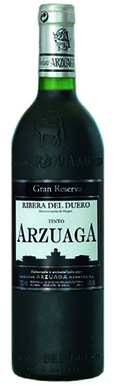

Go ahead, spoil yourself. If you love a gran reserva, then this is spot-on. Glorious oak, toned-down after all these years; fine blend of forest...
2004
Bodegas Arzuaga NavarroRibera del Duero

Cillar de Silos, La Viña de Amalio, Ribera del Duero, Castilla y Léon, Spain, 2014
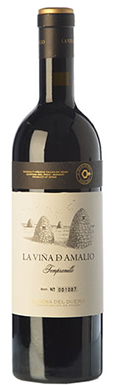
Cillar de Silos keeps getting better. Oscar Aragón makes this wine, named after his father, from a 50-year-old single vineyard. Refined, finely balanced, with ripe...
2014
Cillar de SilosRibera del Duero
Dominio de Atauta, Ribera del Duero, Castilla y Léon, Spain, 2014
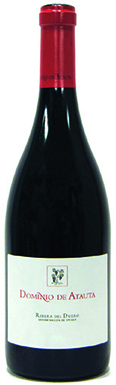
Now for something different. From the far east in Soria, very old vines on sandy soils over calcareous bedrock deliver a fresh intensity. Nothing baked...
2014
Dominio de AtautaRibera del Duero
Garmón Continental, Garmón, Ribera del Duero, Castilla y Léon, Spain, 2015
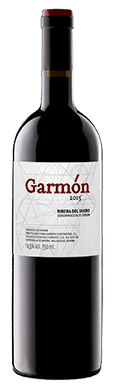
A relatively new wine from Mariano Garcia (of Aalto, formerly Vega Sicilia) and his sons; the brand comes from a merger of their surnames. Made...
2015
Garmón ContinentalRibera del Duero
Hacienda Monasterio, Ribera del Duero, Castilla y Léon, Spain, 2012
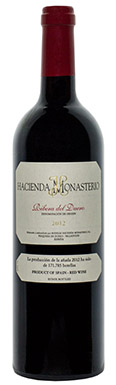
A delicious wine: fine, savoury style, with a tannic edge softened by fresh red fruit (including 10% Cabernet Sauvignon, 8% Merlot and a dash of...
2012
Hacienda MonasterioRibera del Duero
Alonso del Yerro, María de Alonso del Yerro, Ribera del Duero, Castilla y Léon, Spain, 2012
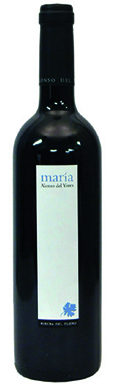
The top wine from a fine estate, which is much improved. Stéphane Derenoncourt consults here. Generous brambly aromatics characterise the nose. A deep, dark palate...
2012
Alonso del YerroRibera del Duero
Dominio de Cair, Tierras de Cair Reserva, Ribera del Duero, Castilla y Léon, Spain, 2012
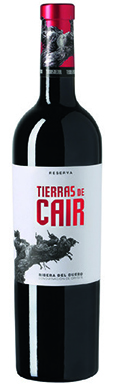
Fine cedar aromas on the nose lead to an attractive, juicy and fleshy palate. Vivid, with freshness and complexity. Still young and with potential; very...
2012
Dominio de CairRibera del Duero
Aster, Finca el Otero, Ribera del Duero, Castilla y Léon, Spain, 2014
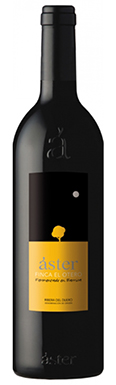
Nicely balanced wine, which is sourced from vineyards in Anguix. A polished and accomplished style from the team at La Rioja Alta; this is proof...
2014
AsterRibera del Duero
Montecastro, Reserva, Ribera del Duero, Castilla y Léon, Spain, 2013
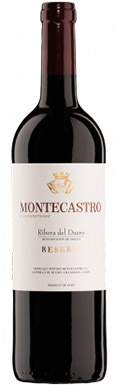
One to watch: Hacienda Monasterio became a 50% partner in 2012, bringing in both vineyard and winemaking expertise. High-altitude vineyard parcels; Tempranillo with a dash...
2013
MontecastroRibera del Duero
Quinta Milú, La Cometa, Ribera del Duero, Castilla y Léon, Spain, 2016
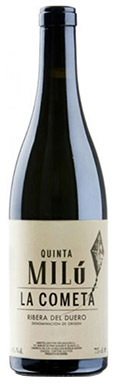
The top wine, from 70-year-old bush vines in La Aguilera. Made with 50% whole-bunch and foot-trodden fruit; 13 months in used French oak barrels from...
2016
Quinta MilúRibera del Duero
Viña Pedrosa, Cepa Gavilán Crianza, Ribera del Duero, Castilla y Léon, Spain, 2014
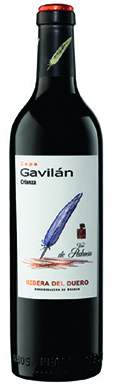
The Pérez Pascuas brothers – and now the third generation in José Manuel Pérez Ovejas – make Ribera del Duero classics. Cepa Gavilán is the...
2014
Viña PedrosaRibera del Duero
Vintae, De Bardos Romántica Crianza, Ribera del Duero, Castilla y Léon, Spain, 2013
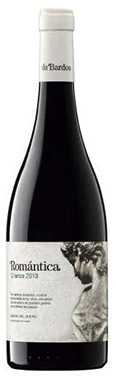
I’m not in love with the name of this wine, but the important thing is that the liquid is convincing. It spends 14 months in...
2013
VintaeRibera del Duero
