
Sta Rita Hills: California’s ‘coolest’ wines plus the 10 to try
In the Santa Rita Hills cool temperatures are only one of many contributing factors to the region's wines. Soils, the coastal wind and slope aspect are also crucial elements. These conditions combine to deliver wines of clarity and complexity with rich flavours balanced by vibrancy and lift.


The Santa Rita Hills of Santa Barbara County is a special place for growing wine. The landscape is evocative of England’s Yorkshire Dales and South Africa‘s wild Capelands. This area is the westernmost sub-zone of the Santa Ynez Valley.
Scroll down to see tasting notes and scores for 10 wines from the Santa Rita Hills
Altogether, this American Viticultural Area (AVA) spans 12,431ha and is home to nearly 60 vineyards. Pinot Noir is the region‘s top variety, with more than 1,241ha planted, followed by 200ha of Chardonnay.
Cool beginnings
Botanist Michael Benedict and friend Richard Sanford looking to make cool-climate wines planted a vineyard here in 1971. The region was little more than ranches and farmland at the time. More than 50 years later, the Sanford & Benedict Vineyard is one of the most heralded in Santa Barbara County, boasting the oldest Pinot Noir vines in the region.
Sanford Winery continued operations even though the partnership dissolved after 1980. Richard Sanford would go on to establish other renowned Santa Rita Hills vineyards. These include El Jabali Vineyard, home of Alma Rosa Winery; La Rinconada and La Encantada Vineyard.
Sanford and others were instrumental in spearheading the effort to designate the Santa Rita Hills as an official AVA, which was approved in 2001.
A complicated geology
The geology of the Santa Rita Hills AVA is complex. Three mountain ranges frame the Santa Ynez Valley—the Santa Ynez, San Rafael, and Sierra Madre Mountains. They began as marine sediment once deposited deep within the Pacific Ocean. With tectonic movement, they rose into mountains along a standard north-south orientation.
Over a few million years, these mountains broke from the plate. They turned inward, creating an unusual transverse range with an east-west orientation—the only one of its kind along the Pacific Coast, from Alaska to Chile.
The Santa Rita Hills is a tighter subsection of this formation. It represents a narrow corridor bound on the north by the Purisima Hills and the Santa Rosa Hills on the south.
The north side of the region features calcium-rich earth tumbled with ocean sands. But on the southern side, the hills include more marine shale, chert, and two different layers of diatomaceous earth. One is light and pure, and another is compressed with heat over time to make a silicate-based chert or flint.

Sashi Moorman has worked as a winemaker, consultant, and general entrepreneur in the Santa Ynez Valley for over 20 years. In 2011 he joined celebrated sommelier and winemaker Rajat Parr to create Sandhi wines.
This brand focuses on cool-climate Chardonnay and Pinot Noir from select vineyard sites within the Santa Rita Hills, including the Domaine de La Côte, a collection of five vineyards planted over 16ha on the westernmost edge of the appellation. The site is only 11km from the ocean and is composed of a unique type of clay loam soil over fractured shale and diatomaceous earth.
‘I’m such a big fan of the soils because they are extremely well-drained. They don‘t hold on to water nutrients as well as the true heavy clay soil that you find further east towards Buellton. We are one of the few wine regions worldwide that work with diatomaceous shale, if not the only one.’
Just south of Domaine de la Côte, there is a clear view of The Hilt Estate. Here winemaker Matt Dees oversees the production of about 80ha among three separate vineyard blocks about 20km from the coast. The Radian vineyard sits along a ridge at up to 215m at its highest point.
The right varieties
With over 40ha planted, nearly 95% of the vineyard is Pinot Noir, with Chardonnay and a small block of Syrah making up the remainder.
Syrah roots struggle in poor, rocky soils with thick striations of diatomaceous earth, which contributes to a mineral-driven tension in the resulting wines. Just down the ridge slope, the Bentrock vineyard consists of clay, compressed sediment, and marine shale in the form of chert and some smaller outcrops of diatomaceous earth.
‘The Chardonnay and Pinot Noir from Radian have the capability to stop you in your tracks,’ says Dees. ‘It’s pure diatomaceous earth outcrops. It gives Chardonnay this kinetic energy that makes your mouth want to explode. With Pinot Noir, it’s dark and a little bit brooding from the thick skins the winds make it produce, but on the palate, it’s shockingly bright and fine.’
Almost mid-way between Lompoc and Buellton on Santa Rosa Road, sits Sanford Winery. Home to the Sanford & Benedict and La Rinconada vineyards. It stands as a beacon of Santa Rita Hills’ past and future. Home to the region’s oldest vines, the soils shift away from what is seen on the far west landscape.
Beyond vine age, winemaker Trey Fletcher attributes the singularity of these sites to their unique positioning on a landslide that is estimated to have occurred more than 10,000 years ago.
‘This whole mountain collapsed behind us and spilt out onto this site,’ says Fletcher. He points out the myriad shards of jagged chert sprinkled throughout the soil. ‘We have chert and Monterrey marine shale. But we also have dark soils that are high in organic matter from the forests that were on the mountains.
This is the only spot in the region with this soil composition, and it’s turned out to be a perfect place to grow Pinot Noir and Chardonnay.’
To the east is a range of soils richer in clay and organic material. Just a few miles from Sanford Winery is Donnachadh Vineyard. The property is 115ha, with approximately 16ha planted predominantly with Pinot Noir, followed by Chardonnay, Syrah, and a small parcel of Gamay.

The Chardonnay and Pinot Noir are planted at the highest elevation. These hillside blocks feature some marine shale but have a denser clay content making the site extremely challenging to farm during rainy seasons
Stretching towards Buellton, LaFond Winery, Peake Ranch, and Alma Rosa Winery, where Benedict planted the El Jabali vineyard in 1993, round out some of the easternmost sites of Santa Rita Hills. Here the soils continue with layers of clay and sandy loam.
Vineyards here struggle less to push roots deeper into the ground, as a result, the wines here are also more plush and full while maintaining balance and brightness.
Wind
The sea‘s cool influence is ushered into the region via strong winds that whip through the vineyards deep into the valley. These breezes allow for a long, cool ripening season, giving the grapes plenty of time to develop ripeness and phenolic character while retaining fresh acidity.
At The Hilt, the Radian vineyard, which sits at a higher elevation (about 280m), is more exposed to these persistent winds. By contrast, the adjacent Bentrock vineyard sits just below the hillside and is primarily shielded by Radian, receiving more moderate breezes.
‘Radian takes the brunt of the wind and protects Bentrock. It may be a lovely day for a picnic at Bentrock, but at Radian, you’re holding on to the side of the truck so you don’t blow away,’ says Dees.
Wind can often hinder flowering and fruit set in grapes leading to coulure, or grape shatter, where the grape cluster fails to develop fully. It‘s a problem Moorman sees fairly regularly at Domaine de La Côte. But at the Radian vineyard, the Pinot Noir vines have adapted to create smaller, tighter clusters of grapes a fraction of the size of a standard bunch.
From Moorman‘s perspective, the harsher coastal conditions along the western side of the appellation yield wines with more clarity than on the eastern side.
‘The wines from the west side have this sophistication that isn‘t the same on the east side. The tension gives the wines this certain savoriness and more focus.’
At Donnachadh, Storm notes the wind‘s perpetual presence and strength, particularly in the afternoons.
‘It is windy here every afternoon regardless of the time of year,’ says Storm. ‘We even put temporary wind breaks up in some parts of the vineyard, but the wind was so strong that it pulled up the stakes where the ropes were tied.’
Aspect
‘Aspect is an extraordinary component of this region,’ says Moorman. ‘Whether the vineyard is north-facing or south-facing, you have all of these amazing different aspects. They add dimension and complexity in terms of the different styles of wines here.’
Vineyards on south-facing slopes in the northern hemisphere benefit from the most sunlight exposure. This aspect tends to warm earlier in the spring and can help prevent damage during an early spring frost. It can also allow grapes to ripen in otherwise too-cold places.
In Santa Rita Hills, producers such as Domaine de La Côte, Sea Smoke, Melville Vineyards and Babcock Winery & Vineyards all farm vines with a south-facing slope. These yield wines that still reflect a cool climate but with different textures and tension.
Sanford Winery, The Hilt, Donnachadh Vineyard and Alma Rosa are vineyards with a north-facing slope. They receive less direct sunlight but enough to develop phenolic ripeness. The constant winds provide the necessary drying protection from rot and mould from morning dew.
‘The difference in farming a north-facing slope is dramatic compared to south-facing, which takes the sun all day. The light here is more refracted, so the vines must struggle to get the most they can,’ says Dees.
The elements converge
The dramatic combination of soils, ocean winds, and aspects produce wines with profound expression in the Santa Rita Hills. These components help define a through-line of complexity, natural tight acidity, tension, and an ocean-kissed salinity, It all brings an identity to the region with precision and clarity, something Dees often refers to as ‘refrigerated sunshine.’ The climate will continue to change and the world of wine along with it.
It would seem Santa Rita Hills is in a prime position to weather whatever the future may bring, offering wines of a distinctive style, persistent vibrance and enduring longevity.
Santa Rita Hills: 10 wines to try
Wines are listed white then red in score order
Related content
Matt Dees: winemaking on the edge in Santa Barbara County
Santa Rita Hills AVA and must try wines
Santa Ynez Valley for winelovers: where to visit, eat and drink
Sandhi, Romance Chardonnay, Sta. Rita Hills, California, USA, 2021
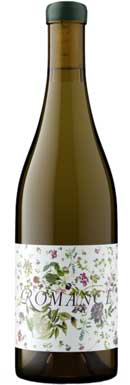

Highlighting the nuance of the ocean's proximity to the Domaine de La Cote vineyards, this Chardonnay offers aromas of spring blossoms, green apples and ripe...
2021
SandhiSta. Rita Hills

The Hilt, Chardonnay Radian Vineyards, Sta. Rita Hills, California, USA, 2020
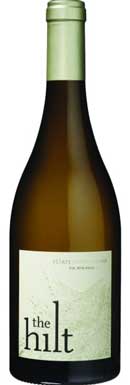
Evocative of the light, chalky diatomaceous soils on which it was grown, this wine radiates vibrancy and energy. With grapes pelted by Pacific Ocean winds,...
2020
The HiltSta. Rita Hills
Sanford, Chardonnay La Entrada, Sta. Rita Hills, California, USA, 2019
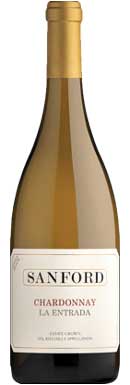
From the La Entrada estate vineyard, the aromas of this wine evoke fields of fresh summer flowers, baked lemons, and wet stone. A chalky vibrancy...
2019
SanfordSta. Rita Hills
Tyler, Sanford & Benedict Chardonnay, Sta. Rita Hills, California, USA, 2019
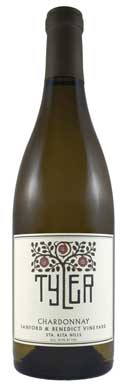
Sourced from the historic Sanford & Benedict Vineyard, this Chardonnay offers aromas of peach blossom, yellow apples, and light toast. On the palate, steely notes...
2019
TylerSta. Rita Hills
Domaine de la Côte, Pinot Noir, Bloom’s Field, Sta. Rita Hills, California, USA, 2021
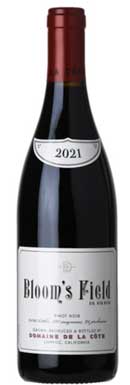
Capturing the windswept, hillside growing conditions of the Bloom’s Field Vineyard, this wine balances sharp, cool-climate acidity and delicate floral notes of rosehip and cherry...
2021
Domaine de la CôteSta. Rita Hills
Piedrasassi, Syrah, Sta. Rita Hills, California, USA, 2019
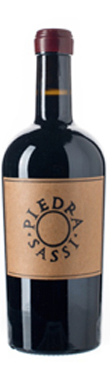
Brimming with notes of lush dark blackberry, dried fig and subtle black pepper, this wine is as aromatically enticing as it is palate pleasing. Driven...
2019
PiedrasassiSta. Rita Hills
Sanford, Pinot Noir, Sanford & Benedict Vineyard, Sta. Rita Hills, California, USA, 2019
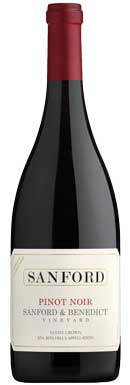
<p>Leaning towards an old-world style, this Pinot Noir from the historic Sanford & Benedict Vineyard offers notes of black cherry, fresh fig, and cinnamon spice...
2019
SanfordSta. Rita Hills
Donnachadh, Syrah, Sta. Rita Hills, California, USA, 2019
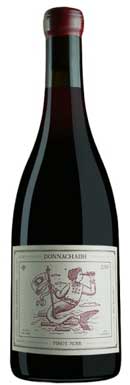
From the hillside blocks of the Donnachadh vineyard, this elegant Syrah has all the trappings of a cool-climate growing environment with aromas of violet and...
2019
DonnachadhSta. Rita Hills
Brewer-Clifton, Pinot Noir, Sta. Rita Hills, California, USA, 2021
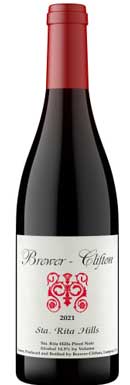
A blend of three distinctive vineyards from the sandy and clay-loam northern rim of the Sta. Rita Hills, this wine offers ripe forest fruit, mushroom,...
2021
Brewer-CliftonSta. Rita Hills
Alma Rosa Winery, Caracol Pinot Noir, Sta. Rita Hills, California, USA, 2020
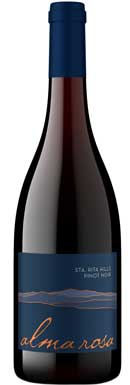
A bolder riper Pinot Noir style from the Sta. Rita Hills. This single-block release from the Caracoal Vineyard offers rich, ripe blackberry, cherry, baking spice,...
2020
Alma Rosa WinerySta. Rita Hills
