
The revival of Sekt, Germany’s signature sparkling wine
Anne Krebiehl MW charts the history of Germany's illustrious but almost forgotten fizz, and selects a handful of sekts to try.


In New York or London you can still be forgiven for turning your nose up at Sekt – German sparkling wine – but in Berlin, Hamburg and Munich Sekt is the new ‘sexy’.
About time, too, since Germany has an illustrious but almost forgotten history when it comes to effervescence. In the mid-19th century Sekt spelled pure luxury, but by the turn of the millennium it had become a byword for sweetish, mass-produced plonk. Sekt, which had lagged behind in Germany’s quality revolution, is the country’s latest category to experience a revival. It is back with a vengeance – and real quality.
When Georg Christian Kessler founded Germany’s first Sekt house in 1826, he was the disruptor of the day and soon various Sektkellereien sprang up. Kesseler had joined the business of Barbe-Nicole Clicquot Ponsardin in Reims, the widow herself, risen through the ranks and become partner in the Champagne house before founding his own business in Germany. The Germans had experimented with making sparkling wines for a while but Napoleon’s occupation and annexation of the German territories on the left bank of the Rhine from the 1790s until 1814 had left a distinct fashion for that new-fangled, fizzing French wine which soon turned into serious business. Making sparkling wine was, after all, a way of adding value to the naturally acidic and slender German base wines.By 1900 Germany produced more than 10 million bottles of Sekt. This roaring trade attracted taxation: in 1909 the Sektsteuer that had been introduced in 1902 to finance Kaiser Wilhelm’s navy, started taxing Sekt according to price. This turned the tide against the best and most expensive Sekts and allowed Champagne to cement its (well-deserved) place in the world. Two world wars did the rest and Sekt’s fortunes only rose again in the 1950s when big houses like Henkell and Kessler introduced 200ml Piccolo/Pikkolo bottles that popularised the former luxury.By the late 1960s most of the German Sekt houses changed to cheaper, more efficient tank-fermentation and turned initially German, then pan-European base wines into easy-drinking, very affordable Sekt. What had once been the preserve of the rich was now truly democratised – but the art of bottle fermentation was almost lost.In the late 1980s it was once again taxation, or rather a technicality in its administration, that changed Sekt’s fortunes. Winemakers could now hold untaxed Sekt in bond in their own cellars: traditional-method Sekt became a real option again. Experimentation duly started. Some made it their main business, others developed a serious side-line.
The 1990s then saw the legal framework for quality Sekt expanded with the definition of the terms Crémant and Winzersekt. Over the past decade the once demeaned term ‘Sekt’ has been revived and rehabilitated.
In 2018 Germany’s association of elite estates, the VDP, published its own Sekt statute – signalling that Sekt has finally come full circle. Making Sekt is now a serious and distinct discipline with ambitious producers setting their sights firmly on quality. Suitable plots are dedicated to growing base wines for Sekt and are farmed accordingly while quality notches higher and higher.
Sekt: What to look for on the label
Traditionelle Flaschengaerung (traditional bottle fermentation) This is the key term to look out for. While the law defines Sekt, Winzersekt and Crémant, not all producers choose to use these terms.
Winzersekt Prescribes traditional bottle fermentation and 100% estate-grown fruit, must state grape variety and vintage (min. 85% of that variety and vintage)
Crémant Now less used; prescribes whole-bunch pressing for white grapes and max. yield of 100l must from 150kg grapes, and traditional bottle fermentation
The VDP Sekt statute stipulates grape varieties, yields, pressing regimen and traditional bottle fermentation. It distinguishes between Ortssekt (village) with a minimum of 15 months on lees in bottle; and Lagensekt, from a single site classified as either Erste or Grosse Lage, with a minimum 36 months on lees.
Varieties
In terms of grape varieties, Sekt is either classical or uniquely German. When made from Pinot Noir, Pinot Meunier and Chardonnay as single varietal or blend, Sekt takes its place neatly alongside other traditional-method sparkling wines from around the world – benefitting from inherent freshness. Increasingly, Pinot Blanc also plays a role.
But Germany’s unique proposition in the sparkling realm is Rieslingsekt. Natural lightness and acidity predestine Riesling for sparkling wine production, but its aromatic make-up, especially the terpenes and norisoprenoids creating its varietal notes of citrus, herbs and stone-fruit can result in very distinct Sekts. Some producers aim for very varietally pronounced Sekts, harvesting later to capture most of the aromatic development.
Such Sekts illustrate the aromatic evolution of Riesling-flavours to perfection. While Rieslingsekts can get quite honeyed with post-disgorgement ageing, even when bone-dry, some producers add an even greater varietal edge by adding a small dosage of a mature sweet Riesling. Others excel in bringing out Riesling’s essential, stony steeliness with long-aged, thrilling, zero-dosage Sekts that should carry the warning ‘for acid-loving adults only’. Rieslingsekt is a category to watch.
Niko Brandner, winemaker at Griesel & Compagnie, who turned heads with his first releases in 2015, speaks of a ‘minimalist’ approach that the top estates adhere to: no filtration, no fining, no enzymes, little or no sulphur and enough time on lees for both base wine and Sekt. This kind of ‘unadulterated, minimalist’ approach also tries to do with no or very low dosage to show off its purity. Brandner says: ‘Artisanal-quality Sekt is experiencing a real upswing and this affects all producers.’
While the production of premium-quality Sekt is still dwarfed by the vast production of tank-fermented Sekts, the Germans have upped their game, particularly over the past decade, and continue to do so – at a fundamentally different level from the initial traditional-method Winzersekts of the late 1990s and 2000s. The best bottles are still slumbering in deep, cold cellars waiting to be disgorged. If you know where to look, there is much to look forward to.
Anne Krebiehl MW’s top Sekt selections:
Anne Krebiehl MW is a freelance wine writer, wine judge and author of ‘The Wines of Germany’
You may also like:
Australian fizz: Bubbling under
Lambrusco: Back on the menu plus top wines worth trying
Sekthaus Solter, Berg Roseneck Reserve Riesling, Rheingau, Germany, 2012
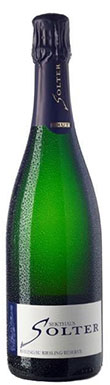

<p>Lifted chamomile, dried lemon rind and smoky earth immediately promise Riesling complexity. The palate sparkles gently and the bubbles act like a tonic of youth...
2012
Sekthaus Solter

Griesel & Compagnie, Brut Nature Pinot, Hessische Bergstrasse, Germany, 2015
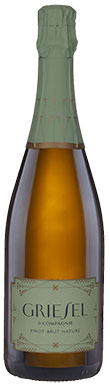
Mellow red apple and fresh pastry are mellow on the nose but a lifted streak of zesty lemon steals the show. The palate also plays...
2015
Griesel & Compagnie
Schloss Vaux, Rosé Réserve, Rheingau, Germany, 2015
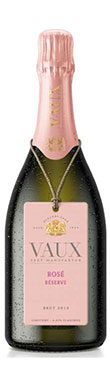
Red apple and redcurrant appear on the fresh nose, framed by yeasty creaminess. The light body is rounded out by yeasty richness and has a...
2015
Schloss Vaux
Bibo Runge, Provokateur Sekt Brut, Rheingau, Germany
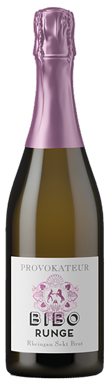
This is an unusual rosé Riesling-Sekt, and no, this is not a mistake – this was coloured pink by a small addition of red wine...
Bibo Runge
Reichsrat von Buhl, Reserve Brut, Pfalz, Germany
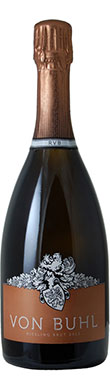
Creamy, mellow apple notes suggest Cox Orange as much as Golden Delicious while all the yeastiness suggests apple pie. The palate is wonderfully light, super-fresh,...
Reichsrat von Buhl
