
Tasting Amarone history: Six vintages of Bertani back to 1958


Aldo Fiordelli tastes Bertani Amarone, including the first vintage, 1958...
Six vintages of Bertani wines
The ‘keeper of traditions’ is often an abused metaphor in the wine business.
Bertani winery in Valpolicella, on the other hand, is literally a gatekeeper of Amarone for at least two reasons: its classic unchanged style over decades and its impressive 120,000-bottle stock from 1958 to 2009.
Six of these outstanding vintages were tasted last November at The Westin Palace in Milan including the first 1958, the celebrated 1967 and a preview of the 2009.This unique occasion was held in honour of the winery’s 50th harvest and in anticipation of the 50th Anniversary of the Amarone DOC itself occurring this year.
The history of Bertani
Amarone is a treasure that, more than once in Bertani history, has risked being lost. Brothers Giovan Battista and Gaetano Bertani were educated in France by Jules Guyot. The winery’s foundation goes back to 1857.
At that time the most renowned wines in Valpolicella were sweet Recioto. The Bertani brothers were keen on Piedmont and eager to produce a wine similar to Barolo and in 1961 they hired Ernesto Barbero, a winemaker from the Langhe, given his knowledge about ageing wines.
When Barbero arrived, he found ten vintages in more than 100 large oak vessels to taste at the Bertani winery. Because it was not sweet, the wine was considered faulty, although Barbero’s experience deemed it an outstanding dry red.
The 1958 was almost off-dry (3 g/l residual sugar) and didn’t received the success that did the completely dry 1959.
“That was the best news of my life,” declared Barbero during the Milan tasting. In 1981 – at the moment of dividing the heritage of the Bertani founders to 27 heirs – their stock was deemed “to drink” by courts.
But Emilio Pedron understood that the experts appointed by the court were wrong. Today he is the CEO of the winery and guards 25 million euros of reserve wines.
‘We have no other merit except for being the custodians of these vintages.’
The third and most harsh threat arrived in the 90s when the world asked for powerful wines and Bertani went out of fashion due to its pale, elegant style that today is a signature example of classic Amarone.
The winemaking
The French viticultural background of the Bertani’s combined with the experience and influence from Piedmont are the pillars of the estate’s recognisable elegance.
The vineyards span 62 hectares in Novare, one of the cooler valleys in Valpolicella Classico, composed primarily of Corvina trained with the Guyot system. The vines range from 50 to 10 years in age, planted in almost unique soils of chalk combined with basalt.
‘In these soils Corvina achieves the light, textured and savoury character of Bertani elegant style,’ explains the winemaker Andrea Lonardi.
After hand harvesting, the grapes are dried for more than 100 days on bamboo trellises before fermenting in cement tanks for 50 days.
The ageing of Amarone Classico takes place in neutral oak vessels from 50 to 80 hectolitres (the younger of which is 25 years old) for seven years followed by at least one year in bottle.
These elements produce a wine with pale garnet color, aromas of fresh fig (alluding to scents of the winery during appassimento) along with the black pepper tones of Corvina from the hill and the depth of complexity from ageing, with a relatively lean body compared to the richer, more powerful examples of Eastern Valpolicella, and with the outstanding, trademarked elegance for which Bertani is recognised today.
Bertani, Amarone della Valpolicella, Classico, Veneto, Italy, 1958
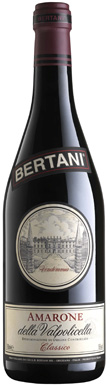

One of the rarest bottles in Valpolicella, valued around 1,000 euros. Considered a warm vintage, the wine was bottled in April of 1980 with “a...
1958
BertaniAmarone della Valpolicella

Bertani, Amarone della Valpolicella, Classico, Veneto, Italy, 1967
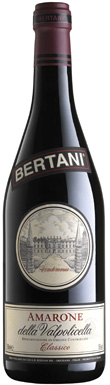
1967 is remembered for its very hot summer, so it's no coincidence that this exceeds 15% alcohol. The first impression is super-fresh, with tamarind, cedarwood,...
1967
BertaniAmarone della Valpolicella
Bertani, Amarone della Valpolicella, Classico, Veneto, Italy, 1975
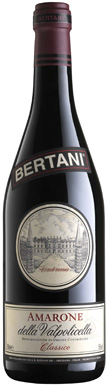
A cooler vintages to collect that is “becoming more interesting today”, says winemaker Andrea Lonardi. Garnet in the glass with a nose of bay leaf,...
1975
BertaniAmarone della Valpolicella
Bertani, Amarone della Valpolicella, Classico, Veneto, Italy, 1986
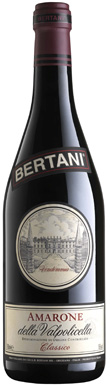
Another cool vintage, with a moderate climate during harvest anticipated by a rainy summer. Fresh and youthful in color with an austere aroma ranging from...
1986
BertaniAmarone della Valpolicella
Bertani, Amarone della Valpolicella, Classico, Veneto, Italy, 2008
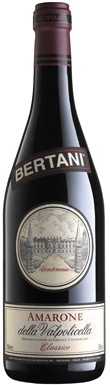
Pronounced with layers of complexity, the 2008 displays aromas of fresh and dried red cherries, cured meat, wood spice and dried herbs. It's dense in...
2008
BertaniAmarone della Valpolicella
Bertani, Amarone della Valpolicella, Classico, Veneto, Italy, 2009
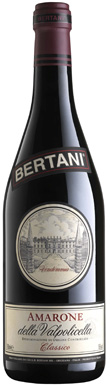
A hot summer with good diurnal temperature variation in September were the ingredients for an excellent vintage. Full of balsamic tones, milk, mint and citrus...
2009
BertaniAmarone della Valpolicella
