
Spotlight on Spätburgunder


Although it is the world’s third-biggest producer of the variety, Germany may not spring to mind when choosing Pinot Noir. But Spätburgunders now compete with the world’s best. Anne Krebiehl MW charts its rise to the top
It’s no longer news that Germany produces great Pinot Noir: Spätburgunders have won top Decanter awards and made headlines in the process. Nor is it a surprise to find German Pinot Noirs on well-curated wine lists, as their inherent freshness and elegance make them a versatile and natural choice.
Yet Spätburgunder still confuses drinkers, and it’s not surprising: German Pinot Noir thrives across four degrees of latitude, from 48°N in Baden to 51°N in Saxony (to compare, Beaune in Burgundy is at 47.0°N, Reims at 49.2°N ); in all of Germany’s 13 wine regions; and in every imaginable soil. Couple that with individual winemaking styles and you quickly realise that Spätburgunder cannot be shoved into a neat little box.
Regionality is not a reliable key to style: Baden no longer just stands for rounded and juicy; the Ahr is no longer quite so broad and bold. Nor is there such a thing as a definite Rheinhessen style or a distinct Pfalz flavour. But Pinot lovers should persevere, because a dynamic winemaking scene is eagerly upping its game across Germany, delivering finely honed and honest styles.
Here, geology seems to be a stronger marker than regional provenance, notwithstanding differences in climate. Pinot Noirs grown on limestone have that expansive texture and have a lot in common across regions; so do smoky Pinots from slate, and spicy, floral expressions from sandstone. This is what Germany really contributes to the world Pinot stakes: nuanced styles from basalt and loess, sandstone and granite, slate and schist, limestone and keuper (a kind of marl).
Even if they are diverse, they all have a certain savouriness and the elegance that comes from a temperate climate.
Recent resurgence
Today, Germany grows more Pinot Noir than New Zealand and Australia combined: exactly 11,783ha (hectares) of it. While its presence can be traced to monastic settlements of the early Middle Ages, its pan-German success is relatively recent. Plantings have doubled since 1990, which coincides with Spätburgunder’s trajectory from localised speciality to flagship variety. Pockets of Ahr, Baden, Franken, Rheinhessen and even the Mosel had a nearforgotten tradition of great Spätburgunder. Wines from Assmannshausen in the Rheingau were legendary.
It was a visionary old-guard who took up the baton of fine German Spätburgunder in the mid-1980s, winemakers who either knew what Pinot Noir had done in Germany in the past or what it could do in Burgundy. They tried to reach similar heights again and slowly forged a path of quality. Today, their children and other youngsters are at the helm, fine-tuning, recalibrating and redefining what German Spätburgunder is.
There are some stalwarts like Hajo Becker in Walluf, whose grandfather planted the first Spätburgunder vines of the eastern Rheingau in 1904 and whose first vintage was 1962, among the few who pursued quality and dryness throughout, never falling victim to fashion. ‘I have never owned a barrique,’ he states and quietly continues making beguiling, bone-dry Pinot Noirs. Franz Keller at the Schwarzer Adler in Baden’s Kaiserstuhl also stuck resolutely to dryness and elegance.
But a whole new generation also discovered Pinot Noir’s potential and started a much wider quality revolution. Hans-Peter Ziereisen in Baden’s Markgräflerland decided to convert his family estate from mixed farming to viticulture in 1991. Until then, Ziereisen cheerfully admits, he only drank beer. ‘In the very beginning, just sorting fruit was a huge step up in quality; learning to handle wood was another,’ he remembers. ‘Successively, the quality increases became smaller and smaller. Today it’s all about fine-tuning.’
Also in Baden, Martin Wassmer, who stopped selling his grapes and started making his own Pinot Noir in 1997, explains that it took time for a wider quality paradigm to emerge: ‘It’s easy to have lots of fruit in Pinot, but then you lose out on power. Likewise, it’s easy to achieve power and sacrifice fruit. Combining the two is the art: achieving full fruit with expression, length and finesse.’
Digging deep into German Pinot Noir
| Row 0 - Cell 0 | Surface area | Predominant Soils |
| Baden | 5,536ha | Very diverse soils due to Upper Rhine Rift: limestone, sandstone, granite, basalt, loess, clay |
| Pfalz | 1,658ha | Diverse soils of limestone, sandstone, loess, marl, granite |
| Rheinhessen | 1,453ha | Diverse loess, marl, limestone, sandstone, clay |
| Württemberg | 1,303ha | Triassic formations of keuper (a kind of marl) and different sandstones |
| Rheingau | 389ha | Mica schist, quartzite, loam |
| Ahr | 356ha | Slate, greywacke (dark, hard sandstone), basalt, loam, loess |
| Mosel | 296ha | Mostly slate |
| Nahe | 276ha | Incredibly diverse |
| Franken | 266ha | Triassic formations of keuper and different sandstones |
| Row 10 - Cell 0 | 250ha | The remaining Pinot Noir surface is spread |
| TOTAL | 11,783ha | Row 11 - Cell 2 |
Fresh thinking
Indeed, the first wave of internationally successful Spätburgunders tried to convince with power and flirted a little too much with oak. Ziereisen is onto something when he says that he and other German Pinot makers are freeing themselves from an obstinate idea of what Pinot Noir should be and are approaching it with intuition instead.
Rainer Schnaitmann in Württemberg, who founded his estate in 1997 when he stopped selling grapes to the co-op, was hailed as the Pinot wunderkind of the early 2000s. ‘But I suspected even then that this style of Spätburgunder was not necessarily the future,’ he confesses. ‘We had low yields, good barrels and made clear-cut wines with serious structure, different from what the Germans previously knew.

‘But we realised we did not want to make bigger, more powerful wines,’ he says. ‘We wanted to return to the idea of Spätburgunder as a kind of red Riesling: there has to be freshness; the coolness of the climate has to be evident.’ He shows his obsessive nature as he constantly and relentlessly challenges and questions everything. ‘Freshness, juiciness, but also power and longevity are what I aim for. And 20 vintages is nothing,’ he exclaims. ‘That is the reason why I keep experimenting. I want to do things better.’
Alexander Stodden grew up in one of Germany’s pioneering Pinot Noir estates in the Ahr. He worked alongside his father from 2001 and took over in 2006: ‘It’s no longer about doing a green harvest or canopy management – that’s all standard now,’ explains Stodden. ‘What has changed is the calibration of the timing of these measures, aligned to the conditions of every new vintage. Timing of the optimum moment is everything, as is absolute honesty when it comes to low yields. That also means taking a loss in certain years.’
Stodden addresses another central point: ‘We are no longer Oechsle fetishists,’ he states, referring to the German must-weight scale that measures grape ripeness and potential alcohol. Guiding growth so that grapes ripen without clocking up too much grape sugar is the chief aim now; a significant shift when every previous generation was taught to value Oechsle above all – understandable in these northerly, often inclement climes. Stodden is under no illusion: ‘Overripe Spätburgunder is boring, has no tension or complexity. I want ripeness at 92°Oe rather than at 105°Oe,’ he explains, effectively aiming for ripeness at 13% alcohol rather than 14.5% – which can easily happen in Ahr. In the past, says Stodden, the best vineyards were usually harvested last, but today this no longer holds true: ‘If everything else is there in abundance, nobody will miss 1% of alcohol.’
Delicate treatment
Addressing climate change is a top concern. Global warming, a decisive factor in Spätburgunder’s initial success, now also poses a challenge. It is no longer difficult to ripen Pinot Noir in Germany. It is, after all, a variety that loves a sunny spot in an otherwise temperate-to-cool climate, and Germany has an abundance of such sites.
In Germany’s warmest region, Baden, winemakers are fully aware of this. Holger Koch in the Kaiserstuhl district says: ‘There is real dynamism today. We understand soil and canopy management far better and can achieve naturally lower yields and slower, even ripening. It’s a completely different balance. This is what we’ve been working on over the past years to achieve a certain coolness and clarity, to make wines with restraint but real substance.’ He also underlines the purity of his fruit by using 500-litre rather than 225-litre barrels. This is a common theme. Experiments with whole-bunch fermentation are rife, and it’s seen as a non-wood way of bringing structure and firmness to a wine.
Long hang-times are no longer fashionable. Konrad Salwey, also in the Kaiserstuhl, says he is ‘looking for wines that are appetising, not big’, and is dialling back everything that weighs his Pinot Noir down. ‘I try and capture freshness and bite,’ he says.
An even younger generation, enriched by international experience, is in no doubt that Spätburgunder’s fullest potential still lies ahead. They also know where Germany’s strengths lie. Christian Dautel returned to his family estate in Württemberg in 2010 after stints in Austria, Australia, France, Oregon and South Africa. He took full responsibility for the already quality-focused estate in 2013.
‘Every year, you try and do things a little better, to advance a little more,’ he says. ‘It was during my time abroad that I realised what advantages we have here in Germany, right on our doorstep: climate allows us to make elegant, filigree wines. Pinot Noir should be fine and lithe, balanced, but also have power and density.’ To achieve this he uses less new wood and now eschews barriques in favour of 300-litre and larger barrels. ‘I’m even thinking of not using any new wood at all,’ he muses.

Youthful vitality
Dautel’s contemporary, Johannes Jülg of the eponymous estate in the southern Pfalz, agrees: ‘It takes Fingerspitzengefühl (instinct) when it comes to the use of oak.’ Jülg some of the top German estates, Stodden among them, as well as in Burgundy, before returning to his family estate in 2010: ‘I want Pinot from my limestone that is precise, fine, subtle and vibrant. I want inner density and texture made firm and taut by acidity; that’s the kind of long-lived Pinot that fascinates me.’ The wine from his first vintage, 2010 – still dew-fresh in 2017 – is testament to his words.
In Württemberg, Matthias Aldinger, who crafts fragrant Spätburgunder with his brother Hans-Jörg, echoes this: ‘The most important thing is the time of harvest,’ he says, and draws a parallel to cooking: ‘Pinot Noir has to be al dente: overcooking spaghetti irretrievably ruins a dish. Elegance is enormously important in Spätburgunder. New wood should stay in the background, while addition of whole bunches gives structure.’
Today’s youngsters want to find their own way. Johannes and Christoph Schneider of Weingut Claus Schneider in Weil am Rhein, in Baden’s far southwest on the German-Swiss border, embody this questioning spirit: ‘Even though we’ve grown up on the estate, even though our family has been making wine here since the 15th century, we are still finding the best way of doing things: be that planting material, vine spacing or training. We experiment with both whole-bunch and co-fermentation of white grapes. We aim for real understanding, but we know we want to express our site, the Weiler Schlipf.’
Julian Huber in Baden, son of Bernhard Huber, one of Germany’s true Spätburgunder visionaries who passed away far too early in 2014, tries to continue in his father’s vein. He has the long-term view of someone who grew up alongside young vines. ‘The vineyards my father replanted in the 1990s are only now reaching their prime,’ he says. ‘Each year the fruit gets better. My father knew that he was planting for future generations.’
A lot of Huber’s energy thus goes into identifying the best clonal material. ‘We’ve been selecting material ourselves for a long time and now have access to mixed-berried clones which have incredible aromatic depth and playfulness, freshness and transparency.’
His aims reflect the wider German quality ethos of choosing rootstocks and scions that are perfectly suited to each individual site: many have a mix of French and German clones. Germany’s own quality clones released at the turn of the millennium are now starting to mature. Many also make their own massal selections, propagating from their own existing plants in order to preserve the best old-vine material.
‘Pinot Noir has to be al dente: overcooking spaghetti irretrievably ruins a dish’ Matthias Aldinger
Bright future
In terms of quality Pinot Noir, Germany has made huge strides in a short time – despite the fact that a lot of the area under vine is still dedicated to insipid, thermo-vinified cooperative production (which thankfully stays in Germany). In the hands of countless thoughtful, independent winemakers from south to north – from Baden, Württemberg, Franken, Pfalz, Rheinhessen, Rheingau and Ahr, and further north and across to Sachsen – Spätburgunder thrives. There is even a small and fascinating revival in the Riesling heartland of the Mosel.
The stylistic spectrum across the country is wide and the estates that look beyond a strictly local market do not have to fear international comparison – on the contrary, there is no doubt at all that Germany is now a fully fledged world-class player.
Spätburgunder around Germany: Krebiehl’s top 20
Rudolf Fürst, Centgrafenberg Grosses Gewächs, Franken, Germany, 2014
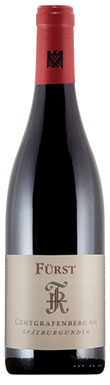

At first a whiff of oak, then subdued hints of tart red fruit and white pepper. The palate is crisp and svelte, still crunchy, with...
2014
Rudolf Fürst

Bernhard Huber, Malterdinger Bienenberg Grosses Gewächs, Baden, Germany, 2014
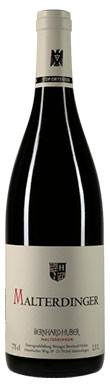
The nose has a touch of rosehip before broadening into redcurrant and a lovely leafiness that has touches of blood-like iron oxide. There is a...
2014
Bernhard Huber
Jean Stodden, Neuenahrer Sonnenberg Grosses Gewächs, Ahr, Germany, 2014
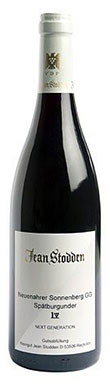
Bundled red fruit aromas are bound up with moody smokiness on the nose. The palate is concentrated but translucent, vivid redcurrant and red cherry almost...
2014
Jean Stodden
Schnaitmann, Fellbacher Lämmler Grosses Gewächs, Württemberg, Germany, 2014
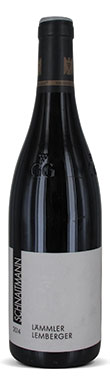
Evocative raspberry notes have the wilderness streak that comes from 100% whole-bunch fermentation. Exquisitely slender, fearlessly bright and verging on the poetic. This is delicate...
2014
Schnaitmann
Dautel, Bönnigheimer Sonnenberg Spätburgunder, Württemberg, Germany, 2013
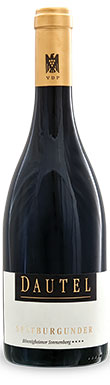
Tender red fruit is hinted at on the nose. Palate is incredibly spicy, with peppery verve amid tart redcurrant, aromatic cherry and bright cranberry. Lively,...
2013
Dautel
Holger Koch, Bickensohler Herrenstück, Kaiserstuhl, Baden, Germany, 2014
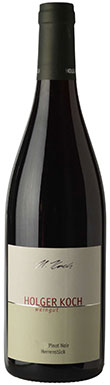
Restrained nose of tart red cherry with lovely, tingling pepper spice. Translucent and evocative with a wondrously elegant and slender body. Shimmering with red fruit...
2014
Holger Koch
J.B. Becker, Wallufer Walkenberg Spätlese Trocken, Rheingau, Germany, 2002
Tasted in magnum. Boasts the earthy, autumnal allure of mature Pinot, though tart cranberry notes appear after a little air, all echoed on the palate,...
2002
J.B. Becker
JJ Adeneuer, No1 Spätburgunder, Ahr, Germany, 2014
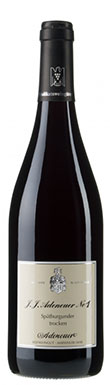
Exquisitely fragrant, this comes with overtones of peony and an alluring streak of elderberry. Sourced from grand cru sites only, this represents great value and...
2014
JJ Adeneuer
Jülg, Spätburgunder Trocken Réserve, Pfalz, Germany, 2014
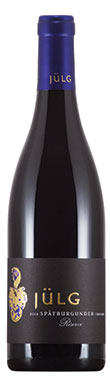
A touch of woodsmoke hovers above fine, dark cherry notes on the nose. The palate is taut and structured, bright with freshness but brimming underneath...
2014
Jülg
Salwey, Oberrotweiler Henkenberg Grosses Gewächs, Kaiserstuhl, Baden, Germany, 2014
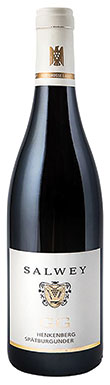
Pure and lifted redcurrant and cranberry mingle with slight smoke on the nose. This has gorgeous freshness and pure red fruit notes that convince with...
2014
Salwey
Ziereisen, Rhini, Markgräflerland, Baden, Germany, 2013
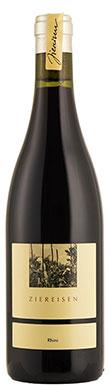
Classified as Badischer Landwein, thanks to Ziereisen’s individual streak. Beautifully mellow ripe cherry fruit on the nose becomes defined and taut on the palate, which...
2013
Ziereisen
Aldinger, Untertürkheimer Gips, Württemberg, Germany, 2015
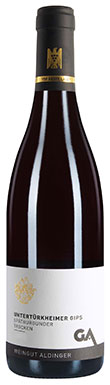
Wild strawberry appears hauntingly on the nose. Pure and delicate flavours of aromatic red berries pervade this, and the texture is as silky as a...
2015
Aldinger
August Eser, Mittelheim St Nikolaus, Rheingau, Germany, 2012
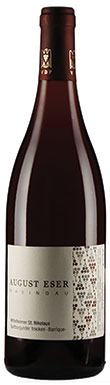
The nose shows rich tones of peony and polished mahogany with a slight edge of pepper. A vivid palate has resonant red cherry and a...
2012
August Eser
Fortnum & Mason, Axel Neiss, Spätburgunder, Pfalz, Germany, 2014
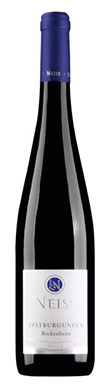
92
At first there’s a hit of toasty new oak, then bitter cherry and cranberry join in on the nose. The palate has real tension and freshness, typical for 2014, highlighting pepper spice and crunchy, tart cherry fruit with a lovely, firm but silky grip. It is the freshness with its tart fruit that echoes long on the palate. Elegant and lasting.
2014
Fortnum & Mason
Claus Schneider, CS Weiler Schlipf Spätburgunder, Markgräflerland, Baden, Germany, 2014
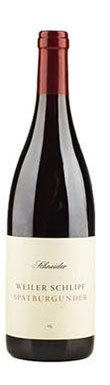
Expressive red and black cherries, almost heady, dominate the nose. The palate is juicy and vibrant; it comes on light feet but carries power with...
2014
Claus Schneider
Franz Keller, Franz Anton, Kaiserstuhl, Baden, Germany, 2014
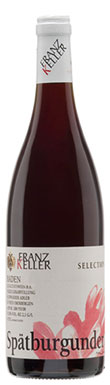
A lovely savoury nose of bay leaf and hayflowers precedes cherry and berry fruit. Pepper mingles with the soft red fruit on a moreish palate....
2014
Franz Keller
Martin Wassmer, Spätburgunder, Baden, Germany, 2011
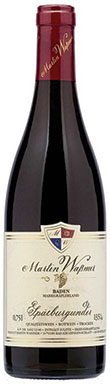
90
Distinctly lighter than your average German Pinot Noir, unadulterated by oak and carrying a breezy charm. Perfumed and with sweet raspberry fruit, there’s a lovely intensity within the soft tannins, before an attractive, red cherry hit on the finish.
2011
Martin Wassmer
Oliver Zeter, Pinot Noir Reserve, Pfalz, Germany, 2014
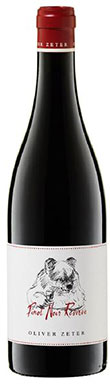
Morello cherry freshness immediately captures the nose. The palate has an appetising tanginess and a slight grip. This is taut and firm, even crunchy in...
2014
Oliver Zeter
Josten & Klein, Vom Schiefer Pinot Noir, Ahr, Germany, 2015
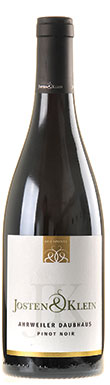
Appetising red cherry fruit is evident straight away. This is a very approachable, juicy and young Pinot that’s spicy around the edges,but also captures the...
2015
Josten & Klein
Hans Baer, Pinot Noir, Pfalz, Germany, 2016
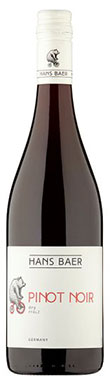
88
Appetising, spicy cherry fruit rules the nose here, followed by white pepper and red and black cherry notes coming into their own on the palate, for a fruit-driven and rounded introduction to German Pinot Noir: joyous, fresh and juicy. Incredible value too – and for sceptics, a very affordable way to dip their toe into the water.
2016
Hans Baer
