
Wine sweetness: navigate your way through


Wine labels can be confusing when it comes to indicating how sweet a wine will taste. But help is at hand, as Matt Walls offers some useful pointers to help you navigate the space between sweet and dry...
It happens to us all once in a while. You open a bottle, take a sip, and instead of a dry wine, your tongue flags up an unexpected sweetness.
It’s rarely an issue with red wines, and fully sweet dessert wines are relatively easy to spot (smaller bottles, higher prices, usually merchandised separately), but some medium-dry and medium-sweet white wines can appear to the eye almost identical to their dry counterparts.
However, there are certain clues you can gather from grape variety, regional tradition or label terminology that can lead you in the right direction.
Scroll down for Walls’ top 15 suggestions to explore sweetness in wine
And by ‘right’ direction, I don’t necessarily mean towards a dry wine.
Dryness can mistakenly be seen as a sign of sophistication or quality, perhaps because many mass-market wines contain some sugar.
But sweetness is nothing to be wary of. On the contrary, the judicious withholding of residual sugar gives winemakers scope to play with structure, balance and flavour.
Not all of the greatest wines are fully dry or fully sweet. The tricky part is knowing when best to drink them.Except for some regional curiosities, semi-sweet wines are usually produced in cool-climate regions, especially the Loire, Alsace and Germany.
Either that, or they’re made elsewhere with associated grape varieties. And no grape is more closely intertwined with semi-sweet styles than Riesling.
Germany and Riesling
Even a glimpse of the traditional German flute-shaped bottle can suggest sweetness. It’s understandable: Riesling retains acidity as it ripens, so a degree of natural unfermented grape sugar in the wine is fairly common to bring balance. Germany has also sometimes struggled to fully ripen its grapes, so a little sweetness was prized.
But tastes are changing. According to Steffen Schindler of the German Wine Institute: ‘German wine is drier than ever. Today, almost 70% of all wine produced in Germany is dry or semi-dry. Back in the 1970s, more than two-thirds were sweet.’
The most useful term when identifying whether a German Riesling is dry or not is ‘trocken’, meaning ‘dry’. The impression of sweetness in a wine isn’t just down to residual sugar, it’s also affected by the level of acidity.
So, a trocken wine can have up to four grams per litre of residual sugar (4g/l RS), or up to 9g/l RS provided that the total acidity (TA) is no less than 2g/l below the level of residual sugar (so if a wine has 9g/l RS, it would need at least 7g/l TA). The terms ‘halbtrocken’ and ‘feinherb’ mean medium-dry. But usage of any of these terms is not obligatory.
If none of these words feature on the label, another way of checking is by looking for any German Prädikat terminology. Prädikatweine is the category once called QmP or Qualitätswein mit Prädikat – the highest level of wine quality in Germany. It’s effectively a scale that refers to the ‘must weight’ of the grapes used (their degree of fermentable sugars before fermentation) rather than the sweetness of the finished wine. In ascending order of must weight: kabinett, spätlese, auslese, beerenauslese and eiswein, trockenbeerenauslese. The last four are nowadays always sweet. Kabinett and spätlese can go either way, but an alcohol level of 12% or more would suggest that all the fermentable sugars have turned to alcohol and the wine is dry. The final term (I promise) worth knowing is grosses gewächs – a prestige category of German wines that is always dry.
All this German terminology is necessarily technical and is relatively complex compared to other regions, but at least it helps you make an educated guess. With New World Rieslings you have to rely on descriptions on the label or know the producer. But generally speaking Australian Rieslings are usually bone dry; New Zealand Rieslings also tend towards dryness, but you can find some excellent medium-dry and medium-sweet examples, such as Pegasus Bay’s Bel Canto and Aria.
Beyond sugar
The impression of sweetness in a wine isn’t just down to how much residual sugar and acidity it has. The following list of factors can also play a role:
Oak
Ageing in contact with oak can release sweet-tasting compounds into the wine. It can also impart flavours that are associated with sweetness, such as naturally occurring vanillin, or caramel or coffee flavours produced from toasting the oak over a flame.
Ripeness
The flavours of very ripe grapes – overripe, jammy or dried fruits – can prompt us to think of the sweetness that would usually accompany these flavours in nature, even if the wine which contains these flavours has been fermented to dryness.
Alcohol
Alcohol can taste sweet (as can glycerol), so a wine with a high alcohol content can taste slightly sweet even if it contains practically no residual sugar.
Serving temperature
The lower the serving temperature, the less sensitive the palate is to sweetness. A very sweet wine can taste cloying at room temperature, but more refreshing and drinkable when chilled.
The treasures of Alsace
Alsace is arguably the greatest white wine region in the world, and this is in part thanks to the way it has embraced sweetness – a kind of third dimension that can make other wine regions look flat in comparison. But speaking commercially, sugar is also its greatest weakness; without the same terminology as Germany, it’s even easier to be caught out by unexpected sweetness here than over the border. Opening a semi-sweet wine when you’re expecting a dry one needn’t be a big deal, but most of us have an idea of the style we feel like drinking at any given time. So, for many, it’s a case of once bitten, twice shy.
Unusually for France, the grape varieties are usually stated on the label; they are your first clue. Pinot Blanc, Sylvaner and Muscat are almost always dry. Pinot Gris and Gewurztraminer are usually off-dry but can be anywhere from dry to medium-sweet (grand cru examples are often more noticeably sweet). Riesling is usually dry – but not always. So how can you tell?
It’s increasingly common to see a sweetness scale on the label, depicted either graphically or numerically. It’s helpful but not mandatory. However, within the next year or two, it’s highly likely that producers will be obliged to use ‘sec’ on the label if the wine is technically dry. ‘Vendange tardive’ and ‘sélection de grains nobles’ wines are reliably fully sweet.
Alsace Riesling has been rapidly evolving. The traditional style has long been dry, but in the 1990s there was a trend towards a sweeter expression. Trimbach makes exclusively dry Rieslings, and they have always championed the dry style. Owner Jean Trimbach says: ‘I’m happy to say for the last 10 years many of [the producers] who fell into sweetness – a sort of false richness – are back to dryness again.’
But to taste the Rieslings of an estate such as Domaine Rolly Gassmann, whose wines all have some degree of residual sweetness, demonstrates that medium-dry Alsace Riesling can be compellingly delicious. Pierre Gassmann explains that there’s no indication as to sweetness on his labels because his wines are made with long ageing in mind, and as wines mature, the sensation of sweetness gradually fades.
Gewurztraminer is now grown around the world, and outside Alsace it’s usually dry. Pinot Gris is just as widespread, and though normally dry, it often denotes a richer style than when the grape is labelled Pinot Grigio.
Chenin Blanc and the Loire
Chenin Blanc is another grape that retains its acidity as it ripens, so winemakers can play with a range of sweetness levels in a similar way to Riesling. Its heartland is the Middle Loire region in northern France, and although a number of appellations such as Anjou and even Savennières make a tiny amount of semi-sweet Chenin Blanc, its greatest exponents are the appellations of Vouvray and Montlouis-sur-Loire.
It’s obligatory for their dry wines to display the word ‘sec’ on the label; it is measured in a similar way to how trocken wines are measured in Germany. For sweeter wines, there is a sliding scale upwards from sec, to sec tendre, to demi-sec to moelleux, but these aren’t legally defined and are used at the producer’s discretion. ‘Liquoreux’ and ‘sélection de grains nobles’ indicate fully sweet wines.
Philippe Foreau of Domaine du Clos Naudin makes Vouvrays of varying sweetness. He sees more demand for dry styles from restaurants, while home drinkers buy across the board. Dry styles are the easiest to match with food, but demi-sec can work brilliantly with savoury dishes too, particularly with white meats, rich sauces or strong spicing. Moelleux wines are often best drunk alone, before or after a meal. But it’s these sweeter styles that, according to Sarah Hwang of Domaine Huet, ‘best radiate the heart and soul’ of her domaine ‘and carry on the winemaking traditions of Vouvray’.
In years to come, we may wonder why so many of the wines we drank were huddled at the other end of the spectrum.
See Walls’ top 15 suggestions to explore sweetness in wine
You might also like:
Refreshingly dry Alsace Riesling 2012: Panel tasting results
What is Icewine? Ask Decanter
Top Sauternes 2017 wines
Domaine Jousset, En Aparté Moelleux, Montlouis-sur-Loire, Loire, France, 2009
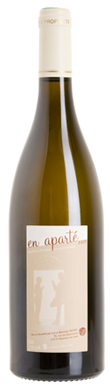

A new estate with old vines and biodynamic methods. Joyful aromas of pineapple, apple compote and beeswax. Medium-sweet but you barely notice; it’s so fresh,...
2009
Domaine JoussetMontlouis-sur-Loire

Szepsy, Betsek Tokaji Furmint, Tokaj, Hungary, 2015
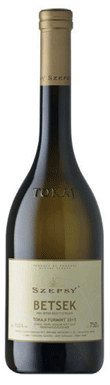
‘Száraz’ on the label denotes a dry wine. Szepsy is the master. Floral notes, green apple and rhubarb. Cooling and calming yet electrifying on the...
2015
Szepsy
Trimbach, Riesling Cuvée Frédéric Emile, Alsace, France, 2010
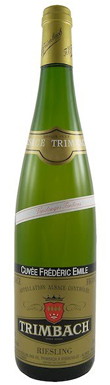
Unusually, the 2010 (grown organically) has a proportion of malolactic, giving a rounder, gentler feel. Unfurling now, with notes of apple, plum and turmeric. Full,...
2010
Trimbach
Domaine du Clos Naudin, Vouvray Sec, Vouvray, Loire, France, 2014
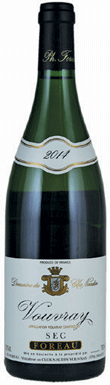
Honeyed on the nose, with subtle quince and mushroom; fresh like snow. Very dry, with a driving mineral core. Understated, reserved and serious but unforgettable....
2014
Domaine du Clos NaudinVouvray
Domaines Schlumberger, Pinot Gris Grand Cru Kitterlé, Grand Cru Kitterlé, Alsace, France, 2010
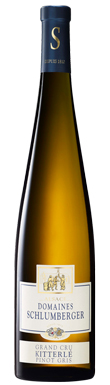
Very full and flowing medium-sweet style, with balanced acidity. Honeyed quince, pear and shortcrust pastry. An incredibly long, intense and tangy finish. Great purity, concentration...
2010
Domaines SchlumbergerGrand Cru Kitterlé
Fritz Haag, Brauneburger Juffer Sonnenuhr Riesling Trocken, Mosel, Germany, 2015
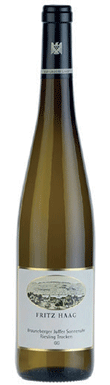
From the heart of the producer’s slate Brauneberg vineyard, this old-vine Riesling is dry but powerfully rich and mineral, revealing concentrated lime and mandarin fruit...
2015
Fritz Haag
Domaine Huet, Vouvray Moelleux Le Haut Lieu, Vouvray, Loire, France, 2016
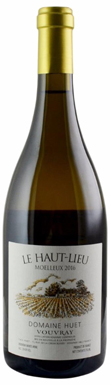
Heady honeysuckle, honey and candied lemon aromas. This biodynamic wine is medium-bodied, rich, mouth-filling. It’s sweet, but far from dessert wine. Quince and crème pâtissière...
2016
Domaine HuetVouvray
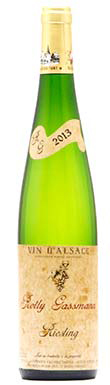
Rolly Gassmann, Riesling, Alsace, France, 2013
93
An increasingly rare medium dry Alsace Riesling. Kaffir lime leaf, lemon curd and flinty reductive aromas. Ripe acidity brings balance and structure. Weightless fresh finish with finger lime notes. Complex, compelling and characterful.
2013
Rolly Gassmann
Domaine Bruno Sorg, Gewurztraminer Grand Cru Eichberg, Grand Cru Eichberg, Alsace, France, 2016
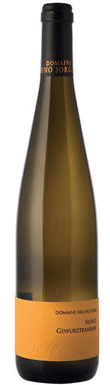
Bright, gentle varietal aromatics of rose and citrus. It’s medium-sweet, but this is secondary to the freshness, acidity and terroir expression. Finesse and precision, despite...
2016
Domaine Bruno SorgGrand Cru Eichberg
Ovum Wines, Off the Grid Riesling, Oregon, USA, 2016
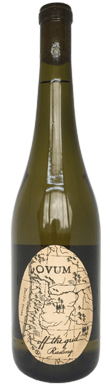
Low-intervention Riesling with light, fresh aromas – lime blossom, hawthorn blossom – that follow onto the medium-dry palate. Floral nectar sweetness hits the tongue, just...
2016
Ovum Wines
Willi Schaefer, Graacher Himmelreich Riesling Kabinett, Mosel, Germany, 2016
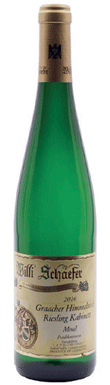
A tiny 4ha estate with a big reputation. Elderflower and satsuma aromas; lifted and pure. Fresh like laundered sheets. Medium-sweet and light-bodied. Perfectly balanced: just...
2016
Willi Schaefer
Framingham, Pinot Gris, Marlborough, New Zealand, 2016
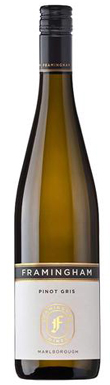
Gentle pear and blossom aromas. Full-bodied and medium-dry; tempered acidity adds to the impression of richness. Balance is achieved through inner tension, agreeable bitterness and...
2016
Framingham
Hexamer, Porphyr Riesling, Nahe, Germany, 2015
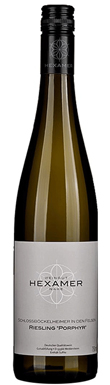
91
From Schlossböckelheimer In den Felsen’s volcanic soil with porphyry. Smoky lime, flint and grapefruit on the nose. The off-dry palate is rich in fruit, with keen acidity and a mineral grind. Great value.
2015
Hexamer
August Kesseler, R Riesling, Rheingau, Germany, 2016
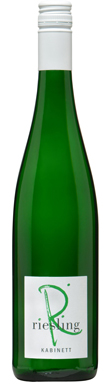
90
Very floral, with lime blossom and white pepper. Medium-dry, with good intensity and a subtle mineral undertow. Rheingau straightness and character with a light touch.
2016
August Kesseler
Léon Beyer, Réserve Personelle Gewurztraminer, Alsace, France, 2015
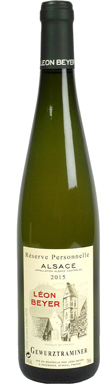
89
Like smelling a rose flecked with pink peppercorns. Keen acidity ups the sense of dryness. Not the longest, but precise, fresh and brisk.
2015
Léon Beyer
