
Taking the plunge


City trader, doctor, hobbyist, lifelong dreamer: the winemaking bug can strike anyone, whether or not they have an existing connection to the industry. Anne Krebiehl MW meets career-changers and risk-takers around the world
Not everyone is born into a life of wine. yet for many, making wine is living the dream. Some fulfil their dream once they have made enough money in another business: they buy land or a winery and hire a winemaker. But we sought out those who have done it the hard way, who were not exceptionally rich, who were nowhere near retirement, who turned their lives around completely.
They risked it all in order to make wine; they made sacrifices and struggled through. They are living proof that change is possible. Each is as different as they come – the only thing they all have in common is energy, imagination and an appetite for risk and hard work. Meet our winemaking renegades.

Ray Nadeson
Lethbridge Wines, Victoria, Australia
Ray Nadeson, 52, has a PhD in neuroscience. ‘I spent 10 years applying research on how we can reduce pain in humans,’ he explains. ‘And I was pretty good at what I did – but I didn’t want to be defined by that.
‘All my life I’ve been outdoorsy and somehow I ended up entrenched in a hospital. But I also like being outside, doing things with my hands and I really like working with different people. Being a farmer I need to work with everyone.’ It’s the same story for his wife Maree Collis, who has a PhD in chemistry. ‘Somehow or other Maree and I decided to have a go. We decided to approach it as a research project,’ Nadeson remembers.
Tasting countless wines had piqued his interest. ‘Why wine? Because wine allows you to use science and have an artistic element, and it allows you to use your hands and to farm. It unites science, nature and philosophy. But I wasn’t going to be a doctor one moment and then a winemaker, with no transition, so my wife and I got a degree in winemaking [while continuing to work]. Not because you need it to make wine, you don’t, but we wanted to have street cred.’

Nadeson continued in his day job for eight years while they were establishing the winery. ‘I wanted to do every aspect of what it takes, and the last thing I wanted was to employ a winemaker. But I couldn’t do both jobs. So 14 years ago I decided to become a full-time winemaker. It was a huge decision. you leave a job that is secure and well-paid to do something you have no track record in at all. My mum was horrified, she could not believe I would give up a prestigious job and become a farmer. Now she loves it,’ he says.
But Nadeson is honest: ‘Lethbridge didn’t make any money for years. I had to make contract wine, consult and do other things to smooth out the cash flow. We didn’t come into the business with a whole heap of money. But even though we didn’t make a lot, we existed.’

Vicki Samaras and Jonas Newman
Hinterland Wine Company, Prince Edward County, Ontario, Canada
Vicki Samaras and Jonas Newman are risk-takers and pioneers in Prince Edward County, both coming to the same decision to get into wine before they even met. Newman was a maître d’ at a Toronto restaurant and Samaras worked in the pharmaceutical industry. They were both 27 and each had dreams of owning a vineyard. Upon meeting they bought land together. ‘We started dating and built a romantic relationship while we built our farm, much to the chagrin of our parents – we’re now married with children and it seems to have worked out fine,’ says Samaras.
They financed this by doing up Toronto properties before selling them and trading up. They also got a state-backed agricultural loan and planted their first 3.5ha of vines in 2004. Due to the climate, they decided to make sparkling wine. ‘We wanted to make wine that was good every year, because we have to pay our bills. We had that pressure on us, in an unproven wine region,’ Samaras emphasises. Newman continued his restaurant job in Toronto until 2007 and Samaras left hers in 2010, when they released their first wine. ‘By then we had a couple of kids as well, and we were renovating an old dairy barn,’ Newman says. This is now their winery.

‘We didn’t really know how to farm or to change oil on a tractor,’ confesses Newman. ‘Conceptually we understood it, but practically we had no idea what we were doing. Thankfully we were young enough to take the risk.’ Samaras agrees: ‘We really believe strongly in due diligence. It was risky, but I did my research. We really wanted to have autonomy and we had a tiny, tiny budget,’ she adds, ‘but I don’t know how we did it.’
They acknowledge 2008 as their crisis: a poor, rainy harvest, no money to hire help and a critically ill child. ‘But we got through it,’ says Samaras. Neither of them expected that it was going to be so hard to sell wine. But, she says: ‘We both wanted it and we are both equally committed.’ Newman sums it up: ‘I get up every morning and I like going to work.’

Jamie Kutch
Kutch Wines, Sonoma, California, USA
Jamie Kutch is toying with his secateurs as he explains: ‘I was always a hobbyist; as a child, in college. I guess wine was a hobby while working in finance. I was a Nasdaq trader for Merrill Lynch, with three computer screens and two telephones. I quickly learned that it didn’t make me happy. But I don’t think I would have succeeded had I not gone to Wall Street first and seen what you become with just the drive to make more money. Now I’m making a tangible product. Now I get a text message on Christmas from a customer saying “I’m enjoying this with my family”. That’s a massive reward – more so than making 20 grand to boost Merrill Lynch’s earnings.’
It was his hobby that led to the life-changing telephone conversation with a Californian winemaker who promised to lend a hand. ‘When I hung up the phone I knew this was the opportunity of a lifetime.’ Three months later he went west, despite never having worked in farming or winemaking. ‘I had no family here, no friends, got on a plane with one suitcase. I’d been dating a woman for a long time and asked if she would join me. She came out six months later.’ Kristen is now his wife.

‘My friends still working on Wall Street live in multi-million-dollar homes; we rent. They drive Ferraris, I’ve got a Honda. But the experiences I have are richer. I was in the vineyards three hours ago and I couldn’t even describe the feeling you get when you look out onto the Pacific from 900 metres up, with redwoods all around you. That is priceless. I feel blessed and fortunate.’
Kutch made the decision when he was 30. Now he is 43 and says the work ‘is hard on your body’. He admits he thought ‘it would be easier than it is’, and he still has to ‘work very hard to sell 3,000 cases of wine’, but he never regretted his decision for a second. ‘When you trade stocks every day, you always weigh risks versus rewards. In wine, the risk seemed worth the reward.’
Corrado Dottori
La Distesa, Cupramontana, Marche, Italy
‘I was trading in stocks,’ says Corrado Dottori, but immediately adds that he was never a high-ranking employee. He grew up in Milan where he took an economics degree and then worked in finance. His father’s family had owned vineyards in Marche since 1935 but, like many of his generation, they sought a more sophisticated life in the city. All of the land was leased to farmers, but they slowly started retiring and Dottori either had to find someone to look after the land or sell it.
This was in 2000 when he was 28, with ‘memories of endless summers as kids, running in the fields’. His girlfriend Valeria, now his wife, was happy to join him. ‘It was what we needed,’ he recalls. ‘Coming from the city was like being free for the first time.’
The property he moved to was run down – he had just one hectare of vines, so he and Valeria opened a B&B, which was their only income stream for a while. But money did not bother him. ‘Of course you have to change your lifestyle,’ he recalls, noting that living in the country is far cheaper than in the city. ‘Even so, the first four or five years were very hard.’ He now owns 7ha of vines and also grows olives and wheat for a local pasta cooperative. Initially it was difficult to explain what seemed like a regressive move to his family, who had done so much to forge international careers. ‘Probably my father understood my dream,’ Dottori feels.
Converting to organic and then biodynamic viticulture in the early 2000s was his biggest challenge. ‘I was doing something very complex but without knowledge,’ he says, noting that he never studied agronomy. ‘It was very hard.’ His only regret is not planting more vines at the beginning, due to lack of funds. ‘If I had, I would have more mature vines now.’ He says that ‘there is no point of contact’ between his former career and now, and his only advice to aspiring career-changers is: ‘Don’t be scared of hard work.’

Urban Kaufmann
Weingut Kaufmann, Hattenheim, Rheingau, Germany
The Rhine ferry that Urban Kaufmann took every day to get to work was ‘the only thing that still had structure’, he recalls. This tongue-tied former cheesemaker developed his fascination with wine early, at his family’s table. This crystallised into a dream when he attended his first proper tasting at age 25. Becoming a cheesemaker, he says, was not an unusual choice of profession in rural Switzerland. In his former life he had it made: he ran a successful cheese dairy making Appenzeller. ‘It was a good existence; I was at the top. I easily could have carried on, but that inner voice became louder and louder. I figured I still had a horizon of 20 years to make something happen.’
Moonlighting throughout 2012 in a Swiss winery clinched it: he decided to buy a wine estate. There were ‘a thousand reasons’ not to do it, but he could not let go of his dream. ‘Giving up something existing and well-run for the big unknown, leaving your own country…’ he starts but trails off, reliving the enormity of the decision he took as a 41-year-old.
Finding an estate that was both affordable and a going concern was a challenge. But looking for property first in Italy, then in Austria and Germany, he found love instead: meeting Eva Raps, then manager of the German VDP association, was pure luck as she had harboured the same dream. Through her he learned of a Rheingau estate for sale in 2013. Kaufmann thus tied up all his Swiss affairs and moved his entire life to the Rheingau to make Riesling and Pinot Noir.
Getting to grips with the different aspects of a working winery was hard. ‘The chaos was perfect,’ Kaufmann says. This is when he mentions the ferry. Raps grappled with admin while Kaufmann worked in the cellar. Oenology itself did not faze him, nor did the prospect of hard work. ‘Whether it’s lactic acid bacteria or wine yeast, microbiology is much the same,’ he says. Are there any regrets? ‘No. Once the decision was made, there was only one way: forward.’

Alie Shaper
Brooklyn Oenology, Long Island, New York, US
‘Born of Serendipity Courage Persistence’ proclaims the label on Alie Shaper’s ‘As If’ series of wines. She has an engineering degree and comes from a family of engineers. ‘Because I was good at maths and sciences, I assumed that’s what I would end up doing.’ The assumption led her to Silicon Valley in 1996, into the aerospace industry. ‘After four years I burnt out, dropped everything and returned east.’
Casting about for what to do, Shaper answered an ad for tasting room staff at a Hudson Valley winery, which morphed into working in a New York City tasting room. ‘That’s where the bug bit hard. I took WSET classes,’ she says. She continued working with her father in the family manufacturing business, but dedicated evenings and weekends to wine. Soon that was not enough: a full-time job as wine distributor followed. ‘The hardest thing was telling my father I wouldn’t work for him anymore,’ Shaper says.
‘Then it struck me like a lightning bolt, wandering around Brooklyn one Sunday afternoon: I could start a winery here. There were so many old warehouses, there were glassblowers, parachute makers, you name it. It was like this rebirth of making in Brooklyn. You don’t have to own land to own a winery. I just kept turning it over in my head. How would I accomplish this? A year later I quit my distributing job, but there was one missing piece: I had never worked in production.’
So in 2006, when she was 33, she did some work at a custom-crush facility on Long Island; the experience was invaluable. Shaper made her first two custom blends and has made her wines there ever since. ‘Every case we sell, we have to fight for. I didn’t expect that,’ she acknowledges, but adds: ‘Something had to burst in order for something new to bloom. That transition can be really hard. It tests your resolve, your persistence and your creativity. You bear a lot of responsibility, but at the end the reward is huge, because it’s something you created yourself.’
Risk-takers and career-changers: a taste of success
Anne Krebiehl MW is a freelance wine writer, educator, consultant and judge
Hinterland, Sacrament Méthode Traditionelle, Ontario - Prince Edward County, Canada, 2011
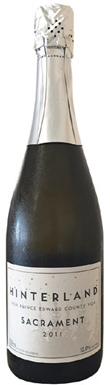

Yeasty hints of freshly baked brioche appear first on this lovely sparkling blend of half Pinot Noir, half Chardonnay. Honey notes play on the dry,...
2011
Hinterland

La Distesa, Gli Eremi, Marche Bianco, Le Marche, Italy, 2015
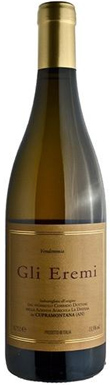
Notes of salty, savoury yeast blend with bruised apples on the nose of this concentrated, single-vineyard Verdicchio. The dry saltiness attains an almost soy-like spice...
2015
La DistesaMarche Bianco
Lethbridge, Between Five Bells, Australia, 2015
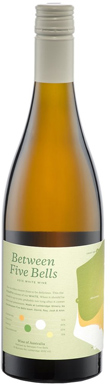
Hazelnut and creamy lime on the nose of this unusual blend of Chardonnay, Pinot Gris, Riesling and Gewurztraminer, bottled as a ‘Wine of Australia’. The...
2015
Lethbridge
Kaufmann, Tell Riesling Trocken, Rheingau, Germany, 2015
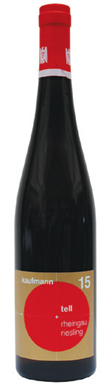
A blend of the best tanks of grapes from classified sites, this Riesling has vividly ripe citrus flavours. Amalfi lemon plays with green apples on...
2015
Kaufmann
Brooklyn Oenology, As If Serendipity, New York State, USA, 2014
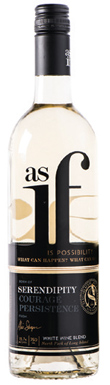
Summer blossom and orange peel create an aromatic opening on this blend of Chardonnay, Viognier and Sauvignon Blanc. The slender body is fresh and full-flavoured...
2014
Brooklyn Oenology
Kutch, Bohan Vineyard Pinot Noir, Sonoma County, Sonoma Coast, California, USA, 2016
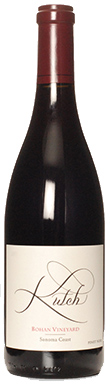
Fragrant, tangy Morello cherry fruit pervades both the nose and palate. Lightness, bright freshness and taut structure are the hallmarks of this evocative, slender and...
2016
KutchSonoma County
