
Tasting Opus One: 1979 to 2016
Jane Anson finds pleasure and plenty of discussion points at the almost 40-year vertical of one of America’s icon wines...

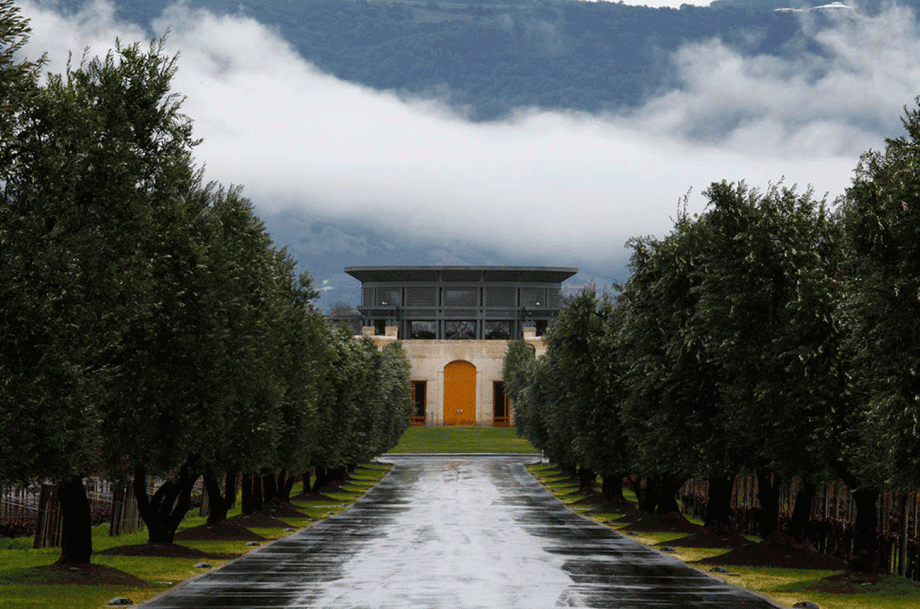
Tasting a 40-year vertical of any wine from its conception through to its latest bottled vintage is always exciting, because you are tracing a proof of concept, asking the question whether the belief and investment in this particular wine has proved to be justified. In the case of Opus One, it is particularly fascinating because from 1979 to today pretty much everything changed – the vineyards, the winery, the viticulture, the team.
‘Everything’, says CEO David Pearson, ‘but the idea, which at its heart remains extremely simple – marrying the potential of Bordeaux and Napa, and to create an American First Growth’. The first name was ‘napamedoc’, becoming Opus in year two.This was only the second-ever complete vertical of Opus One since Pearson took over as CEO in 2004, and both have taken place this year – once in South America a few months ago, and another this weekend in Bavaria, held at Unger Weine in Frasdorf’. Together with a small group of collectors, we were taken through the history not only of the first high profile joint venture between Bordeaux and Napa, but also through the evolution of two families and the recent history of the wider region of Napa Valley – all things that came out clearly in the glass.
Back in 1979, we were hard on the heels of the Judgement of Paris, and although Insignia and a few other Bordeaux blends already existed in Napa, the idea of Baron Philippe de Rothschild starting a joint venture with Robert Mondavi was viewed as a risk. The idea has first been floated between the two men back in 1970, but it was only in 1978 that it became a reality – proof, as I have always thought, that the smart French winemakers were excited not threatened by the possibilities offered by the success of Californian wines in the now-legendary tasting.
One point is worth making right up front. Some of the vintages that were less celebrated at the time over in Napa had clear appeal to the tasters in Europe this weekend. The wines with more bottle age, from 1979 to 2003, are very much regarded as ‘old style’ Opus when the two founding families were still directly involved in the winemaking. They were less consistent than the recent vintages, but when they were good they were brilliant; working perfectly with food and so full of nuance and joy.Their ageing ability was standout, and clearly signalled to me and others present that Opus rewards ageing. Many also underlined that the cooler years in Napa should never be dismissed. The 1980, which has blown me away every time I’ve tasted it, is the result of a long, slow and relatively cool growing season (until a burst of heat at the end). The alcohol is barely above 12%abv and yet it remains intense, well spiced, complex and deeply coloured. Hugely impressive and a reminder of how much natural power is found in the soils of Napa without having to push.
It’s also clear, having said that, that Opus has become a more complete, fully-realised wine in more recent years. The first standout improvement comes in 1997, the first vintage to use all five grape varieties of Cabernet Sauvignon, Cabernet Franc, Merlot, Malbec and Petit Verdot. The arrival of winemaker Michael Silacci in 2001 is also immediately evident, paving the way to greater precision and flesh as the wine heads towards becoming fully independent in 2004, with its own winemaking team and entirely estate-owned vineyards.
The biggest difference in recent years is in consistency, and in hitting its stride as a Californian wine; with all the exuberance and pleasure that entails, while still retaining a crushed mint and saline finish that speaks of choices such as slightly earlier harvesting than some icon Napas, and viticultural choices such as leaving leaf cover around the grapes. Opus remains a wine that respects vintages, and the light and shade that it offers is essential for any winery that aims at greatness.
There are so many layers of interest here, it’s hard to know where to start. To break down what to expect when you are tasting these wines, it’s helpful to see the evolution of Opus in three (or perhaps four) main stages.
The early years cover 1979 to 1990 where the wine was made in the Mondavi winery by Lucien Sionneau from Mouton and Tim Mondavi, with vines from the Mondavi’s To Kalon vineyards. Then 1991 in their own winery but still with the Napa-Bordeaux winemaking team of Patrick Léon (from 1985) and Tim Mondavi, with vines coming from plots across the Valley. The biggest step change was the arrival of Michael Silacci (fresh from Warren Winiarski at Stag’s Leap, and before that André Tchelistcheff at Beaulieu) in 2001 – and finally the move to full independence from 2004, when the Mondavi family sold to Constellation Brands (the Rothschilds retained their 50%) and Opus became its own self-contained entity, headed up by David Pearson with its own winemaking team and entirely estate-owned vineyards (69ha spread over four main plots, as they had been since 2000, half from To Kalon vines and half from plots around the winery).
This was also the point at which they began a 25-year replanting programme that is still on-going, changing not only grape plantings in places, but also row orientation, pruning, trellising and irrigation techniques to drive the roots from 1m to 3m underground. The vineyard has always been farmed organically, with biodynamics in place for the past 11 years since 2008 (not certified).
Then there’s the backdrop of the wider politics and wine styles of Napa. Opus came under criticism at various times over the first two decades for being too European, too ‘food-friendly’ was one criticism, particularly once the snowball of Icon Napa became a potent force from 1998 onwards. Negative comparisons to Screaming Eagle and others were real, and in some ways deserved. Was Opus taking too much note of its Bordeaux heritage and not enough of its location?
It’s fascinating to look at just one statistic that I have included in every tasting note – the differing length of skin contact, a step in winemaking that extracts colour, flavour compounds and tannin by keeping the skins of the grape in contact with the juice after alcoholic fermentation is finished. Just this one thing tells a story all by itself – the lowest being 9 days in 1982 and the highest 43 in 1994 (usually closer to 20 days again today). The racking intensity has also changed, from six times during ageing in the early days (‘because that’s how it was done in Bordeaux at the time’), down to four, and as low as twice during ageing today, as winemaking becomes less interventionist and the emphasis very definitely shifts out to the vineyard.
All in all a thought-provoking tasting that delivered both discussion and pleasure. Hard to argue with that.
The bottles were kept upright for one week then opened at 12pm on each day of the tasting (held over two consecutive evenings). Bottles not magnums. Tasting held with Opus One, with wines provided directly by them or from their importer.
Tasting Opus One 1979-2016
Opus One, Napa Valley, Oakville, California, USA, 1979

At 40 years old, the colour here is still exceptionally dark, surprisingly so. On the palate, the more expected signs of evolution are certainly there...
1979
Opus OneNapa Valley

Opus One, Napa Valley, Oakville, California, USA, 1980
This wine was stunning when I tried it in June 2018, and delivers again here. Just a wonderful nuanced wine rippling with flavour. Richer and...
1980
Opus OneNapa Valley
Opus One, Napa Valley, California, USA, 1981
One of the earlier harvests in Napa Valley history, following a mild winter with lower than average rainfall and a hot summer. 10 days skin...
1981
Opus OneNapa Valley
Opus One, Napa Valley, California, USA, 1982
The tertiary notes of an older wine are more evident at this point, still a deep rich colour although a little more brick around the...
1982
Opus OneNapa Valley
Opus One, Napa Valley, California, USA, 1983
A rainy August was followed by dry windy September that protected the grapes from rot and overall the yield was extremely low, which made the...
1983
Opus OneNapa Valley
Opus One, Napa Valley, California, USA, 1984
This is a generously-structured, powerful wine, with a still beating heart and layers of liqourice-backed fruits that show their age through a subtle bricking around...
1984
Opus OneNapa Valley
Opus One, Napa Valley, California, USA, 1985
Patrick Leon's first year as winemaker alongside Tim Mondavi, as Lucien Sionneau retired. This is a superb vintage (in fact the entire trio of 1984,...
1985
Opus OneNapa Valley
Opus One, Napa Valley, California, USA, 1986
A successful mix of intense black fruits with soft tannins and elegance running through it, the wine is really delivering pleasure right now and should...
1986
Opus OneNapa Valley
Opus One, Napa Valley, California, USA, 1987
What strikes immediately with this wine is the balance and the lush quality of the fruit, that is subuded and yet juicy. This is reputed...
1987
Opus OneNapa Valley
Opus One, Napa Valley, California, USA, 1988
This wine stands out in the line-up, with spicy black olive and rosemary notes, great concentration of fruit and an expansive feel through the mid-palate....
1988
Opus OneNapa Valley
Opus One, Napa Valley, California, USA, 1989
A little softer than some, this is not displaying the intensity of the 1987 and 1988 but still lovely sweet fruit and a silky, confident...
1989
Opus OneNapa Valley
Opus One, Napa Valley, California, USA, 1990
This was the last vintage made in the Mondavi winery, and they go out on a high. A clear touch of caramel, this is silky...
1990
Opus OneNapa Valley
Opus One, Napa Valley, Oakville, California, USA, 1991
The first year in their own winery, with a winemaking team that still had input from both Bordeaux and Napa, with Patrick Léon and Tim...
1991
Opus OneNapa Valley
Opus One, Napa Valley, California, USA, 1992
Still evident power and concentration running through the body of the wine, although salinity and soft cedar on the finish takes it into a more...
1992
Opus OneNapa Valley
Opus One, Napa Valley, California, USA, 1993
This has wonderful spice and depth but drops off just a little quicker than some. 42 days skin contact, variable weather during flowering so a...
1993
Opus OneNapa Valley
Opus One, Napa Valley, California, USA, 1994
Deep and rich dark ruby in colour, clear liquorice and crushed black olive notes. A long cool growing season (the longest in a decade, after...
1994
Opus OneNapa Valley
Opus One, Napa Valley, California, USA, 1995
This is a little soft, with crushed leaf and earthy notes playing around the still clear brambly fruits. I question the level of brett, but...
1995
Opus OneNapa Valley
Opus One, Napa Valley, Oakville, California, USA, 1996
One of the best vintages of the vertical, the fruit feels well defined and bright, the fleshy berry expression is certainly Californian, with notes of...
1996
Opus OneNapa Valley
Opus One, Napa Valley, California, USA, 1997
Jumps out of the glass, another one that stands out among the very best in the line-up; intense, well integrated flavours, blackberry, menthol, black olive,...
1997
Opus OneNapa Valley
Opus One, Napa Valley, California, USA, 1998
Not an easy vintage, with rain through the growing season that extended the ripening period into late October. This doesn't have the grip and definition...
1998
Opus OneNapa Valley
Opus One, Napa Valley, California, USA, 1999
The richness of the texture takes a step up with this vintage, and the wines are at this point starting to display consistency and clarity...
1999
Opus OneNapa Valley
Opus One, Napa Valley, California, USA, 2000
A long, cool growing season in 2000 and you can feel this through the character of the fruit, which has less intensity that some vintages,...
2000
Opus OneNapa Valley
Opus One, Napa Valley, Oakville, California, USA, 2001
Small concentrated berries from a long harvest that lasted from 1st September 1 to 19th October. Michael Salacci arrived as winemaker this year, taking over...
2001
Opus OneNapa Valley
Opus One, Napa Valley, California, USA, 2002
<p>Concentrated, rich layers of black cherry fruit, with savoury spice, anise and ground coffee bean, black chocolate and deep blackcurrant and bilberry fruits. This is...
2002
Opus OneNapa Valley
Opus One, Napa Valley, California, USA, 2003
The last one where the families were directly involved and after 2002 was the lowest crop of the decade, this one is the highest, croped...
2003
Opus OneNapa Valley
Opus One, Napa Valley, California, USA, 2004
This is the point at which Opus becomes a fully independent estate, with its own vineyard crew so able to react when needed throughout the...
2004
Opus OneNapa Valley
Opus One, Napa Valley, Oakville, California, USA, 2005
Low yield and clear concentration, at 15 years old we can just start to see some early bottle ageing notes as it relaxes into itself,...
2005
Opus OneNapa Valley
Opus One, Napa Valley, California, USA, 2006
Rich, damson and spiced plum notes, chocloate and roses, black olives, rosemary and cinammon. A great year with depth and layers, well finessed tannins, a...
2006
Opus OneNapa Valley
Opus One, Napa Valley, Oakville, California, USA, 2007
A powerful wine, full of black chocolate, cocoa powder and olive paste, layers of tightly packed flavour, many consider this to be the best of...
2007
Opus OneNapa Valley
Opus One, Napa Valley, California, USA, 2008
Closed and tight right now, there are clear bright and well-defined cassis notes but those tannins still have grip and attitude, and it is pretty...
2008
Opus OneNapa Valley
Opus One, Napa Valley, Oakville, California, USA, 2009
A more mineral, floral-tinged style in this vintage, with blueberry and blackberry fruits, beautifully aromatic if a little softer through the finish than some...
2009
Opus OneNapa Valley
Opus One, Napa Valley, Oakville, California, USA, 2010
Very much a young wine in its primary stage, this is silky and powerful and tasted excellent during this vertical, despite 2010 being an extremely...
2010
Opus OneNapa Valley
Opus One, Napa Valley, Oakville, California, USA, 2011
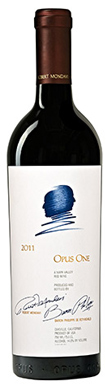
The silkiness of the tannins is striking, with nuanced blueberry and raspberry fruit that gives a wine full of light. A vintage where rain fell...
2011
Opus OneNapa Valley
Opus One, Napa Valley, Oakville, California, USA, 2012
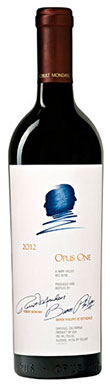
A near-ideal vintage, where all parts were perfect. Here we are at full peak Opus; satin-like in texture, packed with cassis, bilberry and crushed raspberry...
2012
Opus OneNapa Valley
Opus One, Napa Valley, Oakville, California, USA, 2013
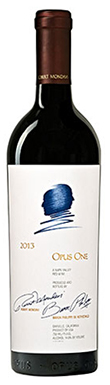
I love the 2012, but honestly the 2013 just has the edge, because it is just as concentrated and full of fruit but acidity and...
2013
Opus OneNapa Valley
Opus One, Napa Valley, California, USA, 2014
Sometimes a little overlooked, this is a vintage that falls closer to 2012 than 2013 in profile, at least on this showing - it has...
2014
Opus OneNapa Valley
Opus One, Napa Valley, Oakville, California, USA, 2015
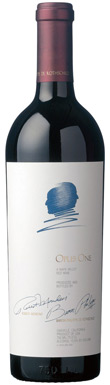
The hottest vintage since 2008, this is full of spice and still an absolute baby. Touch of heat through the mid-palate, but it's seductive and...
2015
Opus OneNapa Valley
Opus One, Napa Valley, Oakville, California, USA, 2016
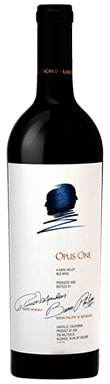
Love the juiciness of this, right off the bat, rich deep black cherry rippling with menthol and eucalyptus notes, and these beautiful floral aromatics that...
2016
Opus OneNapa Valley
