
The Decanter interview: Daniel Pi


Never more comfortable than when breaking the winemaking mould, the Peñaflor veteran is a central figure in the story of Argentina’s wine industry, as Amanda Barnes reveals...
Overseeing the production of more than 200 million litres of wine each year, Daniel Pi doesn’t have time for much else. ‘I’m lucky I love what I do!’ he says sincerely, and you get the impression that he really does love his job. Pi may be softly spoken but, as director of winemaking for Grupo Peñaflor, he is at the helm of one of the biggest wine producers in the world and has been instrumental in building its success. His own success is down to decades of hard graft and determination – but Pi also has an intrepid spirit that’s taken him beyond the ordinary.
Born into a middle-class family, Pi was the first to attend university, choosing to study architecture. Disillusioned with the creative limits that restrain architects in Mendoza – a region known for its earthquakes – he soon switched to winemaking. Graduating five years later, Pi was ready to start making wine – but the industry wasn’t quite ready for him.‘I finished my degree and was immediately unemployed,’ he recalls sardonically. ‘There was an overproduction crisis. White wines were fashionable and everyone was overcropping, prices were low and the quality wasn’t good. Let’s say it was “complicated”…’
Daniel Pi at a glance
Born 1960 in Mendoza City
Training Juan Agustin Maza University: graduated as a winemaker in 1983. Don Bosco oenology college: started white wine research in 1984
Career 1985 head winemaker at Quirós winery; 1992 hired by Grupo Peñaflor; 1998 becomes head winemaker at El Esteco; 2003 becomes head winemaker of Trapiche; 2009 first vintage of his family label Tres14; 2010 becomes winemaking director for Grupo Peñaflor
Family Wife Cecilia (a radiologist), children Daniela (28, studying to be a winemaker) and Gonzalo (26, a programmer)
Hobbies Cooking; sharing meals, wine and music with friends; hiking; architecture
First steps
Undeterred, Pi took a ‘terribly paid’ job at the National Viticulture Institute’s laboratory until he landed his first position two years later: making pre-mixed sparkling wine and pineapple cocktails (‘they were popular at Christmas’). He split his time between the winery and pineapple factory, but in the evening he moonlighted at the local university researching white wine production. His growing specialism soon made him one of the most sought-after technical experts for white winemaking in Latin America, and it was when he was lecturing on the topic in Brazil in 1992 that Grupo Peñaflor offered him a job.
On paper this might sound like Pi’s big break – but in reality he was being thrown in at the deep end. His task was to start wine production from scratch in the unfashionable region of San Juan. ‘No one believed in San Juan,’ Pi remembers. ‘I wanted to prove that we could make good wine there’. So he moved his family to San Juan, where they then lived for the next decade.
During this time, Pi worked with several consultants – he credits Australian winemaker Peter Bright as one of his greatest mentors – and travelled extensively to Washington and California. Ignoring the Bordeaux influence taking hold in Mendoza, Pi became a lone Rhône-ranger in San Juan, planting the region’s first Viognier and carefully selected Syrah clones – both of which have become emblematic varieties for the region.
Pi also focused on producing own-label wines for UK supermarkets including, as he fondly chuckles, a ‘Monster Spicy Red’ for Tesco. In his characteristically unpretentious manner, he credits the UK supermarkets with discovering the potential of Argentinian Malbec in the late 1990s. ‘Malbec was very common and cheap at the time, and the UK trade is usually looking for a bargain… That’s why it started appearing on labels and people started paying attention.’
Attention was also being paid to Pi’s ability to champion good value wines, and in 1999 he launched Finca Las Moras – the first Argentinian brand to export red wines within their vintage year. It went on to become Argentina’s most-sold brand in the UK, and Pi unabashedly describes the wines as ‘easy to understand’, advocating simplicity in a world where ‘wine has become too complicated’.
Having successfully flown the flag for the underdog region of San Juan, the Peñaflor group now set Pi another challenge: to turn around production at their new investment, Michel Torino (now El Esteco), in Salta’s Calchaquí Valley. It didn’t get off to the best start. ‘The previous owner had sold five containers of Torrontés to Germany, and we had to take them back – the wine was crap,’ he laughs. ‘At that time Torrontés wines were very heavy; nobody liked them.’ Fortunately Pi was able to reinvent the winery’s style of Torrontés, before turning his focus to old-vine red vineyards in the region and seeking out distinctive terrains to plant new vines.

Eye for detail
After rising to the challenges of San Juan and Salta, in 2002 Pi returned to his native Mendoza to become head winemaker of the group’s latest acquisition, Trapiche. Founded in 1883, Trapiche came with a long history as a large producer of table wine for a domestic market. Pi’s goal was to switch the balance, and in less than 15 years, Trapiche’s fine wine production grew from 5% to 65%, with exports growing from 3% to 25%.
Despite Trapiche’s size, Pi has always taken a meticulous approach. His first task when he started was to visit each and every grower – all 80 of them. One such visit was an inspiration: ‘I met two brothers in their vineyard, one was 78 and the other was 80 years old. I asked to continue buying their grapes, and they told me that their dad always had the last word. I laughed and asked if they were pulling my leg. They took me into the house to meet their father, Felipe. He was 103 and still running the vineyard! I realised there are lots of stories behind the growers.’
Pi set Felipe’s fruit aside, and isolated the other unique grower lots into micro-vinifications. He had decided to make a single-vineyard series, but what made this series particularly radical is that he didn’t want the label to focus on the name of the winery – but that of the grower.
‘There are 23,000 growers and only 800 wineries in Argentina – that’s a lot of anonymous people who never get recognised on the labels. We need our growers, so we need to take care of them,’ he says.
It took time for Pi to convince the commercial team, but Trapiche released its Grower Series with the 2003 vintage – including a label dedicated to the centenarian grower Felipe Villafañe. This new series was a runaway success and has become the company’s icon line.

Building a legacy
Pi’s most maverick move however, is found on the other side of the country – on the coast in Buenos Aires. ‘Nobody imagined we could make a coastal wine in Argentina,’ confides Pi about the Costa & Pampa vineyard he and viticulturist Marcelo Belmonte planted in 2009. The experimental vineyard succeeded and in 2019 will total 40ha.
How did they calculate the ideal spot for Argentina’s first coastal vineyard? ‘It wasn’t scientific at all!’ laughs Pi. The story goes, ‘We were drinking a lot of wine…’ – Pi and Belmonte were near Mar del Plata beach resort one evening, merrily reminiscing. ‘We each spent our childhood holidays there and remembered how everyone wore sweaters in summer. We realised it was cool climate with plenty of water, so we convinced the company to invest in a vineyard.’
The move has broadened the horizon for Argentinian winemaking regions, beyond the western Andes corridor, and laid a blueprint for future coastal vineyards. ‘With global warming, the future lies in places with more water availability,’ Pi says more seriously.
A more intimate project is Pi’s family label, which he started with his children, Daniela and Gonzalo, in 2009. The name Tres14 (3.14) is an inside joke about their surname, for which Pi was bullied at school. ‘This wine was a chance to make our weakness a strength.’ They called the first vintage ‘Imperfecto’ (imperfect) to celebrate its flaws but, after bottles were gifted to wine friends, Imperfecto gained a cult status. Pi and his daughter Daniela, now studying winemaking, have produced a vintage together ever since.
He is also in the process of building a winery for the Bemberg family, who acquired Grupo Peñaflor in 2010. Describing himself as a ‘frustrated architect’, Pi has helped to design the modern winery in Gualtallary with Mendoza architect Mario Yanzón – though details are under wraps until next year.
This isn’t the first time Pi has helped to build a winery for Peñaflor. When he returned to Mendoza in 2003, he caught wind of a historical winery that Trapiche used to own. ‘It was located across the old railway tracks and I heard that it was one of the most beautiful wineries. But I couldn’t see it at all – it was covered in trees and bushes. So I went exploring with a machete!’
Indiana Jones-style, Pi reached the overgrown, abandoned winery and ‘fell in love immediately’. He spent two years convincing Peñaflor to buy it, and then two more years planning the complete restoration. The 1912 Florentine building was re-inaugurated in 2008. ‘For me it is a piece of art and shows something in the blood of the Argentinian wine industry for more than 100 years – the beautiful blend of architecture and winemaking,’ he explains.
As a winemaker, Pi too has that blend of artistry, architectural design and technical precision in his blood. It is both his studious approach and his affable appreciation of the consumer’s pleasure that has established him as one of the most respected winemakers of his generation.
Tres 14, Imperfecto, Uco Valley, Gualtallary, Mendoza, Argentina, 2012
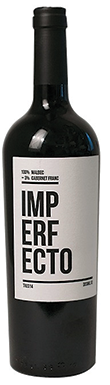

Pi first made the Iscay Cabernet Franc and Malbec blend in 2008, and his affinity for this partnership shows in his personal label. Fleshy black...
2012
Tres 14Uco Valley

El Esteco, Chañar Punco, Calchaquí Valley, Salta, Argentina, 2011
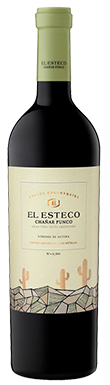
The extreme terrain (2000m altitude on schist soils) comes out in the glass: wild dark fruit, smoked meat and seductive liquorice. This intense - almost...
2011
El EstecoCalchaquí Valley
Trapiche, Terroir Series Finca El Tomillo Chardonnay, Uco Valley, Gualtallary, Mendoza, Argentina, 2017
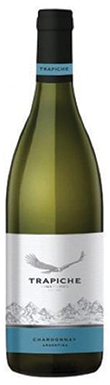
Pi’s rapport for white wine making reaches his acclaimed Terroir Series. Flint, wet stones and lavender tease the nose but the power is in the...
2017
TrapicheUco Valley
Trapiche, Costa y Pampa Albariño, Buenos Aires, Argentina, 2017
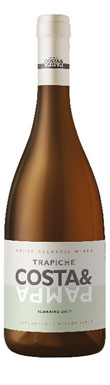
The newest addition, and first vintage of Albariño, from Trapiche’s pioneering coastal vineyard is perhaps the most exciting yet: bright citrus and stone fruit notes...
2017
Trapiche
Tres 14, Imperfecto, Uco Valley, Gualtallary, Mendoza, Argentina, 2012
Pi first made the Iscay Cabernet Franc and Malbec blend in 2008, and his affinity for this partnership shows in his personal label. Fleshy black...
2012
Tres 14Uco Valley
El Esteco, Chañar Punco, Calchaquí Valley, Salta, Argentina, 2011
The extreme terrain (2000m altitude on schist soils) comes out in the glass: wild dark fruit, smoked meat and seductive liquorice. This intense - almost...
2011
El EstecoCalchaquí Valley
Trapiche, Terroir Series Finca El Tomillo Chardonnay, Uco Valley, Gualtallary, Mendoza, Argentina, 2017
Pi’s rapport for white wine making reaches his acclaimed Terroir Series. Flint, wet stones and lavender tease the nose but the power is in the...
2017
TrapicheUco Valley
Trapiche, Costa y Pampa Albariño, Buenos Aires, Argentina, 2017
The newest addition, and first vintage of Albariño, from Trapiche’s pioneering coastal vineyard is perhaps the most exciting yet: bright citrus and stone fruit notes...
2017
Trapiche
