
My top 10 St-Emilion and Pomerol châteaux
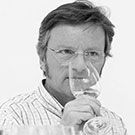

We asked long-time Decanter contributing editor James Lawther MW to select his favourite estates from these Right Bank appellations. His choice highlights the evolving nature of the region since the 1990s...
Bordeaux became my home in 1996, St-Emilion and the Right Bank an agreeable 25-minute drive away. Leaving the rolling hills of the Entre-Deux-Mers, the road dips and crosses the Dordogne running on towards the elevated epicentre of St-Emilion, the limestone plateau and côtes. Advancing further, the terraces, slopes and châteaux appear. It’s a heartening sight and one that hasn’t palled over the years. Likewise, the medieval town itself – whether bustling from spring to late summer or slumbering in the winter.
In the 1990s the Right Bank was a flurry of activity. The start-up ‘garage movement’ was in full swing, a revised classification for St-Emilion in 1996 caused something of a stir, and viticulture and winemaking were in the spotlight, with ‘progressive’ methods such as green harvesting, grass cover, late-harvesting, extraction and ageing in new oak hot topics.
Scroll down for Lawther’s top picks from his favourite Pomerol and St-Emilion chateaux
Some 20-odd years on, revolution is no longer in the air, the viticultural methods are standard practice and the wilder extremes of winemaking have been toned down. The garage wines that survived are now part of the establishment, the talk these days imposed by wealthy investors and the latest acquisition and amalgamation. Unchanged is the quiet rurality that still holds.
Choosing my top St-Emilion and Pomerol châteaux, I’ve tried to show the fabric of the region, illustrating the evolution since the 1990s. Both the official (Angélus, Ausone, Cheval Blanc, Pavie) and unofficial (Lafleur, Petrus, Le Pin) top growths have been left aside to allow for a little more scope. It’s a choice that is personal rather than one that is dictated by points.
Château La Fleur-Pétrus, Pomerol
It’s difficult not to include an estate owned by Ets Jean-Pierre Moueix in a review of the Right Bank. La Fleur-Pétrus was the first property acquired by Jean-Pierre Moueix in 1950. It has since been expanded by his son, Christian Moueix, and grandson, Edouard Moueix, and now consists of 18.7ha on the Pomerol plateau, a notable size in this tiny appellation.
Clearly, the wine has evolved and we have yet to see the full picture. But it’s safe to say that the renowned finesse of La Fleur-Pétrus shows more depth and structure these days. Merlot is the dominant grape with 90% in the blend, but with a pinch of Petit Verdot and Cabernet Franc. ‘We’re convinced a high percentage of Merlot is necessary; it purveys the Right Bank character,’ affirms Edouard.
Château La Conseillante, Pomerol
The continuity of ownership at La Conseillante has been one of its strengths, the Nicolas family being proprietors since 1871. It did, however, make for a rocky period in the 1990s when one family member, a doctor, oversaw winemaking with the assistance of a part-time cellarmaster. The new millennium, though, ushered in a more professional approach, first with Jean-Michel Laporte arriving in 2004 as manager-winemaker, then Marielle Cazaux as director from 2015.
The cohesion of the property goes beyond ownership, the boundaries of the 11.8ha vineyard the same as in 1871, the blend of 80% Merlot and 20% Cabernet Franc from both clay- and gravel-dominant soils also relatively stable. In fact, it’s the Cabernet Franc and Merlot grown on gravelly soils that provide the minerality and finesse so admired in La Conseillante. What the new management has brought is greater precision, particularly in the vineyard, where Cazaux is now slowly initiating organic cultivation. ‘I come from a viticultural background so have always been close to the vineyard,’ she says. A new winemaking facility, built in 2012, also helps. The style of the wine hasn’t changed but the grain of tannin is finer and the fruit comelier.
Château Valandraud, St-Emilion 1GCCB
What a story: the architect of the garage movement is now an establishment St-Emilion premier grand cru classé. It all started in 1991 when Jean-Luc Thunevin – sometime bistrotier, DJ and bank clerk – and his wife Murielle Andraud, produced the first vintage of Valandraud, a total of 1,280 bottles, in a lock-up next to their house in St-Emilion. Frost and green harvesting reduced the yield, hand-destemming and pigeage saved on finance, while malolactic fermentation and ageing in new oak barrels produced the desired effect. The garage wine was born and the rest, as they say, is history.
Except there are a few elements left unrecounted: the cherry-picking of an increasing number of parcels to produce the wine (disclosure: I worked the harvest here in 2006); prices that surpassed those of the Médoc first growths in the 1990s; the purchase of 8ha Château Bel-Air-Ouÿ in 1999 (now Valandraud), and the introduction of a white wine in 2003.
And alongside all of this, a commitment to quality and precision, and the ambition to have Valandraud recognised. Initially, the wine divided opinion with its onedimensional concentration, but over the years that has been replaced by a complexity to match the ripeness, depth and structure. Don’t think that Thunevin’s ambition has been sated either; he’s eyeing the ‘A’ status in the classification next.
Château Bourgneuf, Pomerol
There’s a sort of hegemony in Pomerol: if you’re not on the high point of the plateau, you can’t run with the elite. Some, though, make a pretty good effort. Château Bourgneuf has been owned by the Vayron family since 1840; the present winemaker, Frédérique Vayron, is the eighth generation. Her parents, Dominique and Xavier Vayron, made some dependable wines through the 1980s and 1990s but Frédérique has pushed on since taking over in 2008, adding greater purity and precision to a typically unctuous, structured base.
The 9ha vineyard, which is in one single block, descends from the heavy clay-withgravel sector of Trotanoy through gravel and clay to parcels of gravel and sand. Frédérique has improved the pruning, employed plot-byplot management, increased exactitude over the harvest date and introduced a second wine from 2012. At the same time, she’s launched a programme of replanting which includes a massal selection of Merlot and Cabernet Franc from a 100-year-old parcel. Bourgneuf may not quite be at the top table, but there’s certainly no need for subordination.

Château Grand Corbin- Despagne, St-Emilion GCC
François Despagne knows all about the trials and tribulations of being downgraded in the St-Emilion classification. In 1996, in the hands of an ailing uncle, Château Grand Corbin- Despagne was stripped of a status it had held since 1955. ‘It was psychologically hard for the family and economically tense,’ he recounts. There was no recourse to the law courts. Instead, Despagne was given the choice of continuing his research alongside Denis Dubourdieu at Bordeaux’s Faculté d’Oenologie or becoming the seventh generation to run the family domaine. He chose the latter.
The arrival of a younger generation was greeted positively as Despagne set about retrieving classification. The wind-blown sand and clay terroir was already a known factor and the 28.5ha vineyard in a reasonable state, but he had trenches dug so that he could understand the 50 different parcels better, introduced grass cover and reduced yields. ‘From someone at home in a laboratory I became passionate about the vineyard,’ he says.
Organic cultivation followed progressively, with the whole estate certified since 2013. The cellars were also gradually modernised and a second wine was introduced in 1998. There’s a happy ending to the story, as Grand Corbin-Despagne was reclassified officially in 2012; the generous, Merlot-led wines a well-established entity today.
Château Canon, St-Emilion 1GCCB
Canon is symbolic of the restoration and change St-Emilion has witnessed in the past 20 years. Ranked first growth since the inaugural St-Emilion Classification in 1955 and ideally located on the limestone plateau, it was in poor condition when purchased by the Wertheimers, owners of Chanel, in 1996. Since then investment, dedication and professional expertise have given the 34ha property a new lease of life; the wines now pure, refined and expressive of the terroir. ‘It’s been a pleasure to lift the property to the status it merits,’ says Canon’s long-serving technical director, Stéphane Bonnasse.
Change did not come overnight as the renovation has been extensive. Nearly 80% of the core area of the vineyard has been replanted, the old vines having been virus-ridden; a portion of the underground galleries were reinforced and the cellars cleaned of a TCA problem as well as being modernised. There’s also been expansion, with the acquisition and integration of neighbouring vineyards, and a 12thcentury chapel remodelled as a separate winery for the second wine, Croix Canon. It’s the sort of project that only a wealthy benefactor could undertake, but it’s been done with taste and consideration, as well as an eye for the style and brand of Canon.
Château Figeac, St-Emilion 1GCCB
Figeac’s 1979 was one of the first wines I ever bought to lay down. This was followed by a case of the 1982. Visits have been reasonably frequent, the highlight a 2001 dinner hosted in the cellars for the now-defunct association of premiers grands crus classés. In short, it’s a property I’ve come to know; the wines, with a high Cabernet content, impressing with their finesse and ability to age.
The late Thierry Manoncourt, a degree in agricultural engineering in hand, established Figeac’s modern reputation in the 1950s and 1960s. His decision to cultivate 35% each of Cabernet Sauvignon and Cabernet Franc and 30% Merlot did more than anything to establish the Figeac style. Development since has been steady, but if the estate marked time in the 1990s it is now ploughing ahead with renewed vigour. Much has been accomplished in the vineyard in terms of replanting, and next in line is a new cellar complex in 2019. Already, if progress can be measured by vintage quality, 2015 and 2016 are among the greatest wines ever produced at Figeac.
Vieux Château Certan, Pomerol
‘Quality is in the detail,’ says Alexandre Thienpont, and at Vieux Château Certan that has been made into a fine art. Alexandre’s grandfather, Georges Thienpont, bought the 14ha property in 1924. It was then run by his father, Léon Thienpont, before Alexandre took over in 1985. He has since been joined by his son, Guillaume, so the continuity and family succession are confirmed. It’s this type of shared knowledge, plus a sharp intellect, that has kept VCC at the top of its game. Stumbles are uncommon and stylistically it is rarely blown off course.
The vineyard is the focal point, located as it is at the heart of the Pomerol plateau. One section abuts that of Petrus but overall there’s a different soil profile, which dictates a distinctive spread of grape varieties: Merlot (65%) is planted on heavy clay, Cabernet Franc (30%) on gravelly clay and Cabernet Sauvignon (5%) on gravel. The blend can differ radically according to the vintage but the wine remains profound, firm and fine in style. Batches of wine from vines that are under 25 years old are destined for the second label. ‘We eliminate everything that can ruin quality,’ asserts Alexandre.
Clos des Baies, St-Emilion GC
The days of finding tiny, independent, start-ups in St-Emilion are limited but they do still exist. Philippe Baillarguet waited 13 years to make his first wine and 17 to own his first plot of land. ‘I felt I needed the experience before launching out on my own,’ says the man who has been the cellarmaster for Château Ausone and other Vauthier family properties since the mid-1990s. Clos des Baies first saw the light of day in 2006 with a wine made from rented land; 2010 was the first vintage produced from the tiny plot (less than a hectare) acquired on the clay-limestone slope of the côte sud just below Tertre Roteboeuf.
Baillarguet readily admits his personal venture would not have been possible without the support of the Vauthier family. He makes the wine at Château Moulin St-Georges and is assisted in some of the vineyard work by the Ausone team. ‘Prices of land have rocketed, making start-up costs prohibitive,’ he explains. Garage in size, less so in style, his 70% Merlot, 30% Cabernet Franc blend is dense, full and firm, with an acidity that highlights freshness and structure.

Tertre Roteboeuf, St-Emilion GC
François Mitjavile has always been a maverick. When custom dictated the Guyot system of pruning, he adopted the cordon system. Low yields and late-harvesting appeared at an early stage. In the 1990s the fashion for power and colour was queried and rejected, the wine remaining resolutely ruby-red and exotic in style. And if, in the early days, the négociants in Bordeaux were unsupportive, then overseas importers provided a solution. The final non-conformist gesture was to eschew classification and drop the ‘Château’ moniker.
He’s followed his own path and in so doing created a unique expression and identity with Tertre Roteboeuf. It’s a bijou property, more Burgundian than Bordelaise, located on the clay-limestone soils of the côte sud. From the start in the 1980s he knew that the 5.5ha estate had to be run in a certain way. ‘Low production and high working costs meant I had to go for outstanding quality and sell expensively,’ he explains. Without classification the wine is up there with the first growths. Stylistically, the opulence, and the quality and texture of tannin, owe much to the Merlot on this terroir being picked on the edge of overripeness, as well as to a lengthy period of maturation in 100% new oak barrels with controlled oxidation. In this approach Mitjavile has never wavered.
See Lawther’s t0p picks from his favourite Pomerol and St-Emilion chateaux
Château La Fleur-Pétrus, Pomerol, Bordeaux, France, 2008
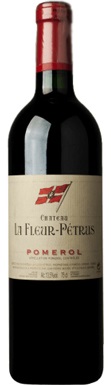

Supple and enjoyable, this is excellent to drink now because it has the seductive tannins and star-anise exoticism of Pomerol, but not the power that...
2008
Château La Fleur-PétrusPomerol

Château La Fleur-Pétrus, Pomerol, Bordeaux, France, 2015
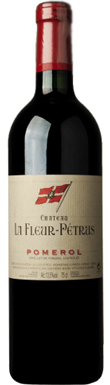
Creamy and seductive, with chocolate and dark cherry notes; the oak is perceptible. Dense core of fruit. Round and full with a fine grain of...
2015
Château La Fleur-PétrusPomerol
Château La Conseillante, Pomerol, Bordeaux, France, 2015
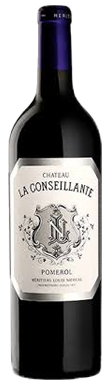
The nose here is incredibly concentrated but slightly inexpressive. Loaded with dark fruit, violets and dark chocolate. Incredibly silky on the palate, almost voluptuous with...
2015
Château La ConseillantePomerol
Château Valandraud, Virginie de Valandraud, St-Émilion, Bordeaux, France, 2014
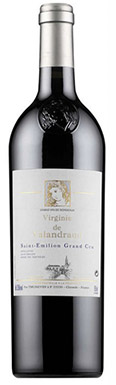
Creamy dark fruit with well-integrated vanilla oak. Seductive fruit on the palate, mid-palate weight, freshness and length on the finish. Harmonious.
2014
Château ValandraudSt-Émilion
Château Valandraud, Blanc, St-Émilion, Bordeaux, France, 2016
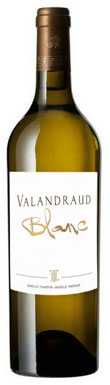
A blend of Sauvignon Blanc, Sémillon and Sauvignon Gris. Harmonious and restrained despite the evident weight and power. Citrus notes and a lovely texture. Tangy,...
2016
Château ValandraudSt-Émilion
Château Grand Corbin-Despagne, St-Émilion, Grand Cru Classé, Bordeaux, France, 2010
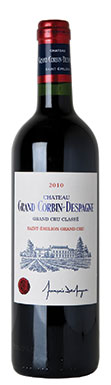
<p>Robustly oaky nose, with a hint of tar and berry fruits. Quite rich, juicy, compact, tannic but not tough, and soft in texture. Still brooding...
2010
Château Grand Corbin-DespagneSt-Émilion
Château Canon, St-Émilion, 1er Grand Cru Classé, Bordeaux, France, 2015
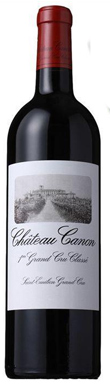
Slap bang on the plateau, Canon is a textbook example of the polish offered by clay and limestone over hard limestone bedrock. This approaches the...
2015
Château CanonSt-Émilion
Château Canon, Croix Canon, St-Émilion, Bordeaux, France, 2013
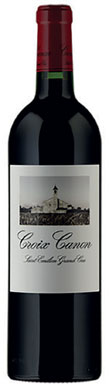
Fresh and breezy with briary fruit notes. This has a lighter weight and frame but should work with food. Luncheon claret style.
2013
Château CanonSt-Émilion
Vieux Château Certan, La Gravette de Certan, Pomerol, Bordeaux, France, 2015
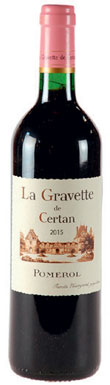
Mainly young vines make up the reliably seductive second wine of Vieux Château Certan, which in 2015 took one-third of production. It's bright and fresh,...
2015
Vieux Château CertanPomerol
Vieux Château Certan, Pomerol, Bordeaux, France, 2015
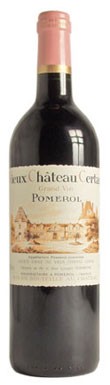
Aromatics here are a little more evolved than with the 2016, showing tar notes, Liquorice Allsorts, anise, raspberry and blackberry fruits. This is a good...
2015
Vieux Château CertanPomerol
Clos des Baies, St-Émilion, Grand Cru, Bordeaux, France, 2015
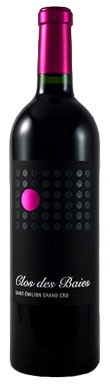
Ausone's cellar master's wine. Dense on the nose – even a little austere. Smooth texture on the palate and then builds. Terroir note on the...
2015
Clos des BaiesSt-Émilion
Clos des Baies, St-Émilion, Grand Cru, Bordeaux, France, 2010
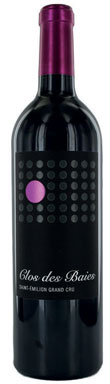
A slight reductive note is followed by dark fruit and liquorice aromas. Plush on the attack then a minerally, fresh finish. Powerful and robust style.
2010
Clos des BaiesSt-Émilion
Château Tertre Rôteboeuf, St-Émilion, Grand Cru, Bordeaux, France, 2014
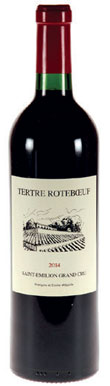
Round, plush and seductive. Tender, fresh tannins balance the mellow aspect. Confit, toasted notes then soft, caressing palate. Expressive fruit. Low acidity but, as always,...
2014
Château Tertre RôteboeufSt-Émilion
Château Tertre Rôteboeuf, St-Émilion, Grand Cru, Bordeaux, France, 2006
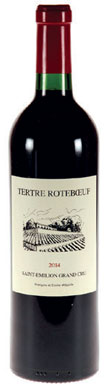
Rich and generous with dark fruit and roasted notes. Palate round and sweet but a freshness evident. Slight dryness on the finish.
2006
Château Tertre RôteboeufSt-Émilion
