
Top 2013 cru Beaujolais reds
From St-Amour in the north to Brouilly in the south, the 10 crus of Beaujolais suffered in the past from a lack of investment and poor winemaking, not to mention the glut of Nouveau. But things have changed, says James Lawther MW.


There’s a shake-up going on in Beaujolais that wine lovers should heed. The Beaujolais crus, in particular, are demonstrating that there’s more to the Gamay grape than just Nouveau. A series of successful vintages, including the exceptional 2009, are part of the reason but old vines, a unique terroir and a growing band of diligent and determined producers are also vital factors.
Trying to convince consumers that Beaujolais reds can be serious is not an easy task. Beaujolais Nouveau has held such a stranglehold on taste and communication since the 1970s that it’s difficult to believe the region produces anything other than this light, fruity and rather standardised libation. Indeed, at the height of its success in the late 1980s, Nouveau accounted for more than half of the region’s production. This has now been throttled back to about a third (30 million bottles in 2013) but continues to have an impact on perception.Of more interest to consumers, though, is what’s different in the glass. What do you get that is above and beyond regular Beaujolais? Well, at their best, these are wines of real personality and character that speak of soil and climate. The grape may be Gamay, but the crus find some resonance with the wines of their Burgundian neighbours to thenorth and those from the northern Rhône some 70km south. A semi-continental climate and poor, granite-based soils (those in southern Beaujolais are richer and produce lighter wines) provide freshness and structure, the acidity and supple tannins contributing a linear precision and firmness ideally enjoyed with food. Alcohol levels are a reasonable 12.5% to 13%.
Aromatically, one can find minerality, for want of a better word, with often a hint of the pepper and spice associated with the northern Rhône. The fruit expression can be red or dark depending on the style of the vintage, the crus with their southerly and easterly hillside exposures ripening earlier than vineyards at the southern end of the region. In short the crus have a delicious smack of fruit but also the structure to age, some resembling a mature Pinot Noir with a few years in bottle.
James Lawther MW picks his top cru Beaujolais reds from the 2013 vintage…
Château Thivin, La Chapelle, Beaujolais, Côte de Brouilly, Burgundy, France, 2013
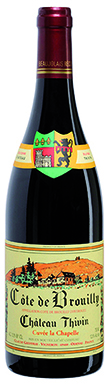
91
Dense and racy with an affirmed structure. Spice and red fruit notes. Fine texture. Loads of freshness and length.
2013
Château ThivinBeaujolais
Domaine Chignard, Les Moriers, Beaujolais, Fleurie, Burgundy, France, 2013
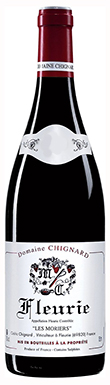
90
Elegant red fruit and lifted floral nose. Silky texture. Poised and complete. Delicious.
2013
Domaine ChignardBeaujolais
Jean-Marc Burgaud, Côte de Py, Beaujolais, Morgon, Burgundy, France, 2013
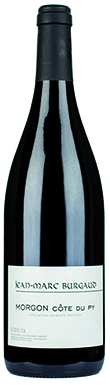
90
Dark cherry notes with a hint of black pepper. Tight, firm and structured. Length and grip on the finish. Great value from the most famous slope in Morgon.
2013
Jean-Marc BurgaudBeaujolais
Domaine Laurent Martray, Vieilles Vignes, Beaujolais, Brouilly, Burgundy, France, 2013
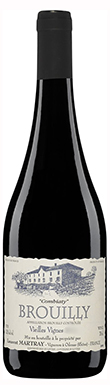
88
<p>Lovely depth of fruit. Eminently drinkable but should hold up for a few more years.</p>
2013
Domaine Laurent MartrayBeaujolais
Dominique Piron, Domaine de la Chanaise, Beaujolais, Morgon, Burgundy, France, 2013
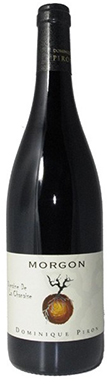
88
<p>Red fruit and lifted floral aroma and flavour. Round and supple on attack then firm and structured on the finish</p>
2013
Dominique PironBeaujolais
Lucien Lardy, Beaujolais, Fleurie, Burgundy, France, 2013
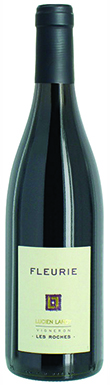
88
Firmer and more masculine in style than many Fleuries. Juicy red fruit with a strong tannic frame. Fresh finish.
2013
Lucien LardyBeaujolais
