
Tormaresca Bocca di Lupo: Antinori’s Puglian outpost
Stephen Brook tastes the Aglianico-based Bocca di Lupo from Antinori's Puglian outpost...


The Antinori family is indelibly associated with Tuscany, but for decades it has also owned properties elsewhere, such as Piedmont and Napa Valley. In 1989 they ventured into Puglia by purchasing two estates: Bocca di Lupo in Castel del Monte and Masseria Maime, south of Brindisi and close to the Adriatic.
Bocca di Lupo had been owned by the Gancia family, and most of the vines planted were white varieties destined for sparkling wine. The white wine is still produced in the form of the lightly oaked and relatively inexpensive Pietrabianca, a Chardonnay with a dash of Fiano. But there were also some Aglianico vines that had been planted in the mid-1980s, which Antinori’s head winemaker Renzo Cotarella decided to vinify. He liked what he tasted and planted more Aglianico, which was the source for the wine called Bocca di Lupo. In 2001 Cotarella blended in a little Cabernet Sauvignon, but found it dominant and distracting, so dropped it from subsequent vintages.Cotarella explained: ‘There are three main areas where Aglianico flourishes: Campania, especially in its flagship appellation Taurasi; Vulture in Basilicata; and Castel del Monte. They are all different. Vulture is on volcanic soils, but here in Puglia it’s grown on calcareous tufo soils that give considerable finesse.’
Nonetheless, Aglianico remains a tannic variety. ‘If the bunches aren’t fully ripe, the skins and especially the seeds will give you ferocious tannins. What wasn’t always realised is that phenolic ripeness occurs some seven to ten days after sugar ripeness. There were vintages when we over-extracted, especially by fermenting at temperatures higher than we would employ today.’
Winemaking decisions here vary according to the vintage character. There is no formula, but in general Bocca di Lupo is picked late, not overripe, fermented at up to 28C with a maceration of 15 to 18 days, and then aged in small barrels for around 15 months. In recent vintages Cotarella has been moving from barriques to French barrels of larger capacity such as 300 or 500 litres. He is vague about such matters as the proportion of new oak or toast levels. ‘We often don’t transfer the wine to barrels until January after the harvest, so we have plenty of time to assess the character of the wine before we need to order the barrels. So there’s flexibility when it comes to deciding on the kind of barrels we want for this wine.’
‘By 2010,’ he continues, ‘I knew the style of Aglianico I wanted from this site. I want intensity but not excessive muscularity. I can accept some austerity – that comes with the variety – but not rusticity.’
In 2012, Cotarella changed the vinification method, installing small conical steel tanks that allow him to ferment at lower temperatures. During fermentation, the seeds can drop to the bottom of the tanks, and about half of them are removed. This minimises the extraction of harsh tannins from those seeds. ‘This technique gives us earlier drinkability – I want our wines to be accessible once they’re released – but we can also retain a firm structure that gives an ageing potential of up to 20 years.’
This is in line with the Antinori house style, which never delivers blockbuster wines. Bocca di Lupo is more polished than many wines from neighbouring Vulture, but there is no lack of richness or power.
Tormaresca Bocca di Lupo: Tasting seven vintages
You may also like:
Antinori masterclass: Super Tuscans from 1999 to 2013
Is Le Serre Nuove Italy’s best second wine?
Tormaresca, Bocca di Lupo, Castel del Monte, Puglia, Italy, 2001
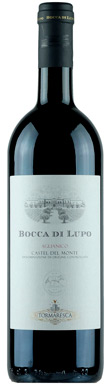

An early effort here, and Renzo Cotarella admits they were still feeling their way. But it's a fine result with a very deep colour that's...
2001
TormarescaCastel del Monte

Tormaresca, Bocca di Lupo, Castel del Monte, Puglia, Italy, 2004
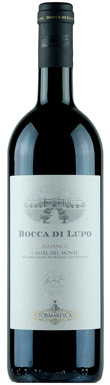
The nose is exceptionally complex, packed with blackberry fruit and notes of cloves and mocha too. Although very concentrated, this still displays a fresh attack,...
2004
TormarescaCastel del Monte
Tormaresca, Bocca di Lupo, Castel del Monte, Puglia, Italy, 2006
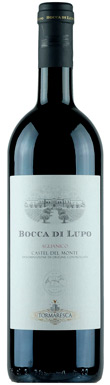
Cotarella freely admits that 2006 was a vintage he did not read correctly, with higher temperatures at fermentation leading to excessive extraction. Plums and blackberries...
2006
TormarescaCastel del Monte
Tormaresca, Bocca di Lupo, Castel del Monte, Puglia, Italy, 2010
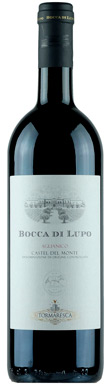
The nose is intense, with lifted black cherry and blackberry aromas and a touch of mint that highlights the cool character of the vintage. Although...
2010
TormarescaCastel del Monte
Tormaresca, Bocca di Lupo, Castel del Monte, Puglia, Italy, 2014
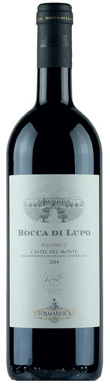
This was a tricky vintage in many parts of Italy that suffered from heavy rainfall. It has given this wine a lighter profile, with fresh...
2014
TormarescaCastel del Monte
Tormaresca, Bocca di Lupo, Castel del Monte, Puglia, Italy, 2015
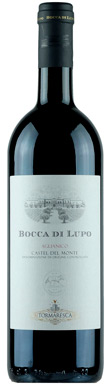
A splendid result from a great vintage. The black-fruited nose is ripe and polished, with stylish oak. The attack is supple and the palate is...
2015
TormarescaCastel del Monte
Tormaresca, Bocca di Lupo, Castel del Monte, Puglia, Italy, 2016
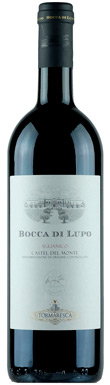
Still in its infancy, this opaque red-coloured wine is very rich, juicy, and plummy on the nose, vibrant, poised and quite oaky. The attack is...
2016
TormarescaCastel del Monte
