Understanding the Left Bank: A comprehensive guide


Get to grips with the different appellations on this side of the Gironde, as Stephen Brook offers a comprehensive guide from north to south for anyone who is just beginning their love affair with Bordeaux wines...
As the terms Left and Right Bank clearly imply, what we think of as Bordeaux is in reality two different regions separated by the broad Gironde River. It’s not just geography that divides them. The Left Bank is, in its best terroirs, dominated by gravel banks, which Cabernet Sauvignon in particular finds accommodating. Across the river, the Right Bank is largely clay and limestone, where Merlot is more at home.
Yet even the Left Bank is far from homogeneous. Its numerous appellations are divided by location – it’s 130km from the northern Médoc to the southern Graves – and also by proximity to the river. Soil too plays a part: top sub-regions such as Margaux are a series of gravel mounds, while elsewhere gravel is sporadic at best. The role of gravel is twofold: it permits excellent drainage, a crucial factor in a maritime region, as it stores heat during sunny days and then releases it slowly after sundown, encouraging the ripening process.
Scroll down to see Brook’s selection of classic tastes from the Left Bank
The city of Bordeaux is at the region’s centre. Within the city itself, and for some distance to the south, is the Graves, home to the Left Bank’s oldest properties. To the north lies the Médoc, home to the Left Bank’s most prestigious sub-regions: Margaux, St-Julien, Pauillac and St-Estèphe. Almost all the estates classified in 1855 lie within those communes, with just a few exceptions such as La Lagune, Cantemerle and Belgrave.
Médoc
To the north of Bordeaux city, the Médoc is red-wine territory, dominated by Cabernet Sauvignon and Merlot, with Cabernet Franc and Petit Verdot playing supporting roles.
Properties with a high proportion of Merlot, such as Pichon Longueville Comtesse de Lalande and Palmer, maintain that Merlot on the Left Bank can give structured wines which have little in common with the fleshier, seductive styles of Merlot from the Right Bank.
There are a few white wines made here, such as Aile d’Argent from Mouton and Pavillon Blanc from Margaux, plus attractive bottlings from, among others, Prieuré-Lichine in Margaux and Fonréaud in Listrac. But most properties are well aware that red-wine prices outstrip those for whites to such an extent that white wine production in a top Médoc terroir would be an indulgence.
Haut-Médoc
Only a small proportion of the vineyards of the Médoc are located within the four top communes. The rest are entitled to the broader appellations of either Haut-Médoc or Médoc.
The Haut-Médoc extends from the northern edges of the city to the area just north of St-Estèphe. Many excellent properties are found here, including a number of classed growths. What distinguishes the prestigious communes is their proximity to the river and the depth of well-drained gravel soils on which the vines are planted.
The Haut-Médoc vineyards just missing out lie slightly to the west of the top regions on later-ripening soils, or on soils with a low gravel content, such as the area between Margaux and St-Julien. The one exception is around the commune of St-Seurin, where beautifully located properties such as Sociando-Mallet and Charmail produce wines that can sometimes rival those of St-Estèphe, just to the south.
AP Médoc
Continue north and you find yourself in AP (formerly AC) Médoc. This is the most northerly part of the peninsula, and ripening can be problematic in cooler or wetter years. Nor are the soils as propitious as further south, though gravel is not entirely absent.
The area is certainly capable of producing excellent wines such as Potensac, d’Escurac, La Tour de By, Loudenne and Tour-Haut-Cassan, but quality very much depends on individual location and on maintaining moderate yields. Because the owners cannot demand prices anywhere close to those considered normal in St-Julien or Margaux, the inability to invest in the cause of improving quality further is an additional factor. But in great vintages, the wines from here can offer outstanding value.
Margaux
Margaux is the appellation about 15km north of Bordeaux city. The region is quite large, with about 1,500ha under vine, and it extends for some distance inland.
The gravel is at its finest here, giving the wines a distinct elegance and delicacy. That’s not to say they’re lightweight, and the common descriptor for Margaux wines as ‘feminine’ is misleading. Nonetheless the wines tend to exhibit finesse rather than power.
The best vineyards lie on four large gravel croupes (or mounds), and because the gravel is less deep than further north, the soil and the vines heat up a few days earlier than, for example, in Pauillac. This early ripening is of particular benefit to Cabernet Sauvignon. Some estates have up to 10% of Petit Verdot, which adds more spice and structure to the final blend. The commune is home to one first growth, Château Margaux, and its vineyard holdings have remained much as they were when classified in 1855.
St-Julien
The road that traverses the Margaux appellation passes through the villages of Cantenac, Margaux and Soussans, then continues across a band of Haut-Médoc vineyards until it reaches St-Julien.
Almost all of the 900ha of vineyards here belong to classed growths, and the wines are highly consistent, with few underperformers. Even slightly less famous estates like Lagrange and Talbot produce wines of high average quality and considerable longevity.
There are no first growths here but a number of highly regarded second growths such as the Léovilles and Ducru-Beaucaillou. The wines are elegant but have a bit more weight than those from Margaux, while rarely displaying the sheer power of a top Pauillac.
Pauillac
Pauillac lies directly north of St-Julien and is both a larger region and one that’s more widely dispersed, with 1,200ha under vine. There are three first growths here, each very different from the other. Lafite and Mouton stand shoulder-to-shoulder, yet display strongly varying personalities, as does Latour.
The top wines are the most powerful of the Médoc, and estates such as Pichon Comtesse and Pichon Baron, as well as the first growths, have remarkable ageing potential. There used to be a number of good crus bourgeois here, but in recent decades they’ve been snapped up by and absorbed into the classed growths. As in St-Julien, the wines show great consistency, and the few classed growths that were for many years underperforming have accepted the need to improve quality, and by and large have done so.
St-Estèphe
Leap over a small stream just north of Lafite and you will find yourself in St-Estèphe. Here too you will discover the same band of classed growths on magnificent gravel slopes close to the river, but there are many more vineyards that lie inland to the west on soils with a much higher clay content.
The top growths are planted mostly with Cabernet Sauvignon, but on these clay soils the more precocious Merlot is a safer bet. Clay is also an advantage in dry years, as it retains moisture and sustains the vines – even through severe heatwaves, such as in 2003. St-Estèphe also has a large number of crus bourgeois that are sensibly priced. The wines rarely have the finesse of the communes to the south, but they are still robust, concentrated and long-lived.
Global warming has made its mark here too. When new owner Guy Tesseron replanted much of Château Lafon-Rochet in the 1960s, he opted for a high proportion of Cabernet Sauvignon. Often it failed to ripen, so in subsequent decades the balance of replanting swung in favour of Merlot. Today Guy’s grandson, Basile Tesseron, is planting more Cabernet Sauvignon, again to give the wine a more classic profile. Other properties, such as Pichon Longueville Comtesse de Lalande in Pauillac, have adopted the same approach.

Moulis & Listrac
Moulis and Listrac lie north of Margaux but quite far inland. They adjoin, and Listrac is the more northerly. Moulis in particular does have some gravel croupes, but in general the soils are cooler and with a higher clay content.
Late ripening here used to result in hard tannins and a certain rusticity, but global warming has made it easier to produce wines with more ripeness and flesh. Moulis in particular has some fine growths such as Poujeaux and Chasse-Spleen, but the best wines of Listrac too are much improved.
Graves
Moving back south, the Graves begins within the city limits of Bordeaux. There used to be dozens of vineyards here, but urbanisation has swallowed up most of them. Nonetheless Haut-Brion, La Mission Haut-Brion and Pape Clément still produce magnificent wines here. As is common in the Graves, white as well as red wines are made and, because of their scarcity, the whites can be higher priced. There is much debate among growers about whether Sauvignon Blanc or Sémillon should be the principal variety. Most prefer a blend of the two, but there are quite a few properties that make a pure Sauvignon Blanc.
The whole of the northern Graves now falls within AP Pessac-Léognan. Despite their antiquity, many growths still don’t have the prestige of the top wines of the Médoc. Yet who would deny that Domaine de Chevalier, Haut-Bailly and Malartic-Lagravière are among the most delicious wines of the Left Bank? Gravel croupes are common here too, but there is less monoculture than further north, and the vineyards are interspersed among woodlands and meadows.
Pessac-Léognan & AP Graves
Pessac-Léognan has its own classification, which becomes complicated since there are separate appraisals for red and white wines. Price, as well as the words ‘cru classé’ on the label, indicate which wines are classified. South of Martillac and Léognan begins AP Graves, which continues for about 40km to just south of Langon. As the name implies, there are gravel soils here too, but they are lighter and the wines tend to be simpler and less structured than those from Pessac-Léognan. They are also less expensive and less overtly oaky. Indeed, some wines are fresh and unoaked and unpretentious, fashioned for early and pleasurable drinking.
Both white and red wines can offer excellent value, but you need to know which estates to look out for, as quality overall is very variable. In addition, there is a Graves Supérieures AP that’s dedicated to lightly sweet wines. Less complex than the other sweet wine appellations of the region, they have found a market among those who enjoy an undemanding sweet wine for early drinking and at a modest price.
Sauternes & Barsac
In the southern part of the Graves and inland from the small towns of Barsac and Preignac is the large AP Sauternes region that is dedicated to the production of noble sweet wines from Sémillon and Sauvignon Blanc grapes.
Barsac is entitled to use its village name as a separate AP, but not all its estates do so. It’s a picturesque area, with well-known châteaux such as Yquem, Rieussec and Rayne-Vigneau occupying hilltop sites, although other top properties such as Suduiraut, Guiraud, Coutet and Climens are on flatter land.
Autumn fogs provide ideal conditions for noble rot here, but the invasion of the necessary botrytis spores is sporadic. The attacks of botrytis induce chemical transformations inside each berry that concentrates the juice, resulting in juice that’s ideally suited to the production of sweet wine of great complexity and staying power. The harvest can continue over many weeks, and this selective harvesting is essential to ensure that only nobly rotten grapes are picked. Yields tend to be tiny, and the only surprise about Sauternes is that the wine isn’t more costly (and more prized) than it is.
Just north of Barsac is another sweet-wine appellation, Cérons, although most growers prefer to use their vineyards to make white and red Graves, which is far easier to sell.
See Brook’s notes and scores for a selection of classic tastes from the Left Bank
Château Haut-Bailly, Pessac-Léognan, Bordeaux, France, 2015
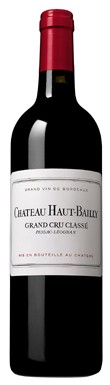

The Graves wine of the vintage (along with Haut-Brion's red). A structural, sensual, expansive wine. Dense but deft, 3.75pH, 60% Cabernet Sauvignon, 36% Merlot and...
2015
Château Haut-BaillyPessac-Léognan

Château Léoville Barton, St-Julien, 2ème Cru Classé, Bordeaux, France, 2016
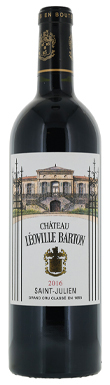
The nose offers sun-kissed raisin and plum, while the palate is juicy and energetic with fleshy bramble fruit, exotic spices and a hint of blue...
2016
Château Léoville BartonSt-Julien
Château Siran, Margaux, Bordeaux, France, 2015
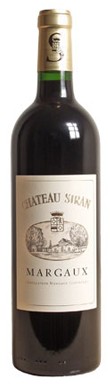
90
Fine Margaux florality and very good depth of fruit. Almost has the breed of a cru classé with good natural charm, tannins and acidity for the future.
2015
Château SiranMargaux
Château Sociando-Mallet, Haut-Médoc, Bordeaux, France, 2015
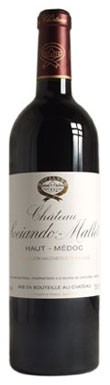
90
Deep, rich fruit with lots of depth and potential complexity. Very good middle palate and a fine, firm finish.
2015
Château Sociando-MalletHaut-Médoc
Château Branaire-Ducru, St-Julien, 4ème Cru Classé, Bordeaux, France, 2016
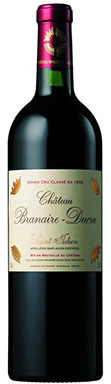
Florality and black fruits on the nose, really very aromatic and expressive. Generous and giving, this is definitely more plush and supple than the 2015,...
2016
Château Branaire-DucruSt-Julien
Château Latour-Martillac, Pessac-Léognan, Bordeaux, France, 2015
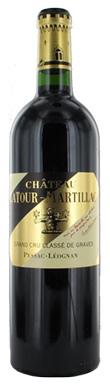
Powerful, finessed and deeply textured, with well-balanced cassis and blackberry fruit. It shows great appellation signature, a testament to the vintage. Will age beautifully.
2015
Château Latour-MartillacPessac-Léognan
Château Capbern Gasqueton, St-Estèphe, Bordeaux, France, 2016
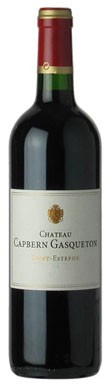
Quite tannic in expression – and a contrast to the more ‘modern’-style estates. Fine mid-palate grip; compared to the 2010, which was also tasted, the...
2016
Château Capbern GasquetonSt-Estèphe
Château de Chantegrive, Graves, Bordeaux, France, 2015
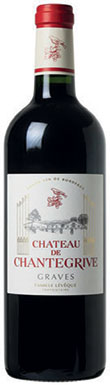
This large and well-run estate produces consistently appetising wines, both white and red. The nose has charmand lift, with intense aromas of blackberry and vanilla....
2015
Château de ChantegriveGraves
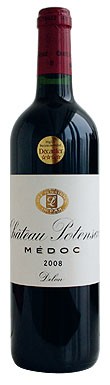
Château Potensac, Médoc, Bordeaux, France, 2015
92
One might have expected Potensac to have produced an intimidating wine in this fine vintage, but it’s actually quite accessible and fluid. The nose is sweet and ripe, with elegant cherry and blackcurrant aromas. The tannins are firm but ripe, giving grip, but there’s complexity and spice too. Assertive and long.
2015
Château PotensacMédoc
Château du Seuil, Graves, Bordeaux, France, 2014
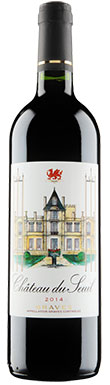
This shows a lean cherry and blackberry nose, with an attractive herbaceous tone and a tobacco note typical of Graves reds. Medium-bodied and supple, this...
2014
Château du SeuilGraves
Château Sigalas Rabaud, Sauternes, 1er Cru Classé, Bordeaux, France, 2015
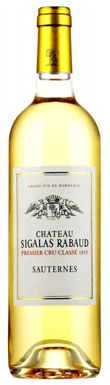
Fresh, nimble nose, with an alluring blend of citric and oaky aromas. Medium-bodied but graceful, stylish and very fresh, showing both precision and restraint. Reticent...
2015
Château Sigalas RabaudSauternes
Château Raymond-Lafon, Sauternes, Bordeaux, France, 2010
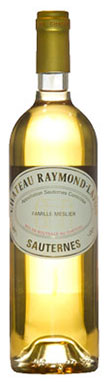
Acquired in the 1970s by the former winemaker at Yquem, this estate was run to similarly exacting standards. A lovely nose of lush apricot and...
2010
Château Raymond-LafonSauternes
