Understanding the different Madeira styles
Ever wondered what Madeira tastes like? Or which bottle to buy? Read Richard Mayson's style guide below...


Madeira is a wine that behaves like no other. Acidity, heat and air combine to make it one of the world’s most resilient wines – a dream for a desert island.
Scroll down to see tasting notes and scores for a selection of top Madeira styles
Fortified and shipped over ever-increasing distances in the 16th century, Madeira gained natural stability in cask. By the time it was landed on remote shores (both the West Indies and the east coast of North America were early markets), the wines were seemingly indestructible and could be enjoyed in literally all weathers.
Grapes
Four white grapes are the key to Madeira, which is possibly the world’s original varietal wine. Sercial, Verdelho, Bual (or ‘Boal’) and a sub-set of Malvasias all have their own distinct flavour profiles but retain their acidity when grown at different altitudes on Madeira’s volcanic soils.
Collectively, these grapes occupy around 120 hectares on this sub-tropical island and each is credited with producing different styles of high quality Madeira, from dry (Sercial) to medium-dry (Verdelho), medium-sweet (Bual) and sweet (Malvasia).
The lion’s share of Madeira comes from a pale red grape called Tinta Negra. With over 220ha on the island it has long been favoured by growers for its ability to produce consistent yields, and by winemakers for its capacity to be molded into a variety of different styles.
It’s only since 2015 that Tinta Negra has come to enjoy equal status with the white grapes, and the name can now appear in its own right on the label.
Ageing
Madeira wine is shaped by age, something for which there is no substitute. Inexpensive wines, mostly made from Tinta Negra, are artificially heated in a process called estufagem that caramelises the sugars and lends something of a ‘maderised’ taste.
But for depth and complexity you need to look for so called canteiro wines, aged in cask for anything from five to 50 years. This is where Madeira’s sub-tropical warmth lends a hand, with the wines ageing at ambient temperatures in warm lofts that emulate the long sea voyages that they once endured. With age, a relatively simple, acidic wine is transformed into something ethereal, even life changing…
Styles
So-called ‘vintage’ or frasqueira wines have to spend at least 20 years in wood to qualify as such, although many are left for considerably longer – Blandy’s still have a quantity of 1920 Bual still waiting to be bottled.
With so much development required, these wines are necessarily expensive, but a newer category called colheita or ‘single harvest’ makes it more accessible.
Then there are blended wines bottled at 5, 10, 15, 20, 30, 40 and 50 years old, where a sense mystery often equates to profound depth and complexity.
Tasting the wines
These categories were all well represented at a tasting held recently for members at 67 Pall Mall in London. The wines had all been decanted a day in advance and the fusion of heady aromas was almost overwhelming.
This was a line-up of contemporary Madeira at its best, representing three out of the seven exporting houses, and six different styles. The wines were all chosen for being both commercially available as well as expressing some of the best that Madeira has to offer.
Some tasters present were well–versed in Madeira, which has a tasting language of its own. Others were being introduced to the wines for the first time in what I hope proved to be a life changing tasting.
Decanting
But why decant so far in advance? Having aged for so long in the presence of oxygen, Madeira evolves very differently in bottle, sometimes developing bottle-stink due to the absence of air.
Thorough aeration helps the wine to re-emerge, and a day in a decanter can make all the difference between a wine that may seem dull or thrilling. And of course, once you have decanted the wine you can keep going back for a glass: the next day, next week, next month, even the next year in some cases – Madeira is the wine that keeps on giving.
Tasting the different styles of Madeira:
Seven Madeira styles: the bottles to look for
You may also like:
Madeira: Travel guide
Know your Sherry styles
Revisiting vintage Port 1994
Aged white Rioja back to 1920: What does it taste like?
Blandy’s, Sercial Frasqueira, Madeira, Portugal, 1968
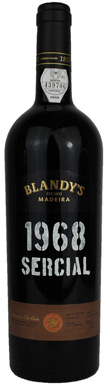

The Blandys established themselves on Madeira in 1811 and are now in charge of the Madeira Wine Company. Aged for 49 years in seasoned American oak casks before bottling in 2017, this wine is mid-deep amber in colour with an olive-green glint. Fine, lifted woodsmoke characters on the nose are redolent of autumn leaves and bonfires. It has crystallised fruit on the palate with rapier-like power and intensity. The hint of sweetness (59g/l residual sugar) is offset by a streak of acidity, leading to a mouthwateringly fresh greengage finish yielding to a touch of savoury complexity. A wine that sings contralto from the glass. Just 2,000 bottles in total.
1968
Blandy’s

Cossart Gordon, Bual Frasqueira, Madeira, Portugal, 1989
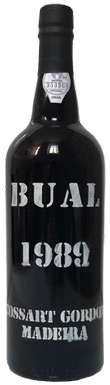
The oldest shipper still in existence on the island, Cossart Gordon were shipping half of all Madeira wine in the mid-19th century. The company joined Blandy’s in the Madeira Wine Association in 1953. This wine spent 29 years in cask before being bottled in 2018. It's a bright golden-amber colour and has lovely aromas of elvas plums with a hint of leathery, malty complexity. Zesty greengage notes on the palate are joined by a touch of savoury woodsmoke. It's very fresh and lively, with grapefruit-like acidity to balance the rich mid-palate leading to a wow of a finish: long, pure, rich and exquisite all at the same time. Only 1,000 bottles in total. 89g/l residual sugar.
1989
Cossart Gordon
Henriques & Henriques, Verdelho 20 Year Old, Madeira, Portugal
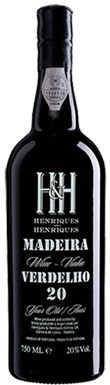
A firm with a distinguished pedigree: Henriques & Henriques were founded in 1850 and from 1938 to 2008 were run by father and son, Peter and John Cossart. H&H have 10ha of verdelho at Quinta Grande on the south side of Madeira, making it the largest vineyard on the island. It's a deep amber-mahogany colour. offering lovely smoky aromas with a touch of cigar box and gunpowder tea. Lemon and lime marmalade flavours are joined by a long streak of acidity which offsets the richness of age. Long, lithe and very pure.
Henriques & Henriques
Barbeito, Malvasia Single Cask 87 Colheita, Madeira, Portugal, 2002
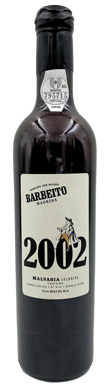
Barbeito introduced their numbered cask series in 2001, bottling small quantities of wine with detailed and impeccable provenance. In short, the grapes for this came from São Jorge on the north coast and the cask began its maturation in a warm wine lodge, moving to a cooler, higher site in 2011 before being bottled in 2017. It's pale gold in colour and made in a characteristically lighter, more delicate style. It has lovely sweet, honeyed apricot purity with fine acidity, and gentle poise on the finish.
2002
Barbeito
Henriques & Henriques, Boal 15 Year Old, Madeira, Portugal
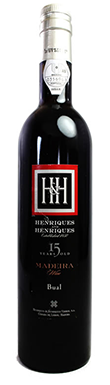
‘There are only two names in Madeira’, or so the local saying goes... These H&H blends are the best of the genre and regularly win Gold Medals at the Decanter World Wine Awards. This is mid-amber to mahogany in colour with an olive-green rim. It has enchantingly complex aromas of toffee-apple with just a hint of malt and woodsmoke. On the palate it displays figgy-raisiny depth, beautifully textured with a lovely incisive tang to offset the richness on the finish.
Henriques & Henriques
Leacock's, Tinta Negra Colheita, Madeira, Portugal, 2001
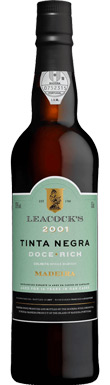
The Leacocks arrived in Madeira in the mid-18th century and developed an important market in Scandinavia. The company now sits alongside Blandy’s as part of the Madeira Wine Company. Made entirely from Tinta Negra, this wine was aged for 16 years in seasoned American oak before bottling - considerably longer than the five year minimum for colheitas. Mid-mahogany in colour, it's gloriously rich and dense on the nose with a bolo de mel (honey cake) character. It has a spicy butterscotch richness on the palate, very sweet and pruney in style but stopping well short of unctuousness. It perhaps just lacks the really penetrating acidity that you might expect from Madeira’s traditional white grapes.
2001
Leacock's
Barbeito, Rainwater Reserva 5 Year Old, Madeira, Portugal
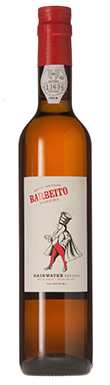
Barbeito are relative newcomers to Madeira, having been founded in 1946. Representing the third-generation, winemaker Ricardo Diogo deliberately makes Madeira in a lighter style, inspired by late-harvest wines. This is a blend of Tinta Negra and Verdelho, aged in French oak. It has a pale orange-amber hue with aromas and flavours of fresh caramelised orange and dried apricot. This is offset by fresh acidity, with a touch of apricot jam richness on the medium-sweet finish.
Barbeito
