
Village profile: Cramant, Champagne
One of the premier villages of the Chardonnay-producing Côte des Blancs territory, Cramant is a unique and complex jewel in the Champagne crown. Charles Curtis MW knows the area intimately, and here picks out his top producers and 10 best to try

With their rapier-fine balance between fruit, finesse and structure, the sparkling Chardonnay wines of Cramant are some of the most compelling being made in Champagne today. As simple as the proposition may seem – one grape, one soil type, one village – there is more to Cramant than meets the eye, and those who take a closer look will discover a world of nuance in the Côte des Blancs.
The Bishop of Châlons recognised the quality of the Côte des Blancs terroir as long ago as 1114 AD, when he drew up the Grande Charte Champenoise, and by the middle of the 19th century Cramant was ranked by the magazine La Vigne as one of the three crus of ‘the very highest order’.
The village was ultimately consecrated a grand cru in the official Echelle des Crus ranking that helped set prices in the region. This initial ranking stood in place until 1985, and the only village in the Côte des Blancs recognised along with Cramant was Avize. Chouilly, Le Mesnil-sur-Oger, Oger and Oiry were all promoted to grand cru status in 1985.
A bit more detail about the Côte des Blancs helps us understand why. The term Côte des Blancs covers a large division of Champagne that includes a number of smaller sub-regions. The Côte des Blancs itself is normally taken to mean that contiguous stretch of vineyards from Chouilly south to Vertus and Bergères-lès-Vertus. However, even the Côte des Blancs itself is not homogenous.
Within the Côte proper, there are several geological formations, including the Butte de Saran and the central portion of the Côte des Blancs. The Butte de Saran is what’s known to geologists as an ‘outlier’ – a free-standing hill carved away from the central part of the Côte by erosion – and thus it has vineyards with different expositions.
The central portion of the Côte is what some call ‘the real Côte des Blancs’. In geological terms, this is a ‘cuesta’ of the Paris Basin: a vast ocean of chalk capped by Brie limestone that drops off steeply to form the Côte des Blancs. Avize is located at the centre of the so-called ‘real’ Côte, and Cramant lies at the northern extremity.
What makes the village of Cramant unique is that it includes superb vineyards on the Avize (southern) side and others on the Butte de Saran. The vines of Cramant can face any direction from northeast to southwest, and a blend of fruit from different vineyards can deliver very complex wine.
The different sections
The name Cramant literally translates as ‘chalk mount’, but it’s more complicated than this. According to grower-producer Anselme Selosse, there are at least four sections.
As he explains it, the first lies to the west of the village, extending from the lieu-dit Les Ricy near the top of the slope and continuing until it reaches the vineyard of Les Longues Verges, which spills into the neighbouring grand cru village of Chouilly.
Some of these vines face southwest, but rolling slopes of chalk can tilt vineyards to the northeast. These vines are along the road that leads to Cuis, and their wines can resemble those of Cuis in their fresh raciness and citrus aromas. The fruit ripens later and gives base wines with a lighter body and more acidity, as seen with the single-vineyard selections produced from this site by Nathalie Vignier.
Metres away, on the other side of the village, vines wrap around the Butte de Saran into the second portion identified by Selosse, the vineyards of the lower south-facing slopes of Saran. This is the location of the plots that are used for Perrier-Jouët’s renowned Belle Epoque Blanc de Blancs. The first of these is Bouron Leroi (which faces southeast), and then Bouron du Midi, which faces more directly towards the east. Here there is less of the lively acidity and more aromas of lush, ripe apricots and white flowers. These flavours are closer to what I associate with Chouilly, and a similar elegant softness comes through here.
The third section lies to the east of the village, between the top of the slope and Avize.The vineyards here have steep slopes with east-facing exposures, and the undulating hills include sites such as Gouttes d’Or, Les Fromattes and Les Vignes de Mardu right on the border with Avize. Because the vines are often in the shade in the afternoon, there is less ripeness here than there is on the south-facing slopes of Saran. In a warm year, however, this can be a particularly successful corner of the village, with a beautiful balance between tension and warmth. The fruit character is more ripe apples, and depending on the vintage conditions, it may recall either Granny Smith or Golden Delicious.
The last section includes the lower slopes in the eastern part of the village, extending up to the border with Oiry. This area is the largest one, characterised by three ‘tongues’ or flows of chalk down the slope of the hill. Water-filled chalk froze during the ice age and fragmented as it thawed, slowly sending a dense mud of chalk to the bottom of the hill, creating small hills that tilt the vines to the north and south.
The first of these tongues, in the north of the village, includes the vineyard called Le Gros Mont and its neighbours. Alice Voirin of Voirin-Jumel notes that this is the historic core of the vines of Cramant, describing its wines as ‘ample and expressive, with softer acidity yet good structure and balance’.
The middle section includes the vineyards of Les Buzons and Les Bionnes. Gilles Lancelot of Lancelot-Pienne owns east-facing vines here and feels their wines are among the most accessible: ‘We taste these first because of their lightness, finesse and delicacy.’
The southernmost portion along the border to Avize begins with the lieu-dit Pimonts and terminates in the Chemin de Châlons, where the vineyard owned by Anselme Selosse enjoys a south-facing exposition. As Selosse describes it, this produces notes of dried flowers and hay, and ‘round, smiling, opulent wines’. He says with time ‘one finds also a depth and the salinity of the chalk’. By contrast, Lancelot owns vines in Les Fromattes that are also in this southern zone, but tilted to the north by the underlying chalk, putting more of the emphasis on ‘precision, minerality and salinity’.

Historic style
Adding to the nuance of topography, the tradition of making wines at a lower pressure gives Cramant wines further stylistic distinction. This style, formerly called crémant (‘creamy’), is a long tradition in Cramant that dates to the early 19th century. These wines are made with about half the pressure of a typical bottle of Champagne. The most famous example of this was the Crémant de Cramant by GH Mumm, whose substantial holdings in the village date to the 19th century.
In 1990, however, the EU ruled that the term would apply only to traditional-method sparkling wine from specified regions outside Champagne, and the producers of Cramant were obliged to rename their wines. The style, however, did not disappear. The bottling from Mumm was renamed Mumm de Cramant in 1990, and the house is now relaunching it as RSRV Blanc de Blancs. Other producers make this silky style of Champagne as well, including the brilliant small grower Lilbert-Fils.
In addition to the question of pressure, there are divergent thoughts regarding winemaking choices in Cramant. Some producers, like Lilbert-Fils and Lancelot-Pienne, believe that neutral tank fermentation best expresses the purity of the Cramant terroir, while others value the slightly oxidative touch and hint of spice that cask-ferments can bring.
In the vineyards, nearly everyone is using sustainable agriculture, and some are going even further into organic and biodynamic techniques. One thing is certain, however: the beautiful terroir of Cramant gives a quality-focused producer the chance to produce riveting wines.
Cramant-based producers: the names to know
Diebolt-Vallois
Indisputably one of the top growers in the Côte des Blancs. The reputation of the estate was built by Jacques Diebolt and is maintained by his daughter Isabelle and son Arnaud. The winemaking here lavishes attention to detail, with parcel-by-parcel vinification and the top wines fermented in used casks. The range is marvellous throughout, marked by elegance, nuance and length. The vintage and Fleur de Passion bottlings are very long lived.
GH Mumm
Mumm has always been a powerhouse in Cramant, where its owns more than 17ha of prime vineyards. It was among the most popular brands of fin-de-siècle Europe, and made its first less-fizzy Crémant de Cramant in 1892. From its inception until 1960, however, it was a private cuvée not offered for sale. Mumm recently rebranded this wine as the vintage-dated RSRV Blanc de Blancs (right). Let’s hope for the reawakening of this Cramant classic.
Guiborat Fils
The Fouquet family owns 8ha of vines in the Côte des Blancs and elsewhere, all sustainably farmed. Richard Fouquet adapts the winemaking techniques to the type of cuvée by using a combination of tank and cask. Most of the Cramant fruit is used in the bottling known as Prisme, and there is also a delicious ‘parcellaire’ selection from Mont Aigu in Chouilly. All the wines are marked by a lively acidity and refreshing lemon character.
J Vignier
Nathalie Vignier is a 10th-generation grower based in Cramant, making delicious wines with her collaborator Sebastian Nickel and her brother Jean. The wines under the J Vignier label are all top-notch, particularly the Silexus Sézannensis from the Côte de Sézanne, the parcellaire Les Longues Verges from Cramant and the Cuvée Ephémère (abbreviated QVFMR), which change every year.
Lancelot-Pienne
Lancelot-Pienne is an under-the-radar producer making elegant, focused wines in Cramant. Gilles Lancelot has a profoundly nuanced knowledge of his vineyards, and he vinifies the wines with sensitivity and care. He ferments in tank and usually finishes the malolactic for all wines, giving them a subtle, expressive character very much in the style of the village.
Lilbert-Fils
Bertrand Lilbert is among the most modest winemakers of the Côte des Blancs, but makes splendid wines in a classic style. The estate consists of 3.5ha, most located in Cramant. The fermentations are carried out in tank, and the malolactic conversion is consistently done. Dosage is light, and the wines are remarkable for their purity and limpid beauty.
Perrier-Jouët
Perrier-Jouët was founded in 1811 by Pierre-Nicolas Perrier and his wife Rose Adélaïde Jouët. His nephew Henri Gallice worked with Emile Gallé to create the famous art nouveau floral design – the inspiration for the Belle Epoque 1964 bottle launched in 1969. Now, the Blanc de Blancs is exclusively from the Bourons Leroi and Bourons du Midi vineyards in Cramant. A reference for the village, and a model of elegance and grace.

Philippe Glavier
Philippe and Véronique Glavier are based in Cramant and work 4.5ha spread over 52 parcels. All of the vineyards are located in grand cru villages in the Côte des Blancs and farmed sustainably, the grapes vinified parcel-by-parcel in a combination of cask and stainless steel. Malolactic fermentation is done for all wines, and the result is a harmonious balance between freshness and fruit.
Philippe Lancelot
Philippe Lancelot is a small organic and biodynamic producer (certified in both) based in Cramant, who works 4ha spread over Cramant, Chouilly and Epernay. Philippe works with noted consultant Hervé Jestin, and the winemaking is as natural as possible: very little sulphur is used, yet they still show admirable purity. Production is tiny, but these are wines to snap up when you see them.
Suenen
Since Aurélien Suenen took charge of his family’s winery in 2009, he has moved steadily towards organic production. Ferments are done in tank and cask using wild yeast. In addition to the parcellaire Les Robarts, there is a mono-cru from nearby Oiry and one that is a blend of fruit from Cramant and Chouilly, all done at an equally high level. These are powerful wines with plenty of substance.
Charles Curtis MW’s Cramant top 10
Diebolt-Vallois, Fleur de Passion, Champagne, France, 2010
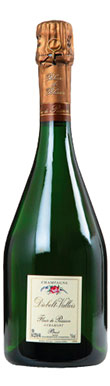

Lemon peel and wet chalk notes grow to include ripe apricot, flowers, marzipan and spice. Although the wine never loses its elegance, it shows impressive...
2010
Diebolt-Vallois

Larmandier-Bernier, Vielle Vigne du Levant Grand Cru, Champagne, France, 2011
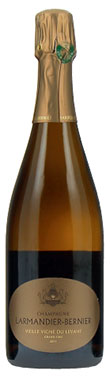
This masterful Champagne comes from the superb Bourron du Levant vineyard, whose oldest vines were planted more than 80 years ago. Brown butter, hazelnut and...
2011
Larmandier-Bernier
Jacques Selosse, Chemin de Châlons Grand Cru, Champagne, France
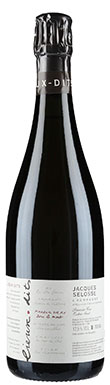
Chemin de Châlons is the unicorn of Cramant: mythic, expensive, near impossible to find, yet utterly compelling. With initial aromas of cream, mineral and buttered...
Jacques Selosse
Perrier-Jouët, Belle Epoque Blanc de Blancs, Champagne, France, 2002
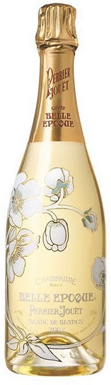
The nose is poised between freshness and maturity, and seems to be fresher and younger than the 2004, we seem to be reversing time, but...
2002
Perrier-Jouët
Lancelot-Pienne, Marie Lancelot Grand Cru, Champagne, France, 2008
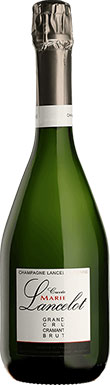
Made in tiny quantities but worth the effort of seeking out. The grapes come from five parcels in Cramant: Les Bas Bourrons, Les Buzons, Les...
2008
Lancelot-Pienne
J Vignier, Les Longues Verges Grand Cru, Champagne, France, 2012
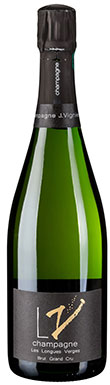
Superbly elegant. Initial aromas of green apple and toasted brioche. Approachable and seductively textured on the palate, the fine bubbles give a creamy feel that...
2012
J Vignier
Lilbert-Fils, Perle Grand Cru Blanc de Blancs, Champagne, France
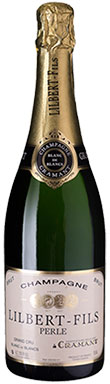
Soft and seductive, floral and ripe pear aromas, a hint of fresh-baked pastry and a delicacy that comes from lower-than normal pressure in the bottle,...
Lilbert-Fils
Aurélien Suenen, Les Robarts Grand Cru Blanc de Blancs, Champagne, France, 2013
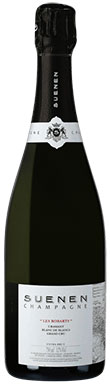
Substantial for a blanc de blancs, with a creamy, dense texture. The nose opens with ripe apricot, fresh blossoms and a hint of spice, then...
2013
Aurélien Suenen
Philippe Glavier, Champagne, France, 2011
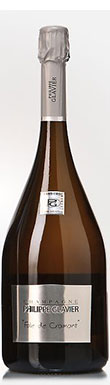
Aromas of toasted brioche, gingerbread and ripe apple take the lead in this delightful wine assembled from the oldest vines of the estate, including those...
2011
Philippe Glavier
Voirin-Jumel, Cuvée 555, Champagne, France
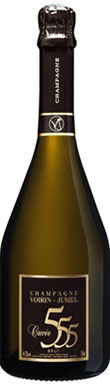
Fruit from Cramant dominates this blend, from the northeast (Le Bateau and Le Gros Mont) to Les Mardus on the southern edge of the village...
Voirin-Jumel