
From the archive: Vosne superstars: Tasting Grivot and Méo-Camuzet
Neighbouring domaines in Vosne-Romanée are ploughing their own furrows – as well as each other’s – to produce fine Burgundy with diversity and distinction. Stephen Brook visits two of the village’s top names
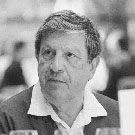

Grivot and Méo-Camuzet are among the finest domaines in Vosne-Romanée, but they differ greatly. Grivot is a quintessential family domaine, deeply implanted in the village. Jean Grivot, Etienne’s father, was a familiar face at London tastings in the 1980s, even though Etienne was by then making the wines. Sensing that the wines sometimes lacked concentration, Etienne began taking the advice of oenologist Guy Accad in the late 1980s – indeed, some would say that he fell into his clutches.
Accad favoured techniques that emphasised deep colour and full extraction, techniques that – in the eyes of his critics – gave a bewildering sameyness to the wines at the expense of individual terroirs. But the relationship lasted just five years, and for the past two decades Etienne Grivot has had the confidence to work on his own. Quality has since risen sharply.Like Jean-Nicolas Méo, he is certainly aided by being in possession of three grands crus, including Richebourg, not to mention a full range of premier cru parcels, both in Vosne and in Nuits-St-Georges.The structure at Méo-Camuzet is very different. The domaine was founded and developed by Etienne Camuzet, a notable Burgundian politician in the first decades of the 20th century. In 1959, the property came into the hands of another politician, his relative Jean Méo. It is amazing to recall that until 1985, the wines from the domaine’s great vineyard holdings, which include no fewer than four grands crus, were sold off to merchants; it was only following the arrival of Jean-Nicolas Méo in 1989 that domaine-bottling became the norm here.
Prime location
Both estates have vines in top sectors of Vosne-Romanée, including the prime premier cru of Brûlées and grand cru Echézeaux. Grivot took me first to inspect his Brûlées.
His south-facing parcel lies on three terraces, the lowest fairly flat and flanked on both sides by parcels belonging to Domaine d’Eugénie (the former Domaine Engel, renamed after it was bought by François Pinault, owner of Latour). In the middle is a gentle slope containing some of the last remaining bush vines on the Côte d’Or. And on top, a third parcel adjoins those belonging to Domaine Guyon. Each terrace is supported by a newly built dry-stone wall. Erected to counter erosion and support the terraces, this was a joint venture between Eugénie, Grivot and Guyon that cost in the region of €150,000.
‘That’s not all,’ says Grivot. ‘My lowest terrace is ploughed by the Eugénie team, the upper one by the Guyons.’ But why? ‘The tractors can’t make a turn without uprooting vines, so we help each other out,’ he explains. ‘That’s nothing new. My grandfather had the same arrangement with the Engels decades ago. My father always respected his neighbours, and I try to do the same. That said, there are some growers here with grudges so ancient they can’t even remember what caused them.’
Wouldn’t it make more sense to swap parcels to have more rational vineyards? ‘Yes, Frédéric Engerer wanted to do a swap with my 60-year-old parcel lower down,’ he recounts. ‘I told him to forget it. I may be a peasant but I’m not stupid. But he remains a good friend.’
Some of these vines are evidently very old indeed. Grivot replaces them individually, both with massal selections and top clones. ‘But eventually they lack the vigour to cope with very difficult vintages,’ he says. ‘So I replace about 2% a year, and it will take 15 years before the new vines reach their peak of quality. But I’d rather replace the very oldest vines than leave my children a domaine that loses production from year to year.’
Rich heritage
Méo has the same problem: many of his vines from the 1930s are virused, which means small berries and very low production. ‘I can live with that when I can get a high price for the wine, but virused vines in a lesser site means very low volumes, and that’s not economic,’ he says.
His two parcels of Brûlées – just over 0.7ha (hectares) – lie south of Grivot’s, and cool breezes make the site less hot than its south-facing exposition suggests. It’s exquisitely located, with Richebourg and the prized premier cru Cros Parantoux a stone’s throw away. ‘These vines were farmed and vinified by Henri Jayer until he retired in 1988,’ he explains. ‘A map from a century ago shows Richebourg extending north over my parcel of Brûlées. But before the crus were defined in the 1930s, great names like Richebourg were probably brands rather than vineyards, so I’m not sure how significant that is. Brûlées is a sunny site but the wines are never heavy. They’re majestic, but never overripe.
‘I leased my main Echézeaux vineyard in Les Rouges du Bas in 1997,’ he continues. ‘It was in poor shape, with many missing vines, and because it was treated with herbicides, it was prone to erosion. But ploughing has helped a great deal.’
Méo’s Echézeaux is ‘both ripe and acidic’, he says. ‘It’s very intense, but when young, it can lack refinement. We pick it fairly early, as it can suffer from rot – I’m not sure why, possibly because of the vine selection. Yet my parcel gives very structured wine.’
Meanwhile, Grivot has two parcels, one high up in ‘Les Rouges du Dessus’, but it’s cool here and the grapes only enter the Echézeaux in very ripe years. The more significant parcel is lower in ‘Les Cruots’ next to ‘Les Suchots’.
‘The wine from here always has voluptuous tannins but is never baroque or overripe, and has splendid energy and salinity,’ says Grivot. ‘It’s accessible but ages well. It’s a magical parcel. Even in 1984, a ghastly vintage, there was no rot here, as the drainage is perfect. Echézeaux offers grace and force; it appeals to the senses and to the mind.’
Near-organic approach
Grivot’s farming methods are close to organic, but he will treat, as in 2013, when it seems a necessity. ‘There’s no point being stupid about it,’ he insists. ‘Anyway, I often use fewer treatments than my organic neighbours, so they’re using more petrol and causing more pollution. It’s not straightforward.’ Méo, too, is close to organic, but does also treat parcels that are prone to rot.
While visiting Echézeaux with Grivot, we meet Prince – a noble horse and one of a number now ploughing prestigious vineyards. It’s a costly process, since a horse can only plough one side of a row at a time, so to plough both sides requires two trips. Alain, the ploughman, talks about the variations of soil within Grivot’s parcel: the way Prince responds tells him how moist or stony a sector may be. Méo, too, uses a horse, but only in steeper sites such as Cros Parantoux.
‘Brûlées is relatively flat, so a tractor does the job equally well,’ he says. ‘Ploughing by horse is great, because there is less soil compaction, but you need a ploughman who’s really competent.’
Méo is quite specific about his wines’ typicity. ‘Brûlées is very present in the mouth: imposing, but with finesse and length,’ he says. ‘Echézeaux can be more showy, but when young, can have this biting acidity. So it needs time to develop harmony and complexity. When young, Brûlées often shows better, but Echézeaux has a tightness of structure that I find very promising. Overall, I like wines that are fruity and voluptuous, with silky tannins.’
Shortly after picking, the grapes will be in the two cellars. Grivot adapts his vinification to meet the vintage conditions. He vinifies a basic Bourgogne first, drawing lessons from the fermentation that he applies to the more important wines. Méo vinifies both Brûlées and Echézeaux in the same way: a cold soak of up to five days, near total destemming, natural-yeast fermentation, gradual chaptalisation up to one degree, pumpovers followed by punchdowns, and finally, a short post-fermentation maceration. Since 2008 Méo has been experimenting with fermenting one of his Nuits-St-Georges in 500-litre barrels. ‘It does give excellent integration of wood, but it’s hard to control the temperatures and needs a lot of surveillance,’ he says. ‘I’m not sure the technique is worth all the trouble.’
He ages both wines for 18 months in entirely new oak. ‘A great wine can accept that much oak,’ he explains. ‘But I adapt the barrels to each vineyard: the type of barrel, and its origin and toast, which is usually light.’
Influences on style
Méo has always admitted that his stylistic mentor was Henri Jayer, who advocated cold soaks, freshness of fruit, and sought a voluptuous quality in his wines. ‘He wanted vins de plaisir that could age,’ says Méo. ‘However, I think our wines are more structured than those that Henri made. I can’t say there have been other major influences.
‘The main growers here get on, but each has his personality and his own style and path. We confer less than we did 10 years ago, but that’s also because we are all busy and travel more.’
Have his methods evolved? ‘Yes, since 1992 we started moving gradually to organic farming,’ he says. ‘We sort a lot in the vineyard and the winery, and when it comes to vinification, I still try not to extract too much. I’ve been experimenting with whole-cluster fermentation since 2004, but I’m not keen. A few whole bunches can be positive, but you must be careful not to add to the tannins already there. I continue to experiment, and though the results aren’t bad, I find you can easily lose finesse. And we’re more rigorous today in our choice of oak.’
For Grivot, the path has been more tortuous. He started working at the domaine in 1982 and soon realised that the wines were underperforming. ‘I was talking to Patrick Bize, Christophe Roumier, Dominique Lafon and others, and I just knew we could do better,’ he says. ‘To improve quality, I started working in 1987 with Guy Accad. I was vilified for this, but some of his techniques, such as a long, cold soak are commonplace today. Nor was it true that Accad advised us to use huge quantities of sulphur dioxide to delay the start of fermentation.
‘I admit I took things to extremes, so in 1992, I stopped working with him. But I don’t regret that I tested the limits. I then evolved to producing wines of greater freshness, without losing ageability, but when young, my wines still seemed monolithic. From 2000, I sought wines with more charm, without veering towards overripeness.’
Small details, such as a shorter cold soak and adjusted temperature control, were all aimed at making wines with balance and digestibility, Grivot adds. ‘Wine is a drink, not a showcase,’ he believes. ‘Since 2008, my wines have greater accessibility but still age well. I love the femininity of Pinot, and extracted wines can be tiring. Today, I destem but keep the skin intact, so I can have the advantage of whole berries without the disadvantage of stems. I don’t do a post- fermentation maceration, and I’ve reduced the amount of new oak from up to 80% to 40%. I see myself as an interventionist – but a sensible interventionist.’
Grivot says that his methods continue to evolve. ‘You can never say you’re at your peak,’ he states. ‘I’m trying to combine rigour and passion. I want luminosity and precision. But I don’t have the same exchanges of ideas with Roumier or Lafon that I used to. We either have families that occupy us or we travel a great deal.
‘I’ve observed that Jean-Nicolas, who used to make wines with exuberance, is now seeking more rectitude, while I’m going in the other direction. I’m aiming to make wines with more sensuality.
‘That doesn’t mean I want overripeness,’ he adds. ‘In 2009, it was easy to pick at 14% potential alcohol. But it wasn’t necessary – 13% is just fine. Pinot needs acidity, so when the grapes are ripe they should be picked. In 2013, it took ages to get the grapes ripe, but they were ripe at around 12%.’
As for natural wines, he remains a ‘sceptic’. ‘I think wines need to be clean,’ he says. ‘If I don’t take a shower each morning, that’s natural, but that doesn’t make it advisable.’
Grivot clearly believes his decades of winemaking have been a journey – one that’s continuing. It’s a move from density to finesse, and Méo concurs that this is the right direction for Burgundy: ‘The major change I see over the past 20 years is that we’re making wines that are less dense and more elegant.
‘You’ll still find a great diversity of styles, but that’s far better than uniformity.’
Comparing Grivot and Méo-Camuzet
Domaine Jean Grivot, Vosne-Romanée, 1er Cru Aux Brûlées, Burgundy, France, 2013
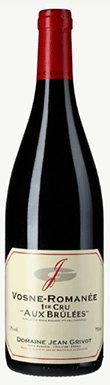

<p>Delicate raspberry nose, with a touch of oak. Medium-bodied and delicate but intense, sleek and lifted, showing fine purity of fruit. Essentially modest but balanced,...
2013
Domaine Jean GrivotVosne-Romanée

Domaine Méo-Camuzet, Vosne-Romanée, 1er Cru Aux Brûlées, Burgundy, France, 2013
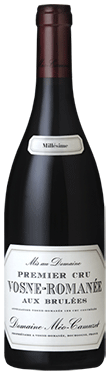
Rich, brooding red fruits and cherry nose. Rich, firm and concentrated, but more flamboyant and suave than Echézeaux, though with pronounced acidity. Long.
2013
Domaine Méo-CamuzetVosne-Romanée
Domaine Jean Grivot, Vosne-Romanée, 1er Cru Aux Brûlées, Burgundy, France, 2012
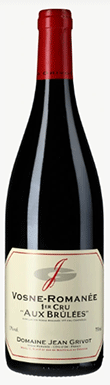
Red fruits on the nose, slightly reduced now. Medium-bodied, fresh and sleek, concentrated with ripe tannins. It shows finesse and limpidity, without any lack of...
2012
Domaine Jean GrivotVosne-Romanée
Domaine Méo-Camuzet, Vosne-Romanée, 1er Cru Aux Brûlées, Burgundy, France, 2012
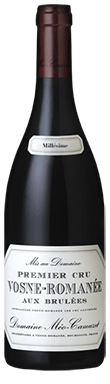
Rich and oaky nose, cherries and red fruits, spicy and lifted. A rich style, full-bodied and concentrated, almost plump and flamboyant. Accessible but structured, this...
2012
Domaine Méo-CamuzetVosne-Romanée
Domaine Jean Grivot, Vosne-Romanée, 1er Cru Aux Brûlées, Burgundy, France, 2011
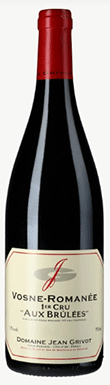
Sweet and voluptuous, raspberry coulis nose. Full-bodied, assertive and concentrated in style, this is also lively, if not racy, with exquisite notes contributing to its...
2011
Domaine Jean GrivotVosne-Romanée
Domaine Méo-Camuzet, Vosne-Romanée, 1er Cru Aux Brûlées, Burgundy, France, 2011
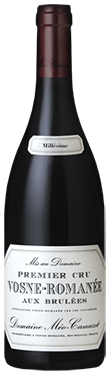
Oaky but subdued nose showing sweet cherry fruit. Rich and forceful, yet quite rounded, enlivened by a crunchy, red-fruit character. This has plenty of energy,...
2011
Domaine Méo-CamuzetVosne-Romanée
Domaine Jean Grivot, Vosne-Romanée, 1er Cru Aux Brûlées, Burgundy, France, 2010
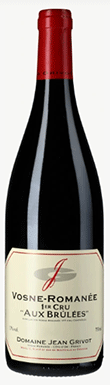
<p>Splendid nose, redcurrants and mint, with a light leafiness and subtle smokiness. Rich and full-bodied, but streaked with fine acidity. Very fresh, vibrant, and tightly...
2010
Domaine Jean GrivotVosne-Romanée
Domaine Méo-Camuzet, Vosne-Romanée, 1er Cru Aux Brûlées, Burgundy, France, 2010
<p>Lush cherry and raspberry nose, ripe and jazzy, exuberant but not flashy. Suave, juicy and concentrated, with excellent weight of fruit, exuberant but less elegant...
2010
Domaine Méo-CamuzetVosne-Romanée
Domaine Jean Grivot, Vosne-Romanée, 1er Cru Aux Brûlées, Burgundy, France, 2009
Rich raspberry-cherry nose, with discreet oak and graphite tones. Rich and supple but not plump or heavy. Admirable freshness and limpidity, structured but not grippy....
2009
Domaine Jean GrivotVosne-Romanée
Domaine Méo-Camuzet, Vosne-Romanée, 1er Cru Aux Brûlées, Burgundy, France, 2009
Surprisingly closed on the nose, oaky, with cherry and floral aromas. Rich and dense, quite tannic and structured, forthright and very concentrated. Brooding now but...
2009
Domaine Méo-CamuzetVosne-Romanée
Domaine Jean Grivot, Echézeaux Grand Cru, Burgundy, France, 2013
Opulent nose, perfumed with ripe red fruits, yet crisp. Has a fine attack, concentrated and vibrant, with fresh acidity. Crunchy and lively, with admirable drive...
2013
Domaine Jean GrivotEchézeaux Grand Cru
Domaine Méo-Camuzet, Echézeaux Grand Cru, Burgundy, France, 2013
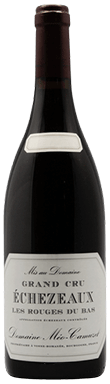
<p>Solid red-fruits nose, with a light herbaceous tone, though not overtly green. Medium-bodied yet concentrated, this has some intensity and drive, pure and racy. Quite...
2013
Domaine Méo-CamuzetEchézeaux Grand Cru
Domaine Jean Grivot, Echézeaux Grand Cru, Burgundy, France, 2012
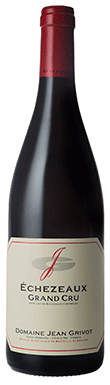
A bit closed on the nose, but this has a fine attack that is fresh and limpid, with clarity and precision. It’s not a blockbuster,...
2012
Domaine Jean GrivotEchézeaux Grand Cru
Domaine Méo-Camuzet, Echézeaux Grand Cru, Burgundy, France, 2012
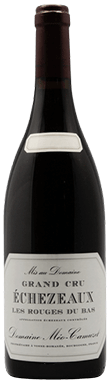
Stern, oaky, raspberry nose, still austere. Firm and rather closed, this has evident concentration, yet seems restrained and inexpressive. But there’s tension here, along with...
2012
Domaine Méo-CamuzetEchézeaux Grand Cru
Domaine Jean Grivot, Echézeaux Grand Cru, Burgundy, France, 2011
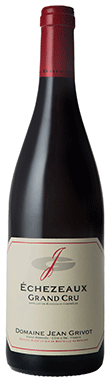
Gorgeous, exquisite nose, with lifted red fruits, almost minty. Rich but supple, very concentrated, but fine-grained tannins. Palate is intense and lifted, with purity but...
2011
Domaine Jean GrivotEchézeaux Grand Cru
Domaine Méo-Camuzet, Echézeaux Grand Cru, Burgundy, France, 2011
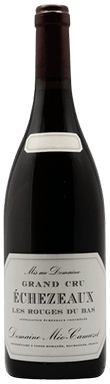
Lean, spicy, oaky but pure nose, redcurrant fruit. Good attack, concentrated and taut, with fine acidity though not aggressive; quite tannic and spicy. Good length,...
2011
Domaine Méo-CamuzetEchézeaux Grand Cru
Domaine Jean Grivot, Echézeaux Grand Cru, Burgundy, France, 2010
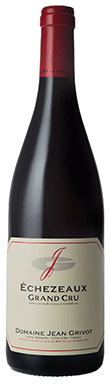
Opulent and seductive nose, showing a very slight reduction that will pass. Bold attack, packed with fruit, concentrated and quite tannic. The palate has vigour...
2010
Domaine Jean GrivotEchézeaux Grand Cru
Domaine Méo-Camuzet, Echézeaux Grand Cru, Burgundy, France, 2010
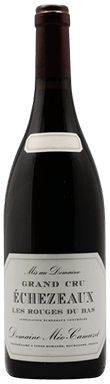
<p>Exuberant red-fruit nose, has energy and charm, surprisingly open, though has intensity. Spicy attack, fine acidity as well as richness. This has drive, force and...
2010
Domaine Méo-CamuzetEchézeaux Grand Cru
Domaine Jean Grivot, Echézeaux Grand Cru, Burgundy, France, 2009
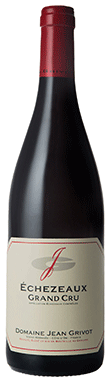
Rich, solid nose, with cherry aromas. Full-bodied, with fine weight of fruit but not blowsy. Quite tannic and robust, though the palate lacks a little...
2009
Domaine Jean GrivotEchézeaux Grand Cru
Domaine Méo-Camuzet, Echézeaux Grand Cru, Burgundy, France, 2009
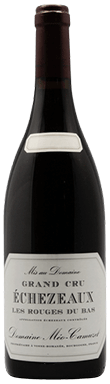
Produced from Méo’s 0.44ha parcel in Les Rouges du Bas. The vines are near the top of the slope not far from the outlet...
2009
Domaine Méo-CamuzetEchézeaux Grand Cru
