
Weingut Bründlmayer: producer profile
Willi Bründlmayer has been at the helm of this family estate for 40 years...


Despite his lean and youthful appearance, the engaging and welcoming Willi Bründlmayer has been at the helm of this family estate for 40 years. As a young man, it wasn’t his intention to be a winemaker, but he was called back to the estate in order to ensure its survival.
The winery is located in Langenlois, the main town of the Kamptal region, and his 80ha of vineyards mostly lie nearby. It’s a versatile region, with a range of terroirs and microclimates, and this has allowed Bründlmayer to establish a wide offering, from a series of impeccable sparkling wines, to classics from Grüner Veltliner and Riesling, to surprisingly successful red wines from an area not especially renowned for them. The barrel-fermented Chardonnay can be one of Austria’s best. And there’s icing on the cake too: delectable ice wines in appropriate vintages such as 2016, and I recall a magnificent Riesling TBA from 2009.
Bründlmayer would be the first to admit that the quality and age of his vineyards are central to his reputation. Grüner Veltliner is the main variety here, and his top vineyards are Käferberg and Lamm, in which the clay and loess soil can result in wines of high ripeness and power. Lamm is located on the eastern slopes of the celebrated Heiligenstein, and it’s a warm site that requires a watchful eye to ensure the grapes don’t overripen. There is also an Alte Reben (old-vine) bottling made from vines at least 50 years old.
He is fortunate to own 11ha in the vineyard widely recognised as the region’s top Riesling site, the 37ha Zöbinger Heiligenstein, located high up on sandstone and primary rock soils. As well as a standard but very good Riesling bottling from here, he also makes an Alte Reben version from vines around 100 years old. In addition to single-vineyard wines, he produces blended wines such as Terrassen from the terraced vineyards typical of the Kamptal, including fruit from vines less than 15 years old from the top sites.
Bründlmayer has long been environmentally conscious, avoiding herbicides and chemical fertilisers and encouraging biodiversity, and since 2015 the vineyards have been certified organic. Willi has long been an advocate of lyre-training in some vineyards, including Heiligenstein. Essentially it’s a form of split canopy training, which allows the vines to be better ventilated, and also exposes a larger surface of leaves to sunlight. Its main drawback is the cost of installation and maintenance, which is probably why it is not more widely encountered.
The winery is gravity-based. Vinifications take place using indigenous yeasts, and he favours Austrian oak of varying sizes for ageing the wines. For Grüner Veltliner he often uses acacia rather than oak, so as to neutralise direct oak influence while retaining the beneficial oxygenation of wood-ageing.
All this makes Bründlmayer a major player on the Austrian wine scene, with sufficient volumes to supply a range of international markets as well as Austrian consumers and restaurants. Large flagship estates are not necessarily always of the highest quality, but the Bründlmayer name on a label offers an assurance of quality ranging from very good to outstanding.
He has hired an expert team, whether in the vineyard or the office, where one of Austria’s few Masters of Wine, Andreas Wickhoff, manages the company. Bründlmayer’s son Vincent not only works alongside his father but has been given vineyards of his own which he has commercialised under his own name since 2011.
Even back in the 1990s Willi Bründlmayer enjoyed experimenting with varieties previously unheard of in Austria, such as Cabernet Franc and Nebbiolo. Some had been planted by his father for domestic consumption rather than commercial sale.
Pinot Noir has, in contrast, long been present in Austria, thanks to monastic houses with their roots in France, but many producers have struggled to express its varietal typicity. Bründlmayer’s is among the best, made from old-vine Austrian selections, and from younger Burgundian clones. For this wine too he uses Austrian oak, in this case 300-litre barrels. The Reserve comes from the oldest vines and is macerated for a longer period. In my experience, this Pinot Noir generally avoids the overripeness and over-extraction that can be found in many Austrian examples.
The Bründlmayer wines can age magnificently. I was poured two 1973 Rieslings from Heiligenstein in 2007 and they were still drinking beautifully, even though they would have been made from higher yields than the 40hl/ha or so customary today. Of course there is no need to age classic wines from the Kamptal for as long as that, but it’s an indication both of the region’s potential and the skill of the Bründlmayer family that the wines can keep for decades.
Stephen Brook’s top six from Bründlmayer
Bründlmayer, Sekt Brut Reserve, Niederösterreich, Austria
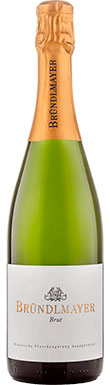

This very enjoyable sparkling wine doesn't pretend to be a Champagne, as it's grown in warmer conditions on different soils. But the basic varieties and...
Bründlmayer

Bründlmayer, Terrassen Grüner Veltliner, Kamptal, Niederösterreich, Austria, 2019
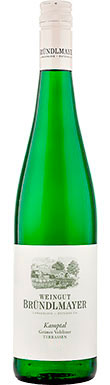
The concept of this blend is that it draws on fruit from vines less than 15 years old, although many are grown on well-exposed terraced...
2019
BründlmayerKamptal
Bründlmayer, Langenloiser Alte Reben Grüner Veltliner, Kamptal, Niederösterreich, Austria, 2018
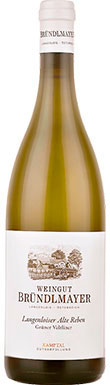
There must be a following for this style of wine, as Bründlmayer occasionally produces it. Already quite evolved in colour, it has a heady peach...
2018
BründlmayerKamptal
Bründlmayer, Ried Heiligenstein Alte Reben Riesling, Kamptal, Niederösterreich, Austria, 2018
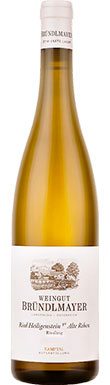
In previous encounters, this wine has not been very expressive and has seemed lacking in flair. More bottle age has brought greater harmony. The nose...
2018
BründlmayerKamptal
Bründlmayer, Ried Lamm Grüner Veltliner, Kamptal, Niederösterreich, Austria, 2017
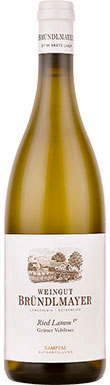
There have been vintages when this wine has been somewhat overblown, with high alcohol and a lack of freshness. However, this is not one of...
2017
BründlmayerKamptal
Bründlmayer, Pinot Noir Reserve, Niederösterreich, Austria, 2017
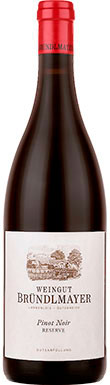
This is an old-vine selection, also differing from the regular bottling in receiving a longer maceration and thus more extraction. The nose is ripe but...
2017
Bründlmayer
