Where to find great Trebbiano in Italy
Tom Hyland uncovers three Italian wine regions where the much maligned Trebbiano is making a comeback.


Trebbiano has a curious reputation in Italy; from its mixed reception as part of the historical Chianti Classico blend, and its ubiquitous nature – permitted in over 80 of Italy’s DOCs, to being an essential component in Vin Santo, and the leading white of the Abruzzo region.
The white Trebbiano (which is actually a family of related – and in some cases unrelated – grapes rather than a single variety) has historically been more recognised for its propensity for high production than for its quality.
In Tuscany, several innovative wineries are now crafting complex dry whites from this variety. In Abruzzo, more specialised clonal selection has led to wines of greater structure and cellar potential.
And in Umbria, Trebbiano has become an important part of wine production in Montefalco.
Tuscany

For Michele Briganti of Monteraponi, located in Radda in Chianti, necessity was the mother of invention. He had more than enough estate-grown Trebbiano for his Vin Santo, and so decided to bottle a dry version with some of the surplus, starting in 2010.
Two years later, he discovered the best solution, in which he partially destemmed the grapes, used skin contact for a few days in concrete, and then moved everything along with the lees to very old barriques, making bâttonage three times per week, followed by a light filtering and another six months of bottle refinement.
‘Trebbiano is a difficult grape,’ Briganti explains, ‘generous in quantity, rustic, with high acidity. During the years, I learned [how] to treat it.’
He currently sources Trebbiano from three of his vineyards – two of which are more than 50 years old – and matures the wine in Burgundian barriques.
At Barone Ricasoli in Gaiole in Chianti, Francesco Ricasoli had been testing different vinification methods for Trebbiano for several years.
Finally deciding on a mix of amphora, stainless steel and barrique, ‘Sanbarnaba’ debuted with the 2020 vintage. ‘The decision was made after several experiments we did,’ he explains. ‘Amphora with skin contact and maceration give structure, the oak lends harmonious roundness, and steel the freshness.’
Arguably the most complex version of Trebbiano in Tuscany is Bòggina B from Petrolo, located in Bucine, in the Arezzo province, about 30 miles southeast of Florence.
Proprietor and winemaker Luca Sanjust remarks that this wine is a ‘very Burgundian style, with a lot of work on the lees’. He ages the wine in French oak tonneaux and explains that it is a ‘very unique wine, connected with the soils and vegetation we have around our vineyards’.
For Sanjust, the wine is ‘very beautiful on the palate, [it] gives you a lot of pleasure, is extremely sapid with beautiful acidity and a very long finish.’
Abruzzo

For decades, Trebbiano has been an important part of viticulture in Abruzzo, most famously as Trebbiano d’Abruzzo, typically vinified in steel and crafted as a pleasant, if uninspiring wine.
But there have been exceptions, most notably from Valentini and Emidio Pepe – two producers whose bottlings offer excellent cellar potential and greater varietal purity.
Thankfully, artisan producers in Abruzzo are changing the wine’s identity, largely in part to their use of the Trebbiano Abruzzese clone, as opposed to the more widely planted Trebbiano Toscano strain.
‘Trebbiano Toscano is a common grape variety, while Trebbiano Abruzzese is a specific biotype of the same grape,’ explains Chiara Ciavolich of the eponymous estate in Loreto Aprutino.
‘Trebbiano Abruzzese has a larger berry with a thin skin, a less compact and lighter cluster, and consequently lower yields. It tends to produce more expressive wines on the nose.’
For her limited production Trebbiano d’Abruzzo, ‘Fosso Cancelli’, Ciavolich uses a combination of terracotta amphora, small stainless steel tank and Slavonian oak for fermentation; the resulting wine has expressive aromatics of pineapple and apple peel, and a structure that promises greater complexities over eight to 10 years.
At Fattoria Nicodemi, Elena Nicodemi produces three separate versions of Trebbiano d’Abruzzo, with the ‘Cocciopesto’ label being the most distinctive.
Cocciopesto is a type of amphora made by a small company in Tuscany; the mixture of ingredients combines brick and stone fragments, hydraulic lime and water; in ancient times, it was used as a plaster for terraces and thermal pools.
Nicodemi uses cocciopesto amphorae as they allow micro-oxygenation similar to that of a barrique, but without interfering with the wine’s aromatic profile.
‘Unlike our other Trebbianos, the Cocciopesto Trebbiano undergoes skin maceration, carefully calibrated to avoid making the wine excessively austere or comparable to an orange wine. The goal is to extract only the most varietal components from the skins.’
Umbria
Finally, Trebbiano Spoletino has become an important player in the Montefalco area in Umbria, where Sagrantino and Sangiovese dominate.
A key producer is Filippo Antonelli, who releases multiple versions of Trebbiano, including a metodo classico and two dry versions: ‘Trebium’ is fermented in large barrels, and ‘Vigna Tonda’ is an amphora-aged version from older estate vines.
The latter offers distinct spiciness on the nose and excellent palate weight, and is light years away from the typical steel-aged examples of other whites from this territory.
Italy’s Trebbiano: Four to try
Related articles
- The insiders’ guide to Tuscany – the ultimate wineries to visit, wines to try and final tips
- Three Barolo producers having a breakout moment
- Ripe for discovery: 10 jewels of Central and Eastern Europe
Petrolo, Bòggina B, Toscana, Tuscany, Italy, 2022
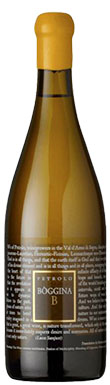

This is a seamless and ethereal wine in which no one characteristic stands out and the finished product is greater than the sum of its parts. 100% Trebbiano Toscano from a single vineyard (called Bòggina), this has aromas of apple peel, lemon twist, bergamot and subdued tropical fruits. It shows excellent ripeness with very good acidity, subtle wood notes, and a long finish with a slight hint of almond and a touch of tannins. Outstanding harmony and complexity.
2022
PetroloToscana

Monteraponi, Trebbiano, Toscana, Tuscany, Italy, 2023
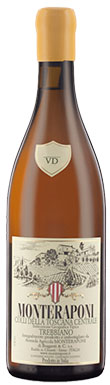
A cloudy orange colour with aromas of orange peel, persimmon and golden raisin. Very persistent and with good acidity, a note of saffron emerges on the dry finish. It needs a bit of time to round out and should peak in three to six years.
2023
MonteraponiToscana
Ciavolich, Fosso Cancelli, Trebbiano d’Abruzzo, Abruzzo, Italy, 2022
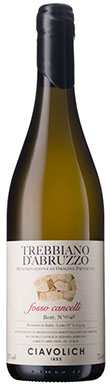
A medium-deep golden yellow colour with aromas of pineapple, golden apple and cereal grain. It has very good acidity and richness, with outstanding persistence and varietal character, displaying notable complexity with notes of almond and thyme.
2022
CiavolichTrebbiano d’Abruzzo
Antonelli, Vigna Tonda Trebbiano Spoletino, Spoleto, Umbria, Italy, 2023
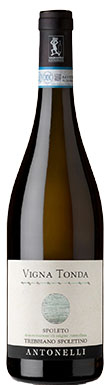
One of the most singular and energetic examples of Trebbiano Spoletino. Spiced pear, honey and dried apricot aromas lead into a medium to full bodied palate with good acidity and a very long finish which displays notes of beechwood and beeswax.
2023
AntonelliSpoleto
