
Wines from Albania: diamonds in the rough
In recent years an ever-increasing number of forward-thinking oenologists and growers have honed Albania's potential for quality winemaking finds Darrel Joseph, who highlights some the the country's top producers and wines.


To best describe Albania as a wine-producing country today, a bit of irony must be applied. Its viticultural history dates back to at least the 8th century BC, when ancient Illyrians inhabited the Balkan peninsula; yet, now, nearly 3,000 years later, Albania is at an infancy stage of modern-day wine development, a diamond in the rough virtually unknown to most of the wine world.
Scroll down to see tasting notes and scores for a selection of Albania’s top wines
Why infancy? Colossal challenges had occurred throughout those millennia, especially during the last half of the previous century, when Albania was a repressively-run communist country whose winegrowers had to turn over their grapes to state factories churning out volumes of quality-challenged wine.
After communism collapsed and the free market economy took hold in the early 1990s, thousands of vineyards were abandoned or converted for other agricultural uses by new landowners with bitter memories of the old regime’s dictates.
Since then, however, an ever-increasing number of forward-thinking oenologists and growers have honed the potential for serious quality winemaking and are taking it to impressive heights. Some have even fine-tuned their expertise by working at wineries abroad, such as in Italy and France, or with foreign winemaking consultants visiting Albania.
The basis for this excellence is, of course, provided by nature. With Albania’s western coastline caressed by the Adriatic and Ionian seas, and its northern, eastern and southern borders hugging Montenegro, North Macedonia, Kosovo and Greece, the country boasts an ideal blend of mediterranean and continental climatic conditions that vineyards love.
Especially sun-drenched ones hosting soils from sand, loess and loam to alluvial and limestone, and at altitudes from 150 to 1, 000 metres above sea level (parts of Albania are quite hilly and host the Albanian alps as well).
These harbour indigenous and regional grape varietals such as Shesh i Zi (black Shesh), Shesh i Bardhë (white Shesh), Kallmet, Debine i Bardhë, Vlosh, Pulës (or Puls; Pulsi) and Serina, which thrive alongside international favourites like Cabernet Sauvignon, Merlot and Riesling.
According to Albania’s Ministry of Agriculture and Rural Development, recent wine production has reached 2.6 million litres (65% bottled; 35% bulk) in the country’s three main wine regions, North, Central and South. Most (80%) of this is consumed at home, with the remaining 20% exported mainly to Montenegro, Kosovo, Switzerland and Germany.
However, figures for total vineyard hectarage, now estimated at between 6,000 and 10,000 ha, and registered quality wineries, presently 76, are incomplete. A thorough tally is due in 2023 as part of a new national wine law set to align with European Union wine regulations; Albania is now in accession negotiations with the EU.
‘There is a major transition happening with Albanian wine today,’ says agriculture minister Frida Krifca. ‘There is growth. There are investments in new wineries and vineyards. And there’s also a younger generation coming up to continue their family tradition into the future. There is real passion in this development!’
Dashamir Elezi, president of the Albanian Sommeliers Association and one of the country’s strongest advocates of the burgeoning wine sector, adds: ‘Ten years ago, you could barely find Albanian wines on restaurant wine lists even right here in Albania. There were only a few quality producers then, but no one believed their wines could possibly be good; mainly French and Italian wines were ordered. Now that has changed. Today, there are quality Albanian wines from several producers included on the wine lists because consumers are seeking them out, demanding them. The quality and reputation are shifting all across the country.’
Central region
Albania’s most widely planted wine grapes, white Shesh i Bardhë (pronounced shesh-ee-bard-uh) and red Shesh i Zi (shesh-ee-zee) are in the Central region, with approximately 4,000 ha planted in the Kavajë and Durrës districts, which host the Adriatic Sea as their western borders.
One of the leading producers of these wines – and of Albania’s quality wine movement – is Kantina Belba (kantina means winery) in the town of Kavajë, 40 km from Tirana, the Albanian capital.
The estate was founded by winemaker Fatbardh Belba and his brother, Saimir, in 2006, after Fatbardh spent 10 years working at the Cantina La Casella and Il Conventino wineries in Montepulciano, Italy. This experience inspired him to produce wine back home, where his father and grandfather had made raki, the popular national distillate, from Shesh grapes.
Now, together with Fatbardh’s 23-year-old son, Klaid, the Belbas dedicate nearly half of their 17 vineyard ha to these varieties. It isn’t known if the white and black Sheshes are related, but they reveal a true Mediterranean sense of place in Belba’s sustainability-oriented Golemas vineyard site, which sprawls amidst a landscape abundant with wild herbs like oregano and thyme, olive and pomegranate trees, birds, grasshoppers and the occasional praying mantis.
‘The dry, clear air, the gentle climate and the 250 sunny days per year are good for these grapes,’ says Fatbardh Belba.
‘The winds from the Adriatic and the north help keep them clean and disease-resistant, especially as they have “rrallosh”, or loose clusters. Also, they express the mineral character of the terroir.’
Belba adds that his Shesh i Bardhë wines, which show typical citrus, pear and herbal tones, are matured in stainless steel tanks and can age up to six years, thanks to the grape’s prominent acidity. His Shesh i Zi, mainly aged in used barriques, is best when harvested mid-to-late October to achieve a good sugar level, moderate acidity and ripe cherry flavours. Alcohol levels tend to be robust, usually reaching between 13.5% and 14.5%.
Other quality Central region wineries producing Shesh include: Bardha, Skënderbeu, Bello and Kokomani
South region
In Berat – a UNESCO World Heritage Site city as well as a wine district – an array of centuries-old indigenous varieties thrive, such as the white Pulës and Debine e Bardhë, and the red Serina and Debine e Zezë. Some of these have a history almost as colourful as the grapes themselves. During Albania’s nearly 500 years as part of the Ottoman Empire – which ended in 1912 – Serina and Pulës were often planted next to oak trees for the vines to grow up the tree trunks.
‘The oak leaves were supposed to emit a protective odour to help keep the grapes safe and healthy,’ says 32-year-old winemaker Levent Nurellari of Kantina Nurellari. ‘But the climbing vines were also a discreet way for people to grow grapes for making raki in those days. Alcohol was forbidden during Ottoman rule, so people made raki from grapes hidden up a tree!’
Today, Levent and his father, Fatos, who founded the Nurellari winery in 1996, grow Serina and Pulës – called Pulsi here – in their 16.5 ha of vineyards (which also feature Cabernet Sauvignon and Merlot) via the Guyot training system; no more oak trees.
Serina is vinified either as a fresh and fruity rosé or as a premium full-bodied red wine from grapes dried for several weeks before barrique ageing for a year (see tasting notes below). The Pulsi, noted for its vibrant acidity, is equally versatile; it can be vinified dry and matured in stainless steel, or as luscious, barrel-aged sweet wines.
In the Korcë district to the southeast, at Kantina Korça 2000, winemaker Elisabeta Lëmi – one of Albania’s few female oenologists – produces Serina, Mavrud (also widely grown in Bulgaria) and a barrique-aged ‘Menea’ label Cabernet Sauvignon-Merlot blend as part of the winery’s red roster.
Its high-altitude white varieties, Debine e Bardhë and Riesling, sourced from vineyards nearly 900m high and harbouring limestone, marble and granite in the soils, are particularly exciting. Despite roasting daytime heat (often 40°C even in late summer), the cool evening temperatures preserve the characteristic fresh acidity of the two varieties.
The 2022 vintage is already pointing to outstanding Debine e Bardhë fruit. A recent tank sample has shown gorgeous ripe citrus/grapefruit flavours and sleek, lengthy salinity framed by firm minerality. Elisabeta’s 28-year-old son, Menelaos, also an oenologist, is slated to lend his hands to this vintage.
Other wineries to look out for in Albania’s South region: Çobo (producing a traditional method sparkling wine, Shendeverë, from Pulës grapes), Bejko and Max Mavrud
North region
In the Lezhë district, there’s a saying that ‘it’s difficult to find someone with neat hair’. This refers to the constant winds swirling through the hilly area just 14km from the Adriatic coast. But they happen to be ideal for the showcase grape in the vineyards: Kallmet.
This sensitive, thin-skinned red variety, also known as Kadarka in Hungary and Gamza in Bulgaria, is susceptible to fungal infection, so the dry climate and cleaning winds along with the alluvial soils of Lezhë are ideal for nurturing healthy grapes.
‘The dryness is so beneficial, that we spray the vineyards only two or three times per year,’ says Gjoke Gjini, who runs his family-owned Kantina Kallmeti.
Founded in 2006, the winery produces 80,000 bottles of Kallmet in three versions: an easy-drinking ‘classic’ style; a full, barrique-aged ‘Prestigj’ and an Amarone-style ‘Privilegj’ from rack-dried grapes.
Kallmet is grown also in the Shkodër and Malësi e Madhe district.
Other quality producers here include: Arbëri, Mrizi i Zanave and UkaWine.
With its impressive roster of indigenous grapes and ever-growing winemaking talent, Albania is finally taking its turn to be recognised as an impressive Balkan wine country by wine lovers and professionals both at home and abroad.
While most other Balkan countries have been enjoying an acclaimed wine renaissance over the last several years – Croatia, Bosnia & Herzegovina and Serbia are excellent examples – Albania has remained fairly hidden from wine stage view. Until now.
Slowly but surely, its wines are making their way to tables in Europe and the United States first and foremost because of their distinctive expressions, but just as importantly because of food pairability and relative price affordability.
However, just as its Balkan neighbours have shown, Albania still has a long way to go in terms of gaining a foothold with a broader audience. And even then, it will always be – just like most of its neighbours – what also lends to its beautiful uniqueness: a niche wine country.
Darrel Joseph’s top 10 Albanian wine recommendations
Wines are listed by colour and style in score order
Related articles
Europe in 12 top winery experiences
Cycling in Geneva: The countryside wine hunt
Georgia: Top three destinations for wine lovers
Belba, Kavaljon, Golemas, Kavajë, Albania, 2021
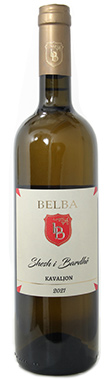

From 40-year-old vines rooted in soils that include weathered shell limestone, this Shesh i Bardhë (an Albanian grape) wafts with scents of wild oregano and...
2021
BelbaGolemas

Nurellari, Pulsi, Berat, Albania, 2021
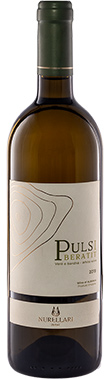
The white Pulsi (or Pulës, Puls) grapes for this wine were picked in September, but earlier than usual to avoid over ripeness caused by the...
2021
Nurellari
Balaj, Plithure Trevllazer, Vlorë, Albania, 2021
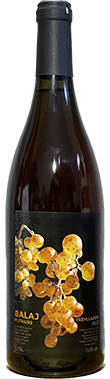
With its gorgeous amber hue, this spontaneously-fermented natural wine from the Plithure vineyard spent three weeks soaking on its skins, ultimately delivering exotic aromas of...
2021
Balaj
Nurellari, Serina Premium, Berat, Albania, 2019
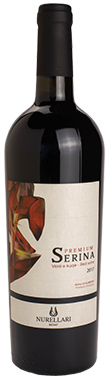
From the revived age-old Serina variety, a sophisticated wine from grapes dried for nearly four weeks and aged in American oak. Fresh, clean black cherry...
2019
Nurellari
Belba, Papaz, Golemas, Kavajë, Albania, 2017
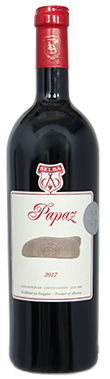
Named after a tiny bubbling mud pool near the vineyard, the Papaz is a gorgeous showpiece that weds an obscure Albanian grape, Kabjuro, with classic...
2017
BelbaGolemas
Kallmeti, Kallmet Prestigj, Kallmet, Lezhë, Albania, 2019
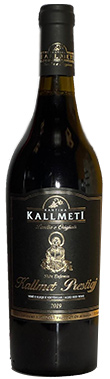
From 20-year-old vines of Kallmet (aka Kadarka in Hungary and Gamza in Bulgaria) rooted deeply in stony alluvial soils. The barrique ageing in French, American...
2019
KallmetiKallmet
Kallmeti, Privilegj, Kallmet, Lezhë, Albania, 2020
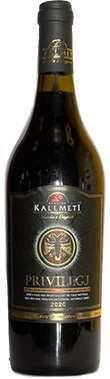
An Amarone-style wine made from Kallmet grapes grown in sustainable-focused vineyards and dried on racks for five weeks. Aged in Hungarian barriques, the complex 'Privilegj'...
2020
KallmetiKallmet
Korça 2000, Menea, Korçë, Albania, 2016
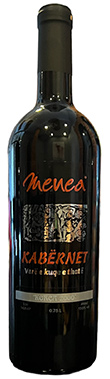
This palate-pleaser from 30 year-old vines starts off with a perfumed fruit and blossom nose. On the palate are classic cassis notes with a touch...
2016
Korça 2000
Vila Hadaj, Malinati E Kuqja Superiore, Malinat, Berat, Albania, 2019
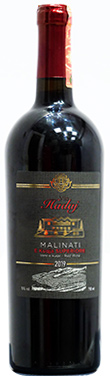
A powerful wine made from premium grapes of 30-year-old vines. Plenty of dark fruit aromas and flavours, including blackberry, juniper, sloe berry and plum. After...
2019
Vila HadajMalinat
Nurellari, Verë e Shenjtë, Berat, Albania, 2016
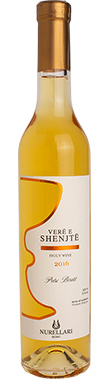
An intriguing dessert wine with aromas of cumquat, pear, star fruit, maracuja (yellow passion fruit) and mandarin. On the palate are seductively discreet expressions of...
2016
Nurellari
