
Younger generations: The fresh faces taking charge at family wineries
In wine, it’s never a given that the younger generation will take the reins from their parents. Or that it will run smoothly if they do. The 10 success stories in this series give an insight into some of the common challenges faced along the way. First up, changes in Côte-Rôtie and South Australia.


How would you like to work with your mum and dad? And then take over after they’ve stepped back? Five minutes spent thinking about this prospect will reveal, I suspect, the shock of the challenge. (I loved my mum and dad – but I’d have flunked.)
Not many of us, though, are born into small family businesses, where every nuance of our parents’ working lives provides the backdrop to our childhood. Fewer still into farming businesses, rooted in land, place, origin, a local culture, a partnership with the environment.
You’ll have watched the struggles of your parents and grandparents; you’ll know the intimacies of ownership, for better and worse. The domaine, the quinta or the tenuta isn’t just a business; it’s more like an eternal child, continually growing into something new, and requiring constant love and care to ensure that this process is successful.
The decision about what you do with your life is marbled with responsibility: can you really walk away from that child? Hence the fascination of the stories in the profiles that follow.
Relative success
I’ve spent 35 years meeting growers and watching the wine world unfold. I’m sure that, when successful, a family transmission can’t be bettered – for the land, for the wines, and for wine culture more broadly.
The Symington family in northern Portugal, the Humbrechts in Alsace and the Guigals in the northern Rhône are all splendid examples of what successful family transition makes possible.
We have to recognise, though, that luck plays its part. What if the older generation doesn’t know how to let go or step back? What if the talents and drive of the younger generation are very differently constituted to those of their parents – or even missing altogether?
And, increasingly nowadays, what if the pecuniary value of an estate brings family divisions, fiscal complications and outside interests into questions of transmission? For some wine estates, the path to a future of family ownership is a dauntingly narrow one, requiring great skill and forethought to navigate.
All the more reason, of course, to applaud those who succeed in it.
Andrew Jefford
Emma Amsellem-Vernay
Domaine Georges Vernay, Rhône, France
By Matt Walls

Christine Vernay and her daughter Emma (pictured above) have contrasting personalities: Christine is thoughtful and slightly mysterious, while Emma is animated and energetic. The family resemblance is plain to see, however, and they finish each other’s sentences.
Christine took over the estate from her father Georges in 1996. They never worked in tandem; she had to figure things out by herself.
‘When he died, eventually I felt the transmission, I felt nourished by him… It was a silent transmission, but it was real,’ she says. She wants the experience to be easier for her daughter. ‘With Emma, it’s an active transmission – it’s very different.’
Emma only decided to take on the estate at the age of 30. She had previously worked as a group wine buyer in Paris, and her retraining as a winemaker came as a pleasant surprise to Christine. Upon Emma’s return, her apprenticeship began.
Her mother might be teaching Emma how the winery functions, but Christine explains that it’s not a one-way street and that she is learning, too; ascertaining how to hand over, how to teach, how to transmit.
And ‘it’s a multifaceted transmission: as a mother, as a business owner, as a winemaker’.
Baptism of frost
Emma’s initial experience at the estate was by no means easy. She arrived in early 2021, a year marked by a hard frost that decimated Condrieu vineyards: ‘It was an infinite sadness to witness this disaster… “how can I handle this?” I asked myself.’ But looking back, she’s pleased that she endured this tough start, as it taught her resilience.
In running the estate today their roles overlap, but ‘I’m mostly vines, she’s mostly cellar’, says Emma. They discuss everything, and Emma can call on Christine’s experience if she has any doubts. There’s no fixed date for Christine to lay down her pipette permanently.
‘It’s not a job – it’s a life,’ says Christine. Emma has no desire to make any major changes or to expand the estate. She has been experimenting with biodynamic treatments, however, which she considers a logical progression of the work in the vineyards that her mother introduced.
‘Each generation faces its own set of problems,’ says Emma. ‘My great-grandfather planted the first vines, my grandfather saved Viognier and the appellation, my mother developed the reds and converted to organics.’
No doubt Emma’s challenge will make itself known in time. ‘We’re only passing through… I just want to contribute to the beauty of these hillsides and continue this work.’
Tom Barry
Jim Barry Wines, South Australia
By David Sly

The weight of family tradition doesn’t burden Tom Barry. As the third successive generation to lead the winemaking team at Jim Barry Wines in the Clare Valley, Tom keeps things simple.
‘In truth, I never think too much about historical expectations,’ he says. ‘Instead, I just focus on getting the fundamentals right with every vintage.’ It works.
Tom’s ability to capture fresh, vibrant flavours while maintaining respect for classic wine styles is steering a new era of success for Jim Barry Wines. It builds on foundations laid by Jim Barry, the first qualified winemaker in Clare who obtained his oenology degree in 1947 and worked for big wine companies before releasing the first Jim Barry wines in 1974.
Jim’s son Peter took over the company reins as managing director from 1985, and has now handed over control of operations to his children, with sons Tom as winemaker and Sam as commercial manager, and daughter Olivia as brand ambassador.
Learning on the job
Peter Barry opted for a gentle generational transition. First, he gave his sons responsibility for making and marketing Clos Clare wines (sourced from part of the Florita vineyard, owned by the Barry family) and The Barry Bros red wine blend.
It soon led to Tom making more winemaking decisions for the Jim Barry Wines portfolio. ‘The main changes I’ve brought have been in the vineyard, placing greater attention to detail in vine health and management, to bring better quality fruit into the winery,’ he says.
By 2013, at the age of 27, Tom was named Gourmet Traveller Wine magazine’s Young Winemaker of the Year, yet he still saw himself as part of a team at Jim Barry Wines, rather than its leader.
‘Dad showed a lot of faith in allowing us to make decisions without the added pressure of just handing over the reins,’ he says. ‘I’d been learning on the job since I started as a cellar hand in 2007, and with every step I grew and learned. ‘By the time I’d finished my winemaking studies, I felt ready to challenge things and introduce some of my own ideas.’
By 2022, Tom was recognised as head of winemaking, coinciding with the 60th anniversary of Jim Barry Wines. His experience doing vintages in Germany and Austria has seen him adopt new techniques to build heightened aromas and finesse in outstanding Rieslings, while he also promotes elegance through restrained oak in a diverse range of red wines, from the mighty old-vine The Armagh Shiraz, to a clever revival of a rich Cabernet Malbec blend, first made famous by Tom’s grandfather.
‘I’m not rewriting history,’ he offers, ‘just adding to it.’
Next instalment: Chiara de Iulis Pepe & Catherine Kistler
Wines from a new generation:
Related content
Meet the next generation at four legacy Napa wineries
From Pauillac to Stellenbosch: Celebrating May-Eliane de Lencquesaing at 100
Champagne Dhondt-Grellet: The young grower at the top of his game
Jim Barry Wines, LoosenBarry Wolta Wolta Riesling, Clare Valley, South Australia, Australia, 2022
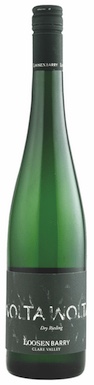

Tom Barry shows his intelligence and ambition in this bold winemaking collaboration with Germany’s Dr Ernie Loosen. Chasing a more luscious, slippery texture than typical...
2022
Jim Barry WinesClare Valley

Domaine Georges Vernay, Blonde du Seigneur, Côte-Rôtie, Rhône, France, 2022
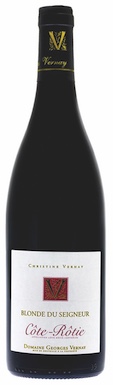
Saturated colour in the glass. Gorgeous aromatic expression that combines menthol, smoke and cedar, all overlaid with floral violet and hibiscus notes. Quite a dense...
2022
Domaine Georges VernayCôte-Rôtie
