Your home bar basics
What tools do you need to make great cocktails at home? Our short essential guide to bar kits will get you started.

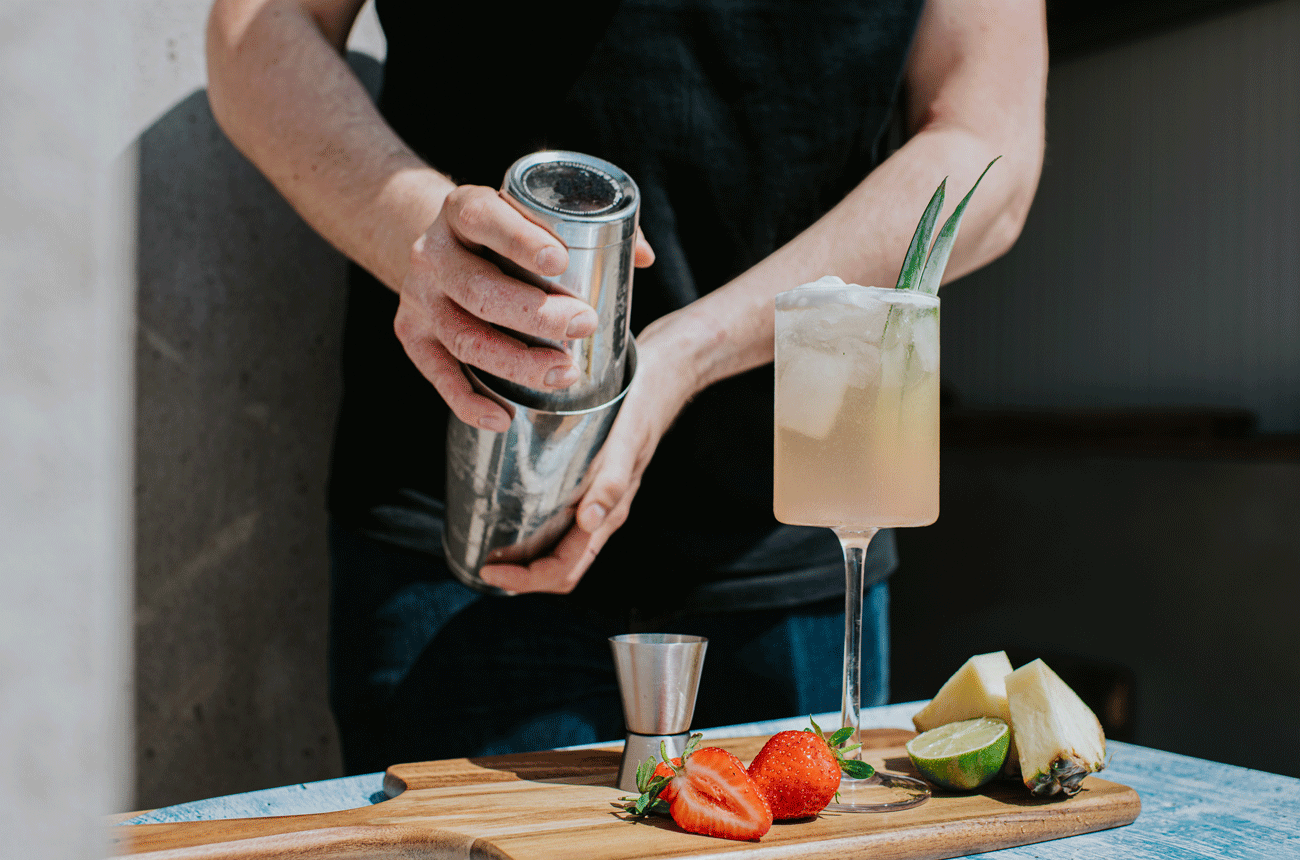
Drinking a cocktail in your favourite bar is one of life’s undeniable pleasures. But nothing beats the sense of satisfaction to be found in crafting your own perfect drink at home.
It’s entirely possible to make good cocktails without any specialist equipment – a jam jar makes a serviceable shaker – but you’ll get better results, have more fun and look the part if you invest in some proper cocktail-making kit.
Made to measure…
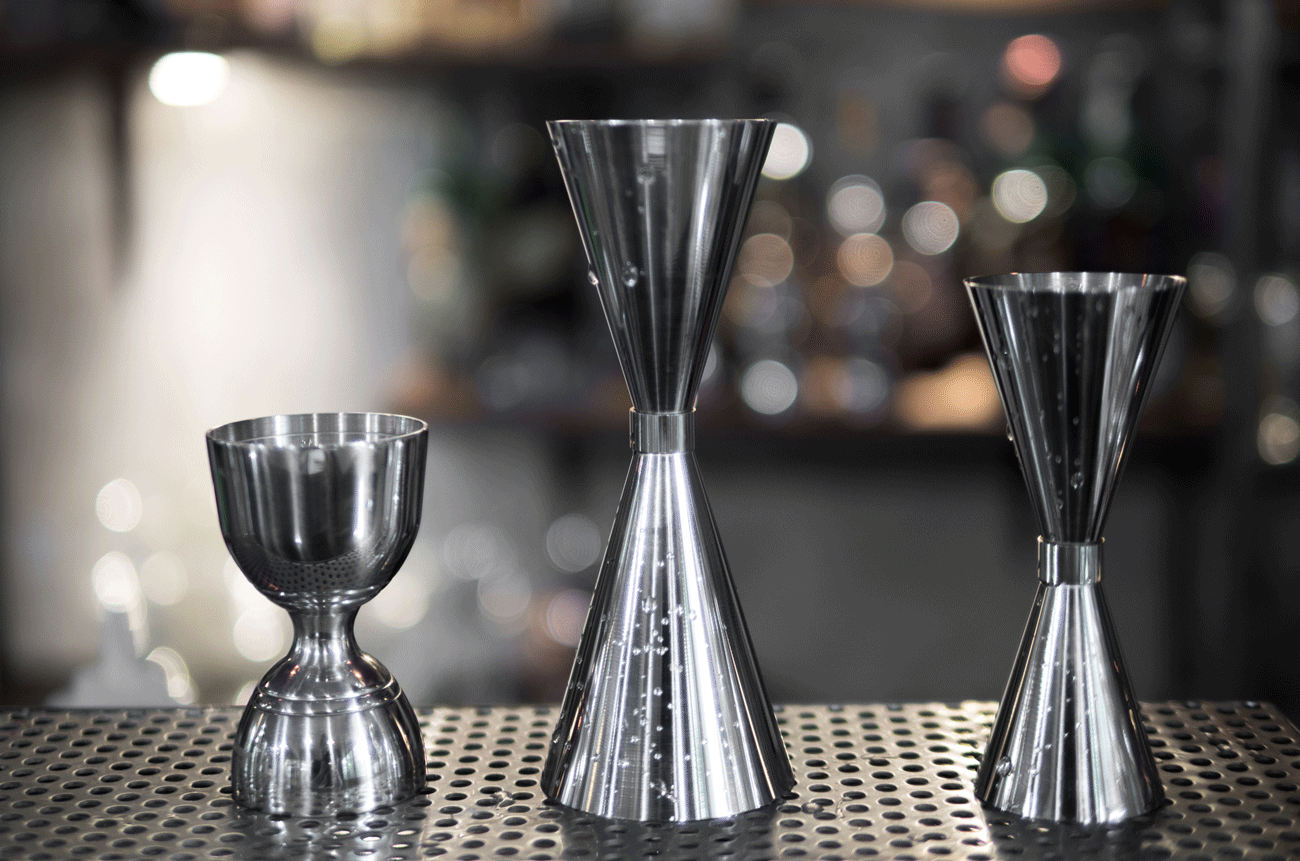
Cocktail jiggers will measure ingredients accurately
First you need something to measure your ingredients accurately. ‘The one essential piece of home cocktail kit is a jigger,’ says Pietro Collina of Viajante87 in Notting Hill, London. ‘You can improvise with other household items and mix drinks in different vessels, but without a jigger there’s really no point. It’s the key tool for accurate measurements.’
Nip-waisted stainless steel jiggers are perfect for measuring single (25ml/1oz) and double (50ml/2oz) shots in a G&T, for example. But most cocktail recipes call for more nuanced measures – 5ml, 10ml or 15ml – so look for a jigger with internal markings in 5ml increments.
Try the Mezclar Preciso Multi Measure Jigger (£11.50, Drinkstuff). Or buy the excellent Easy Jigger, designed by industry veteran and publisher Simon Difford, which measures from 1.25ml to 60ml (£7.75, Difford’s Guide).

Pietro Collina of Viajante87
‘The one essential piece of home cocktail kit is a jigger’
Pietro Collina, Viajante87
Mix it up
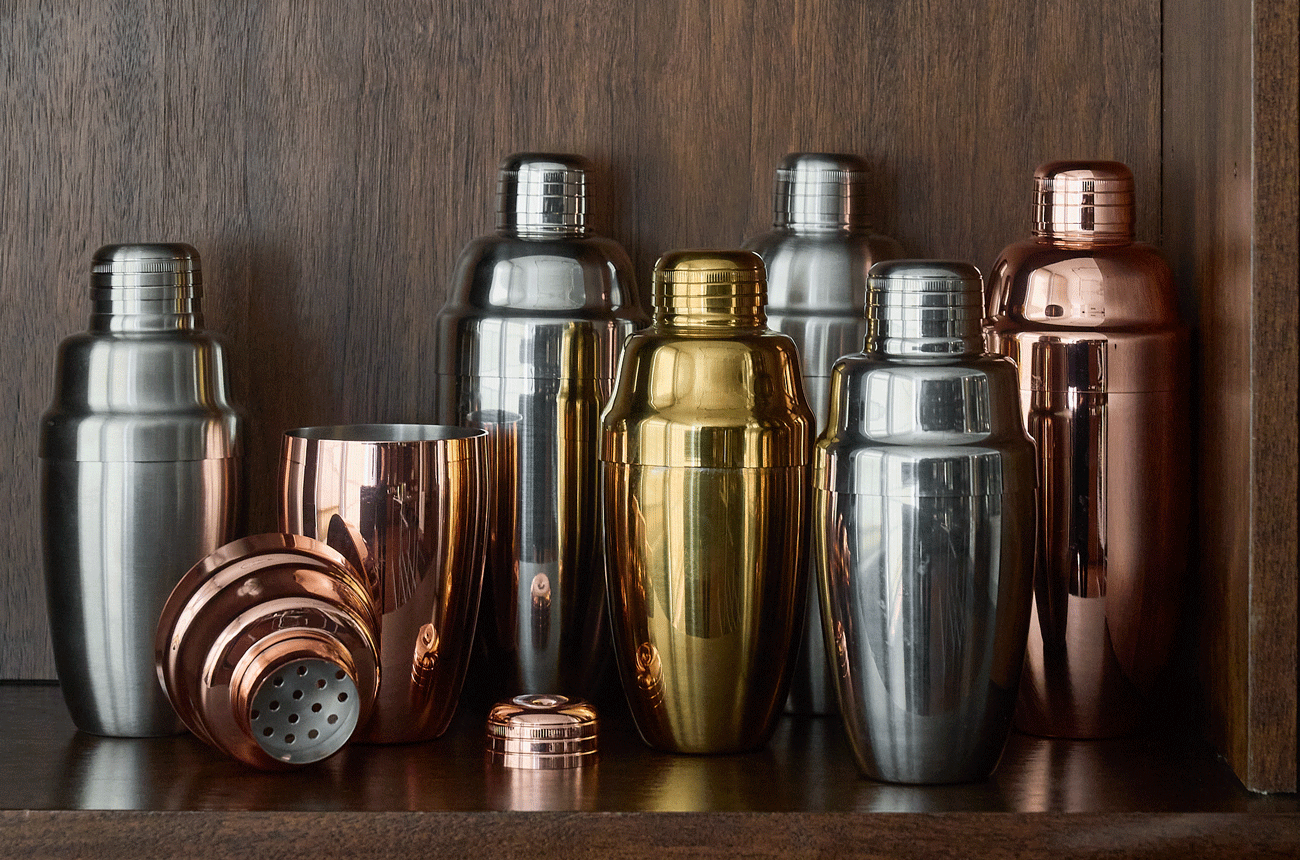
Three-piece cobbler shakers have a built-in strainer
Now that you’ve measured your ingredients, what about mixing? Options are a two-piece Boston shaker – either glass-and-tin type or tin-on-tin – and a three-piece cobbler shaker, which has a built-in strainer. Both have benefits for home mixologists.
‘I’d actually lean towards the cobbler for home use,’ says Jack Sotti, bar director at Archive & Myth in London’s Leicester Square. ‘It’s designed for single serves, has a built-in strainer and looks great sitting on a bar cart. The only thing to know is how to use it properly so the cap doesn’t seize up when it gets cold.’ The trick is to press the cap on lightly rather than forcing it down, and remove it the second you finish shaking.
On the other hand, Emilio Giovanazzi, head bartender at The American Bar at Gleneagles in Perthshire, Scotland, believes a Boston shaker is the best place to start if you’re new to mixology. ‘A Boston shaker is the ideal tool for a home bartender. It chills, aerates and can also double as a mixing glass, so realistically, not much else is necessary,’ he explains. ‘It’s the tool most bartenders use; simple to clean, durable and versatile, making it ideal for learning proper cocktail technique at home.’
Personally, I use a Boston-style shaker from the Japanese brand Koriko at home (£25, Cocktail Kingdom). ‘Their weighted tins are perfect for shaking and they are extremely durable,’ says Giovanazzi.
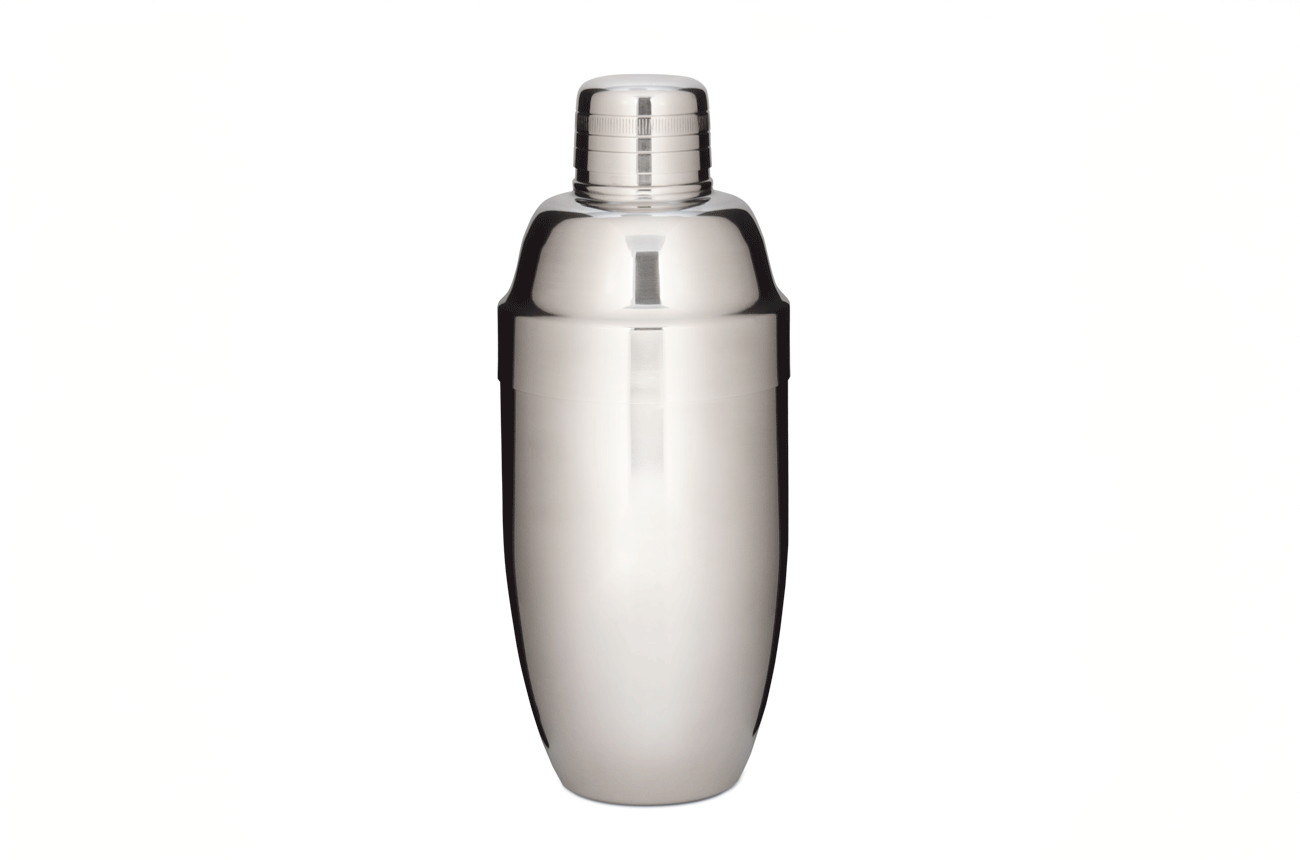
One to buy: Usagi Cobbler Shaker
This 800ml stainless steel shaker can make two drinks at a time and comes with a built-in strainer. Made from stainless steel, it’s both durable and light for budding homebartenders to use. £45, Cocktail Kingdom
Take the strain
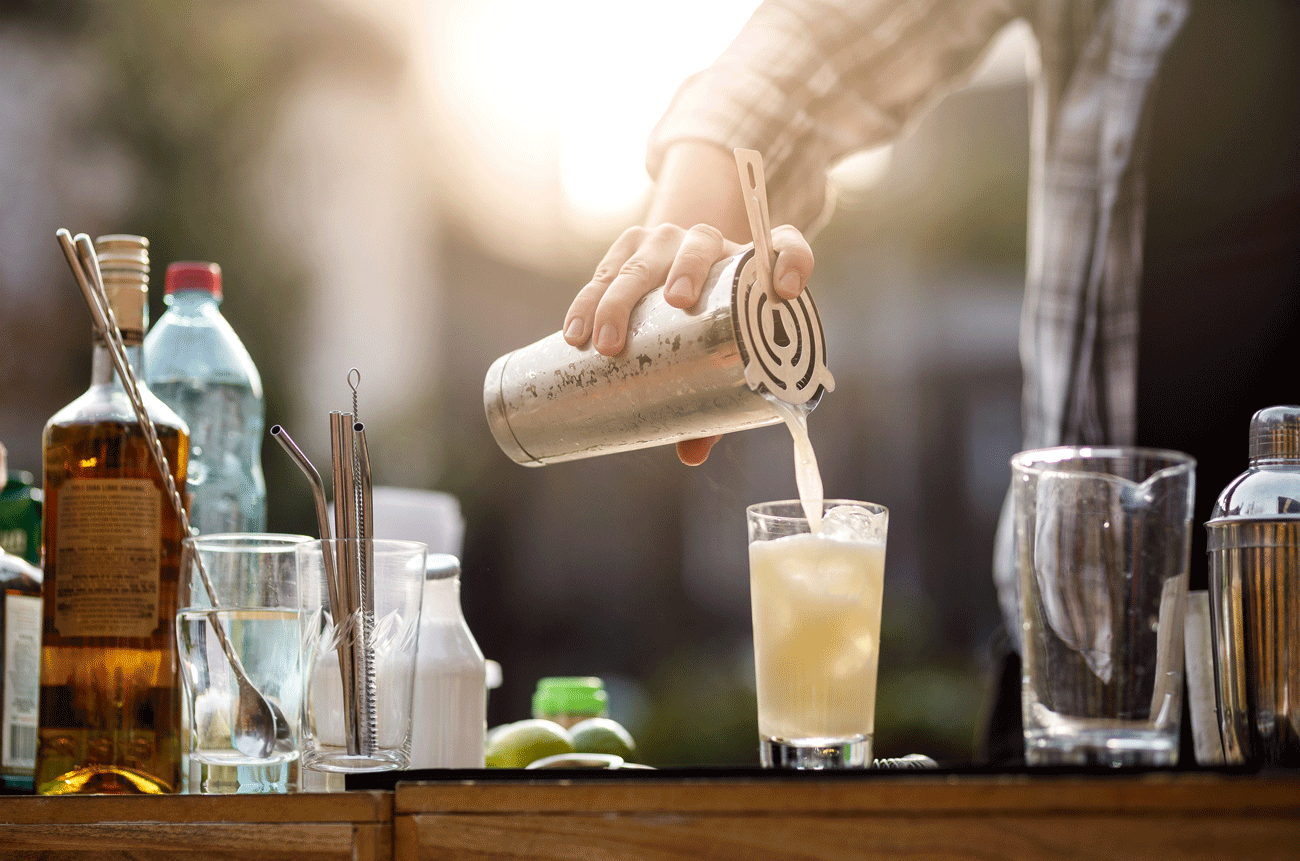
Making cocktails with a Boston shaker and hawthorne strainer
If you do choose a Boston, you’ll need a hawthorne strainer (£8.50, Urban Bar). Shaped like a table tennis bat, this sits over the top of the tin to hold back the ice when you pour. ‘A hawthorne handles most drinks,’ advises Giovanazzi.
‘Add a fine-mesh strainer for double-straining to remove small ice shards and pulp, giving cocktails a smoother finish and helping control dilution after serving.’ Sotti recommends Gorky – ‘the best fine strainers on the market’ – designed by top bartender Gorkem Harp (£3.30, Concept Cuisine).
Stir it up

Kris Bazys, bar manager at Scarfes Bar, Rosewood London
For drinks that are stirred, not shaken – think Martini, Negroni, Old Fashioned – a long-handled bar spoon is a handy tool – though it’s not essential. ‘It’s useful to have a long-handled bar spoon because it allows you to reach the bottom of the mixing glass, making sure all ingredients are incorporated,’ says Kris Bazys of Scarfes Bar at Rosewood London.
‘It also helps with measuring small amounts of any liquid and can even muddle light ingredients,’ he says. Choose a spoon with a flat end if you want to use it as a muddler too, such as the 10-inch (26cm) Yunai twisted bar spoon (£3.99, Amazon).
Sotti adds a word of advice: ‘On the measurement side, bar spoons are technically meant to represent a standard volume, but they vary quite a bit between brands. It’s worth weighing out one bar spoon of water when you first get one so you know exactly how many millilitres yours holds.’
And now you’ve got all the kit, it’s time to start your cocktail-making adventures…
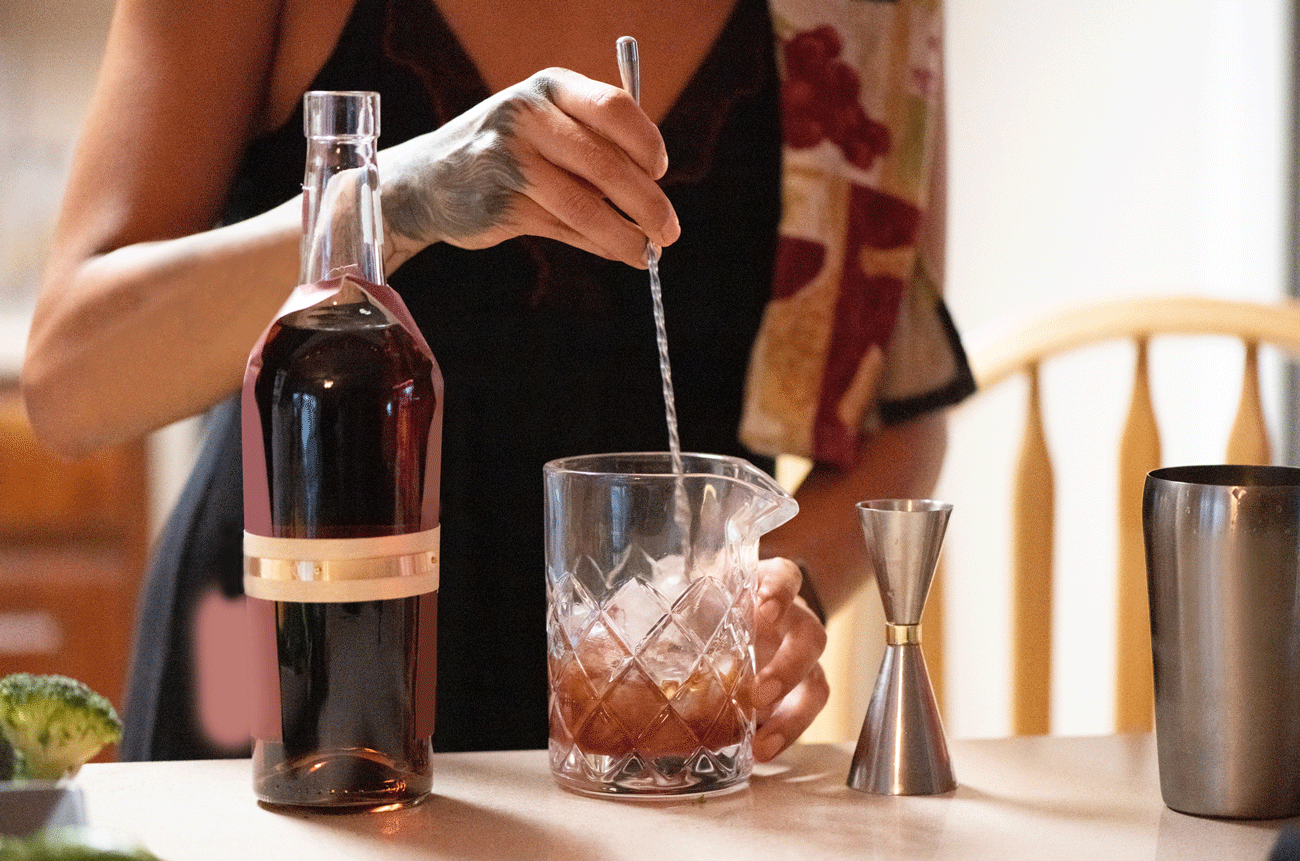
Stirring a cocktail with a bar spoon
Related articles