
Decanter experts give their verdict, tasting notes and drinking windows on Australian Pinot Noir.
The summary
An impressive set of results, underlining the quality and diversity on offer in Australian Pinot Noir, with both the 2012 and ’13 vintages ideal for savvy wine lovers to snap up, comments Nick Stock…
The judges tasted a solid representation of Australia’s Pinot Noir offering – one that included a number of iconic winemakers historically recognised as making wines at the top level. These results reflect the quality of the producers as well as the quality of the vintages currently in the market.
With the bulk of the tasting coming from the widely regarded 2012 vintage, the results are justifiably strong. But 2013 is shaping up to be as good as 2012, perhaps delivering wines that are more immediately approachable and looking very complete. as to which will ultimately prove the better, it’s a debate that has been bubbling away among Aussie Pinot makers over recent months. The 2012s seem to have a greater emphasis on structure and are more reticent in achieving their final form. The 2013s are showy, fleshy and deeply fruited, instantly seductive and undeniably strong.
All of Australia’s major Pinot Noir producing regions were represented in this line-up and, from a sheer numbers point of view, both the Yarra Valley and Mornington Peninsula asserted themselves as the major forces.
It is easy to fathom the hype and interest that has built around Tasmanian Pinot Noir based on the very strong showing here. By comparison with regions like the Yarra, Tasmania accounts for a tiny volume of wine but achieves consistently high quality. The scale of production there also generally dictates higher average prices for the wines.
Significantly though, the Adelaide hills has a very strong showing, capped off by an Outstanding winner. The region has been long discussed as one that could deliver on the promise of great Pinot Noir but has struggled in the consistency stakes. Clearly the quality of the 2012 vintage has overcome anything that has held it back.
The four Outstandings are diverse expressions of Pinot, which bodes well for the belief in great Australian terroirs and the ability of this fickle grape to convey their qualities.
Gary Farr has been long hailed as a pioneering force in putting Australian Pinot on the map and, apart from his own Farrside being recognised as Outstanding, his connection to two of the other top wines cannot be overlooked. Farr worked as a consultant to Curly Flat’s Phillip Moraghan for a number of years as a winemaking advisor and certainly influenced Moraghan’s approach and philosophy. Farr is also great mates with Neil Pike, the winemaker behind Pike & Joyce; the impact of great Burgundies and chats on Pinot style shared between them cannot be underestimated.
The scores
71 wines tasted
Entry criteria: producers and UK agents were invited to submit their latest-release Pinot Noir from Victoria, Tasmania or Adelaide Hills. One wine per producer was permitted.
Outstanding 4
Highly recommended 16
Recommended 48
Fair 3
Poor 0
Faulty 0
The results
With a more sophisticated global outlook, Australia’s Pinot Noir producers – from across Victoria, Tasmania and Adelaide Hills – are proving they can mix it with the world’s best. Georgina Hindle reports…
Our judges praised a positive, enjoyable tasting which highlighted the potential for Australian Pinots – and not just those from the normally star-studded Mornington Peninsula.
‘The fact we’re tasting wines from across three states already shows there’s a distinctive regional character to Australian Pinot that’s developing rapidly,’ said Anthony Rose. ‘A few years ago we’d have talked about Oregon, California, New Zealand and of course Burgundy, and maybe forgotten about Australia. But there’s a lot of excitement around Australian Pinots, which can rival the world’s best.’
Justin Knock MW agreed, finding ‘a surprising level of class’ in the line-up, with winemakers ‘aspiring to higher quality levels and being more sophisticated in terms of what they’re trying to achieve’. He explained: ‘They’re not trying to overoak, be overripe or target a certain market. They are making interesting, structured, delicate styles that you won’t find in Pinots from California or Chile, and with a reliable softness of fruit that you won’t necessarily get from France.’
Roger Jones was ‘underwhelmed’, recalling the superb results from a previous Decanter panel tasting of 81 Pinots from Victoria and Tasmania (August 2013 issue). Part of his disappointment came down to ‘underperforming’ wines from Mornington Peninsula. Rose agreed ‘they may not have hit all the high notes they should’ given the region’s reputation, but ‘there were certainly three excellent wines showing attractive red fruit character and regional identity.’
Yarra Valley also failed to fully enthral our judges. Rose said it ‘didn’t show the heights’ but Knock praised the efforts of winemakers there trying to push the envelope. ‘The wines have an austerity, sharpness and a tautness – they are much more structural compared to others,’ he said.
Rose lauded the quality of Tasmania’s wines ‘from the Tamar Valley all the way down to Hobart’. Knock was equally impressed with the ‘surprising opulence’ of Pinots from the island state. He found ‘rounder flavours, more alcohol and more of a Central Otago style’. His one criticism was that there were ‘some really polished wines but not many exciting ones. Tasmania probably has the most potential but isn’t moving along very fast’, he said.
For Knock, Adelaide Hills had made the biggest improvement, moving from jammier ‘Shiraz-like Pinots’ to more perfumed, voluptuous wines. Jones said they had a ‘nice gaminess’ and Rose said the potential was there for further improvement. ‘It’s never previously been a key region for Pinot Noir but there’s no reason why it shouldn’t be. It’s all about vine age, commitment to vineyard management and winemaking, because the wines we saw that were really good just prove what can be done in Adelaide Hills’.
In terms of vintage variation, the judges were keen to convey that Australian winemakers were as much ‘at the mercy of the vintage’ as those in Europe. Jones found the 2012s ‘generous with great texture’ while Knock praised the ‘real character and perfume’ in the 2013s. Despite the 2012 vintage being much loved by Australian winemakers, Knock said the wines ‘aren’t necessarily for the UK palate where consumers want finesse as opposed to blocky power’.
As for ageing, the judges were confident the best wines would age well for six to seven years, but extolled the virtues of drinking them young too, particularly the 2012s.
So are they a good buy? ‘Pinot Noir and good value do not necessarily go together,’ said Rose. ‘Pinot and pleasure, yes, but you have to accept that you’re always going to be expected to pay for quality.’ And in that respect Australia has got it right, he said. ‘Against Burgundy, California and Oregon, Australia is an excellent midway point and, with what we’ve seen today, these Pinots definitely represent reasonable value.’
Our tasters each pick their top 3 wines from the tasting:
Roger Jones
Jones is chef/owner of the Michelin-starred The Harrow at Little Bedwyn. he travels regularly to Australia to enhance the 350 Australian wines from his 1,000-bin list, and judges on the Australia panel at the Decanter World Wine Awards. He is the consultant chef for The Park House Restaurant in Cardiff, advises numerous catering colleges and schools, and is also the wine consultant to the trade publication, The Caterer.
‘A comparison must be made to Decanter’s panel tasting of 81 Pinot Noirs from Victoria and Tasmania (August 2013 issue) where we awarded seven Outstandings – all to the 2010 vintage – and 12 Highly Recommendeds (half to 2010s), which clearly defined Australia as a Pinot Noir gold mine.
‘This current tasting highlighted the quality of the 2012 vintage – courtesy of our four Outstandings and 10 of the 16 Highly Recommendeds. While three fewer top wines, to me this tasting seemed less inspirational than last year (although admittedly there were four more wines in the second rank) but nevertheless the benchmark has been drawn: Australia makes great Pinot Noir.
‘It was slightly disappointing not to see Tasmania shine more at this tasting, although Derwent Valley did make an impact. Yarra Valley in Victoria continues to impress with textured wines that have both meaty attributes and fresh bright red fruit.
‘In general the wines showed clarity and freshness which makes them perfect partners to current trends for fresh, clean styles of cuisine.’
Kooyong, Haven, Mornington Peninsula 2012
Mornington Peninsula perfection! Classic New World, intense red berries with a touch of custard and lingering freshness from the bright, fresh acidity. A perfect match for grilled turbot with truffles and ceps. 18.5/20 (95/100) Drink 2015-2020
Lucy M Vineyard, Monomeith, Adelaide Hills 2011
This biodynamic, small-production wine is a new discovery for me. A classic match with Asian food such as Peking duck: rhubarb, morello cherries and spice fill the mouth, and there’s beautiful lingering freshness. Outstanding wine. 18 (93) Drink 2015-2025
Riorret, The Abbey, Yarra Valley 2012
Fresh, bright red fruit balances the meaty nuances. It is sweet and savoury with fresh lavender, thyme and rosemary in the background. Winemaker Steve Webber of De Bortoli delivers again with his single-vineyards Pinots. 18/20 Drink 2015-2020
Justin Knock MW
Knock makes wine in the Yarra Valley and is also director of the consultancy Purple Hand Wine Co. He has worked in wine retail and as a winemaker across in Australia. Following this, he moved to London to look after Southcorp’s wine education programme, media activities and local production in the UK and Europe. He has also been wine buying manager for Treasury Wine Estates.
‘Many lovely wines and few lows showing the evolution of Aussie Pinot. The 2013s, from a warmer year, are accessible and pretty already – a good contrast to the 2012s which also produced most of the top wines. The 2012s are more concentrated, with deeper structures and more tannin. Many need time to soften and will age beautifully.
‘It was great to see our four top wines from different regions, though not from the favourites of Mornington or Tasmania. Tassie Pinot is more akin to Central Otago: darker, riper and with more alcohol. The wines are more obtuse than those from the mainland so I think Tasmania has a way to go to fulfil its potential. Mornington wines are more sensuous and red-fruited, so the denser, tannic 2012 vintage perhaps didn’t match the natural regional style. Yarra has the most structured, focused, tense styles where whole bunch use is evident. Wines from Macedon (majestic, delicate and ethereal), Geelong ( thrilling, edgy) and Beechworth (complex, ambitious) impressed. Gippsland was disappointing as the wines were heavier and not as delicate as their cool-climate origins would suggest. Adelaide Hills was the biggest surprise. In the past it has produced richer, sweeter wines but I loved the tightness, complexity and silky balance many Hills producers achieved here.’
Curly Flat, Macedon Ranges 2012
Such a beguiling wine: shy, it slowly unfolded its way out of the glass. Beyond showing beautiful complexity, it had that indefinable perfume of great Pinot Noir that transcends simple varietal character. Power and presence. 19/20 (96/100) Drink 2015-2018
Pike & Joyce, Lenswood, Adelaide Hills 2012
A delightful surprise from the Hills. I was astonished at the sophistication of this wine, which wielded whole-bunch power with aplomb, much of its character coming from the edges (lavender and Lapsang Souchong tea) rather than the conventional sweet centre. Sublime. 18.75 (95+) Drink 2015-2025
Gembrook Hill, Yarra Valley 2012
Another cool-climate star that seemed to glow with effortless grace. It challenged on the nose with shy fruit and briar, but purred on the palate with a seamless texture and tangy persimmon acidity. Consistently one of the best boutique Upper Yarra producers for 30 years. 18.5 (95) Drink 2015-2018
Anthony Rose
Rose is the wine correspondent of the UK’s Independent and I newspapers and has won a number of awards for his writing. One of his specialist areas is wine investment, on which he contributes to Jancis Robinson’s Oxford Companion to Wine. A founding member of The Wine Gang, Rose also has his own blog on anthonyrosewine.com. He teaches the Leiths School of Food & Wine certificate.
‘Australia would doubtless insist that Pinot Noir had already come of age. But for me this was a sort of coming-of-age tasting, not only because of the overall quality now emerging but, equally exciting, because the wines we rated Outstanding or Highly Recommended came from six different regions: Macedon Ranges, Adelaide Hills, Geelong, Yarra Valley, Mornington Peninsula and Tasmania.
‘It’s no coincidence that these are all cool climate, either because of altitude, proximity to the ocean, or both. Tasting each group by region, I was tempted to think there are regional styles emerging, with Tasmania structured, almost Burgundian, Adelaide Hills delicate and savoury, Macedon Ranges super-elegant. But since style is also a product of producer and vintage, it may be some time before we can really get our heads round the specifics of regional style.
‘One of the joys of the 20 top wines in particular is that the alcohols are generally moderate and the oak well-handled, the result being that seductive combination of wonderful perfume, silky texture, juicy red and dark berry flavour and, above all, a moreish freshness.’
Farr, Farrside, Geelong 2012
Gary Farr of Geelong is well-known as one of Australia’s top producers of Pinot Noir and this, with its cool-climate delicacy of perfume, its structure and deliciously savoury fruit, echoes the Pinot Noirs of Burgundy which are clearly Farr’s model. 18.5/20 (95/100) Drink 2015-2020
Pike & Joyce, Lenswood, Adelaide Hills 2012
It’s perhaps no surprise that this wine comes from the cool heights of Lenswood in the Adelaide Hills, but what’s more surprising is that, at its very modest price of £18, it’s something of a bargain for such seductively juicy Pinot fruit quality. Snap it up! 18.5 (95) Drink 2015-2025
Innocent Bystander, Yarra Valley 2012
This producer may be better known in the UK currently for its moreish, low-alcohol pink Moscato fizz, but for me this was one of the best-value Pinot Noirs of the tasting with its stylish fruit quality and typically cool-climate freshness. A real bargain. 18.5 (95) Drink 2015-2020
About Australian Pinot Noir
Australian Pinot Noir has been riding a wave of feverish interest, enthusiasm and discovery. It’s come at a fortuitous time too: as global groundswell in Pinot is building, Australian wines are consistent, diverse and convincing.
The major change is that the base level of quality has improved. This is due to a greater understanding of how to best cultivate high-quality Pinot Noir, and a generational shift in the approach to vinification.
Another notable development is a growing confidence in the inherent qualities of Australia’s terroir. This is part of the zeitgeist among producers of all wine styles, but with Pinot being such an honest conduit for terroir, it has had a profound influence on the diversity of styles on offer. Add to this the quality of the 2012 and 2013 vintages, and the stage is set for a golden era in Australian Pinot Noir.
Around the regions
The Melbourne ‘dress circle’ of Pinot Noir regions surrounds the city. Geelong, Macedon Ranges, Yarra Valley, Gippsland and Mornington Peninsula are all sources of high-quality Pinot and each region has one or more icon producers. Geelong is one of the trickiest regions in which to master Pinot, yet the results of the best producers rank among Australia’s finest wines. They have an accentuated structure and powerful framework of ageworthy tannins.
Macedon is the coolest of Victoria’s Pinot regions and the wines are harvested significantly later here. Fine tannins underpinned by bright, assertive acidity, fragrant fruit and deep flavour makes for a compelling expression of Pinot.
The Yarra Valley has developed an almost Burgundian philosophy that champions vineyard as much as producer. The cooler, more elevated Upper Yarra playing home to the most sought-after sites on volcanic soils with older vines also drawing the attention of the region’s best winemakers.
The Mornington Peninsula has identified Pinot Noir as its most important wine style, and rightly so. It makes the most of its maritime surrounds to temper climatic extremities and manages to strike a style of Pinot that is squarely in the succulent, dark cherry zone. The wines here simultaneously harness broad popularity and critical acclaim.
Gippsland is a fledgling region that, like Geelong, has what it takes to make some of the most sought-after Pinots. It’s a cooler region that receives significant rainfall, which can be both a challenge and an asset for Pinot producers, imbuing the wines with an earthy and undergrowth edge.
The one and only South Australian region to make a convincing case around Pinot Noir is the large and diverse Adelaide Hills. Much of the terroir here is considered slightly warmer than ideal for high-quality Pinot production, but the cooler locations give a powerful style with lots of character.
Tasmania is the place of greatest current interest in Australian Pinot Noir production. It offers a genuinely cool climate, a diverse range of terroirs and has most recently attracted a rich pool of talent. The latter is most significant in terms of winemaking, as much of Tasmania’s Pinot is still made under contract. More winemakers operating more wineries will deliver more accurate expressions and greater quality. Momentum is well established in this direction.
Australian Pinot Noir: the facts
Yarra Valley 730ha of Pinot Noir under vine; second most important after Chardonnay
Tasmania 570ha under vine; most important variety (though most goes to sparkling wine)
Adelaide Hills 530ha under vine; a significant source of both sparkling and red wine
Mornington Peninsula 370ha under vine, most important variety
Geelong 165ha; most important variety
Gippsland 77ha; second most important after Chardonnay
Macedon 67ha; most important variety
Australian Pinot: know your vintages
2014 Smaller yields of high quality. Wines looking very promising in barrel.
2013 Warm, dry vintage. Fleshy, intense and attractive wines. Complete.
2012 Dream vintage. Perfect grapes, giving well-structured wines.
2011 Cool, wet season giving lighter, delicate wines. Disease was a major issue.
2010 Outstanding vintage in which the major Pinot Noir regions delivered wines of impressive structure and depth.
2009 Another warm, dry year in which a period of extreme heat culminated in the horrific Black Saturday bushfires.
2008 Warm to hot season that produced light, fine and elegant wines.
2007 Drought-affected with frost and bushfires in Victoria. Smoke taint issues.
2006 Early harvest giving sturdy tannins and good flavour intensity.
2005 Cool summer with a warm, dry finish. Rich, ripe wines with high alcohols.
By Farr, Farrside, Geelong, Victoria, Australia, 2012
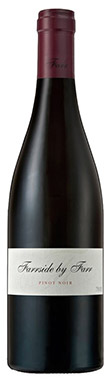
95
<p>The Farr family can take much of the credit for the current state of Australian Pinot Noir. Firstly through his work as winemaker at Bannockburn Vineyards and then at the helm of the family estate in Geelong, Gary Farr has relentlessly championed a better understanding and deep appreciation for Pinot Noir in Australia. His complete dedication has taken him to Burgundy on regular vintages at Domaine Dujac in Morey-St-Denis and his uncompromising approach has earned him widespread respect. His son Nick has followed in his commanding boot steps. The Farrside vineyard was planted in 2001 to a variety of clones on black volcanic soil over limestone.</p> <p> </p> <p><em><strong>Roger Jones</strong></em><br /> Gorgeous ripe berries are intense but controlled from nose to palate. Then a fresh meaty note adds a touch of savouriness, lingering on the long finish along with with gently grilled rhubarb and custard.</p> <p> </p> <p><em><strong>Justin Knock</strong></em><br /> Ripe – like it’s from another world. Pure fruited and dark toned with coffee and chocolate notes. Earthy and spicy, with genuine complexity. Dusty and quite long, with a lick of warmth. Trying very hard.</p> <p><br /> <br /> <em><strong>Anthony Rose</strong></em><br /> Fine, fresh, raspberry-like Pinot Noir perfume. It’s complex and attractively bright with succulently juicy mulberry fruit richness, a lively savoury edge and finely integrated oak. Fine overall balance.</p>
2012
By Farr
Gembrook Hill, Pinot Noir, Yarra Valley, Victoria, Australia, 2012
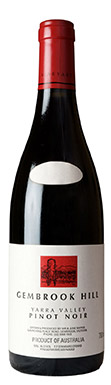
95
<p>One of the pioneering family estates of the Upper Yarra Valley, Gembrook Hill is a prime example of an estate-based approach to making high-quality, cool-climate wine. Founded in 1983 by Ian and June Marks, the distinctive quality of the Pinot Noir made here is a combination of a great site, a mature vineyard, attentive viticulture and the uncompromising, purist approach of winemaker Timo Mayer, who has been joined in recent vintages by the second generation, Andrew Marks. The power and elegance that the wines of Gembrook Hill attain is a hallmark quality of Upper Yarra Valley terroir.</p> <p> </p> <p><em><strong>Roger Jones</strong></em><br /> Bright, fresh intensity of red berries and shortbread. It’s rich and velvety with lots of layers and savoury nuances – seems quite youthful. A lovely, well-made wine with a great savoury spice quality. Be sure to decant.</p> <p> </p> <p><em><strong>Justin Knock</strong></em><br /> Serious, complex, savoury and aromatic – has wide appeal while still being challenging. Smoky briar fruit and poached red fruits – seamless and textured. Bright acidity and tangy persimmon tannins. Wonderful.</p> <p> </p> <p><strong><em>Anthony Rose</em></strong><br /> Classic, juicy, succulent Pinot Noir with rich strawberry fruit, a touch of cool-climate pepper, fresh acidity and lively succulence of silky textured ripe fruit combined with a savoury fresh finish. Real finesse.</p>
2012
Gembrook Hill
Pike & Joyce, Pinot Noir, Adelaide Hills, South Australia, Australia, 2012
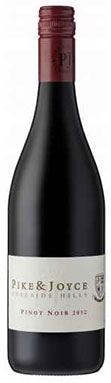
95
<p>Established in the ultra-cool, high-elevation village of Lenswood, the Pike & Joyce project is a joint venture between two families of differing origins and experience. The Pike family has a pedigree of high-quality wine production in the Clare Valley and the Joyce family are fifth generation horticulturalists that joined together by marriage and teamed up to establish this 25-hectare estate in 1998. Pinot Noir and Chardonnay have demonstrated they are ideally suited to the terroir here, boosted to a new pinnacle by the outstanding 2012 vintage.</p> <p> </p> <p><em><strong>Roger Jones</strong></em><br /> Sweet and delicate palate with great balance between controlled fruit and silky smooth oak. Hints of Asian spices; this would be great with Peking duck as you get lovely Chinese plum jam nuances from this. Complete.</p> <p> </p> <p><em><strong>Justin Knock</strong></em><br /> Showstopping whole-bunch aromatics. Autumnal wood smoke, Lapsang Souchong tea, lavender and beautiful yet indefinable red fruits. Really sublime, classy and complex; almost otherworldly.</p> <p> </p> <p><em><strong>Anthony Rose</strong></em><br /> Fine strawberry aromatic quality with lovely spicy oak. There is a seductively juicy mulberry fruit richness, incisive acidity and firm tannins with a firm dry, savoury feel to the finish.</p>
2012
Pike & Joyce
Port Phillip Estate, Red Hill, Mornington Peninsula, Victoria, Australia, 2012
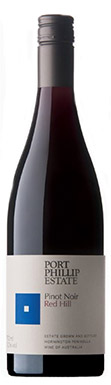
92
Seductive nose of delicate rhubarb crumble, shortbread and violets. It’s full of energy on the palate as it dances with freshness and racy acidity and gives a crisp berry bite on the finish.
2012
Port Phillip Estate
Tasmanian Hill, Pinot Noir, Tasmania, Australia, 2013
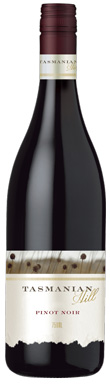
91
Dusty summer fruits are layered with vanilla and herbaceous characters. Beautifully elegant palate, evenly weighted and slightly sinuous. Meanders to a delightful sandy finish. Very good wine.
2013
Tasmanian Hill
Yabby Lake, Single Vineyard Pinot Noir, Mornington Peninsula, Victoria, Australia, 2013
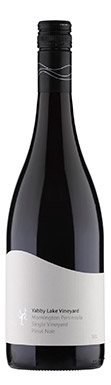
91
Serious, sensual and sinuous with an attractive mulberry aroma. The palate has densely packed fruit buried among the classy tannins, and a gentle caramel underlay. Complex, controlled and ageworthy.
2013
Yabby Lake
Dawson & James, Pinot Noir, Tasmania, Australia, 2010
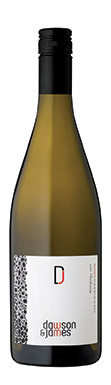
90
An old-fashioned heavyweight: savoury plums, wood smoke and fennel. This is packed with juicy berries and great balance. Nicely mature, slightly gamey Pinot Noir with a touch of underlying oak spice. Satisfying finish.
2010
Dawson & James
De Bortoli, Estate Grown Dixons Creek Vineyard, Yarra Valley, Victoria, Australia, 2012
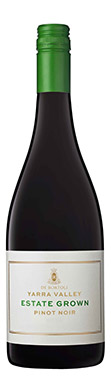
90
<p>Great quality, savoury Pinot Noir fruit that’s bright and pure with an elegant, almost effortless freshness and fine balance. Subtle, long aftertaste with a hint of well-integrated tannins.</p>
2012
De Bortoli
Deviation Road, Pinot Noir, Adelaide Hills, South Australia, Australia, 2012
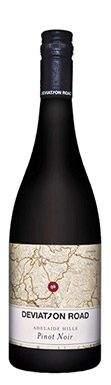
90
<p>Aromatic rose petal and dark berry fruits fill the nose. There’s some sweet vanilla extract on the back palate with hints of fruit cordial, but the structure carries it well, leading to a fresh berry aftertaste. Really classy and refined – a seamless, berry-focused wine.</p>
2012
Deviation Road
Grosset, Pinot Noir, Adelaide Hills, South Australia, Australia, 2012
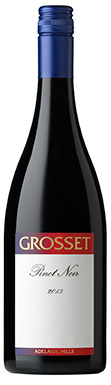
90
Sweetly ripe strawberry fruit scent. Lovely intensity of ripe Morello cherries, liquorice and loganberry. A voluptuous wine with freshness and a fresh, succulently textured finish.
2012
Grosset
Shaw & Smith, Pinot Noir, Adelaide Hills, South Australia, Australia, 2013
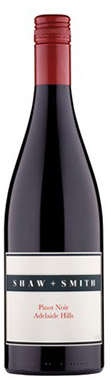
90
Ripe, sweet, pure-fruited style. Refreshing acidity but deep flavours of fresh young cherries. Silky, textured tannins, elegantly styled with a lively savoury fresh bite.
2013
Shaw & Smith
Freycinet Vineyard, Pinot Noir, Tasmania, Australia, 2013
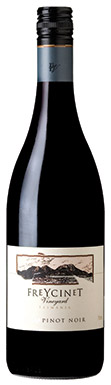
90
Powerful and lifted: real aromatic presence with a touch of marzipan and cherry. A well-crafted Pinot with firm structure from a solid backbone of tannins and fresh acidity and overall good balance.
2013
Freycinet Vineyard
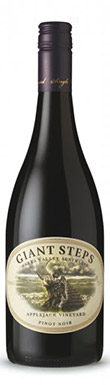
Giant Steps, Applejack Vineyard, Yarra Valley, Victoria, Australia, 2012
90
The nose has a wild complexity and an earthy, savoury structure. A touch of plum and marzipan on the palate with wild thyme and cherry. Seductively glossy, textured and juicy fresh berry fruit flavours with well-integrated oak.
2012
Giant Steps
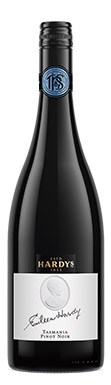
Hardy’s, Eileen Hardy, Tasmania, Australia, 2012
90
Intense, savoury, meaty nose and pretty, perfumed nuances. Herby palate with some attractive red fruit characters and a mouthfeel that is is long and full of exciting spices. This is an upright, distinctive, tangy style.
2012
Hardy’s
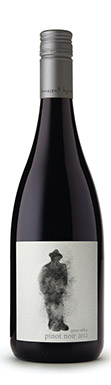
Innocent Bystander, Pinot Noir, Yarra Valley, Victoria, Australia, 2012
90
Intense, aromatic quality of bright raspberry and mulberry. This is very stylish with lots of fruit and structure. It has depth of flavour and a fine streak of incisive, almost mineral acidity. Very long.
2012
Innocent Bystander
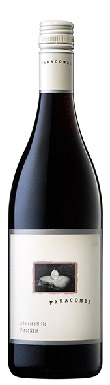
Paracombe Wines, Pinot Noir, Adelaide Hills, South Australia, Australia, 2013
90
Nice, cool-climate freshness and raspberry fruit juiciness leading from nose to palate. It’s clean, fresh and full of mouthwateringly crisp red berry fruitiness.
2013
Paracombe Wines
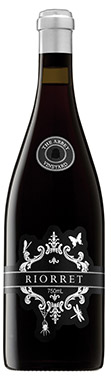
Riorret, The Abbey, Yarra Valley, Victoria, Australia, 2012
90
Exciting freshness on the palate combined with savoury, meaty notes offering lovely complexity. It has a firm structure of grippy tannins and fine acid backbone – well-made with nicely integrated oak.
2012
Riorret