Crus bourgeois 2010: panel tasting results
See the top Cru Bourgeois 2010 wines tasted by Decanter's trio of experts...

The 260 crus bourgeois are a natural hunting ground for those who can’t afford the high prices that 2010 commands among the Médoc classed growths, says Jane Anson...
The architect’s vintage: 2010. Physical wines with angles, depth, length and width, packed with the Bordeaux holy trinity of tannins, fruit and acidity.
At least, that’s the theory. Many wines had been challenging en primeur for precisely those reasons – this was a big vintage that suited estates that were willing to take a chance on the brilliant raw materials that nature had provided, but many wines were going to need time and patience to grow into themselves.
All grape varieties reached excellent maturity, meaning both Left and Right Bank gave great wines, but the long growing season seemed particularly to suit Cabernet Sauvignon, with many estates putting record percentages of the grape in their blend.
There were some problems in the growing season that might have affected some of the wines in our tasting, despite the scientific analyses looking nearly perfect.
Chief among these was coulure (poor berry set) during flowering, water stress and excessive heat, which in some cases led to vines shutting down and stopping photosynthesis and prevented ripening. Many young vines suffered so much that the best estates simply declassified their wine – one of the reasons that quantities were on average between 10% and 30% down from 2009.
All of which should benefit the crus bourgeois of the Médoc. Retasting them two years on, now that they are in bottle and trickling out on to the market, should be an enjoyable experience.
Some 260 châteaux were included in the cru bourgeois selection for the 2010 vintage, the third year of the new system. In 2009 there were 246, which suggests that the quality of 2010 surpassed even that of 2009.
Open to all eight Médoc appellations – 4,400 hectares of vines in ACs Médoc, Haut-Médoc, Listrac-Médoc, Moulis, Margaux, Pauillac and St-Estèphe – the judging takes place two years after the vintage. This 2010 selection was announced in September 2012. All wines are tasted blind for the annual selection, and châteaux must also follow a quality charter to be eligible for submission to the tasting.
Good value
There is one compelling reason for buying crus bourgeois this year: prices of the 2010 Médoc classed growths went through the roof, and even with recent price drops are still often significantly higher than they would have been a few years ago. This gives a window of opportunity for the crus bourgeois – and indeed for us.
There are hesitations, however. Things haven’t always been easy for the cru bourgeois – the association is still trying to attract back those big-name châteaux (mainly the former exceptionnels and supérieurs) which chose not to join the new system, and there is a distinct lack of estates in some of the more prestigious appellations (just five in Pauillac and none in St-Julien).
Nevertheless, the association offers a worthwhile way to make sense of the many smaller châteaux outside of the 1855 classification, and the name ‘cru bourgeois’ should provide a reliable signpost for buyers.
The scores
166 wines tasted
Outstanding 0
Highly recommended 14
Recommended 141
Fair 11
Poor 0
Faulty 0
Overall the panel was impressed: the tasting definitely delivered what they expected. Stephen Brook summed it up perfectly: ‘It demonstrated that 2010 is a seriously good vintage. It was a cool year, so producers had to wait for the acidities to drop, which meant the grapes had sugar ripeness combined with pretty high acidity and high tannins.’
Steven Spurrier added: ‘I think consumers should be really happy with this vintage; it’s a classic Médoc year and the wines overall showed extremely well.’
Though there were no outstanding wines, an amazing 92% were recommended. As Ronan Sayburn MS explained: ‘I can’t say I was surprised by the outcome. We didn’t have any superstars, but we didn’t have any rubbish either; it was all in the middle band where it should be.’
Margaux and Haut-Médoc were the two clear favourites. ‘Sleek’, ‘elegant’, ‘charming’, ‘delightful’, were words used to describe Margaux. As the panel expected, Haut-Médoc was also a good performer; Spurrier explained that ‘the wines had more class, better grip and more length’ than those from the Médoc.
St-Estèphe drew mixed opinions. Brook found them difficult to taste: ‘They had meatier, much tougher tannins and some wines were too extracted.’
Spurrier, however, argued that ‘this vintage probably favoured the north, because the northern vineyards had to hang on to ripen the grapes. Sure, they are tough and a bit leathery, but really quite impressive.’ Sayburn felt the wines were typically St-Estèphe: ‘I found them a little bit rustic, heavy and quite full-bodied, but they are wines that need to be looked at in context and served with the correct food.’
Médoc, the largest of the communes, did surprise our panel. Spurrier commented that ‘Médoc, being so far north, can struggle to get the ripeness but with a little bit of global warming, a little bit of modernity, those wines were really nice.’
Brook agreed: ‘Médoc is such a huge area that it’s difficult to generalise, but the wines had freshness rather than depth; I was expecting some herbaceous wines but I was very pleasantly surprised.’
Moulis also impressed, said Brook: ‘The wines were suave; they were powerful, well-made and polished’. Listrac didn’t charm so much, and lacked consistency. Spurrier had been thinking that Listrac was catching up with Moulis, ‘but in this tasting that didn’t show. They were very Listrac in the sense that they were a bit tough’.
The panel was unanimous: these wines offer excellent value for money for mid-term drinking. ‘With a few exceptions, we are looking at £15–£20, and as long as consumers pick carefully and follow our recommendations, there are some very good wines there,’ said Brook. ‘I didn’t note any of them as improving for more than 10 years, but the best of them will keep for much longer than that. But I think most people would want to drink them within seven to 10 years.’
What about the value of cru bourgeois as a classification?
Sayburn believes it’s good for consumers because it’s ‘above the run-of-the-mill Bordeaux and under the classed growths; it’s where a lot of exciting things are happening in Bordeaux.’ That ‘cru bourgeois’ is now a seal of approval given every year explains the paucity of bad wines. ‘The problem’, said Brook, ‘is that the list is going to change every year: that’s confusing for consumers.’
Spurrier agreed: ‘In my view, crus bourgeois has lost its validity as a classification. It’s now just a rubber stamp.’
Conclusion
In theory, the Médoc crus bourgeois should have been perfectly placed to take advantage of 2010, because the vintage meant rich tannins and well-ripened fruit flavours, together with the shot of acidity that Cabernet Sauvignon responds to so well. It’s worth remembering that most of these are recently bottled, and that such a big vintage is inevitably going through a ‘dumb’ phase, when the wines close down for a few years, before tannins soften and the wines start to reach their potential.
But we might still expect to have seen at least one or two Outstanding wines. And of the 14 wines rated Highly Recommended (out of a tasting of 166), only La Fleur Peyrabon, Les Ormes de Pez, Belle-Vue, Mongravey and Caronne-Ste-Gemme can be said to be big names with a consistent track record. By appellation, just one Margaux and one Pauillac were awarded the highest scores.
Special mention should go to Château St-Aubin and Château de Panigon – both AC Médocs that were extremely impressive. The most lauded wine of the tasting, Château Larose Perganson, is a great buy at £18–£20. With vines next door to Château Batailley, and certain plots of Ducru-Beaucaillou, this offers serious Haut-Médoc pleasure and should last for at least the next decade, if not longer.
Château Belle-Vue tops our 30 marked ‘good value’ wines for £13 and under; the most expensive wine, Château Phélan-Ségur from St-Estèphe at £30–£37, scoring almost two full points lower, seems a stretch in comparison.
With St-Estèphe estates on both the Recommended and Fair lists, it may be that they suffered in 2010 – as some big names in St-Estèphe did – from severe water stress and coulure. The third growth Calon-Ségur, for example, made a wonderful wine in 2010 in tiny quantities, but it may be that the neighbouring St-Estèphe estates didn’t have the financial means to select so drastically.
Other big names – Potensac, Le Boscq, Lilian Ladouys, Fonréaud, Château de Pez and more – made it to the Recommended list. There were many well-performing wines that would not disappoint upon opening and which offer an affordable way in to 2010. But this tasting seems to underline that the association, for all its achievements, is missing its former star players.
Top crus bourgeois 2010 wines from the panel tasting:
Published in the February 2013 issue of Decanter magazine
Château Larose Perganson, Haut-Médoc, Bordeaux, France, 2010
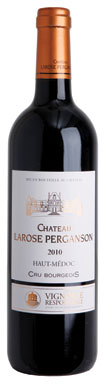
93
<p>Forward new oak on the nose with vanilla, powerful black fruits and violets. Rich, flamboyant, concentrated, complex and spicy, with bags of vigour, tight and structured, peppery and long. Shows the character of the Haut-Médoc in the best way. Very, very good.</p>
2010
Château Larose PergansonHaut-Médoc
Château Belle-Vue, Bordeaux, France, 2010
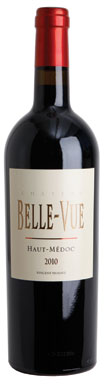
90
Fine nose with smart oak integration and notes of cream, toffee, graphite, pencil shavings and wild black fruits. Rich, full-bodied, concentrated, with hefty but ripe tannins. Has a marked torrefied character from the oak, but this, too, adds character. This doesn’t play safe and has energy and punch.
2010
Château Belle-Vue
Chateau Caronne Ste-Gemme, Bordeaux, France, 2010
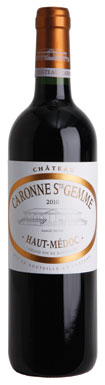
90
Lush but lifted blackberry nose, with a hint of menthol, Cabernet black fruits and earth. Medium-bodied, silky, fine acidity, an elegant rather than massive style, with a clean, almost tangy finish.
2010
Chateau Caronne Ste-Gemme
Château de Panigon, Bordeaux, France, 2010
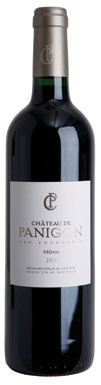
90
<p>Delicate nose, some graphite and tobacco, smoky oak, hint of bitter chocolate and ample black fruits lurking. Plump, firm, concentrated, this has weight and structure, with a firm elegance on the finish. Should have more staying power than most and needs some time to harmonise.</p>
2010
Château de Panigon
Chateau Labat, Haut-Médoc, Bordeaux, France, 2010
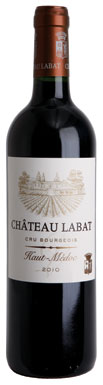
90
Dark, dense nose of coffee, chocolate, graphite, cedar and heady black fruits. Classy, fresh and full-bodied, crammed with blackcurrant fruit. Spice and zest thanks to underlying acidity, but enough grip and structure to keep the wine going.
2010
Chateau LabatHaut-Médoc
Château Le Crock, St-Estèphe, Bordeaux, France, 2010
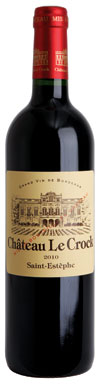
90
<p>Open, ripe, forward nose. Nicely concentrated blackcurrant fruit with rich Christmas cake fruit aromas. This isn’t subtle but it has vigour, structure, a good spicy grip on the finish, a natural sweetness and very good length with a slight St-Estèphe leatheriness.</p>
2010
Château Le CrockSt-Estèphe
Château du Moulin-à-Vent, Bordeaux, France, 2010
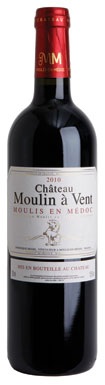
90
<p>Bright, fresh, liquorice-scented nose, with stylish oak, blackberry and blackcurrant fruit. Sleek, quite concentrated, supple tannins, and overall a polished style with ample fruit, an appealingly luxurious character and no rough edges.</p>
2010
Château du Moulin-à-Vent
Château Bibian, Haut-Médoc, Bordeaux, France, 2010
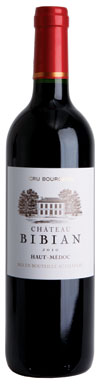
90
<p>Rich, full-bodied, generous and concentrated, with plenty of spice and vigour, thanks to keen acidity. Big, warm flavours of earthy cassis and chocolate. A well balanced wine with plenty of energy and flair; has depth, and the charm will come.</p>
2010
Château BibianHaut-Médoc
Château de Malleret, Haut-Médoc, Bordeaux, France, 2010
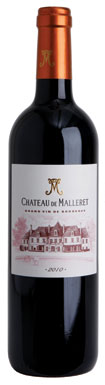

<p>A bright, fresh nose of blackcurrant is augmented by touches of quality oak, with juicy dark cherry fruit enveloped by firm yet refined tannins. Ready...
2010
Château de MalleretHaut-Médoc

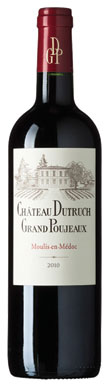
Château Dutruch Grand Poujeaux, Bordeaux, France, 2010
90
Fragrant nose of red and black berry fruits; rich and complex. A supple smoothness on the palate with typical Moulis elegance, has ample concentration of fruit without being heavyhanded. The oak gives a light chocolatey tone but it doesn’t dominate.
2010
Château Dutruch Grand Poujeaux
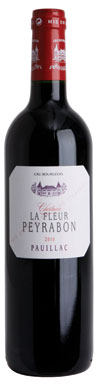
Château La Fleur Peyrabon, Pauillac, Bordeaux, France, 2010
90
<p>Earthy, fragrant blackcurrants on the nose. Rich, full-bodied, concentrated and dense, has power and swagger that compensate for the rather low acidity. An impressive mouthful of fruit with tobacco and blackcurrant flavours. Will be held together by the tannins.</p>
2010
Château La Fleur PeyrabonPauillac
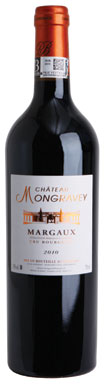
Château Mongravey, Margaux, Bordeaux, France, 2010
90
<p>Pronounced red berry fruits, lots of Cabernet influence on the nose which is creamy and shows touches of vanilla and summer berry compote. Acidity gives length and elegance. An understated style that relies on balance rather than power.</p>
2010
Château MongraveyMargaux
Château Ormes de Pez, Bordeaux, France, 2010
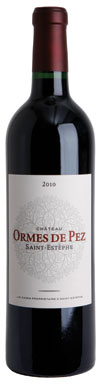
90
Reserved, tarry nose. Fine expression of ripe Cabernet fruit on the palate, with lots of grip and vigour, and no loss of elegance. Solid and elegant.
2010
Château Ormes de Pez
Château St-Aubin, Médoc, Bordeaux, France
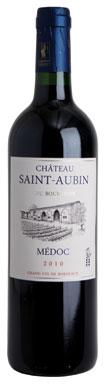
0
Soft, complex, smoky nose with forward, earthy, damson and raspberry fruits. Rich, suave, rounded, full-bodied and quite chocolatey, but there’s no lack of ripe blackberry and cassis fruit with a touch of smoky tobacco. There’s an appealing spiciness on the finish.
Château St-AubinMédoc
