Muscadet wines: Time to think again – panel tasting results


Think you know Muscadet? Think again! Our panel tasting results in the June 2017 issue of Decanter magazine have blown all expectations out of the water...
With 65% of wines scoring 90 points or more, including a perfect score from Loire expert Jim Budd, this tasting confirmed that Muscadet is back.
The scores:
113 wines tasted
Exceptional – 3
Outstanding – 8
Highly Recommended – 63
Recommended – 25
Commended – 6
Fair – 4
Poor – 1
Faulty – 3
The judges:
Jim Budd, Chris Kissack & Ben Llewelyn
Click here to view the tasting notes and scores for all 110 Muscadet with extended lees ageing
A move to recognise communes with specific soil types, aligned with wines that stay on their lees for a minimum of 17 months, has revived this Loire region.
Chris Kissack said these results proved that Muscadet’s perception as ‘a simple wine you just knock back with oysters’ was outdated and should be put to rest.
‘These are exciting, versatile wines, especially for the UK market where people appreciate fresher, more mineral, lower-alcohol wines,’ said Ben Llewelyn.
The six top-rated Muscadet with extended lees ageing:
To read Decanter’s full Panel Tasting reports, subscribe to Decanter magazine – available in print and digital.
Sur lie or not sur lie
Perversely, the 113 wines tasted here cannot be labelled ‘sur lie’ despite having spent a minimum of 17 months on their lees (dead yeast particles). According to appellation rules, this is too long.
Muscadet is usually fermented and aged in large, shallow underground vats, though stainless steel vats are also used. Oak barrels are occasionally used but remain atypical. To qualify as ‘sur lie’, wines have to spend one winter on their lees and then be bottled between 1 March and 31 December.
The next step
Following the overdue tightening up of the sur lie regulations in 1994, there were long discussions over the next quality step up. Eventually it was agreed that long lees ageing associated with particular communes with specific geological type was the way forward.
The crus
The first three crus – Clisson (granite), Gorges (gabbro) and Le Pallet (mix of granite, gneiss and gabbro) were approved in February 2011. Yields are limited to 45hl/ha.
Wines from Le Pallet have to be lees aged for a minimum of 17 months, while the minimum for Clisson and Gorges is 24 months.
Le Pallet wines tend to be fruity and forward; Clisson rich, full and flattering; and Gorges tighter and more restrained in character.
Four more cru communaux are due to be recognised: Château-Thébaud, Goulaine, Monnières-St-Fiacre and Mouzillon-Tillières – all in the Sèvre-et-Maine. Hopefully final approval will be given this summer.
There are a further three crus in the pipeline – La Haie-Fouassière and Vallet (Sèvre-et-Maine), and Champtoceaux in Muscadet Coteaux du Loire. It is expected to be at least another two years before approval is given. In time there may be two – north and south – in the Côtes de Grandlieu.
Expression
While the crus communaux may account for only 2% of Muscadet’s production, the panel was convinced they will raise the profile of the region and make consumers aware of the importance of terroir. Melon de Bourgogne may be a neutral grape variety, but it expresses its terroir well and the panel felt the relationship between the soil,
grape and lees was the distinctive mark of the wines.
Time on its side
In terms of vintages, 2014 and 2012 showed best, Kissack descibing both as having ‘energy, acidity and fruit intensity’.
Llewelyn was impressed by the older wines. ‘It’s very exciting to taste something from 2003 or 2006 which has been sitting on its lees for a long, extended period – this is Muscadet’s real calling card. Extended lees ageing gives the wine this extra dimension, texture and energy which is unique.’
These older, extended lees-aged wines demonstrate Muscadet’s ageing potential, said Budd. ‘Many will happily last to 2030, if not longer.’ He also advised aerating the wines before serving, and not to chill them excessively: ‘You want them at cellar temperature – the temperature you’d serve fine white Burgundy.’
Hard to find
The panel said behind their obvious enthusiasm over the quality of these wines, the frustration is that very few are available in the UK. However, Llewelyn said this is slowly being rectified by savvy importers. ‘And when the trade, press and consumers taste these wines, they will understand our excitement!’
Pierre Luneau-Papin, Excelsior, Muscadet, de Sèvre et Maine, Loire, France, 2007
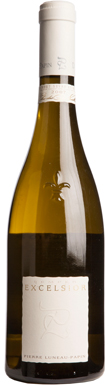

JB: Pronounced toasty aromas from lees aging and bottle age, followed by a richly textured and lightly honeyed palate with wonderful complexity and superb length....
2007
Pierre Luneau-PapinMuscadet

Poiron Dabin, Muscadet, de Sèvre et Maine, Loire, France, 2009
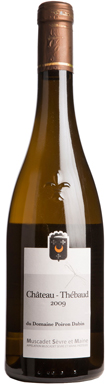
98
A rich and smoky nose amplified by a touch of brioche, leading into a powerful palate with a broad texture. A clear demonstration of how a cru wine can be very different from 'normal' Muscadet. A maturing rich fruit character, in unison with a minerally backbone fuelling a pithy grip on the long finish. An impressive, thought-provoking wine.
2009
Poiron DabinMuscadet
Vignoble Drouard, Les Templeries, Muscadet, de Sèvre et Maine, Loire, France, 2012
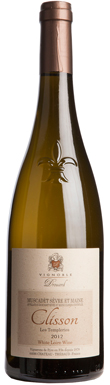
98
A well-defined, concentrated nose, augmented by notes of sea shell. A softly textured style with an exquisite harmony between creamy lees, citrus intensity and the stony influence of the vineyard's granite soils. Weighty in the mouth with a pronounced thrust of minerality. An impressive and imposing wine.
2012
Vignoble DrouardMuscadet
Bouin, Haut Clos de la Pierre, Muscadet, de Sèvre et Maine, Loire, France, 2003
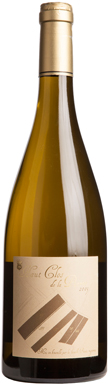
97
An intoxicating nose of dried fruits and toast, enhanced by notes of white peach and vanilla flower, mirrors the rich style and evolved character found on the palate. In the mouth, it exhibits the richness of the heatwave vintage, seamless and concentrated with broad fruit yet retains mineral freshness and uplifting acidity to allow for a long, bright finish.
2003
BouinMuscadet
Domaine David, Muscadet, de Sèvre et Maine, Loire, France, 2012
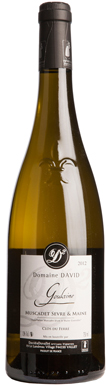
97
Honey and citrus aromas with subtle hints of white flowers. It has a fresh, clean palate with a dense seam of fruit and salty minerals; richly textured and harmonious with pleasing length. Further ageing will bring out even more; a terrific example of this cru.
2012
Domaine DavidMuscadet
Le Jardin d'Edouard, Muscadet, de Sèvre et Maine, Loire, France, 2012
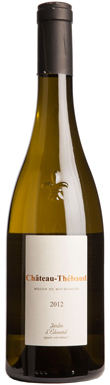
97
A smoky character on the nose, magnified by notes of white peach and salty minerals with intriguing hints of almond paste and white flowers. It has a richly textured, beautifully integrated palate with a rewarding zip of lychee and stone fruit. There is a lifted acid freshness with a satisfying, lingering finish; a very precise wine.
2012
Le Jardin d'EdouardMuscadet
