Pomerol 2010: panel tasting results
Decanter's experts taste the 2010 Pomerols...


With no classification plus varied terroirs and quality, this appellation isn’t easy to understand. But Stephen Brook says the ageworthy 2010 vintage is worth investigating...
Pomerol is not an easy region for consumers to fathom. Its terroir is extremely varied, although the greatest wines tend to come from a small plateau around the church that is mostly composed of clay and gravel soils. As the land slopes down towards the town of Libourne, the terroir becomes less distinguished, with a good deal of sand. There is nothing on the label to indicate the origin of a wine and, as so often in Bordeaux, many châteaux own parcels of vines in different sectors and blend them.
Then there is no classification. Hierarchies aren’t definitive as they omit the human factor, but they can be helpful in indicating which estates are most highly regarded. Price tends to be a reliable guide, though sometimes it reflects scarcity rather than quality. In a tasting such as this, each wine has to fight its own corner: large property against minuscule, famous against essentially unknown.
In a fine vintage, Pomerol offers perfume, charm and a discreet structure; tannins tend to be less muscular than in neighbouring St-Emilion. And 2010 was a fine year here, though Pomerol shared the vintage’s peculiar character with other regions of Bordeaux.
The hot early summer and warm but cloudy August meant that the grapes ripened steadily, so that by early September they showed good sugar levels but also very high acidity. Growers had to wait for those acidities to drop and for tannins to become less strident. And wait they did, enduring cool nights that kept those acidities stubbornly high. When the harvest began in late September, the wines were high in acidity and tannins (but not excessively) and had unusually high sugar levels.
The resulting wines can feel more like Barossa than Bordeaux, and alcohol levels of 15% or above are by no means unusual. Yet low pH levels meant that the wines have kept their vibrancy and even a degree of freshness. They are not as voluptuous as the resplendent 2009s, but the best are truly exciting.
A quality minefield
Quality is far from uniform. It never is in Pomerol, due to the varied terroir and because some growers are content to release mediocre wines in the hope that the glowing reputation of the region as a whole will pull them into saleability. At the same time there has been a growth in sophistication and quality in the appellation’s lesser districts, where even growers on unsensational terroir still strive to make balanced and enjoyable wines at a fair price.
Although the 2010 vintage followed the irresistible 2009s, producers saw no reason to lower their prices. The 2010 was different from 2009 but by no means inferior, and many consumers will prefer their greater tension and undoubted ageability. This is a vintage to cellar, at least at the top level.
Great Pomerol is never cheap: volumes are just too small. Moreover, Merlot’s fruitiness and elegance beguiles many wine lovers, so there is an avid following for the finest wines. But many less well known properties still produced excellent wines at a more than reasonable price.
But be patient: with more age the still-youthful 2010s will begin to display the truffley sexiness of mature Pomerol.
The scores
83 wines tasted
Outstanding 3
Highly recommended 14
Recommended 63
Fair 3
Poor 0
Faulty 0
The results
This tasting naturally invited comparisons with the (also highly regarded) 2009 vintage in Pomerol. 2010 offers some great wines but for the longer haul, agreed our tasters. Amy Wislocki reports…
Pomerol. the great 2010 vintage – what’s not to like? However in the event, it wasn’t quite that straightforward. ‘I found this one of the most taxing tastings I’ve ever done for Decanter,’ said Steven Spurrier.
James Lawther MW and Stephen Brook agreed, describing the tasting as ‘hard-going’ and ‘punishing’ respectively. So what was the problem?
It seemed to be twofold, down partly to the nature of the vintage, and partly to the wines not showing particularly well at this time. ‘In October 2012 I loved these wines and rated them very highly,’ recalled Brook. ‘But they seem to have closed up. Many were very unexpressive and will show a hell of a lot better in five years’ time.’
Not only that, but 2010 was very different to the accessible and supple 2009 vintage, which ‘started to give what they had to give from the outset and will no doubt continue to do so’, said Brook.
‘The 2010s are very structured, with marked acidity levels, high alcohol levels and tannins that are also very present,’ said Lawther. ‘It’s probably more uneven than 2009, and the successful wines are for long-term keeping.’
Alcohol was a recurring theme for discussion. ‘We were dealing with wines that ranged from 12.5% to 15.5% alcohol,’ observed Lawther. ‘The good wines were those at around 13.5% or 14%, because they were balanced; the acidity was there.’
Brook explained further: ‘I don’t have a problem with wines at 14% and 14.5% as long as they’re balanced, but often the higher-alcohol wines had really bruising, rugged tannins. And as for the really high-alcohol wines – there’s no reason why Pomerol in any vintage should have 15% alcohol, let alone 15.5%. It’s about winemaker choice – they’re picking too ripe, and they don’t need to do that. They’re getting too much tannin and concentration. The wines are monolithic – it’s just not what Pomerol is all about.’
So is there any evidence of what it is all about? ‘What I love about Pomerol is the red fruit purity and finesse, allied to structure and a certain opulence. There were wines that fit that template but not as many as I expected, and there were lots of wines with darker fruit, which surprised me.’
‘To me, this tasting represents a redefinition of Pomerol,’ said Spurrier. ‘In the old days, the 1970s and 1980s, it was overproduced, soft Merlot with no grip. Here we have wines that have tremendous vigour and grip, a good youthful colour, and many with that irony hallmark of Pomerol. These were still Merlot wines, but they were Pomerol wines.’
Brook expressed a concern that some wines lacked typicity. ‘Many will come from the weaker sandy soils that make agreeable but not very distinguished wines, and I wonder whether the extreme climatic conditions will have obliterated some of the differences.’
Spurrier was more upbeat. ‘The traditional view was that Pomerol had perhaps a dozen great properties and the rest was rubbish. But there were a lot of brilliant wines here, wines that were very Pomerol. In my view, this vintage is the new Pomerol.’
So when will these wines be ready to broach? Pomerol evolves quite early compared to the Médoc, said Spurrier, and these should be nice to drink in just a few years. ‘But will they be great Pomerols?’ challenged Brook. ‘You need 10 years for the truffley aromas to emerge. I’m not saying you won’t enjoy these wines in five years’ time, but you’ll get much more out of them in 10 or 12 years.’
Expert summary: Stephen Brook
You need to tread carefully in Pomerol to avoid making a costly mistake, but there are some fine wines available at fair prices from both known and more obscure estates.
The results of this tasting didn’t bring any major surprises. The best-known properties fared well, though as always with Pomerol the list is scattered with more obscure names.
Many of the most celebrated wines didn’t enter this tasting, though one outstanding property, La Conseillante, has been rewarded for its courage in participating; another top estate, Clinet, also did well, if not so spectacularly.
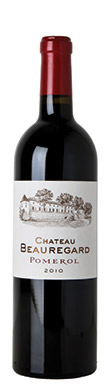
But there was a solid showing by so-called second-tier estates: Beauregard, Nénin, Vray Croix de Gay, Bon Pasteur, Clos du Clocher, Clos l’Eglise, Fleur de Gay and Gazin. Only one of the major estates disappointed: Petit-Village.
Many of the other wines in the bottom third of the rankings were in fact second wines from good estates such as Nénin, Clinet, Pomeaux and Vray Croix de Gay. Even among those lower rankings there were hardly any mediocre wines – a testament either to the quality of the vintage or to the improvements in winemaking in Pomerol in recent years.
The panel didn’t seem to show any obvious preference for one style over another. The top wines included the oaky, garagiste Le Moulin as well as more traditional styles. Wines that are rich and full can be admired alongside others that are perfumed and poised. Both are perfectly acceptable expressions of the Pomerol terroirs.
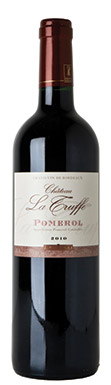
What the tasting clearly demonstrated was that, despite Pomerol’s reputation for producing exceedingly expensive wines – Pétrus, Trotanoy, Lafleur, Vieux Château Certan – you don’t need to spend a fortune for a really pleasurable wine from here. Far less costly wines, such as La Truffe, Beau Soleil, Mazeyres, Franc-Maillet and Vieux Maillet, all showed well.
There have been some changes in ownership in recent years, which may account for a few unexpected results. The rising star, Gouprie, showed well, as it did in 2009, but the panel wasn’t convinced that its all-Merlot, all new oak Excellence cuvée was actually superior to the regular wine.
The new estate Altimar wasn’t among the favourite wines, but, like the 2009, it shows great promise.
La Pointe and L’Enclos, both of which changed hands a few years ago, disappointed in the sense that the dedication of the new owners should have been more evident in the wines by now.
Another newish property, L’Ecuyer, got off to a good start in 2004 but seems to be faltering in recent vintages.
Top Pomerol 2010 wines from the panel tasting:
Published in the December 2013 issue of Decanter magazine.
Château La Conseillante, Pomerol, Bordeaux, France, 2010
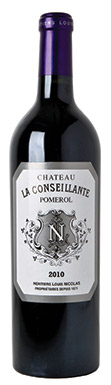

A little darker and deeper in colour than the 2009 at this stage, but both remain young, fresh and full of promise. The depth to...
2010
Château La ConseillantePomerol

Château La Truffe, Pomerol, Bordeaux, France, 2010
95
Sweet, juicy, oaky nose, the cherry fruit, has flair and charm. Quite rich and succulent, with good density of fruit. Not an extracted style yet it has ample structure and grip, with firm but refined tannins, and the acidity gives it drive, elegance, and lenght. Lovely, poised and complex wine.
2010
Château La TruffePomerol
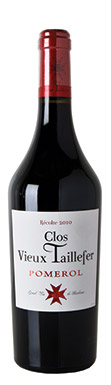
Clos Vieux Taillefer, Pomerol, Bordeaux, France, 2010
95
<p>In the Robin family since 1768, this four-hectare estate lies on sandy soils and thus not in the top sector. About 10% of the vines are Cabernet Franc, the remainder Merlot, with an average age of 40 years. These old vines, careful sorting, and a good dose of new oak – all under the supervision of consultant Stéphane Derenoncourt – have resulted in excellent wines in recent vintages. The wine is aged in 60% new oak for 14 months. About 18,000 bottles are made each year, and there’s no second wine. The Robins have recently bought Château Rol Valentin in St-Émilion from retired French footballer Eric Prisette.</p> <p> </p> <p><em><strong>Stephen Brook</strong></em><br /> Intense red fruit nose alongside pungent and lifted, stylish oak. Fine attack, very concentrated, with marked acidity. It’s ungainly now but all the components seem in place. Tight and unyielding, but it should flesh out with more bottle age. Has great tension and persistence.</p> <p> </p> <p><em><strong>James Lawther MW</strong></em><br /> Fragrant red fruit nose. Firm and fresh. Acidity marked. Firm, dry finish. Tight and reserved at present. Clear potential for ageing.</p> <p> </p> <p><em><strong>Steven Spurrier</strong></em><br /> Good depth of red berry fruit, vigour, grip and balance. Firm tannins will keep the freshness and good vineyard character. Shows the true iron in the Pomerol heart.</p>
2010
Clos Vieux TailleferPomerol
Château Beauregard, Pomerol, Bordeaux, France, 2010
95
Tighter and more chewy than the 2009, less ready to drink - the two are perfect reflections of their vintage. I love this, it's the most Pomerol to date in terms of its plush tannins and texture, and its throbbingly dark chocolate-laced fruits. Feels silky and seductive, but still with the balance and mouthwatering final finish that Beauregard does so well. Needs a carafe if drinking soon because there is still austerity here.
2010
Château BeauregardPomerol
Château Nénin, Pomerol, Bordeaux, France, 2010
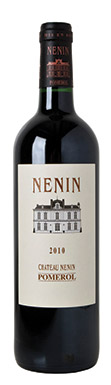
91
Very good, yet clear and clean blackcurrant fruit. Nice touch of iron on the palate. Plump, rounded, fleshy and succulent, but it avoids heaviness thanks to the lively acidity. Ripe tannins give structure and there’s a distinct earthiness that is actually quite appealing.
2010
Château NéninPomerol
Château Gombaude-Guillot, Pomerol, Bordeaux, France, 2010
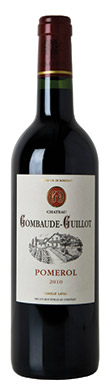
90
Vibrant red fruits nose, with lots of vigour and a nice touch of earthiness. Medium-bodied, sleek, fresh and intense, with considerable purity of fruit. It’s not that weighty but it has exemplary balance and zest.
2010
Château Gombaude-GuillotPomerol
Château Vray Croix de Gay, Pomerol, Bordeaux, France, 2010
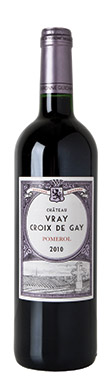
90
Almost minty freshness on the nose. Quite rich, broad and solid, with good depth of fruit and high acidity to balance it. Fleshy red, earthy fruit palate with a good future. Elegant and poised with plenty of lift and drive.
2010
Château Vray Croix de GayPomerol
Domaine de L'Eglise, Pomerol, Bordeaux, France, 2010
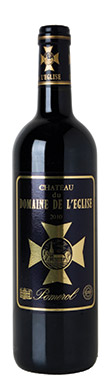
90
<p>Discreet mocha and savoury nose; some toasty oak here. Broad, rounded and fleshy, with good weight of fruit and ample generosity. Opulent fruit on the palate. Has drive and length but tight and restrained at present. Firm, long finish.</p>
2010
Domaine de L'EglisePomerol
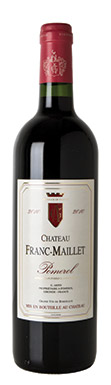
Château Franc-Maillet, Pomerol, Bordeaux, France, 2010
90
Raspberry coulis nose, very ripe with a touch of mint. Rich, velvety and concentrated, with fine depth of fruit. A sumptuous style that’s packed with fruit, but also has enough acidity to give it some freshness.
2010
Château Franc-MailletPomerol
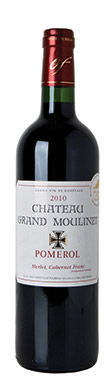
Château Grand Moulinet, Pomerol, Bordeaux, France, 2010
90
<p>Concentrated, bitter chocolate nose, with nice depth of black fruits. Suave and full on the palate. Layers of dark fruit. Good fruit weight. An appealing wine with good acidity and length. It has all the components for the long haul.</p>
2010
Château Grand MoulinetPomerol
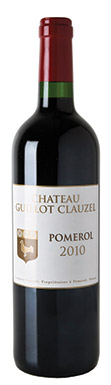
Château Guillot Clauzel, Pomerol, Bordeaux, France, 2010
90
<p>Lively, fresh, red berry fruit nose, with a lifted earthiness typical of Pomerol. Good, rich extraction but not over-extracted. Robust and spicy, with considerable vigour and substance. It may not be subtle, but it has energy and persistence.</p>
2010
Château Guillot ClauzelPomerol
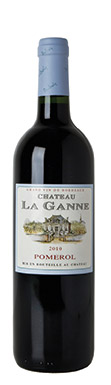
Château La Ganne, Pomerol, Bordeaux, France, 2010
90
<p>Attractive florality of red and black fruits. Good firmness and vigour on the palate, with clarity, freshness and grip. Sleek and supple but not overly sumptuous, as there’s restraining acidity to keep it taut. Definite ageing potential. Big but balanced.</p>
2010
Château La GannePomerol
Château Le Bon Pasteur, Pomerol, Bordeaux, France, 2010
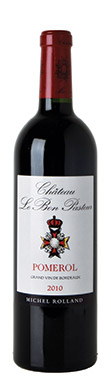
17.5
<p>Fragrant and lifted red fruits on the nose and really lovely fragrance on the palate, while maintaining vineyard vigour. Rich, supple, juicy and concentrated, with firm underlying tannins and a peppery tone on the aftertaste that cuts the overt fruitiness.</p>
2010
Château Le Bon PasteurPomerol
Château Monregard la Croix, Pomerol, Bordeaux, France, 2010
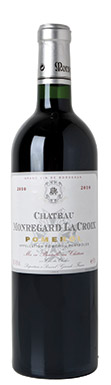
17.25
Spicy meaty, raspberry nose, this has vigour and some floral charm. Nice spice and an earthy/ irony depth, good smooth fruit on the palate with great grip. There’s an overall freshness to the wine, despite its power. Long, elegant, mineral finish. Very Pomerol!
2010
Château Monregard la CroixPomerol
Château Pierhem, Pomerol, Bordeaux, France, 2010
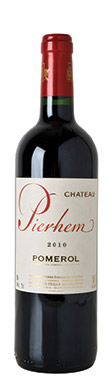
17.5
Vibrantly toasty nose, with cherry and blackberry aromas. Richness and depth on the palate and a touch of black chocolate. Sophisticated in style. Lovely, fragrant fruit. Poised and long. Firm but polished tannins; a seductively modern Pomerol with a good future.
2010
Château PierhemPomerol
Clos du Clocher, Pomerol, Bordeaux, France, 2010
17
<p>Ripe and appealing on the nose. Modern allure. Suave, concentrated and lavishly fruity, with no excessive extraction. Very good clarity and depth of fruit, purity, length and natural vigour. A very good wine and there’s plenty of grip on the finish.</p>
2010
Clos du ClocherPomerol
