From qvevri to glass: The fascinating journey of Georgian orange wine
A wine that has the structure of red, the brightness of white, and a sense of history that spans millennia – explore one of the world’s most distinctive and delicious wines from Georgia.


Georgian orange wine – or amber wine – is traditionally made from native grapes in buried clay qvevri. The wines offer the structure of red, the brightness of white, and a sense of history that spans millennia. They are some of the world’s most distinctive and delicious wines for wine lovers to explore.
Where does orange wine sit between white, rosé and red?
Not so long ago, wine lists were divided between red, white, sparkling and sweet. In the past two decades, rosé and orange wines have joined that line-up, each developing a distinct following.
To understand orange wine, it helps to see where it sits on a spectrum. If modern reds and whites occupy opposite ends, rosé and orange meet near the centre. Rosé leans towards white: it’s a white wine made from red grapes, served and drunk like a white. Orange leans towards red: a red-style wine made from white grapes, best served and enjoyed like a light red.
Another name for orange wine is skin-contact or skin-macerated wine. In Georgia, qvevri-made orange wine has a history reaching back around 8,000 years, making it one of the world’s oldest continuously practiced winemaking traditions.
The defining element of an orange wine isn’t the colour but the method: fermenting and ageing white grapes with their skins, just as red wines are made, to extract tannin, texture and depth.

What is qvevri winemaking?
In Georgia, qvevri (pronounced KWEH-vree) is the vessel at the heart of traditional orange-wine production – although today only a small fraction of the country’s total wine output is made in qvevri.
Made by hand from clay, qvevri vary in size: the largest hold 1,500–2,000 litres and are typically used for fermentation, while smaller ones of around 800 litres are often reserved for maturation. Once buried in the ground, they provide natural temperature regulation throughout fermentation. This ancient practice is so integral to Georgian identity that qvevri winemaking is recognised by UNESCO as part of the world’s intangible cultural heritage.
The traditional process begins with crushing the grapes – often including the stems – and pouring everything into the qvevri. The must is stirred daily to ensure even extraction, and fermentation may last up to forty days. Once it finishes, the skins and seeds settle to the bottom, forming the chacha or gross lees. The qvevri is then sealed and left through the winter. In spring, the clay lid is broken open and the wine is drawn off, often into smaller qvevri for ageing.
This combination of buried clay vessels and indigenous Georgian grapes defines traditional-style Georgian orange wines. Similar wines can certainly be made in oak, concrete or stainless steel, and while they can still be excellent, arguably few replicate the qvevri’s distinctive texture and balance.
Major Georgian orange wine regions
Three regions dominate Georgian orange-wine production:
Kakheti, in the south-east, produces around three-quarters of the country’s wine. Grapes are often fermented with stems, giving deep, savoury styles with firm tannins and remarkable longevity.
Kartli, around Tbilisi, sits between Kakheti and Imereti and produces slightly lighter, more delicate wines with less grip but greater freshness.
Imereti, closer to the Black Sea, uses smaller qvevri and generally omits stems, yielding fresher, softer orange wines with a lighter touch.

Georgian grape varieties for orange wine
The tannin in orange wine comes from the skins and stems of the grape, so both grape variety and winemaking technique shape the final structure. Around thirty native Georgian grapes are grown commercially, but the most common for orange wines are Rkatsiteli, Kisi, Mtsvane, Khikhvi and Tsolikouri.
Rkatsiteli (er-kaht-see-TEH-lee) – Georgia’s most planted grape and one of its most versatile. Produces orange wines with balanced acidity, fine tannins and spice.
Kisi (KEE-see) – gentler and higher in acidity, with a more supple structure.
Mtsvane (mts-VAH-neh, Mtsvane Kakhuri) – bold and structured, with firm tannins and herbal, waxy notes that soften with age.
Khikhvi (k’HIK-vee) – rare but distinctive, marked by floral, honeyed characters.
Tsolikouri (tsoh-lee-KOO-ree) – the key variety in western Imereti, making graceful, refreshing orange wines with delicate fruit and bright acidity.

How to pair orange wine with food
Orange wines have flavours and textures unfamiliar to many western drinkers, and tasting one for the first time can feel like discovering a new cuisine. They behave more like light reds than whites, and the best orange wine food pairings reflect that mix of tannin, texture and savoury depth.
As a result, it can be hard to know how to serve Georgian orange wines or what to pair them with. In general, they work well with dishes that might suit either a fuller white or a light red.
Roast pork is an excellent choice, its richness complementing the dried-fruit and golden-apple notes typical of Kakhetian orange wines. Orange wines also pair beautifully with Georgian walnut-based dishes, as well as aubergine, tahini, pulses and chickpeas. They flatter gently spiced North African and Middle Eastern vegetable dishes like tagines and work well with nut-based or ghee-rich curries.
They can complement certain Asian cuisines, particularly those using miso, sesame or soy, but tend to clash with chilli or wasabi, which heighten tannin and dryness. Their medium to full body can overwhelm delicate seafood, although richer, spiced fish dishes such as Sardinian sarde a beccafico (stuffed sardines) can work well.
How to serve orange wine
Use large glasses and serve it cool but not fridge-cold, as you would a light red. Over-chilling emphasises tannin and mutes aroma – the bottle should feel cool to the touch, but not icy. The wines often open up with air, so take your time and you’ll get the most out of one of the world’s most unique and delicious wine styles.
Georgian orange wines: Nine to try
Try eight qvevri-aged and one steel-tank-aged orange wine from Georgia. All are available in the UK.
Related articles
The marvellous world of orange wines
March 2025 issue: Andrew Jefford on Georgia
Qvevri wines from Georgia: A winemaking story and 12 wines to try
Nareklishvili & Son's, Kisi Qvevri, Kakheti, Georgia, 2022
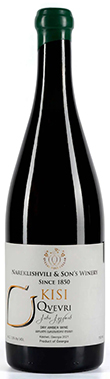

If you like to jump in at the deep end, Narekishvili’s Kisi is a mind-expanding amber wine that offers a hugely spicy nose with a hit of white pepper, caraway and coriander seed alongside caramelised parsnips and baked yellow plums. The palate startles with its contrasting and intense flavour of braised fennel, which builds to a liquorice-like crescendo on the finish. If you’ve not had qvevri wine before, beginning here would be a little like trying to understand painting by starting with Picasso, but for the brave or adventurous, this is a wild, entertaining ride of a wine.
2022
Nareklishvili & Son's

Baia’s Wine, Tsitska-Tsolikouri-Krakhuna, Imereti, Georgia, 2022
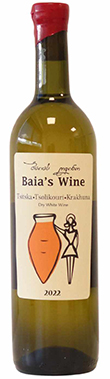
A classic Imeretian blend of around two-thirds Tsolikouri and one-third Tsitska, this offers a very different profile to wines from Kakheti. The tannins are present, giving a faint friction on the palate, but the fruit profile is altogether fresher, with pear juice and red apple notes and a lick of appealing freshness. Although Imereti’s wines can be hard to find, they offer a different, less structural qvevri style than those from Kakheti.
2022
Baia’s Wine
Mildiani Family Winery, Qvevri Bouquet Khikhvi, Kakheti, Georgia, 2018
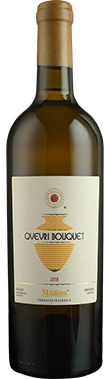
Khikhvi is likely to be a love-it-or-hate-it variety, but the pleasure lies entirely in its perfume, somewhere between the spices of the bazaar and the perfumes of the Orient. There is something about its decadent nose of jasmine tea, lilies and orange blossom honey that marks it out as one of the most distinctive and immediately recognisable varieties in qvevri wines. Having had time in bottle, the tannins are essentially resolved, and the finish is long and rich, with notes of plum jam.
2018
Mildiani Family Winery
Teliani Valley, Kakhuri No 8, Kakheti, Georgia, 2022
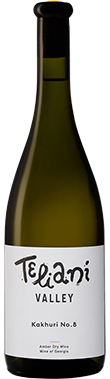
A large producer with a forward-thinking mentality, Teliani Valley are a very reliable name across the board, but this blend of Rkatsiteli, Mtsvane, Khikhvi and Kisi is extremely accomplished. The skin contact here takes place in steel rather than qvevri, changing the shape and flow of the wine a little and giving it a brisker feel with tighter-grained tannins and a chalky dryness that complements its notes of agave syrup, satsuma, walnuts and yellow apples.
2022
Teliani Valley
Chelti, Kisi Qvevri, Kakheti, Georgia, 2022
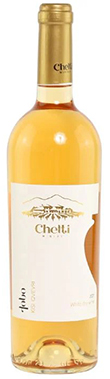
Broader and softer in style than some, Chelti’s Kisi is richly honeyed with notes of flapjacks and orange marmalade, with a fleshy, opulent palate, mild, lightly grainy tannins and plenty of fruit richness in the middle. Like many Kisi qvevri wines, the tannins are less assertive than in a Rkatsiteli or Mtsvane, and this doesn’t necessarily need food if served lightly chilled.
2022
Chelti
Orgo, Rkatsiteli, Kakheti, Georgia, 2023
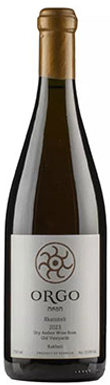
An attractively rich, bright-amber wine made from Rkatsiteli, Orgo’s example is mellow yet juicy, with ripe, well-defined tannins framing notes of fresh honey, flapjack and dried apricot. The winery does not include stems during fermentation, resulting in a wine that is more fruit-forward than spicy, with a gentler tannin structure than many traditionally made Kakheti wines.
2023
Orgo
Tbilvino, Qvevris Kisi, Kakheti, Georgia, 2022
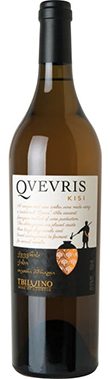
Honey, granola, candied ginger and a hint of orange pith characterise the nose of this expressive wine from Kisi. Less tannic than Tbilvino’s Qvevri Rkatsiteli, it shows a little more brightness and freshness to the fruit. Perfumed and lithe, it still carries its tactile tannic signature through to the finish.
2022
Tbilvino
Dugladze, Kisi Qvevri Dry Amber, Kakheti, Georgia, 2022
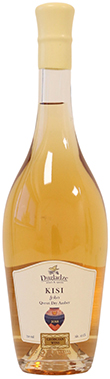
Supermarket wine ranges have a reputation for playing it safe, so it’s commendable to see this skin-contact Kisi from M&S. I can’t imagine it’s what most people are picking up at the train station Food & Wine shop, but it’s a lovely introduction to orange wine, with ripe apricots, sultana and mellow acidity, and just a whisper of grape-skin tannins on the finish.
2022
Dugladze
Dugladze, Ranina Kakhuri, Kakheti, Georgia
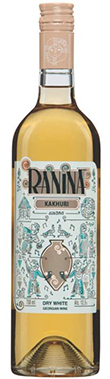
A good-value introduction to qvevri wines, this Rkatsiteli is approachable with fairly soft tannins, offering golden syrup, pumpkin and sultana flavours on a pleasantly mouth-coating, lightly oily palate.
Dugladze
