Producer Profile: San Polino

Get our daily fine wine reviews, latest wine ratings, news and travel guides delivered straight to your inbox.
You are now subscribed
Your newsletter sign-up was successful
Montalcino’s first certified organic estate.....
Producer profile: San Polino
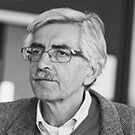
Owned and run by Luigi (Gigi) Fabbro from Friuli and Londoner Katia Nussbaum.
When I last visited, the washing was hanging out on the line in front of the farmhouse – it’s that kind of place.
We conversed around the kitchen table, where we would have tasted the wines too if Nussbaum had not been baking a rather delicious smelling lasagna.
Fabbro is a whirlpool of ideas. He is, among other things, a trained chemist and a computer scientist, and in another life he studied biodiversity in the Amazon jungle.
San Polino was Montalcino’s first certified organic estate and is now run on biodynamic lines.
‘We tend to make the wines first and think about how to sell them later,’ says Nussbaum, an approach exemplified by the decision to bottle three different versions of the 2012 Brunello, each fermented with a different strain of indigenous yeasts.
Get our daily fine wine reviews, latest wine ratings, news and travel guides delivered straight to your inbox.
The wines are joyful. They have depth and power and a wonderfully expressive complexity.
I had the privilege in 2016 to taste the 2001 Brunello and it went immediately into my mental catalogue of all-time greats.
Richard Baudains is the regional chair for Veneto in the Decanter World Wine Awards.

Richard Baudains was born and bred in Jersey in the Channel Islands and trained to be a teacher of English as a foreign language. After several years in various foreign climes, Baudains settled down in beautiful Friuli-Venezia Giulia, having had the good fortune to reside previously in the winemaking regions of Piemonte, Tuscany, Liguria and Trentino-Alto Adige. Baudains wrote his first article for Decanter in 1989 and has been a regular contributor on Italian wines ever since. His day job as director of a language school conveniently leaves time for a range of wine-related activities including writing for the Slow wine guide, leading tastings and lecturing in wine journalism at L’Università degli Studi di Scienze Gastronomiche and for the web-based Wine Scholars’ Guild.