
Italian cooperation: A blueprint for wine's future
As the wine industry becomes increasingly difficult for solo operators, what can be learned from producers combining forces to work together?


Last year, six wineries in Sonoma County, California, announced that they had folded their labels into the Overshine Collective.
In an industry built on the romantic ideal of the solo founder, the news turned heads.
For those familiar with American ‘founder culture’, this sounds radical, but in the wider historical context, it’s familiar terrain.
Sharing is caring

Cantina Tramin
‘Sharing is in vogue,’ says Letizia Pasini, export manager at Cantina Colterenzio in Italy’s Alto Adige.
There, cooperatives arose from different problems, but their structures force environmental, economic and social issues to be confronted simultaneously.
What happened in Alto Adige was part of a wider pattern. In the early 20th century, and particularly in the wake of the two world wars, wine cooperatives began to emerge across Italy.
From Alto Adige’s mountain terraces to Piedmont’s Nebbiolo vineyards and the bush vines of Sardinia’s Sulcis, smallholders facing low grape prices or the lure of city work joined forces, which helped keep them in their homelands and preserve physical and cultural landscapes.
For example, after World War II, Cantina Bolzano (or Kellerei Bozen in the Germanic) grew from the union of two historic co-ops: those of Gries and Santa Maddalena.
Faced with the choice of abandoning winemaking altogether following the Allied bombing of the Santa Maddalena winery, Gries and Santa Maddalena chose to join forces, eventually leading to a full merger in 2001.
Recent wine history, notably in high-cost New World regions, has rewarded the opposite model: estate vineyards, showpiece wineries and the founder as the face of the brand.
Yet that world has grown more fragile. From inflation and tariffs to currency shifts, the cost of doing business has risen, while in many regions, consumption has dropped.
Small wineries looking to scale often can’t jump the next financial hurdle once logistics, marketing, environmental upgrades and all the other costs outside farming and fermenting are factored in.
Human sustainability – the ability to provide a work-life balance – now belongs in the same conversation as soil health and water management.
From Pasini’s perspective, cooperation belongs to the future as much as the past. ‘This model is very modern and will be more relevant than ever in 2050,’ she says.
As proof of concept, today’s co-ops, once seen as volume table-wine producers, now stand behind some of Italy’s most exciting whites and reds.
Standing together against the climate crisis

Cantina Bolzano/Kellerei Bozen
As the wine industry enters uncharted climate territory, a collective approach allows the many to tackle a large-scale environmental project as one.
In 2018, Cantina Bolzano (pictured above) opened a striking new architectural winery on the northern edge of Bolzano city. Certified by regional energy agency CasaClima for its energy efficiency, thanks to heat pumps, solar panels, pellet-fired heating and passive cooling, it became one of Italy’s most advanced, low-impact winery projects.
Bolzano managing director Matthias Messner points out the advantages. ‘The model demonstrates that one plus one does not equal two, but far more,’ he says.
‘Pooling raw materials, resources and expertise creates added value that would be difficult to achieve individually.’
At Cantina Girlan, located just outside Bolzano, the 2025 vintage marked the shortest growing season and the fastest harvest in its history.
‘Because of unusual weather, early-ripening varieties matured later than usual, while late-ripening varieties ripened earlier,’ according to marketing manager Marc Pfitscher.
‘In this situation, being part of a cooperative was a considerable advantage, providing us with logistical resilience and security that would have been challenging for independent estates to cope with.’
Pooling resources

Cantina Colterenzio
The foundations of Italy’s co-ops are intertwined with its singular landscape and history.
Yet the cooperative model isn’t a universal cure. Grapegrowers and winemakers in regions where land has grown expensive, and ownership concentrated, can’t and won’t copy these models exactly.
Sonoma’s Overshine remains a founder-led company rather than a formal co-op, although the rationale behind collaboration stems from what cooperatives have long understood.
‘As a group, we have more resources and reach,’ says Sam Bilbro of Idlewild Wines, part of the collective. ‘So, in the event of climate-driven needs for help, we have a greater pool to pull from.’
In a warmer, less predictable and more expensive world, that pool may be the point. Cooperatives prove that mutual support can be a viable working method – and, for many producers, a credible blueprint for a more sustainable wine future.
Six great Italian wine co-ops to know

Cantina/Kellerei Girlan
Cantina Bolzano, Alto Adige
Formed in 2001 through the merger of Cantina Gries (established 1908) and Cantina Santa Maddalena (established 1930), Cantina Bolzano is one of Alto Adige’s most historically significant cooperatives, representing growers farming steep vineyards on the hillsides surrounding Bolzano.
The Santa Maddalena cooperative was a key player in formalising the Alto Adige DOC sub-zone of Santa Maddalena and promoting its autochthonous red grapes, including Schiava and Lagrein.
Cantina Bolzano has created a reputation around these reds, such as the Taber Riserva Lagrein, from old vines on the valley floor, and Huck am Bach St Magdalener Classico.
Today, the Tal line represents the co-op’s flagship expressions, with Tal 1908 (a Lagrein-led red blend) and Tal 1930 (a Chardonnay-led white blend).
Environmental leadership has shaped the cantina’s identity, and is most visible at the cellar level: a design-forward winery completed in 2018 was built to CasaClima energy efficiency standards, reducing operational energy demand through building design.
Cantina Colterenzio, Alto Adige
Cantina Colterenzio was founded in 1960 by Alto Adige growers determined to set their own course on grape pricing and quality, while keeping family farming viable around Appiano.
Today, about 300 members cultivate mostly small hillside parcels. From the 1980s, under director Luis Raifer, Colterenzio led a quality revolution through the introduction of lower yields, Guyot vine training and better site selection for white grapes such as Sauvignon Blanc, Chardonnay and Pinot Bianco – varieties that now underpin the Lafóa and Gran Lafóa ranges.
Environmental investment has also been central to the group. Photovoltaic and thermal solar panels installed in 2010 now generate all of Colterenzio’s electricity and most of its heat, while rainwater is captured for use around the property.
In the vineyards, regional sustainability goals are nudging a gradual shift towards practices that prioritise living soils over chemical fixes.
Cantina Girlan, Alto Adige
Founded in 1923 in the village of Cornaiano, Cantina Girlan occupies a 16th-century farmstead, with an original labyrinthine network of cellars beneath the village now forming part of the modern winery.
What began with a small group of growers seeking to control their future has grown to about 200 member families farming a little more than 230ha across nearby hills and valleys.
Grapes are harvested and vinified by individual parcel, with picking decisions made in coordination between the cellar team and growers throughout the season.
Girlan has built a reputation for Schiava and Pinot Noir, drawing on old vines and carefully selected sites to make finely etched, site-driven wines.
Its Pinot Noir Riserva programme – including Vigna Ganger from the Mazon monopole – shows that this climate-sensitive grape can achieve depth and finesse in Alto Adige, and that the region’s cooler, high-elevation vineyards are increasingly relevant for Pinot in a warming world.
Cantina Santadi, Sardinia
Located in Sulcis, in the southwest corner of Sardinia, Cantina Santadi was founded in 1960 by local growers seeking higher prices for their fruit.
While the early days of the cantina focused on bulk wine production, the co-op changed course during the mid-1970s under chairman Antonello Pilloni, along with the guidance of consultant Giacomo Tachis.
Between lower yields, judicious site selection and greater ambition in the cellar, the effort transformed Santadi into a leading name for Carignano del Sulcis – and big Italian reds in general.
Top grapes often come from a cache of old, ungrafted bush vines near the coast. For growers in such a hot, increasingly dry region, the shared structure spreads risk across the group.
Wines such as Terre Brune show how collective effort can indeed create powerful, ageworthy reds.
Cantina Tramin, Alto Adige
Founded in 1898 by local priest and politician Christian Schrott, Cantina Tramin is Alto Adige’s third-oldest cooperative and today is a union of 160 families farming roughly 270ha.
Tramin was one of the first co-ops in the region to treat sustainability as a core part of its identity, supporting growers through strict yield management and education on organic viticulture, even if only a minority are certified.
The cellar is best known for Gewürztraminer, with benchmark wines such as Nussbaumer and the late-release Epokale showing how intense, structured and ageworthy the variety can be. Both are among the most highly awarded Gewürztraminers in the world.
The range is organised into ‘classic’ and ‘selection’ tiers, including Stoan, a textured white blend of Chardonnay, Sauvignon Blanc, Gewürztraminer and Pinot Bianco, grown on clay and limestone soil; and Troy, a brisk, chiselled interpretation of Alpine Chardonnay.
Both reinforce Tramin’s credentials as a serious white wine producer.
Produttori del Barbaresco, Piedmont

The vineyards of the Asili cru, just south of the village of Barbaresco, Piedmont, which produce one of Produttori del Barbaresco’s Riservas.
Founded in 1958, Produttori del Barbaresco has become the reference cooperative for Nebbiolo in Barbaresco.
Member growers tend their own vineyards but collectively vinify in the village cellar, focusing solely on this single variety.
The range includes a Langhe Nebbiolo, a classic Barbaresco and, in top years, nine single-vineyard Riserva wines that are aged for extended periods in large casks.
For many drinkers, Produttori offers one of the best examples of how a co-op can produce structured, long-lived wines that comfortably compete with private estates – and often for better value.
Six wines from Italian cooperatives
Related articles

Better together – Spotlight on the Spanish cooperatives

The ethical drinker – What is B Corp?

Seven north Italian wine trends to brighten up your tastebuds in 2026
Colterenzio, Gran Lafóa Riserva Sauvignon Blanc, Trentino, Trentino-Alto Adige, Italy, 2022
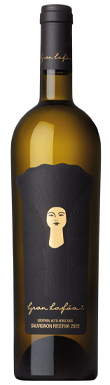

Leading with aromas of apricot, gooseberry and passion fruit, with a subtle graphite and flint undertone, the palate is intense but balanced, showing ripe tropical...
2022
ColterenzioTrentino

Bozen, Tal 1930, Trentino, Trentino-Alto Adige, Italy, 2022
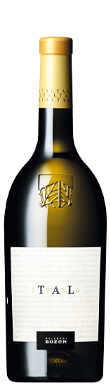
A blend of 85% Chardonnay, 10% Sauvignon Blanc and 5% Pinot Grigio. Fragrant with mango, pineapple and melon layered over grapefruit, lime and a touch...
2022
BozenTrentino
Cantina Tramin, Stoan, Alto Adige/Südtirol, Trentino-Alto Adige, Italy, 2023
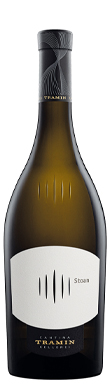
Aromas of ripe pear, white peach and lemon zest mingle with subtle tropical notes, fresh herbs and a chalky, crushed stone edge. Unfurling across the...
2023
Cantina TraminAlto Adige/Südtirol
Girlan, Vigna Ganger Riserva Pinot Noir, Alto Adige/Südtirol, Trentino-Alto Adige, Italy, 2021
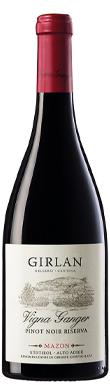
Ripe and sour cherry aromas sit alongside wild berries, raspberry and hints of marzipan and spice. The palate is elegant and finely structured, with vivid...
2021
GirlanAlto Adige/Südtirol
Produttori del Barbaresco, Barbaresco, Piedmont, Italy, 2022
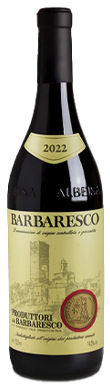
Violet, rose and dried herb scents over black cherry, raspberry and a touch of tar. Medium-bodied yet firm on the palate, its succulent red fruits...
2022
Produttori del BarbarescoBarbaresco
Santadi, Terre Brune, Carignano del Sulcis, Superiore, Sardinia, Italy, 2020
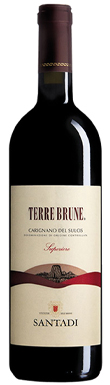
This lifts off with aromas of blackberry and ripe plum with dark cherry, cocoa, tobacco and sweet spice. The palate is full and rounded, with...
2020
SantadiCarignano del Sulcis
