California’s best Zinfandels? Sonoma’s Dry Creek Valley


Tricky to grow and produced in a range of styles, it can be hard to pin down the character of great Californian Zinfandel. Stephen Brook suggests starting your search in Sonoma’s Dry Creek Valley, and picks out his favourite wines.
Driving up to the Nalle Winery in Dry Creek Valley, I find Doug Nalle standing outside surrounded by bins of freshly picked Zinfandel. I peer into one and remark on how healthy the grapes look.
There had been a heat spike a few days earlier and Zin grapes, which had been exposed to temperatures of up to 45˚C, are susceptible to shrivelling or raisining.
‘You’re looking at the bin that has been sorted. Here’s the bin of raisined grapes – this is fruit I don’t want in my vats. And over there is the bin with the bunch rot. That’s going to be thrown out. The raisined grapes I’ll ferment separately and we’ll probably make a late-harvest wine from it. May as well.’
When you’re making wine from Zinfandel, pragmatism has to be the order of the day.It’s a tricky grape at the best of times, being prone to uneven ripening, so winemakers may end up with unripe and overripe berries in their fermenters. Rigorous sorting helps reduce this unevenness, but it does make decisions on when to pick extremely difficult.
‘Flowering is always uneven and so is the maturation,’ says Nalle, ‘so you get grapes at various stages of maturation in the same cluster.’
It is a mantra in California that grapes need to be optimally, or phenolically, ripe to be considered ready for harvest. By the time the bunches reach that ideal position, sugar levels are likely to be very high, and the result will be wines with ferocious alcohol. This, surely, is the reason why Zinfandel is controversial.
At the 2017 Decanter World Wine Awards, a judge who happens to be one of America’s top sommeliers threw up his hands when I announced that the next tasting flight would be Zinfandel. ‘Count me out,’ he said. ‘I just hate Zinfandel, so my low scores will scupper any wine’s chances.’
Expect the unexpected
Strong words, but not uncommon. A visit to Dry Creek Valley, generally accepted to be the source of California’s finest Zinfandels, provided the key. There can be few wines made in so many styles.
I encountered wines imbued with red fruits, others with black fruits; wines with low acidity, others with higher; wines at moderate alcohol levels (around 14%) and many that were 15.5% and above.
With Cabernet Sauvignon, a wine enthusiast will have a good idea of what to expect when he or she opens a bottle. That is not the case with Zinfandel, unless you are already familiar with the style of a particular producer.
And it has to be conceded that there is a lot of bad Zinfandel around: wines that are jammy and/or hot, wines with a dollop of residual sugar, wines with detectable greenness. It’s not easy to grow and it’s not easy to make, either, and many wines flounder between harvest and bottling.
Ed Sbragia, formerly chief winemaker at Beringer, observes: ‘Pinot Noir is hard to grow but easy to ferment, but with Zin you never know what will happen.’
Most winemakers accept that high alcohol – say, 15% or more – is just part of Zinfandel’s typicity, though others, like Nalle, consciously strive to make wines about a degree lower.
Antoine Favero, winemaker at Mazzocco, explains: ‘At harvest I’m looking for flavours, not just sugars. You have to accept that with Zin you’re likely to end up with some shrivelled fruit, and uneven ripening can be a problem, though experience helps you judge how to deal with that. A few unripe berries won’t hurt: they can contribute a little acidity. It’s possible to add water at fermentation to reduce alcohol, but you risk losing some fruit. So you need to be very careful.’
Virginia Marie Lambrix at Truett-Hurst is typical of many when she asserts: ‘With Zin I like big, bold flavours, so I’m not too worried about high alcohol.’ Veteran grower and winemaker Dan Teldeschi of the eponymous family winery agrees: ‘Zin can handle high alcohol because of its body and concentration.’ Personally, high alcohol doesn’t bother me when it comes to Zinfandel – unless, as so often happens, I can taste it.’
Old vines
Dry Creek Valley, northwest of Healdsburg, is California’s sweet spot for Zinfandel, both because its microclimates suit the variety and because there are quite a few surviving old vineyards. Napa too had some excellent Zinfandel sites that are gradually being replanted or grafted over to the more soughtafter Cabernet Sauvignon. Russian River Valley has some old Zinfandel vineyards, but because it’s a cooler area than Dry Creek Valley, the fruit often doesn’t ripen until sugars have gone through the roof.
Further north, Mendocino has a few surviving old Zinfandel sites, and some of the most ancient are to the east in the Sierra Foothills, but here the wines can show a distinct rusticity, although there are some distinguished exceptions
Centenarian vines are not that unusual in Dry Creek, although they too are beginning to disappear as plummeting yields persuade growers to replace them with younger, trellised vines. Nonetheless, a drive up the valley will bring into view rows of splendidly gnarled old bush vines. Not that all of them are Zinfandel. Most of those vineyards are field blends, with Zin representing 70 to 90% of the plantings, the remainder being varieties such as Carignan, Petite Sirah, Alicante Bouschet, and even white grapes such as Palomino.
The minor varieties were either planted by accident or deliberately as an insurance policy, as the grapes, when harvested in one swoop, would contain bunches at various stages of maturity, the overripe balancing the underripe. Zin was chosen by the migrant growers because of its generous yields, whereas today’s winemakers use green-harvesting and other techniques to reduce yields so as to give more concentrated and complex wines.
Winemakers such as Hugh Chappelle at Quivira feel that Petite Sirah plays a useful role. ‘It adds colour, tannin and structure to the wine, and as its alcohols tend to be between 13% and 14%, it helps to reduce the overall alcohol in a Zin-based wine,’ he says.
The same would be true of Carignan, which also adds acidity, and for Unti Vineyards a dash of Barbera performs the same role.
Best sites
The valley is by no means uniform. The more northerly stretches can be considerably warmer than the southern ones, and by the time the valley reaches the outskirts of Healdsburg the climate is generally too cool to be optimal for Zinfandel. The best sites are on the eastern benchlands and the western slopes and hills.
Nalle explains: ‘These sites are well drained, and that’s essential for Zin. If it’s growing on poorly drained, valley floor areas, the berries will swell. Zin needs warmth but doesn’t like excessive heat. Sometimes the western side can give harder or edgier wines. Overall I find the eastern vineyards more consistent, especially around Canyon Road.’
Kim Stare Wallace, whose father David Stare founded Dry Creek Vineyard in 1972, broadly concurs: ‘The western side has more iron in the soil, which is reddish and rocky, and this is ideal for Zin. The eastern side has more sedimentary soils that give softer wines with more elegance.’ Shelly Rafanelli, winemaker at the eponymous estate that owns vineyards on both sides of the valley, finds the western side better in torrid years, as it can resist shrivelling more consistently.
Diurnal range is an important factor too. Chappelle and Sbragia both note that nighttime temperatures can be around 12˚C, even in summer. ‘But that,’ Chapelle points out, ‘is the secret of Zin’s healthy natural acidities – if you don’t pick too late.’ Elevation also makes a difference and helps to explain the wide flavour spectrum of Dry Creek Zinfandel.
As Favero points out: ‘Vineyards at higher, cooler elevations with marine influence give more red-fruited wines and spice, while valley floor sites give jammier flavours. But it also depends on when you pick, as more raisined fruit will also give darker flavours.’ Some higher sites on the western side are extremely close to the fashionable high-elevation vineyards of the Sonoma Coast, and these ripen later and have a different structure.
Versatile variety
David Amadia, president of Ridge Vineyards, says it’s not surprising that Zinfandel can be made in so many styles, even within one valley, as it’s notoriously diverse. ‘Historically, Zin was used to produce not only dry reds, but rosés and Port-style wines,’ he explains. You can also add blush wines to that list. This makes it impossible to pin down the variety’s typicity, as there are so many variables.
Another factor that has nothing to do with terroir or vine age is consumer taste. There’s still a strong following for ‘killer Zins’, wines that can exceed 16%. A few days visiting top producers persuaded me that those coarse, palate-numbing styles were on the way out; but a generic tasting of wines from estates I had no time to visit showed that those styles still cling on. Some winemakers like them too.
Teldeschi’s wines have a kind of rugged grandeur, but no one would call them elegant. But some of these burly monsters soon fall apart, as they are fundamentally unbalanced. Chappelle is convinced that there’s a renaissance of Zin made in a fresher style, the approach championed for decades by Nalle and today by Jessica Boone of Passalacqua.
Richer, weightier styles that avoid excesses, especially of alcohol, can be very enjoyable, are generally balanced and can age well. Ridge’s splendid Lytton Springs wines fall into this category, as do some of Mazzocco’s single-vineyard bottlings. They’re indisputably big wines, but are balanced. Zinfandels made by the likes of Seghesio, Nalle and Ridge can and will age. Amadia poured a Lytton Springs 1997 that was still going strong, but admitted that such longevity couldn’t be counted on.
Paul Draper, former chief winemaker of Ridge, once told me that Zin can close down after seven years; it may bounce back and continue to evolve, but then again it may not. Zin enthusiasts love the variety for its fruit, and for its lifted and varied aromas. Obscure that fruit with too much oak or alcohol, or with overripeness, and that appeal soon vanishes.
Unbalanced wines still exist, but most don’t travel beyond Sonoma’s borders. In an American context Zinfandel is reasonably priced, with good examples between $30 and $60 (£22-£44), the latter being the price of a bargain-basement Cabernet.
Despite the emergence of Pinot Noir as a credible West Coast grape variety, Sonoma’s Dry Creek Zinfandel has its place in the roster of Californian reds that deserve to be taken far more seriously.
Brook’s pick of Dry Creek Valley Zinfandels:
You may also like:
California Cabernet 2014 panel tasting results
Top Sonoma red wines for the cellar
A Rafanelli, Zinfandel, Sonoma County, Dry Creek Valley, California, USA, 2015
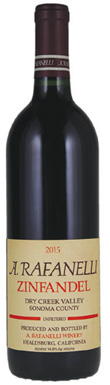

This family estate knows Zin like the back of its hand. The winemaker is Shelly Rafanelli, and this vintage includes 9% Petite Sirah. Sweet yet savoury nose, with cherry and cassis. Medium-bodied and supple yet intense. Good acidity gives persistence, with a fresh finish.
2015
A RafanelliSonoma County

Once & Future, Teldeschi Vineyard Frank’s Block, Sonoma County, Dry Creek Valley, California, USA, 2014
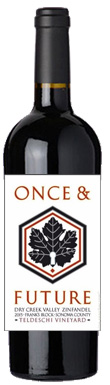
The personal label of Joel Peterson of Ravenswood, a man known for his Zins. This block of vines is over 100 years old. The dense cherry nose is striking in its opulence. The attack is soft and velvety, but cut by welcome acidity. Distinctly tannic, it has structure, length and polish.
2014
Once & FutureSonoma County
Ridge Vineyards, Lytton Springs, Sonoma County, Dry Creek Valley, California, USA, 2015
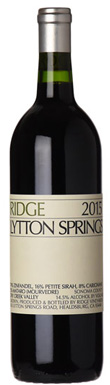
A true field blend, with 16% Petite Sirah, 8% Carignan and 2% Mourvedre, this is one of California’s most consistent Zins. It has a sumptuous cherry nose. On the palate it is rich and explosive, with zest and drive. Textured and grippy, but shows no sign of being over-extracted.
2015
Ridge VineyardsSonoma County
Fritz Underground Winery, Estate Reserve, Sonoma County, Dry Creek Valley, California, USA, 2014
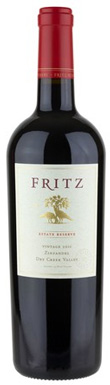
A barrel selection from estate vineyards in the north of the valley. Voluptuous nose with raspberry coulis and mocha. The palate is notably opulent with bold, ripe tannins. Yet it’s also polished and stylish, with a sleek texture and no overt alcohol.
2014
Fritz Underground WinerySonoma County
Lambert Bridge, Forchini Vineyard, Sonoma County, Dry Creek Valley, California, USA, 2015
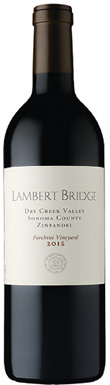
A single-vineyard Zin from vines dating back to 1907. Aged 10 months in French oak. The ripe nose has a whiff of smoke, raspberry and cherry. Approachable and supple with enough acidity to keep it fresh.
2015
Lambert BridgeSonoma County
Mazzocco, Pony Reserve, Sonoma County, Dry Creek Valley, California, USA, 2015
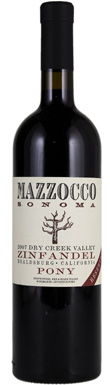
Mazzocco makes many single-vineyard Zins, and this one comes from a site near Lytton Springs Road. Blackberries and cherries on the nose, while the palate is rich and opulent, with vibrant fruit and a long, chewy finish. The alcohol shows on the finish.
2015
MazzoccoSonoma County
Nalle, Zinfandel, Sonoma County, Dry Creek Valley, California, USA, 2015
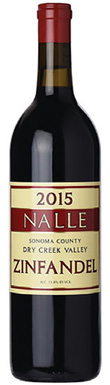
A typical example of the Nalle style, with 10% Petite Sirah and Carignan. The nose is opulent, with blueberry and cherry aromas. Rich and juicy, it doesn’t lack fruit weight but is approachable and succulent. Fine concentration and good length assure some ageing potential.
2015
NalleSonoma County
Passalacqua, PQZ, Sonoma County, Dry Creek Valley, California, USA, 2015
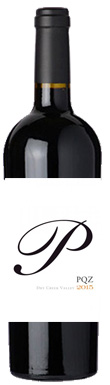
For this bottling, winemaker Jessica Boone blends fruit from various vineyards. Cranberries are to the fore on the nose, which also shows lots of spice. The palate is sleek and intense, with ample acidity and fine-grained tannins. A pungent but elegant style, with good length.
2015
PassalacquaSonoma County
Quivira Vineyards, Black Boar, Sonoma County, Dry Creek Valley, California, USA, 2014
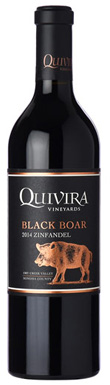
Quivira, a property with a long reputation for its Zin, is farmed biodynamically, though not certified. This shows brooding black fruits on the nose and a hint of liquorice. It’s broad and rounded, fleshy and concentrated, but enlivened by spice and supported by firm but not tough tannins. It has structure and persistence.
2014
Quivira VineyardsSonoma County
Seghesio, Cortina, Sonoma County, Dry Creek Valley, California, USA, 2014
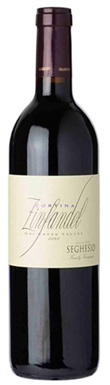
Seghesio produces a range of Zinfandels from various parts of Sonoma. This Dry Creek bottling is pure Zin from vines planted in 1972. Super-ripe raspberry fruit on the nose; just the right side of jammy. Medium-bodied and sleek, this has admirable concentration without excessive extraction. Polished tannins and remarkable elegance, acidity and length.
2014
SeghesioSonoma County
Dry Creek Vineyard, Old Vine, Sonoma County, Dry Creek Valley, California, USA, 2014
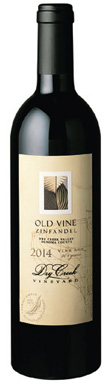
‘Old Vine’ is a flexible term, but here the oldest vines are from 1892. Rich nose with a savoury tone. Dense and tannic, with a spicy finish. The 19% Petite Sirah may account for the formidable structure.
2014
Dry Creek VineyardSonoma County
Mauritson, Zinfandel, Sonoma County, Dry Creek Valley, California, USA, 2015
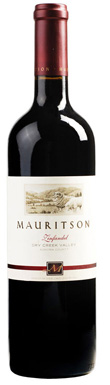
Mauritson makes several single-vineyard bottlings, but this generic Dry Creek Zin is of fine quality. Red fruits mark the ripe nose, which is intense and perfumed. This is fresh and delightfully exuberant; a medium-bodied and zesty style. Good acidity and length on the finish.
2015
MauritsonSonoma County
